











Low-carbon cement: how the cement industry is accelerating its transition to Net Zero
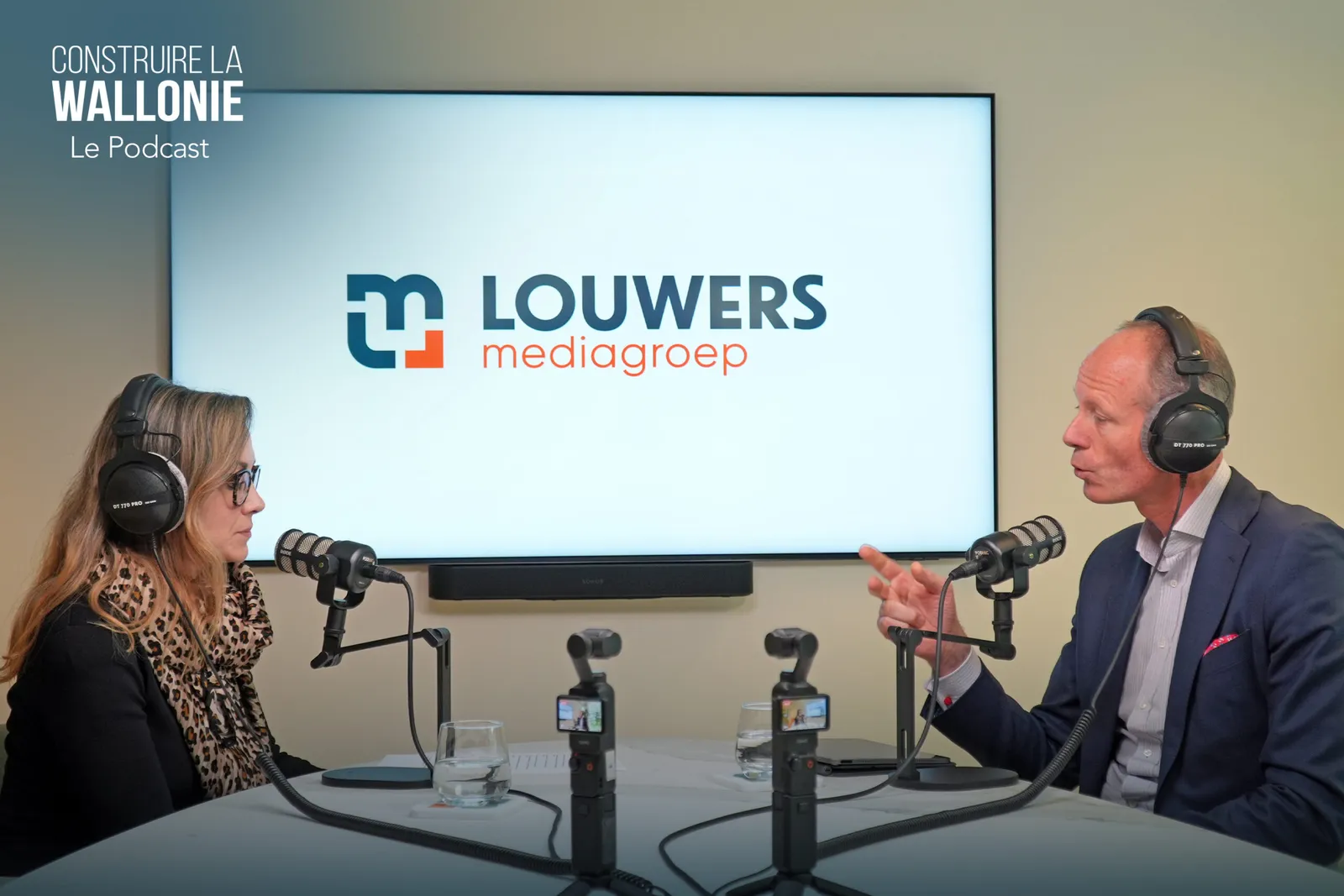
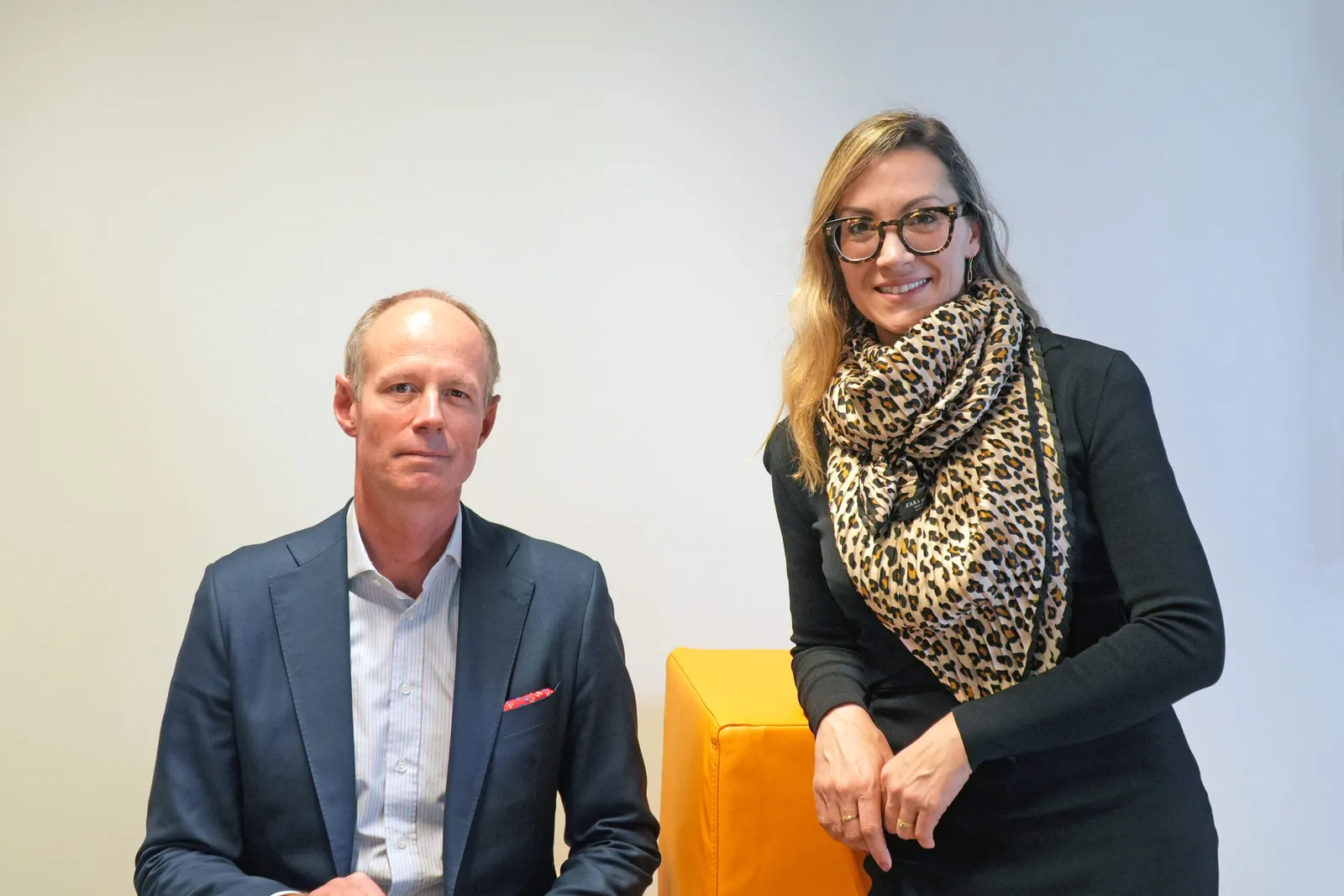
Cement is essential to construction, but it also lies at the heart of the climate challenge. In this episode of Construire la Wallonie, Stéphanie Diaz speaks to Hervé Camerlynck, director of Febelcem, about the changes under way in the cement industry. Reducing its carbon footprint, carbon capture and storage (CCS), the circular economy, new cements, industrial investment and the Net Zero 2050 roadmap: find out how the sector is innovating to build more sustainable infrastructure while meeting the environmental and economic challenges of the future.
Full transcript
All chapters (23)
- Cement, an essential material in transition
- Cement, the binder in concrete
- Why does cement emit CO2?
- A sometimes incomplete picture
- Are there any real alternatives?
- Progress already made
- The Net Zero 2050 roadmap
- Reducing the proportion of clinker
- Carbon capture and storage
- CCS in practice
- Changes already clearly visible
- A well-established circular economy
- The impact of the geopolitical and energy context
- Building differently from 20 years ago
- The ZIN project as a symbol
- Febelcem’s role
- What are the main obstacles still remaining?
- Investments of several hundred million euros
- Are all cement producers moving at the same pace?
- Construction in Wallonia in 20 years’ time
- Wallonia’s strategic role
- An unreservedly optimistic outlook
- Conclusion
Cement, an essential material in transition
Stéphanie Diaz Hello everyone, and welcome to Construire la Wallonie, the podcast series dedicated to the challenges, innovations and professions shaping the sector. In this episode, we’re going to talk about cement. When we think of the roads we travel every day, the bridges we cross or the buildings around us, we realise that behind all of them is the same material, sometimes inconspicuous but essential: cement. When we talk about cement or concrete, we immediately think of strength and robustness. Sustainability, on the other hand, is much less likely to spring to mind. Yet the sector is now facing a huge challenge: reinventing itself to meet the climate challenge. To discuss this, we’re joined today by Hervé Camerlynck, director of Febelcem. Hello, Hervé.
Hervé Camerlynck Hello, Stéphanie.
Stéphanie Diaz Thank you for joining us in the studio today. Before we get into the details, if you had to explain to someone with no knowledge of the cement sector what cement is and why it is so essential today, what would you say?
Cement, the binder in concrete
Hervé Camerlynck To answer that question, I’ll start with concrete. Think of concrete as an artificial stone, a stone that can be moulded. Before concrete, buildings had to be constructed by stacking stones and making them hold together. Concrete truly revolutionised construction. A cubic metre of concrete contains around 85% gravel and aggregate, which need to be held together. That is precisely what cement does. Cement is a powder that reacts with water to form the binder that gives concrete all its properties.
Why does cement emit CO2?
Stéphanie Diaz And yet, when we talk about sustainable construction, cement is often singled out. Why is that?
Hervé Camerlynck To make cement, limestone has to be heated to around 1,400 degrees. That obviously requires a lot of energy. There is also a chemical factor: at around 900 degrees, limestone begins to transform. Calcium carbonate becomes calcium oxide and releases CO2. This is probably the only chemical reaction I’m going to bore you with today. The reaction is entirely unavoidable and is an integral part of cement production. That is why cement has a relatively large carbon footprint.
Read the full transcriptCollapse transcript20 more chapters
A sometimes incomplete picture
Stéphanie Diaz Do we sometimes have a somewhat skewed view of its impact?
Hervé Camerlynck Yes, because we focus almost exclusively on this aspect. It’s true that we produce a lot of concrete and that cement accounts for a significant share of emissions. But we need to put the figures into context. In Belgium, it accounts for around 3% of emissions. We also tend to overlook all the services that cement and concrete provide. They make it possible to build the buildings and infrastructure we absolutely need.
Stéphanie Diaz So our view is a little too simplistic.
Hervé Camerlynck Yes. We also forget that it is a strictly local material. The aggregate and gravel come from here, in Belgium, and more specifically from Wallonia. In terms of strategic autonomy, it is an extremely important material.
Are there any real alternatives?
Stéphanie Diaz We also hear a lot about alternative materials.
Hervé Camerlynck That’s true. Today, architects are looking to use the right material in the right place. We sometimes hear about a revolutionary new concrete or cement that no longer uses cement. But one key factor is often overlooked: scale. In Belgium, we consume around 45 million tonnes of concrete a year. A solution that works for a few hundred tonnes or a few cubic metres does not meet the sector’s needs. We always have to keep scale in mind.
Stéphanie Diaz So there is no truly credible alternative at the moment.
Progress already made
Stéphanie Diaz Febelcem has drawn up a Net Zero roadmap for 2050. Before we talk about it, what progress has the sector already made?
Hervé Camerlynck Looking at the figures, in 1990 one tonne of Belgian cement emitted around 750 kg of CO2. Today, we’re down to around 520 kg of CO2 per tonne of cement. By comparison, the European average is around 620 kg. That already represents a reduction of around 30% in our carbon footprint, which is a particularly strong performance by European standards. We achieved this by using several levers. We have worked on fuels, kiln performance and cement formulations. Not all cements are the same. The raw materials used directly affect their properties.
The Net Zero 2050 roadmap
Stéphanie Diaz Tell us more about Febelcem’s Net Zero roadmap. What does it involve?
Hervé Camerlynck The first thing this roadmap seeks to emphasise is that cement is part of the construction value chain as a whole. The aim is not just to reduce cement’s carbon footprint, but that of the entire value chain. Cement obviously has a role to play, and needs to go from 520 kg of CO2 to zero. To achieve this, we are working with three main groups of measures. The first concerns conventional industrial developments. We are working in particular on fuels. Around 60% of the fuels currently used in cement kilns already come from waste generated through recycling. The aim is to reach around 90%. This is an important first lever.
Reducing the proportion of clinker
Hervé Camerlynck The second group of measures concerns clinker. Without going into all the technical details, clinker is the active material produced in the kiln. It has to be heated to 1,400 degrees and is responsible for a large proportion of CO2 emissions. For many years, we have been reducing its share in cement by using alternative materials. We will continue along this path, particularly through the use of calcined clays. These are clays heated to around 900 degrees, which gives them very interesting properties without requiring the much higher temperatures needed to produce clinker. I’m obviously simplifying things a little, but this is an extremely promising lever.
Carbon capture and storage
Hervé Camerlynck The third lever is carbon capture and storage, known as CCS, for Carbon Capture and Storage. Since the chemical reaction that produces CO2 is unavoidable, the idea is to capture the CO2 before it leaves the chimney. It is then purified, compressed and transported by pipeline for storage in former gas fields beneath the North Sea. This may sound revolutionary, but the technology has already been used in other sectors, particularly the oil industry, for around 50 years. A cement plant in Norway is already using it today. The aim now is to apply this technology to Belgian cement plants.
CCS in practice
Stéphanie Diaz Could you explain more specifically what CCS is?
Hervé Camerlynck Of course. CCS stands for Carbon Capture and Storage. The first steps are to capture the CO2, purify it and then transport it. There is not yet a proper CO2 transport network. That is why these projects take some time. A whole new infrastructure needs to be built. We hope to have an operational network around 2030-2035.
Stéphanie Diaz So that’s relatively soon.
Hervé Camerlynck Yes. The CO2 can then be stored beneath the North Sea, where a site is already operational. Capturing CO2 requires very substantial investment, both in capture facilities and in the transport network. But that network also represents a tremendous opportunity for Belgium. It can benefit not only cement manufacturers, but also the chemical industry, the steel industry and other industrial sectors that will also need to capture and store their CO2.
Changes already clearly visible
Stéphanie Diaz 2050 may still seem a long way off, but what is already changing in practical terms?
Hervé Camerlynck The most visible changes concern cement formulations. They are gradually changing. If you’re not a specialist, you may not necessarily notice. Concrete is still grey, but this is where the carbon footprint is being reduced. The reduction is already substantial. Belgian cement manufacturers are also investing heavily to improve the performance of their kilns. Holcim is building a completely new plant in Obourg. CCB recently made major investments to improve its production facilities in Gaurain-Ramecroix. Heidelberg Materials is also running several improvement projects. All producers are actively working to improve their industrial performance further.
A well-established circular economy
Stéphanie Diaz So change is already under way. Does cement also have a role to play in a local circular economy?
Hervé Camerlynck Yes. Cement production has been part of the circular economy for a very long time. Some of the alternative materials used today have been used for more than a century. One example is blast furnace slag, a by-product of steelmaking. This resource is now becoming scarcer and we sometimes have to import it, but the idea of using local materials remains very much in evidence. The same applies to fuels. A large proportion of waste that cannot be recycled effectively is recovered in cement kilns. It provides both energy and mineral materials. This is a form of direct recycling. Cement is therefore deeply rooted in a local circular economy.
The impact of the geopolitical and energy context
Stéphanie Diaz How are the current geopolitical situation and energy prices affecting the cement sector?
Hervé Camerlynck Cement production is relatively unaffected by gas or oil prices, since most of the fuels used already come from waste. There is, however, an indirect effect. Any general increase in costs causes inflation, which affects production across the board. Above all, gas prices have a strong influence on electricity prices. After being fired in the kiln, cement has to be finely ground, a process that uses a great deal of electricity. In future, CO2 capture will also require significant amounts of electricity. We are therefore directly affected by anything that influences the cost of electricity.
Building differently from 20 years ago
Stéphanie Diaz Are we building differently today compared with 20 years ago?
Hervé Camerlynck Yes. The principles of circular construction are now widely embraced by architects. In Brussels, for example, many projects involve retaining and transforming a building’s existing structure rather than demolishing it and rebuilding. This is where concrete really comes into its own. There is no point in pouring concrete only to demolish everything 30 years later. A well-designed and well-maintained concrete structure is built to last for several hundred years. This is precisely the approach of retaining existing structures that architects are taking today. Belgium is also internationally recognised for its work in circular construction.
The ZIN project as a symbol
Stéphanie Diaz Is there a project that, in your view, particularly symbolises this shift?
Hervé Camerlynck Yes. The ZIN project in Brussels immediately comes to mind. It involves transforming the former World Trade Center towers in the Quartier Nord. The developers sought to retain as much of the existing structure as possible and recycle some of the concrete on site. The project brings together several principles of circular construction. It also creates a building that is open to the city, accessible to the public and integrated into its surroundings. It therefore delivers genuine social value.
Febelcem’s role
Stéphanie Diaz The cement industry is often described as undergoing a major transformation. What role does Febelcem play in this process?
Hervé Camerlynck Febelcem’s teams are not the ones making the investments. Our members are investing hundreds of millions of euros in their facilities. Our role is to ensure their efforts are recognised, explain what they are doing and create a regulatory framework that enables them to invest. Take the transport of CO2, for example. Just a few years ago, it was not even clear whether responsibility for this fell to the regional or federal level. That question has now been resolved. We work with ministerial offices and administrations to ensure these matters remain a priority and projects can move forward. We also provide information to the entire construction value chain, from contractors to clients. Finally, we do a great deal of work on standardisation, so that new cements developed using materials such as calcined clays can be used in concrete with the same level of safety, quality and performance as previous generations.
What are the main obstacles still remaining?
Stéphanie Diaz What are the main barriers to sustainability in the sector today? Is it regulation?
Hervé Camerlynck There are no real blockages, but some processes are particularly slow and need to be accelerated. Standardisation is a good example. It is a slow process, too slow for our liking, although that caution is understandable. We need to build confidence in new materials. Our role is therefore to persuade the various stakeholders to move forward without being unnecessarily conservative, while still exercising caution. We are talking about building structures: nobody wants a building to collapse. The other factors significantly slowing decarbonisation mainly concern the development of the CO2 transport network. At times, we feel that some stakeholders want to backtrack on climate targets. For us, the position is very clear: those targets must be maintained, investment in decarbonisation must continue on a massive scale, and efforts must be sustained. This is the only way to meet the climate challenge while supporting the cement industry and, more broadly, European industry.
Investments of several hundred million euros
Stéphanie Diaz If you had to name one particularly difficult decision the sector has to make today, what would it be?
Hervé Camerlynck The sums involved are enormous. Our members still have to invest several hundred million euros. There is European support and, we hope, regional support too, particularly for what is known as “de-risking”. When you invest in a new technology such as CO2 capture, you are among the first to do so. The level of risk is therefore high. The critical decisions are what we call Final Investment Decisions. They involve investments of several hundred million euros. These decisions should be taken this year, next year or perhaps in 2028. We are therefore at a pivotal moment, when cement producers must decide whether to continue investing to prepare for the future.
Are all cement producers moving at the same pace?
Stéphanie Diaz Are all producers moving at the same pace, or are there still significant differences?
Hervé Camerlynck There are, of course, some differences. Each company has its own industrial strategy and timetable. Overall, though, the gaps are limited. They all share the same vision and are pursuing the same goal. The CO2 capture facilities probably will not all be operational at the same time. Their rollout will be staggered, but all players in the sector share the same ambition.
Construction in Wallonia in 20 years’ time
Stéphanie Diaz Looking 10 or 20 years ahead, what do you think construction in Wallonia will look like?
Hervé Camerlynck We will see buildings designed differently, alongside different patterns of mobility. The principles of circular construction will continue to develop. Housing is also likely to change: homes may be more compact and designed differently. Adapting to climate change will be a major challenge. We will need to respond to periods of extreme heat, manage water better and rethink public spaces. These issues are already being considered by specifiers and contractors. Our role as a cement sector is to provide them with a reliable, decarbonised material that is available and enables them to build the buildings of the future.
Wallonia’s strategic role
Stéphanie Diaz What role can Wallonia play in this transition?
Hervé Camerlynck Wallonia now has a unique asset. Developing a CO2 transport network is comparable to the development of the canal network in the late 19th and early 20th centuries. We are on the cusp of a genuine industrial revival. Wallonia, which has experienced a significant decline in industrial activity over recent decades, now has a tremendous opportunity to rebuild its industrial base and put Belgium back at the heart of European industry.
An unreservedly optimistic outlook
Stéphanie Diaz There is a lot of talk about challenges today. Does all this still leave you feeling optimistic?
Hervé Camerlynck Yes, very much so. It is, in fact, why I work at Febelcem. I share this enthusiasm with all our members.
Stéphanie Diaz Because you are witnessing tangible change.
Hervé Camerlynck Exactly. And I am more than just a witness. I feel that, in my own way, I am playing a part in this industrial and societal transformation. It is extremely motivating. We see the same thing among the young engineers joining our companies. Many want to take practical action on climate change, and it is precisely in our sector that major changes are taking place. This is a particularly positive time.
Conclusion
Stéphanie Diaz Thank you very much, Hervé Camerlynck, for this conversation.
Hervé Camerlynck Thank you, Stéphanie.
Stéphanie Diaz We have seen that a material as understated as cement is, in fact, at the heart of a major transformation, where climate, industrial and societal challenges converge. Thank you also to our listeners for tuning in, and see you soon on Construire la Wallonie.
Keep following this
Get an email when a new story is published. No account needed.
- ThemeBuilding with less carbon
- SubjectNews







