











Liège: E25/A25 to be transformed into an urban boulevard between Monsin weir bridge and Atlas bridge, providing access to the Bressoux multimodal zone
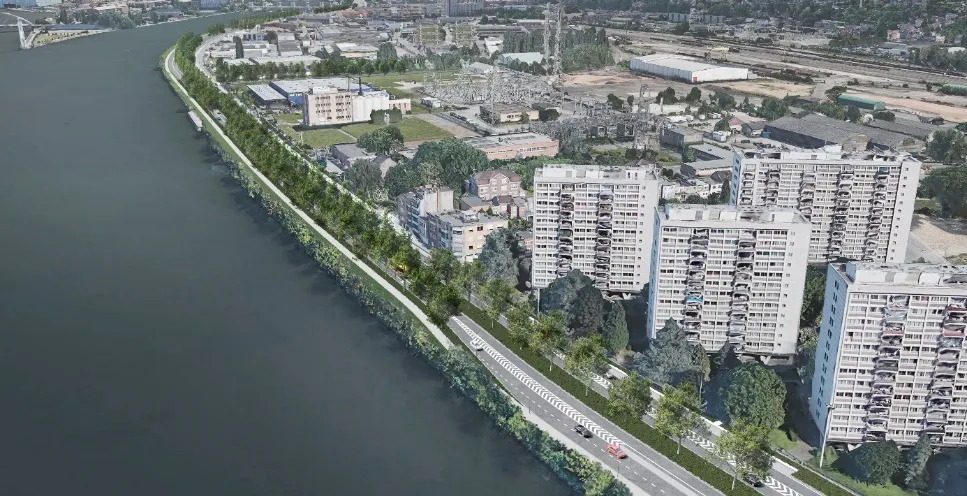
One of the main routes into Liège is about to take on a new look. On 15 March, major works will begin to transform the E25/A25 motorway between Monsin weir bridge and Atlas bridge into an urban boulevard, while also providing access to the Bressoux multimodal zone. This project is fully aligned with the Liège urban area’s PUM (Urban Mobility Plan) and will help to calm motorised traffic, provide infrastructure for active travel and green the area.
Liège’s Urban Mobility Plan (PUM), adopted in 2019, was developed in response to findings, confirmed by several studies, that mobility in Liège would become gridlocked unless effective alternatives to the private car were introduced. As part of this wider approach, it was decided to redesign the entire north-eastern gateway to the city to support the transformation of mobility across the metropolitan area.
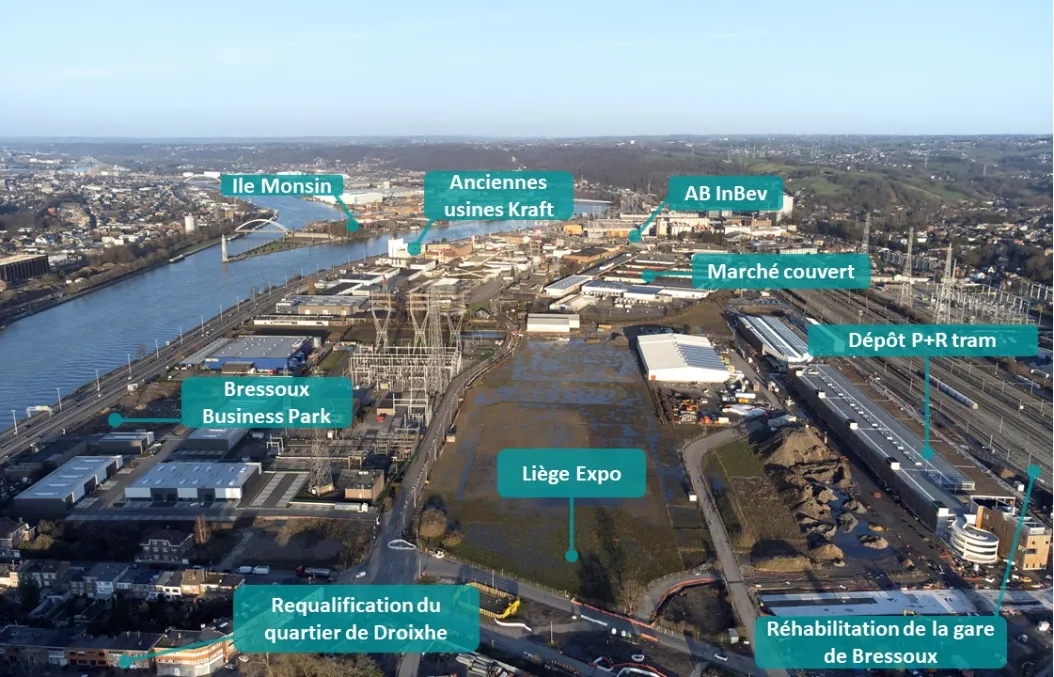
A GREENER CITY GATEWAY THAT ENCOURAGES PUBLIC TRANSPORT AND ACTIVE TRAVEL
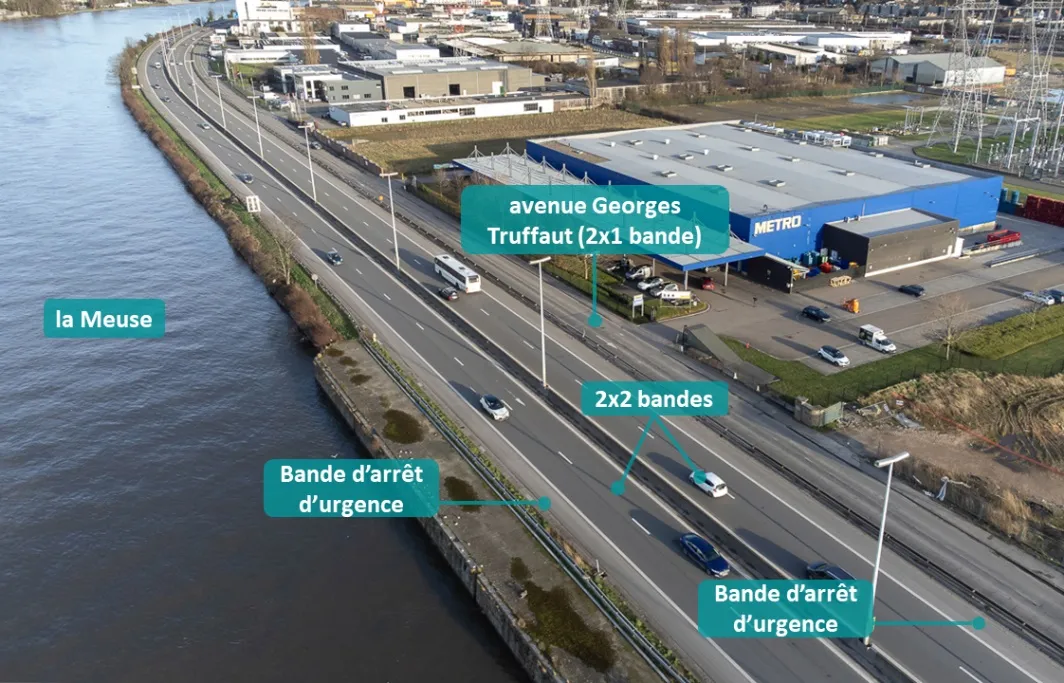
The existing E25/A25 motorway has 2×2 lanes and a hard shoulder. Avenue Georges Truffaut runs alongside it, with 2×1 lanes. On the other side, the motorway runs alongside the river Meuse.
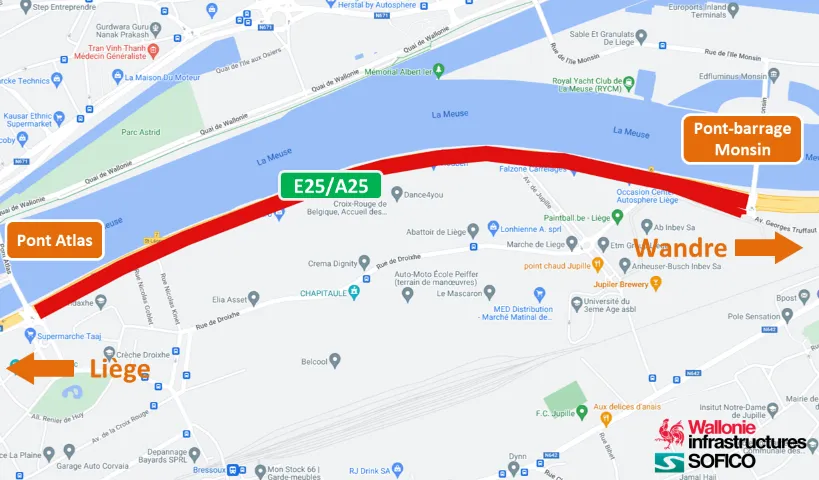
The works cover a 2 km stretch and will upgrade the section of the E25/A25 motorway between Monsin weir bridge and Atlas bridge into an urban boulevard, while providing access to the Bressoux multimodal zone.
The reorganisation of the space will aim to:
√ Calm motorised traffic.
The E25/A25 and Avenue Georges Truffaut carriageways will be demolished to make way for the new roads. Once complete, the area will have two lanes leaving the city and one lane entering it. The speed limit will be 50 km/h (see plans to download via this link).
√ Create an access point to the future tram depot, the P+R car park, Liège Expo and the rapidly changing Bressoux neighbourhood.
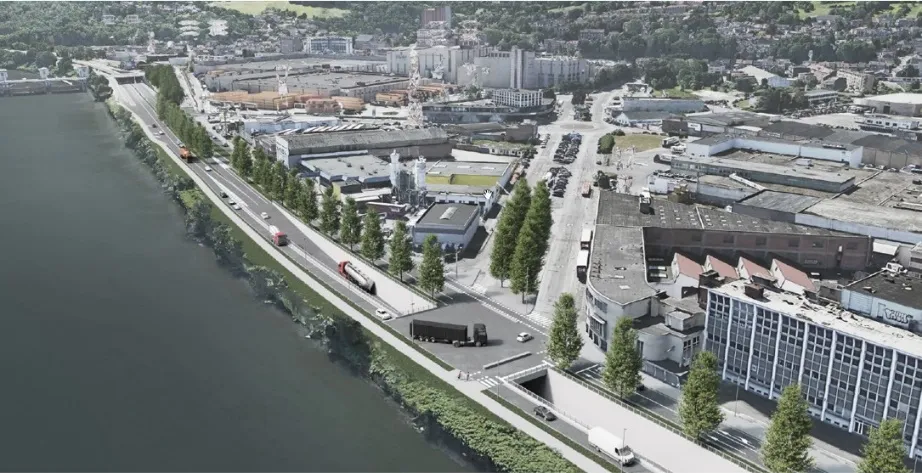
Avenue de Jupille will be connected to the new layout via a new underpass. This structure is necessary to meet traffic requirements for entering and leaving the city. It will have a signal-controlled junction at surface level.
√ Provide infrastructure to encourage active travel.
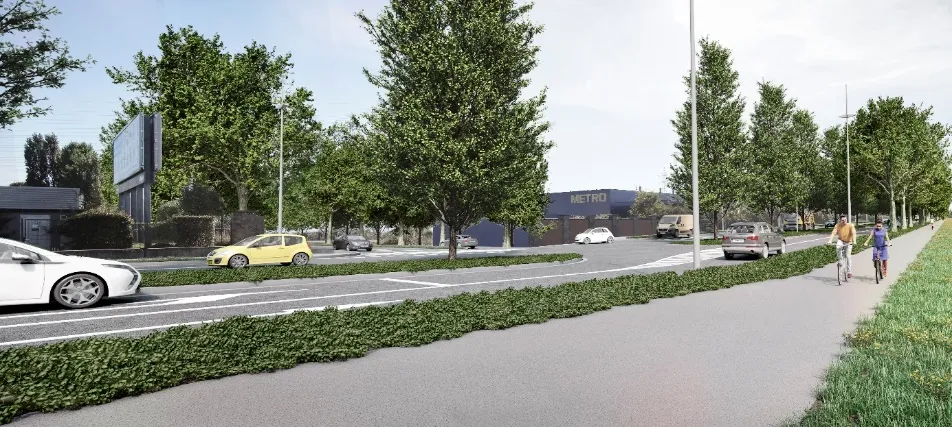
Dedicated cycle paths and pedestrian routes will be built on both the built-up side and the Meuse side. The path on the Meuse side, already wide in the original design, has been widened further in response to comments from residents during the public enquiries associated with the permit application. It will be more than 3 metres wide.
√ Increase the area allocated to landscaping, thereby improving, in particular, the living environment for local residents.
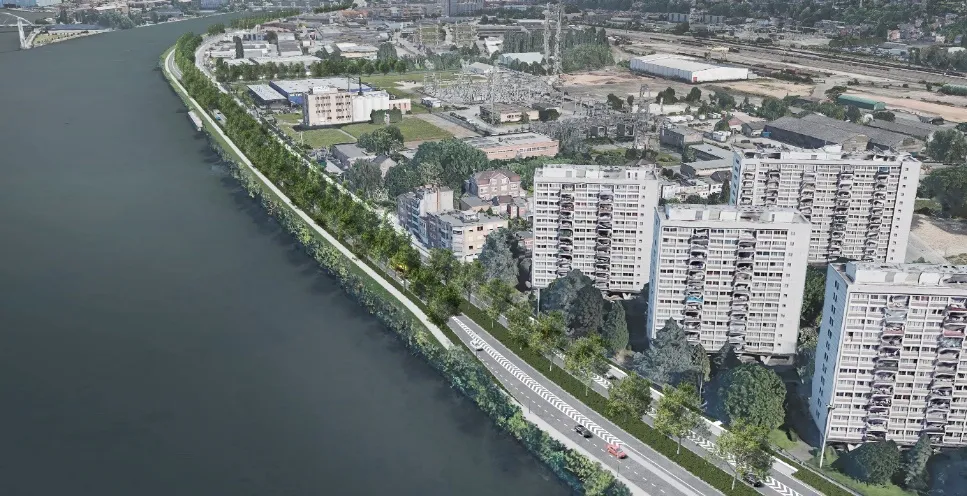
Rows of trees of various species will punctuate and define the layout. Areas between the traffic routes will be planted with ground cover or grassed.
In total, there will be:
• 235 trees planted;
• Nearly 5,000 m2 of grass;
• 8,700 m2 of ground cover.
CHANGES TO TRAFFIC CONDITIONS
The general approach in the work zone will be to maintain two lanes in each direction throughout the works, with a maximum speed limit of 50 km/h.
Access to businesses and homes on Avenue Georges Truffaut will be maintained throughout the works.
Access to the port on Île Monsin will not be affected during the works. For a period of one and a half months, drivers heading towards Liège will be unable to use exit 7, “Coronmeuse”, towards Atlas bridge. This closure is expected to begin next April. A more precise date will be announced later.
The Atlas underpass will need to close for one weekend towards the end of the works to connect the roads.
The works will be fully completed by summer 2024. The final stage will be the construction of the active-travel route on the Meuse side. The final road layout will be open to traffic from the end of 2023.
PROJECT TEAM
The works have a budget of nearly €17 million excluding VAT, including:
√ Nearly €16 million excluding VAT funded by SOFICO, the client (under the PIMPT, the “Infrastructure and Mobility for All Plan
2020-2026”), with a grant of nearly €10 million excluding VAT from the European Regional Development Fund (ERDF).
√ Just over €1 million from RESA (for utility works).
The works are being carried out in collaboration with SOFICO’s technical partner, SPW Mobilité et Infrastructures, the project manager.
GREISCH is responsible for the technical studies for the project.
The public works contract for the civil engineering works was awarded to the GALERE-ABTECH temporary consortium.
Question about this story? Ask your question
Keep following this
Get an email when a new story is published. No account needed.
- ThemeTransforming infrastructure and territories
- SubjectNews







