











Jan De Nul backs electrification and tests Volvo electric excavator
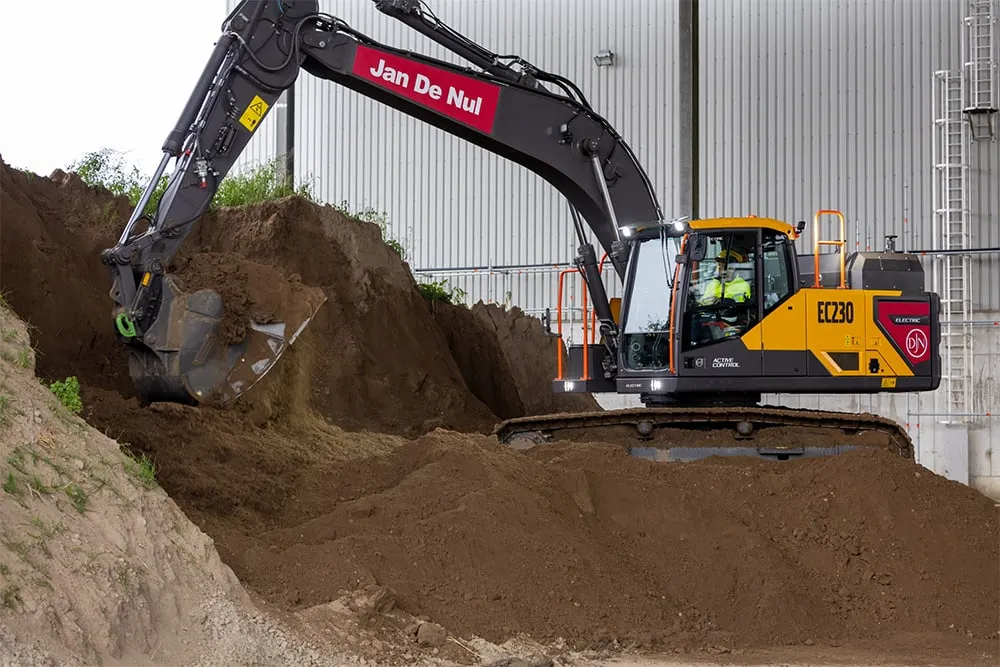
Jan De Nul Group is hiring a Volvo JEC230 Electric excavator for a month at its soil and sediment treatment centre in Hulsdonk. This marks another step in the contractor’s electrification efforts. It aims to play a pioneering role in the transition to renewable energy.
- This is the first time an electric excavator of this type has been used on a Belgian construction site.
- The machine is as powerful as its diesel equivalent, but produces no emissions and is much quieter.
- For Jan De Nul, this marks another step in the transition to sustainable construction powered by renewable energy.
Jan De Nul is hiring the excavator for a month from its partner SMT Belgium, the official distributor of Volvo Construction Equipment in Belgium and Luxembourg, which is preparing to roll out the machine more widely on the Belgian market. Jan De Nul is therefore the first to test the machine on Belgian construction sites. Where possible, it will be charged using solar panels at the Hulsdonk site or local green electricity from the grid. At the Princess Elisabeth Island site in Vlissingen, the contractor is already using a Sennebogen electric cable crane.
Xander Vanderfaeillie, technical equipment coordinator at Jan De Nul: “A cable crane is stationary and uses little energy compared with a moving vehicle. The challenge is greater with this type of machine, which has to move around and shift a lot of earth. But at Jan De Nul, we believe in the energy transition and are ready to invest in it. That is why we are pleased to be part of this new chapter.”
Electric access platforms, bulldozers and dredgers
In 2022, Jan De Nul achieved a similar first with the first hybrid bulldozer on a Belgian construction site, specifically at the Coo Dam site. Since then, the contractor has deployed five bulldozers of this type, as well as an electric screening plant and access platforms. Earlier this year, the marine contractor also ordered its first hybrid dredger and launched a pilot project involving a new type of battery (Vanadium Redox Flow) at its site in Aalst. The company is constantly seeking innovations to further reduce its emissions.
Cutting emissions by 40% by 2035
Today, more than 70% of Jan De Nul’s fleet consists of electric vehicles, and the company has 600 charging points across various sites. Initial trials with electric trucks are under way, but limited range and the impact on payload make this challenging.
Xander Vanderfaeillie: “We have fully mapped our fleet of machinery and vehicles in terms of NOX and CO² emissions, which means we can start by greening the biggest polluters. Jan De Nul aims to reduce its emissions by 40% by 2035. It is a huge challenge, but we are working towards it step by step.”
Question about this story? Ask your question
Keep following this
Get an email when a new story is published. No account needed.
- SubjectNews







