











Intelligent bacterial wastewater treatment
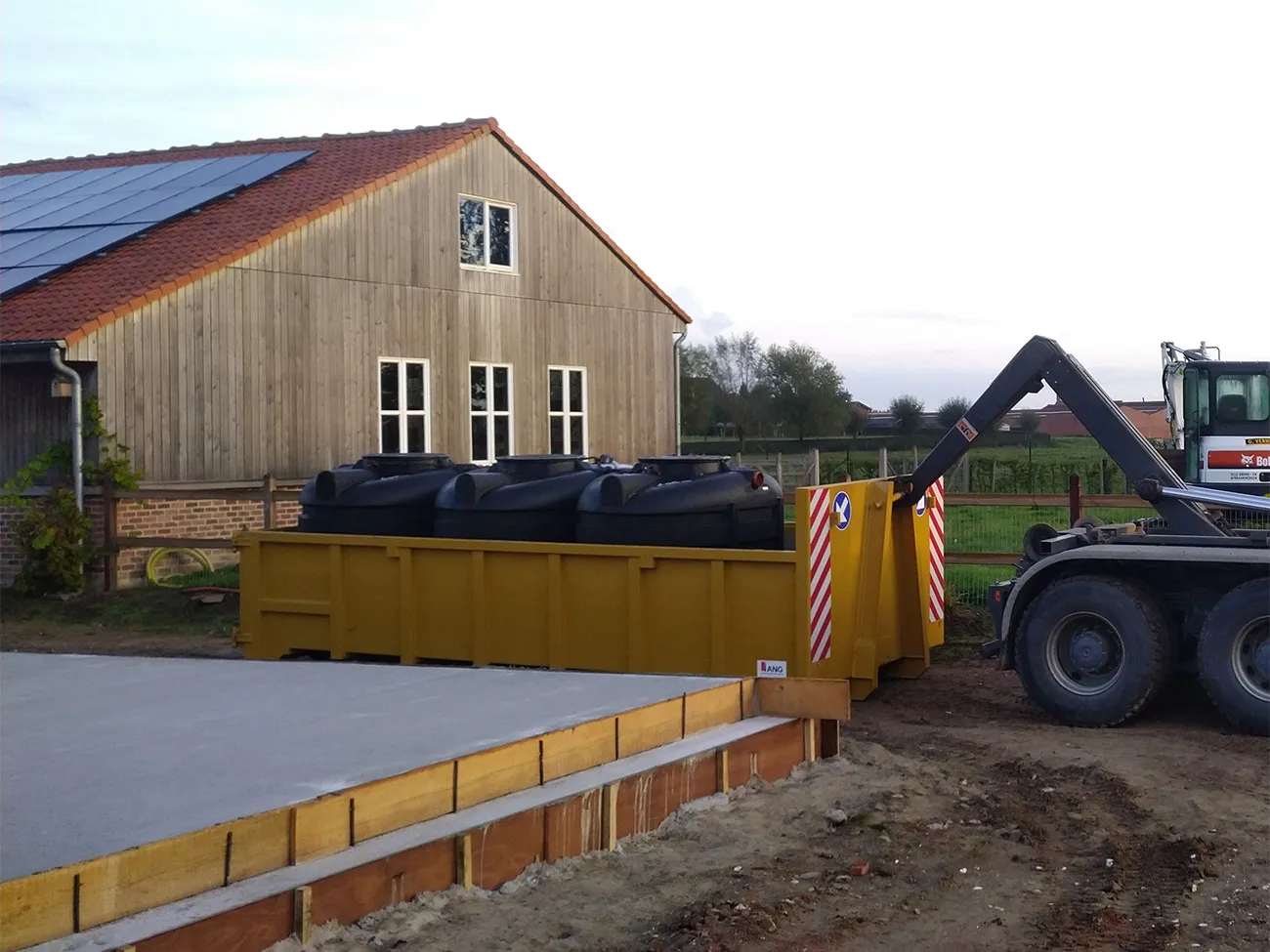
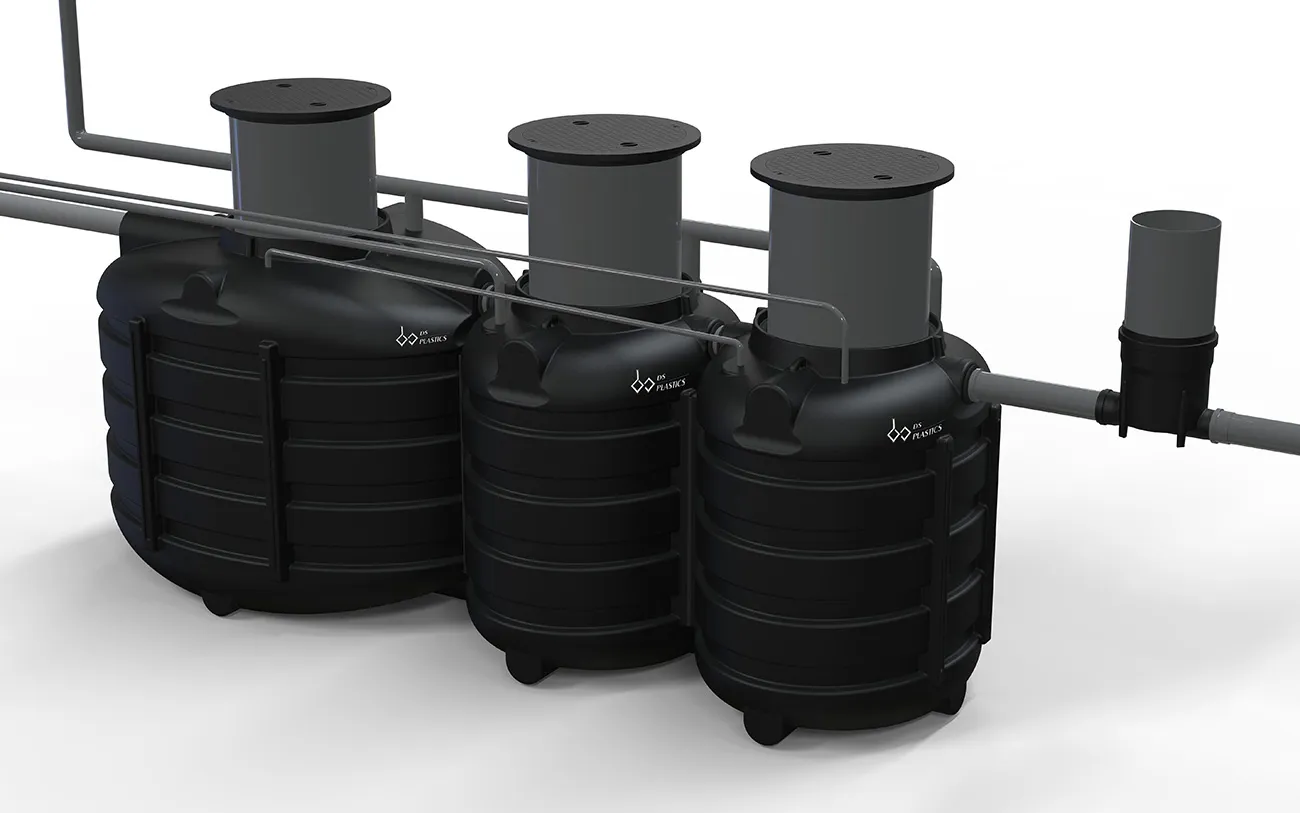
With its BioClear Premium wastewater treatment system, DS Plastics Waterlight Solutions, a specialist in domestic and industrial wastewater treatment, has added a new jewel to its range. The prefabricated polyethylene tanks, with no submerged connections, excel in terms of ease of installation, operation and maintenance, and work on the principle of intelligent bacterial treatment. The system, of course, also meets all the latest standards and has been approved by the Service Public de Wallonie.
Water is a precious resource, essential to all life on Earth. We take it so much for granted that we think of it as inexhaustible. Make no mistake: if the natural balance is disrupted, water shortages and flooding threaten. That is why DS Plastics Waterlight Solutions is committed to managing, treating and discharging water sustainably. Population growth, rising water consumption and extreme weather conditions are all warning signs. We urgently need to rethink how we manage water: using it more intelligently and sustainably so that we can conserve it for tomorrow. “DS Plastics Waterlight Solutions offers a range of solutions that contribute to a healthier environment and a better life,” explains its director, Tom Henneman.
Bacterial treatment
DS Plastics Waterlight Solutions is built on 6 pillars: rainwater management, water treatment, prefabricated sewers and made-to-measure structures, cabling and supply pipes, fuel oil and storage tanks, and finally DS Construction tools & storage. In the water treatment sector, the Lokeren-based specialist has recently added the BioClear Premium wastewater treatment system to its range. The BioClear system is designed to treat domestic wastewater from the equivalent of 5 to 20 people.
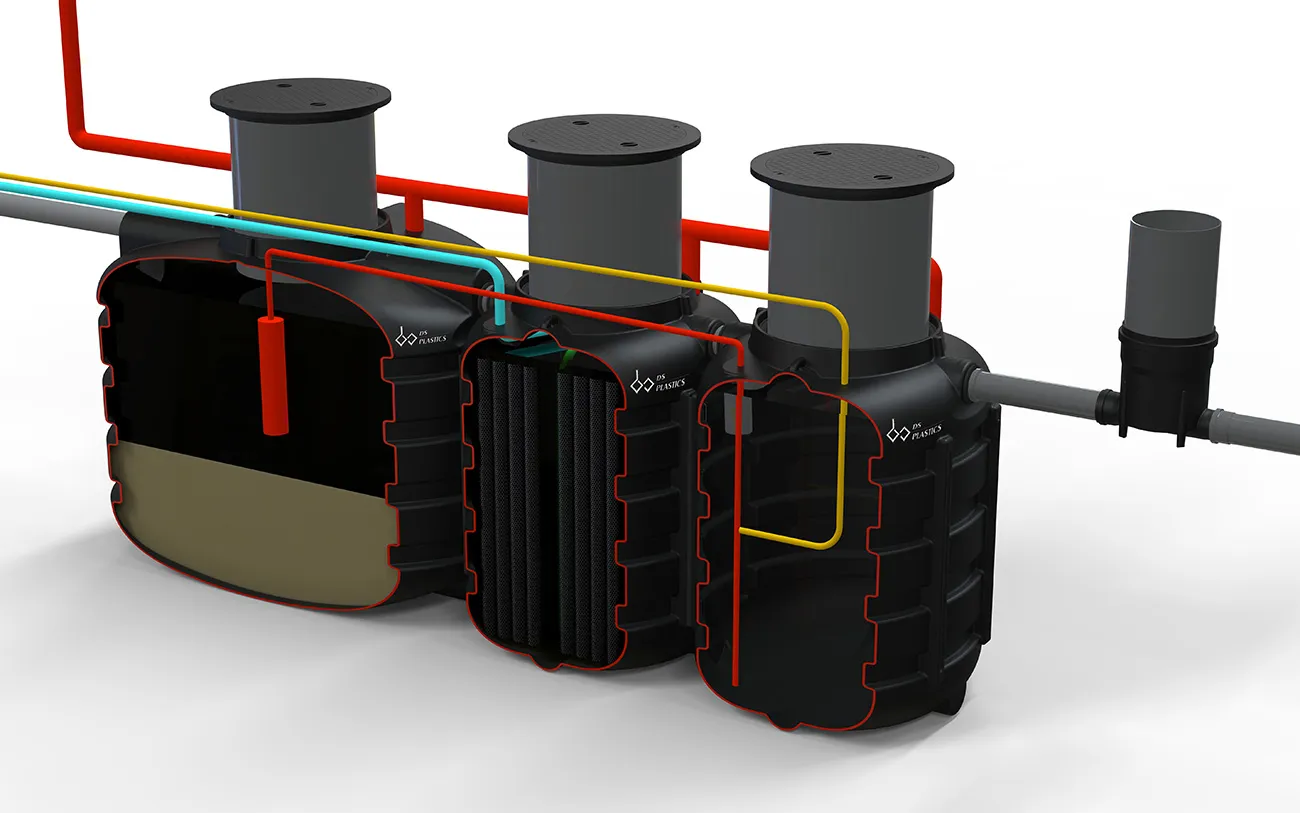
The Bio-Clear range from Belgian manufacturer DS Plastics is designed to treat domestic wastewater, excluding rainwater and runoff. Thanks to their design and the technologies used, systems in the BioClear range are also ideally suited to intermittent use and can tolerate long periods of inactivity. This is a high-performance process backed by more than 30 years of experience and references in Belgium and internationally. For domestic wastewater treatment, DS Plastics, in collaboration with EPUR, offers aerobic biological treatment using a submerged fixed-bed biofilter. The biomass is fixed to a solid medium in the reactor, enabling the selection of an effective bacterial flora capable of efficiently breaking down biodegradable pollutants.
Low sludge production
The medium’s large specific surface area and geometric properties ensure excellent biofilm adhesion, a well-distributed, uniform oxygen supply and zero risk of blockage. Depending on the dimensions of the treatment system, the reactor configuration makes it possible to select a bacterial population suited to the type and level of pollution. The reactors’ most important characteristic is their particularly low sludge production, well below the volumes produced by all other methods.
The BioClear 5 W01 also offers numerous advantages in terms of materials, installation and maintenance. The tanks are made entirely of polyethylene and have no submerged connections, ensuring reliable operation. Thanks to the system’s compact design, excavation work is kept to a minimum, and installation is quick and straightforward. In terms of maintenance and operation, low noise levels and low secondary sludge production, among other features, are significant advantages.
The importance of an individual wastewater treatment system
In Wallonia, depending on the sanitation regime applicable in the area where the building is located, installing an individual wastewater treatment system (SEI) to treat domestic wastewater may be mandatory. In a collective sanitation zone, the building must be connected to the sewer network, which carries wastewater to an existing public treatment plant. An SEI may only be installed by way of an exemption.
In an individual sanitation zone, however, an SEI must be installed if the building was constructed after the date of the first plan (PCGE, PASH or PASH revision) designating the area for individual sanitation; if it is subject to alterations, extensions or conversions covered by a planning permit that increase the building’s pollutant load; if it is located in a priority zone (that is, on the outskirts of environmentally sensitive areas in terms of untreated wastewater discharges, such as water catchment areas, bathing areas or areas around threatened watercourses); or if the local authority requires an SEI to address a public health issue or a clear case of environmental harm.
Question about this story? Ask your question
Keep following this
Get an email when a new story is published. No account needed.
- SubjectNews







