











Infrabel launches action plan to improve safety and punctuality on the rail network
Level crossing accidents and track trespassing continue to have a serious impact on service regularity
The number of level crossing accidents (31 incidents/6 fatalities) and reports of trespassing on the tracks (632 incidents/5 fatalities) fell slightly last year. But their impact on rail traffic increased sharply: a cumulative 12h30 of delays every day, twice as much as in 2021. Infrabel is therefore launching a comprehensive plan to strengthen safety and improve punctuality. Two new measures are being announced today: the continued installation of LEDs on level crossing barriers and the introduction of the ‘1711’ emergency number.
Action plan: a multidisciplinary approach
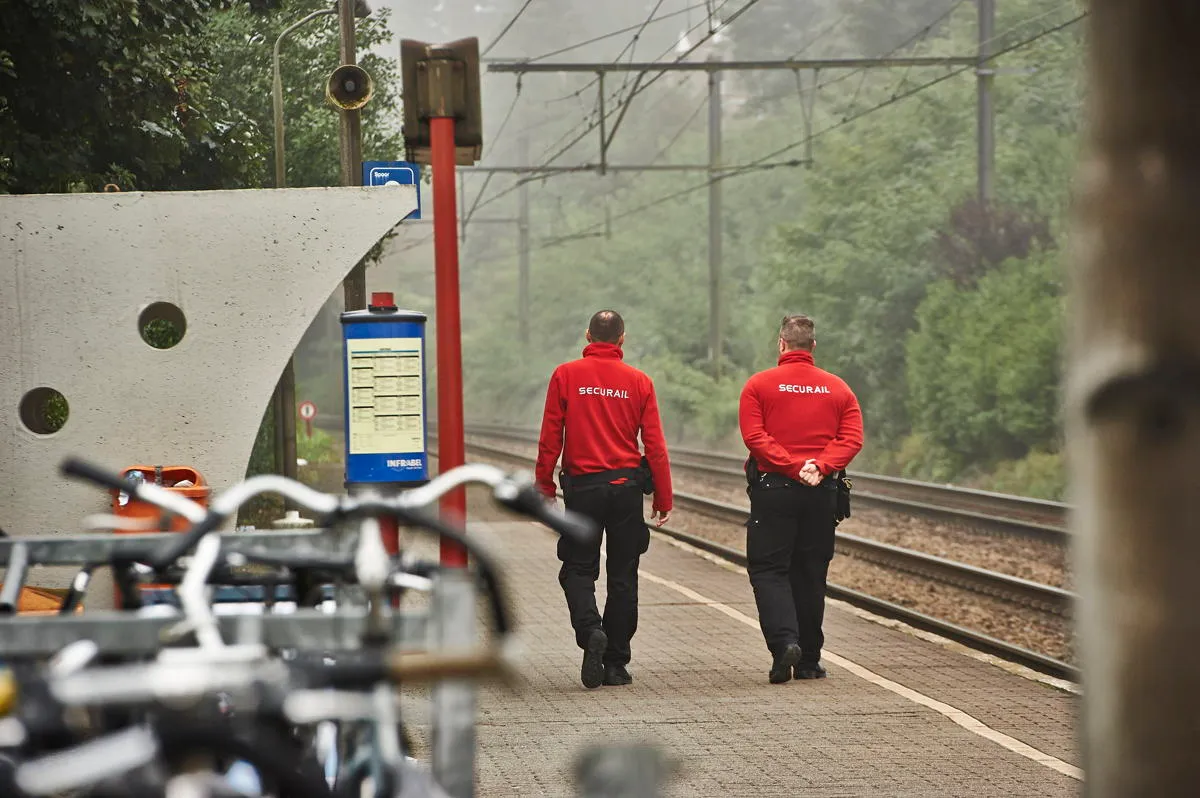
The action plan has several shared objectives. First, incidents on the railway must be prevented through awareness-raising and prevention. Second, they must be ‘dealt with’ through enforcement and faster resolution, with close cooperation between the police, the justice system, emergency services, funeral directors… In addition, Infrabel is calling on all stakeholders in the various fields to tackle this social issue together, for example through enforcement operations by the Railway Police, local police and Securail. It also urges everyone to always follow safety rules at level crossings, in stations and alongside the tracks.
Benoît Gilson, Infrabel Chief Executive Officer: ‘I welcome the support of the Government and the various ministers in their respective fields in tackling this social issue together through a cross-cutting action plan. Both road and rail safety, as well as punctuality, are essential for everyone. I would like to make a new appeal to all road users to commit to strictly following the rules at level crossings, alongside the tracks and in stations. A human life is worth far more than saving a minute.’
1. Level crossings: 31 accidents, almost a third in November and December
Last year, there were 31 accidents at level crossings, in which 6 people lost their lives and 5 others were injured. This figure is comparable to that for 2022 (32 accidents/11 fatalities) and continues the downward trend seen in recent years (see also chart), but the toll remains very high.
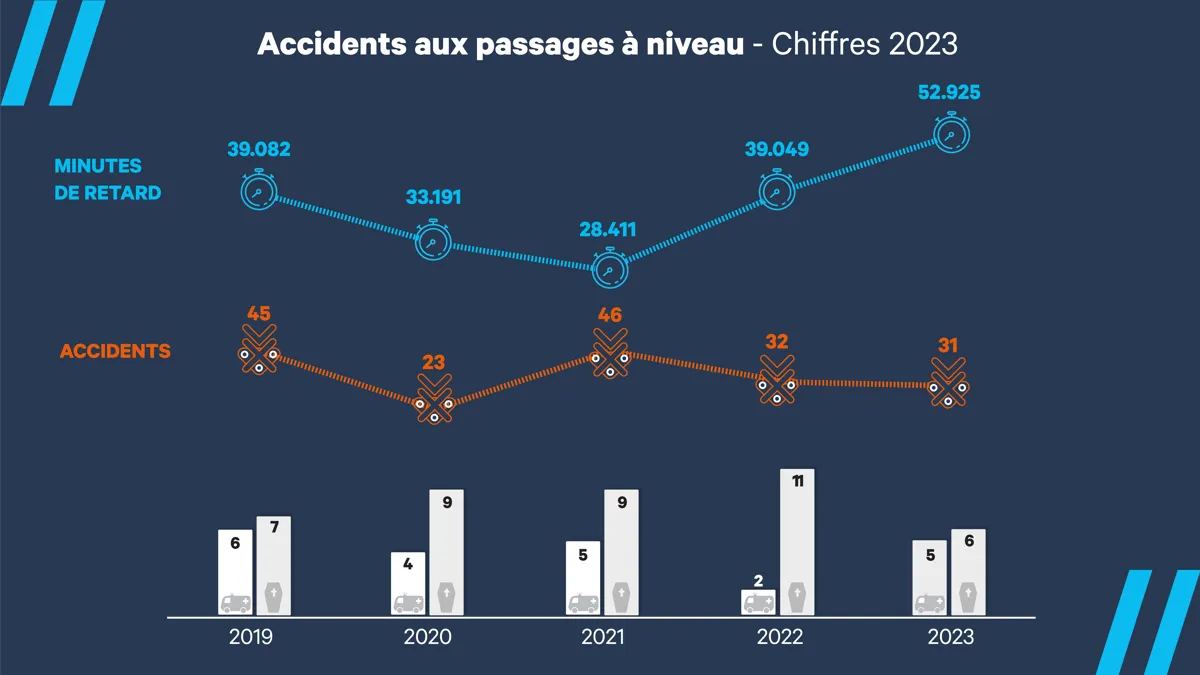
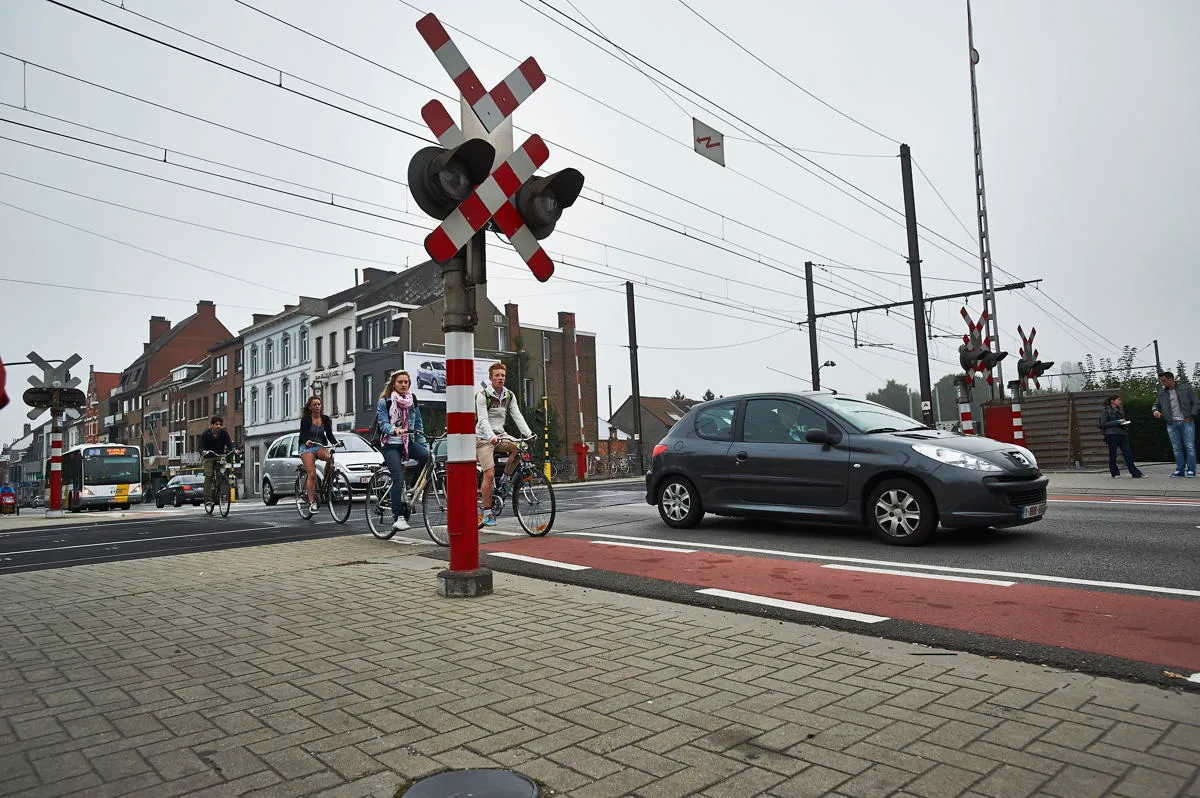
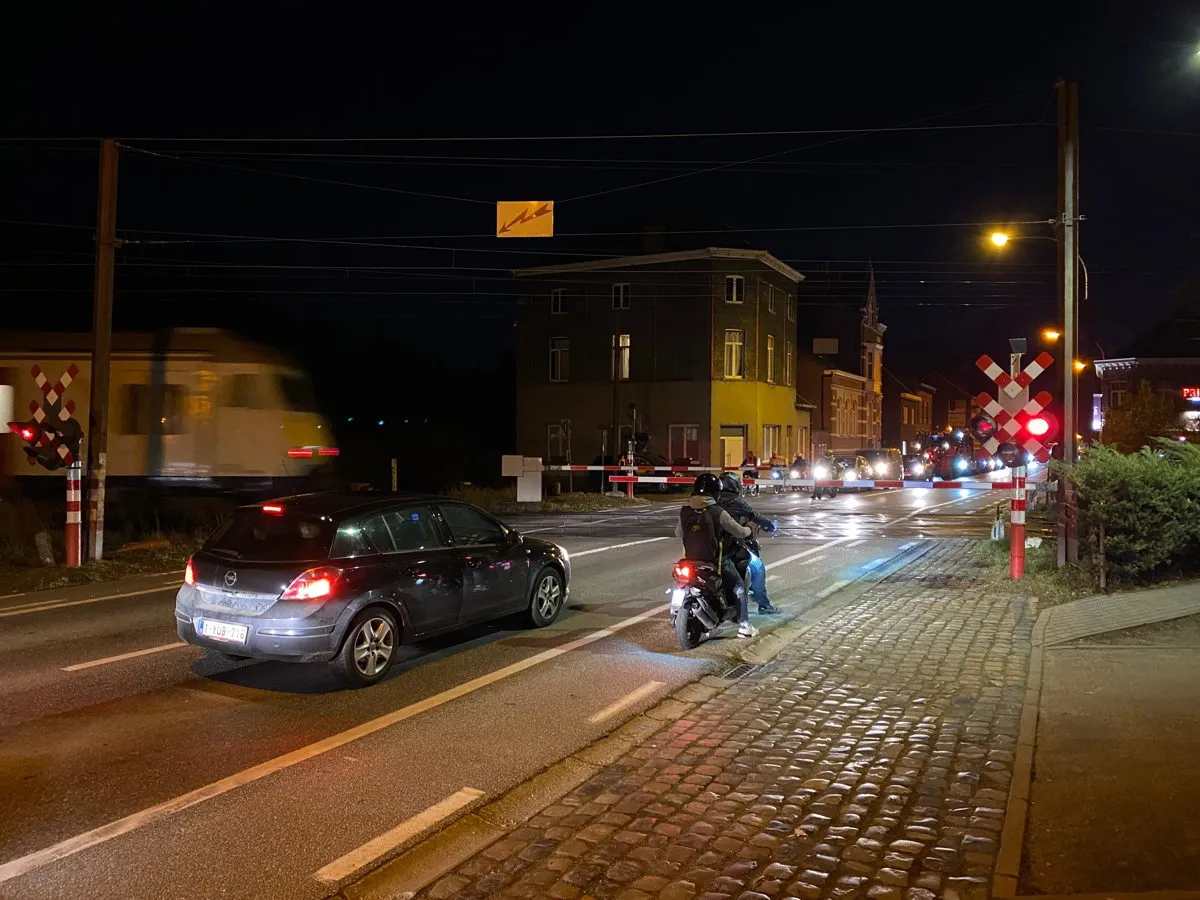
A pedestrian, cyclist or motorist forcing their way across when the light is red and the barriers are down… this was the common factor in last year’s accidents. In addition, 29% of accidents (9 out of 31) occurred in November (5) and December (4), prompting a call to follow the Highway Code and take care in winter weather.
Two new measures: an emergency number and LEDs on barriers
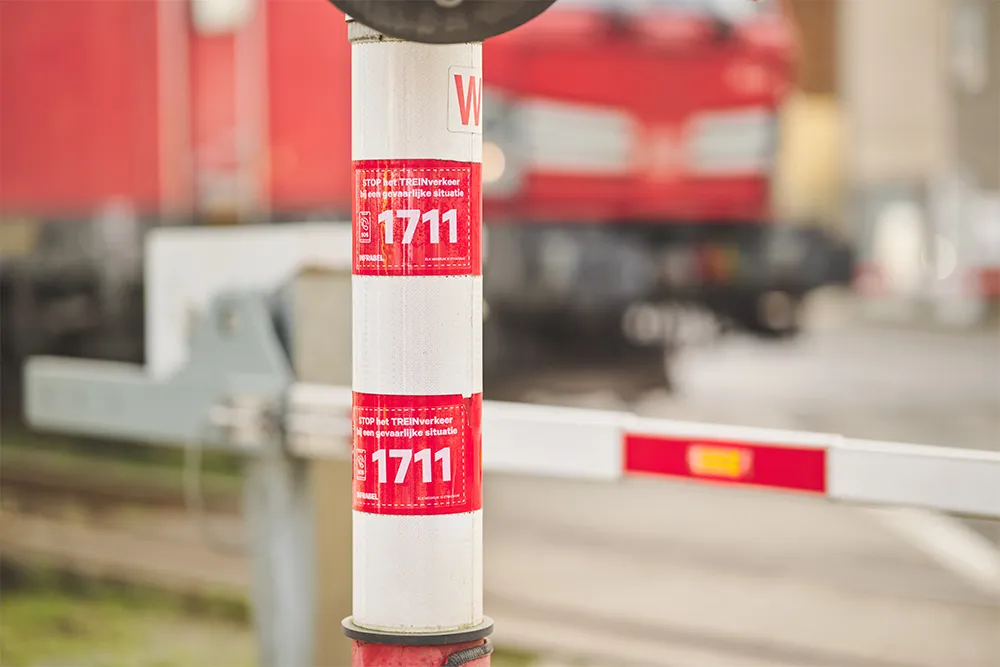
To complement the sticker previously installed, which gives a level crossing’s ‘identity card’ details (level crossing and line numbers, street name and municipality), Infrabel will put a new sticker on all public level crossings this year. It will display the new telephone number 1711, which can be called to contact Infrabel’s traffic management service directly in a dangerous situation. This will enable our teams to respond even more quickly and stop rail traffic when there is a risk of an incident. One important message bears repeating: get yourself to safety first!
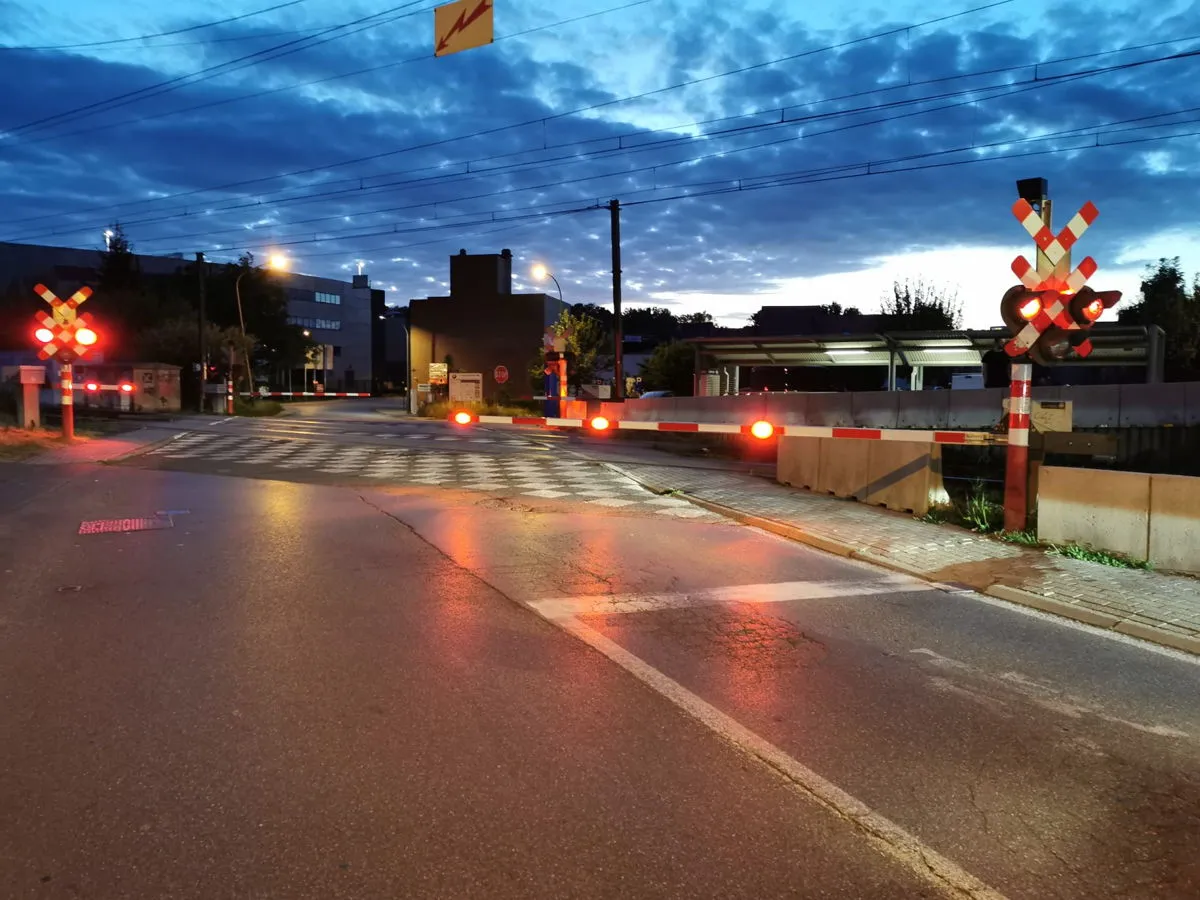
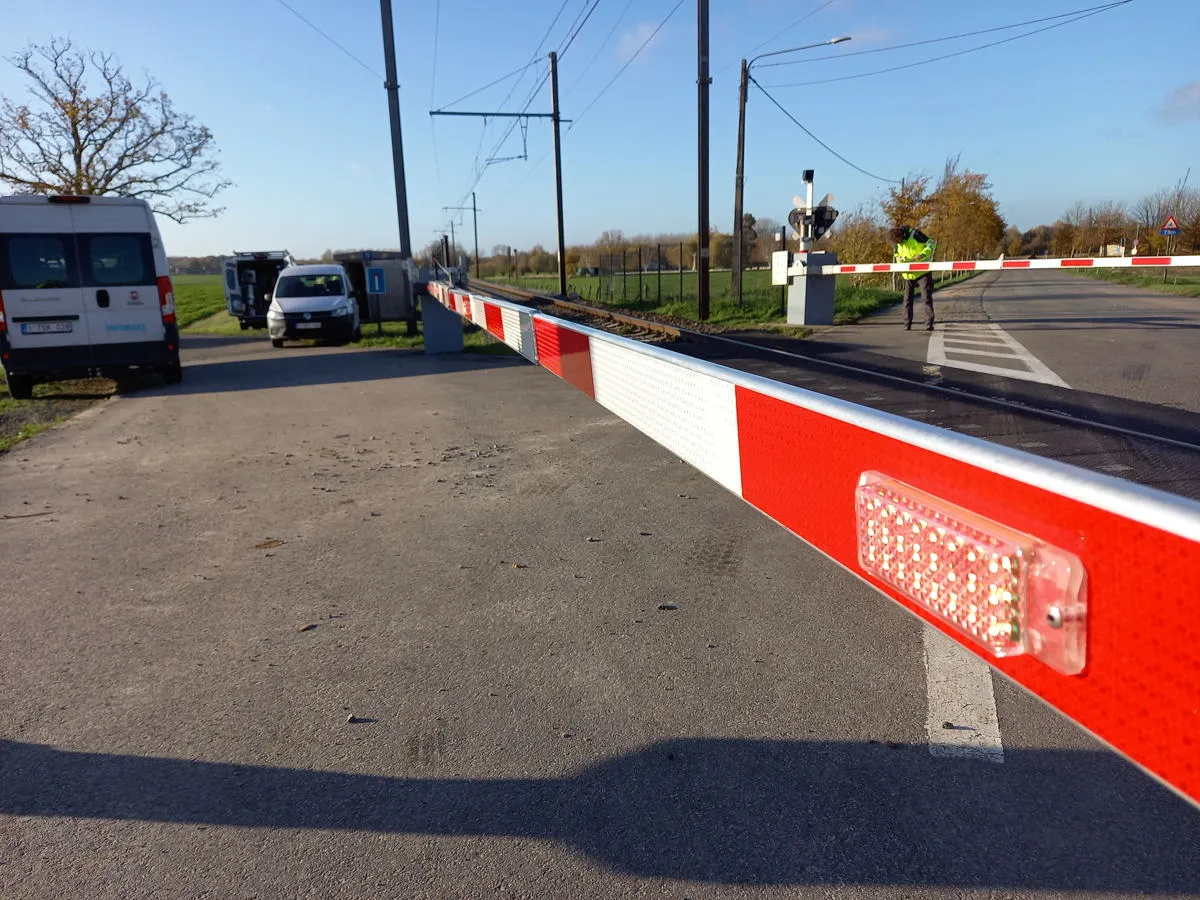
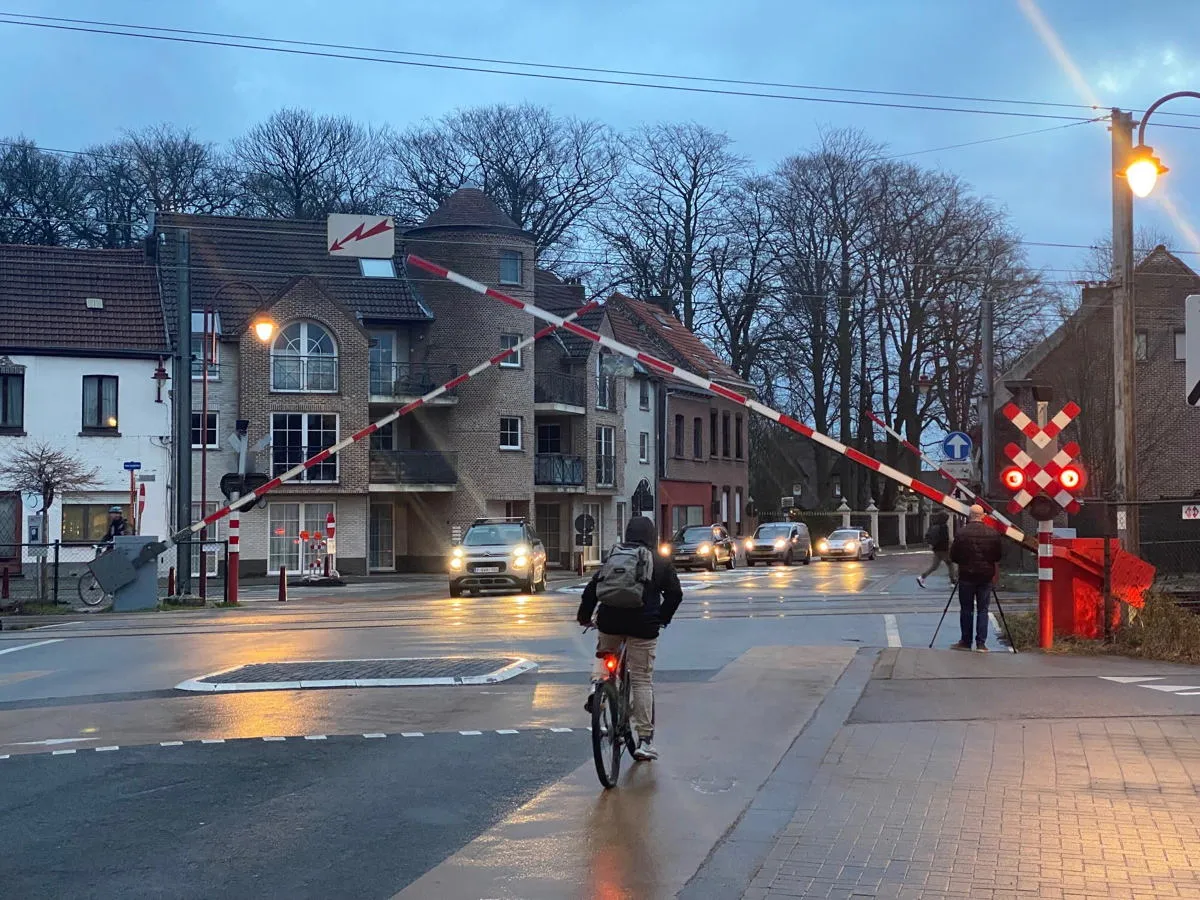
In 2024, Infrabel will also continue rolling out the pilot project to install LED lighting on level crossing barriers. This LED lighting makes level crossings more visible and provides an additional tool, particularly for motorists, to improve road safety locally. These LEDs are currently installed at 20 crossings, and analysis by the Vias Institute has found a positive trend and an improvement in behaviour. The aim is to equip a further 176 level crossings over the next 10 years, including 20 this year, targeting locations where barriers are frequently damaged or road accidents occur, as well as those on busy roads.
Georges Gilkinet, Deputy Prime Minister and Federal Minister for Mobility: ‘All For Zero: zero deaths on the roads by 2050 is our goal. Infrabel is also working towards this through its action plan for level crossings. Trespassing on railway tracks is a problem we must tackle by every means possible. An emergency number and additional LED lighting will make level crossings safer. This will also help trains run more smoothly and punctually.’
Following the Highway Code and raising awareness on an ongoing basis
Failure to follow the Highway Code* (and obey signals, including red lights, barriers and warning bells) remains the main cause of level crossing accidents (around 55%) and is a genuine social problem. Almost as significant a cause is the reckless behaviour (around 35%) of road users who still try to cross when traffic conditions no longer allow it, or who miss their turn and end up stranded. Finally, weather conditions (sunshine, rain or fog) account for around 10%. Analysis of the figures also reveals that accidents ‘outside port areas’ mainly involve (around 75%) people living near the level crossing. They mistakenly believe nothing can happen to them.
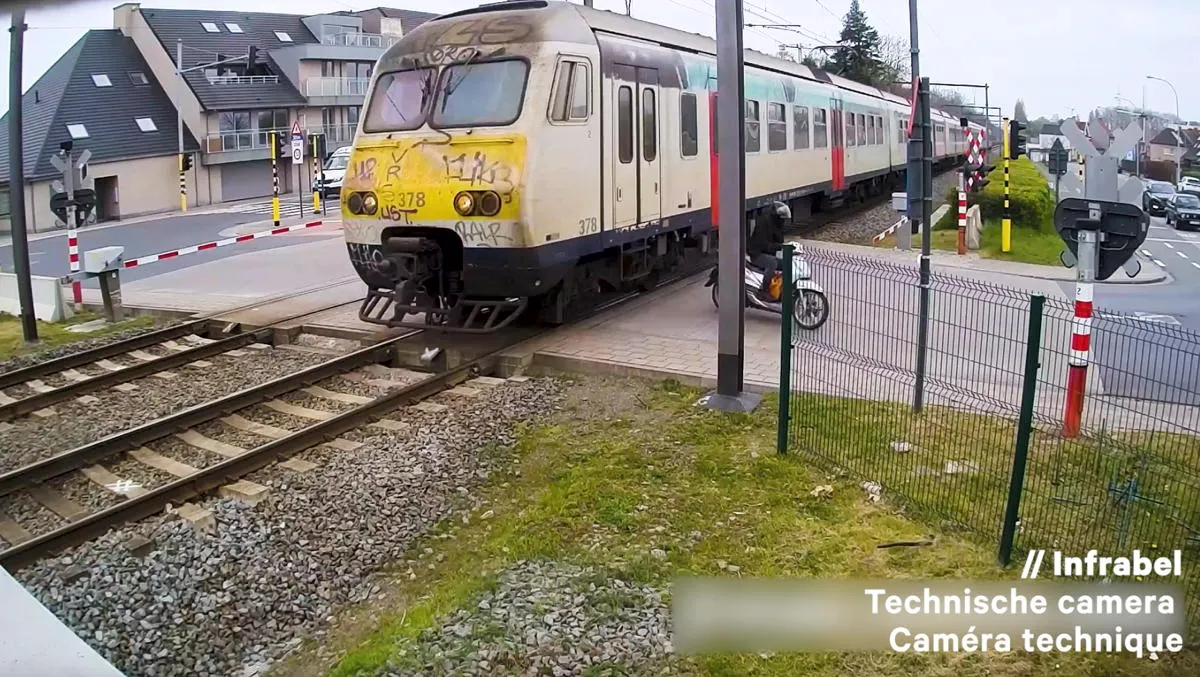
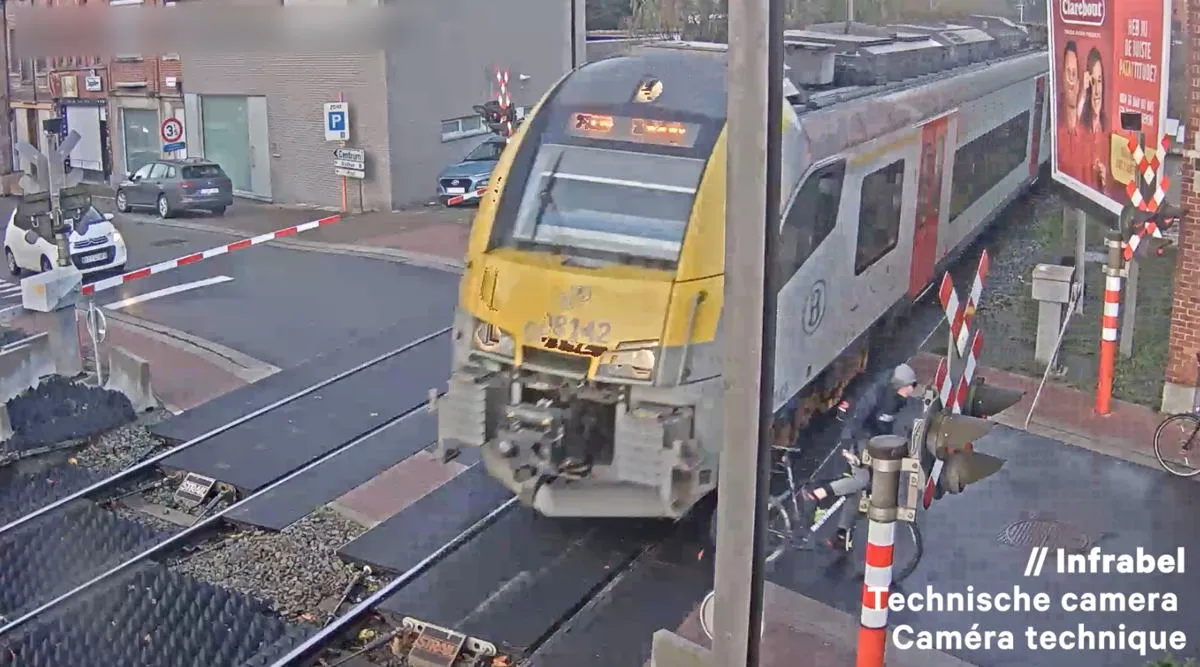
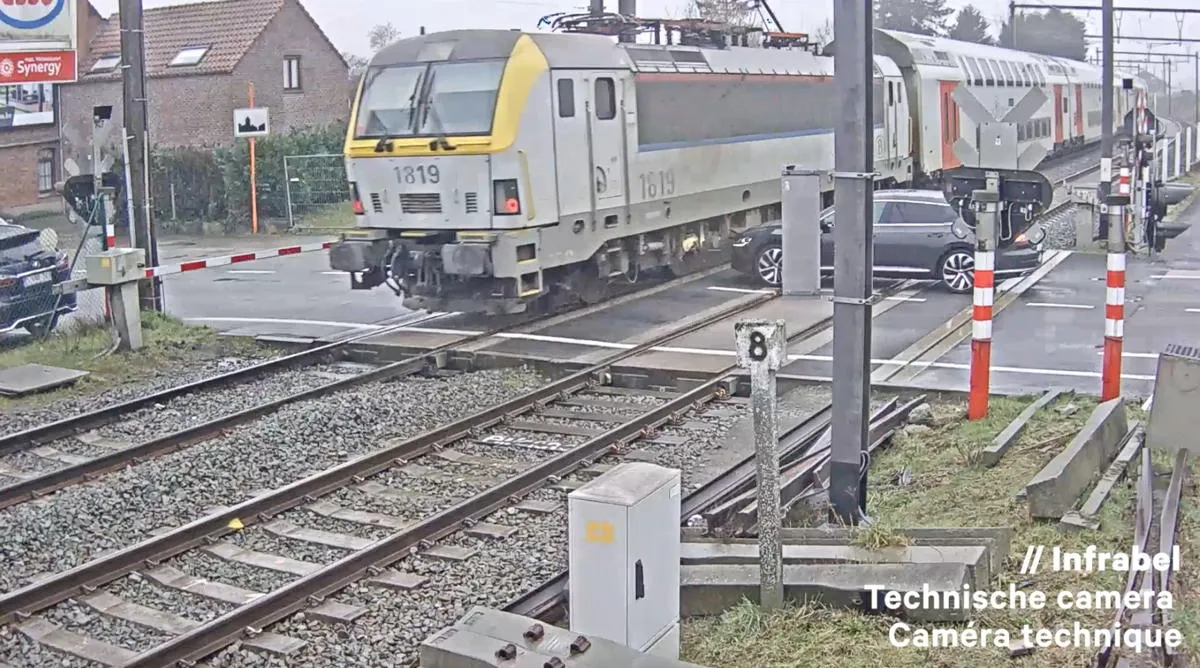
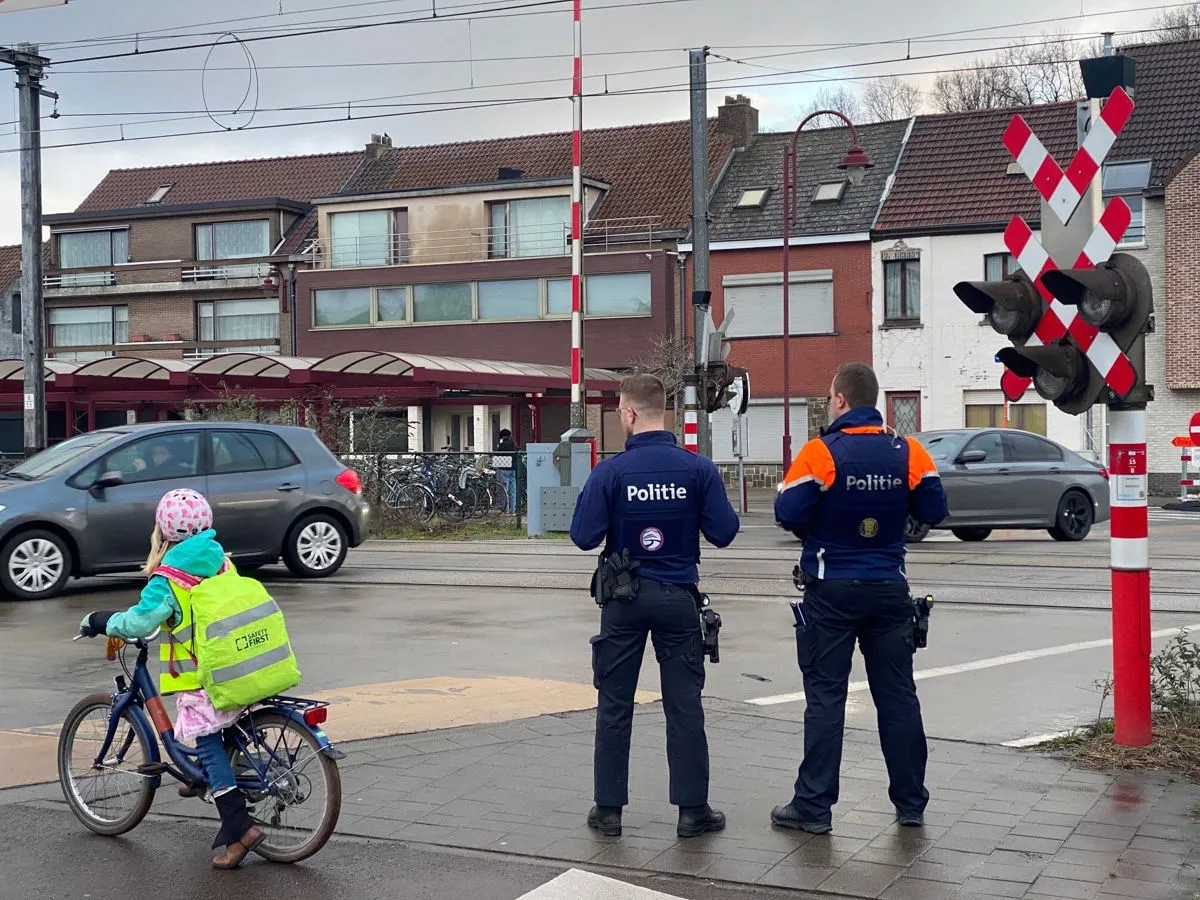
Annelies Verlinden, Minister of the Interior: ‘It is important that all the services concerned continue to work together to combat trespassing on the tracks and prevent level crossing accidents wherever possible. Around 55% of level crossing accidents are caused by failure to follow traffic rules. The human suffering, material damage and impact on rail traffic are enormous. Sadly, these figures show that, alongside prevention, we must continue to focus on enforcement. That is why the Federal Railway Police, as well as local police and Securail, carry out regular checks and raise awareness among road users and rail passengers about following traffic rules and always taking care.’
*Offences at level crossings can incur fines of 320 to 4000 euros, withdrawal of a driving licence and a driving ban lasting from 8 days to 5 years. Offenders must also pay compensation for the damage caused and the minutes of delay incurred by rail traffic.
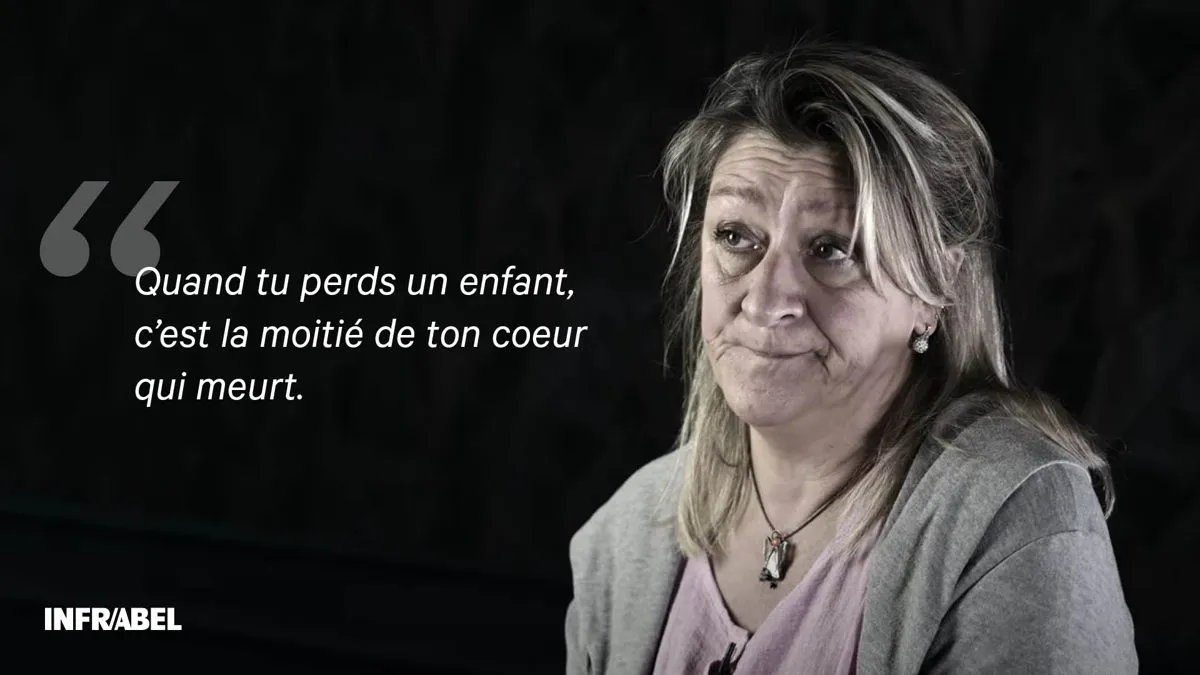
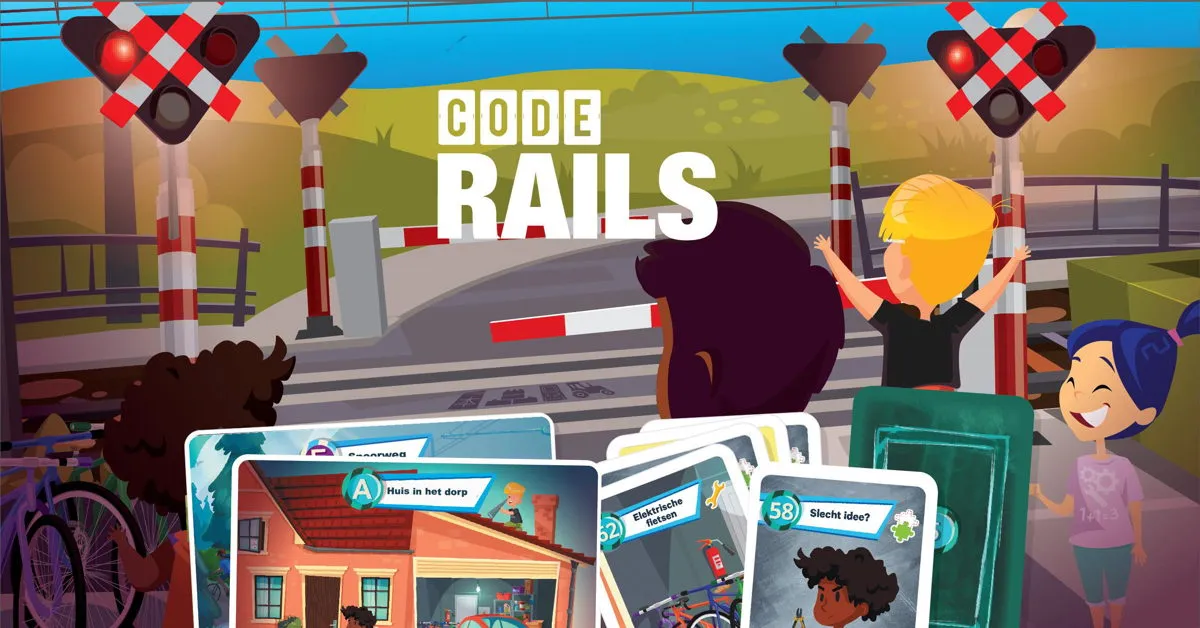
Infrabel is therefore continuing its awareness-raising efforts, including educational programmes and games for schools, and has also recently launched a new digital rail safety campaign. A survey of Belgian citizens will also be conducted shortly on risky behaviour on and around railway tracks and at level crossings.
Link to the new digital campaign: La parole à ceux qui restent
451 fewer level crossings since 2005
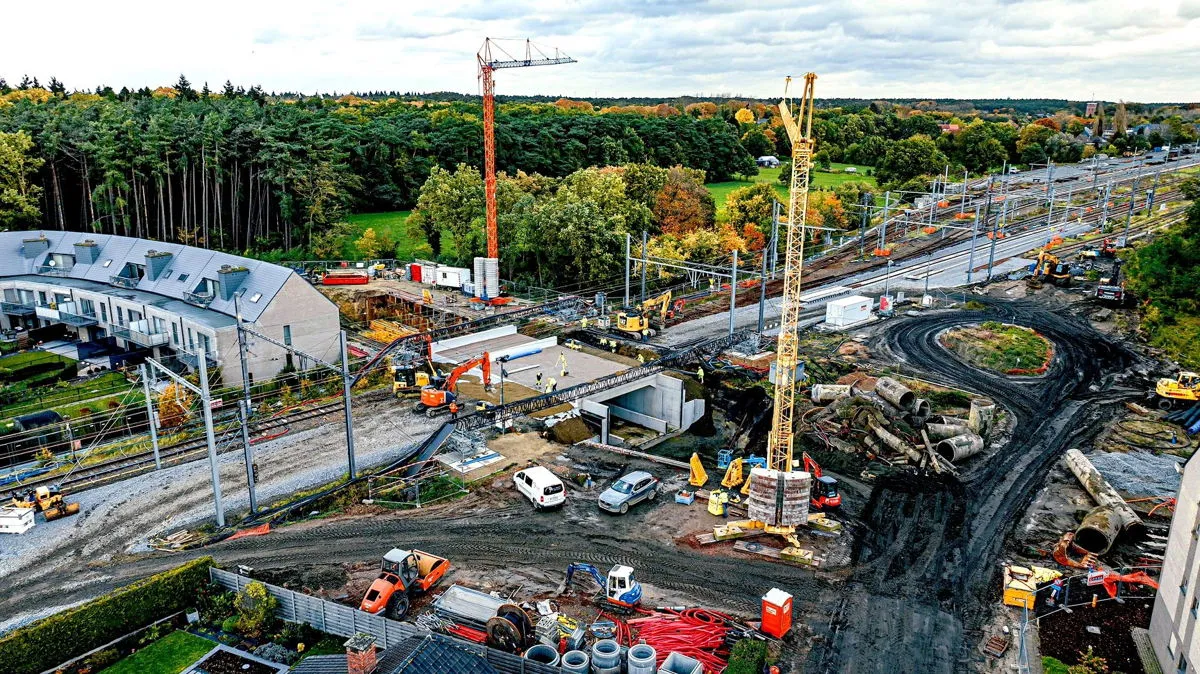
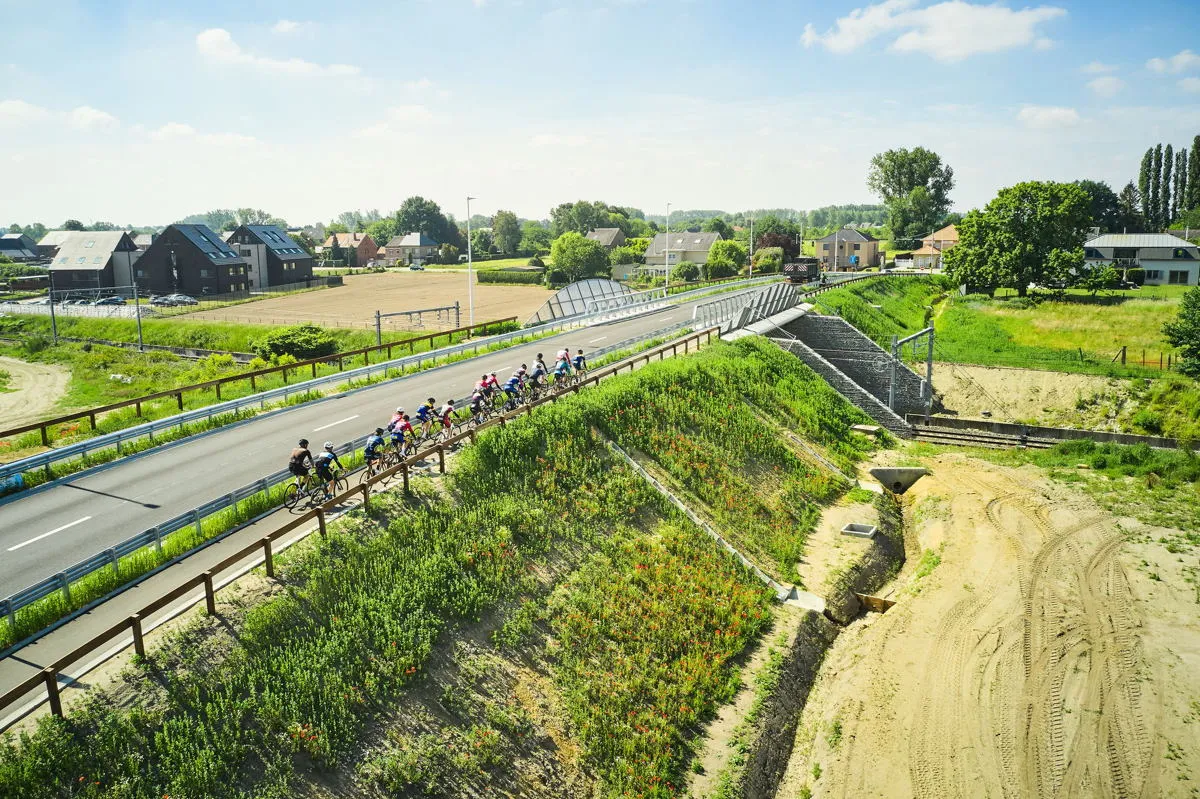
In 2023, 12 level crossings were removed and/or replaced on operational railway lines, and 3 level crossings were added in the port of Ghent to improve safety on the site. Belgium’s railway network is one of the densest in Europe and had 1621 level crossings as at 1st January 2024. Since Infrabel was established in 2005, 451 have been removed. Where possible, Infrabel favours alternatives such as bridges, tunnels, parallel roads and cycle paths, working in close consultation with local authorities. Infrabel is currently working on a more thorough assessment to prioritise level crossings for removal based on criteria such as accident risk, as well as environmental factors such as the presence of schools…
Infrabel is also improving level crossing signage and visibility in consultation with the road authority. In 2023, Infrabel invested around 32 million euros, with support from European subsidies, in replacing and renewing level crossings and implementing safety improvement measures.
2023: 2h25 of delays per day, almost double the figure for 2021
In addition to the human tragedies, incidents at level crossings also disrupted rail traffic and caused delays. In 2023, there were 324 incidents (accidents, events such as a damaged barrier or overhead line, and road accidents near a level crossing), which together caused an average of 2h25 of delays per day. This was an increase on 2022, when there were 349 incidents (an average of 1h47 per day), and almost double the 2021 figure (an average of 1h18 per day).
2. Trespassing on the tracks: 10h of delays per day
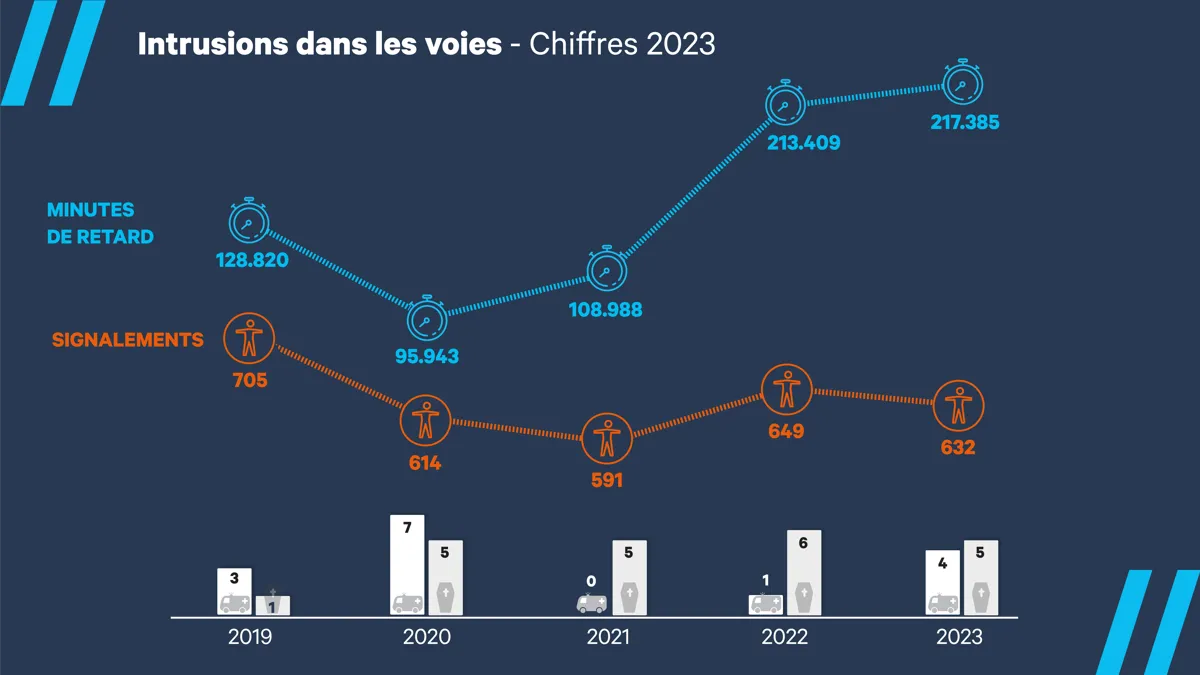
In 2023, there were 632 reports of trespassing on the tracks, resulting in 5 deaths and 4 serious injuries. This figure is comparable to 2022, when there were 649 reports (6 deaths, 1 serious injury), and continues the downward trend seen since 2018, despite a slight increase over the past 2 years. The main causes, which together account for 90% of cases, remain taking a shortcut, walking alongside the tracks and gathering near the tracks.
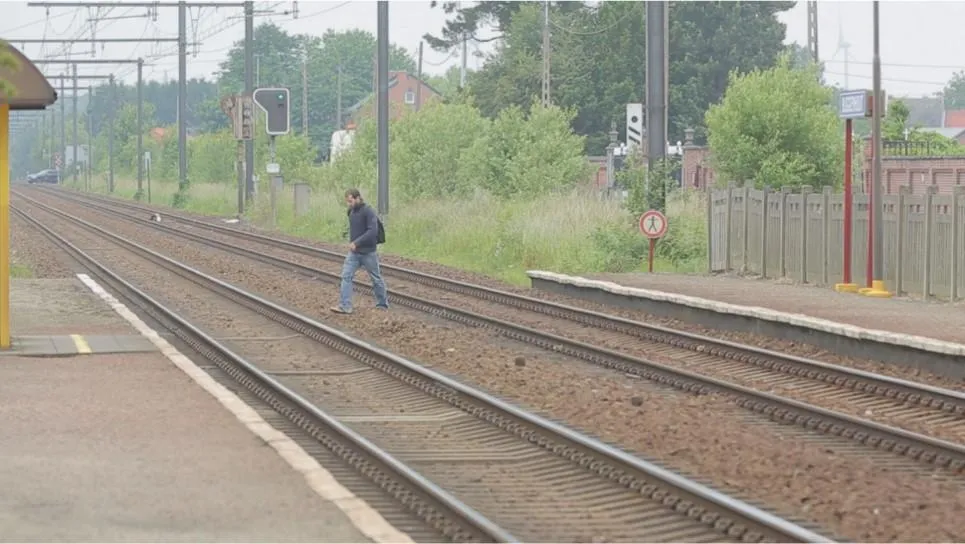
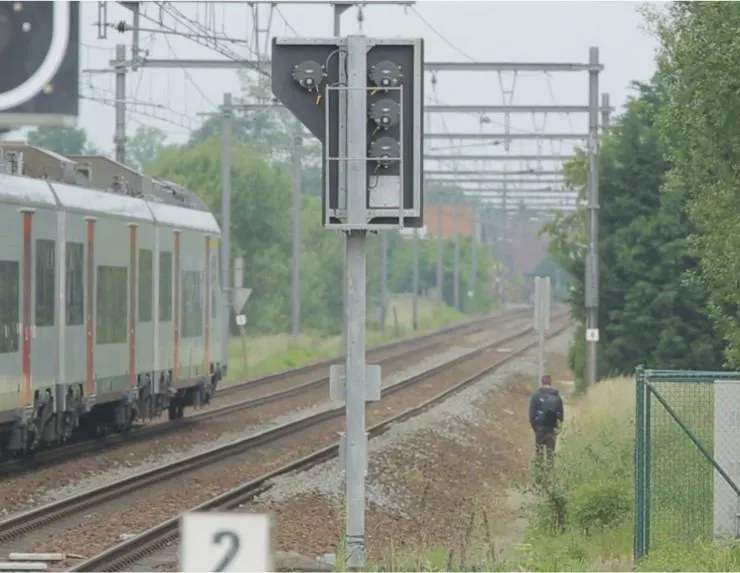
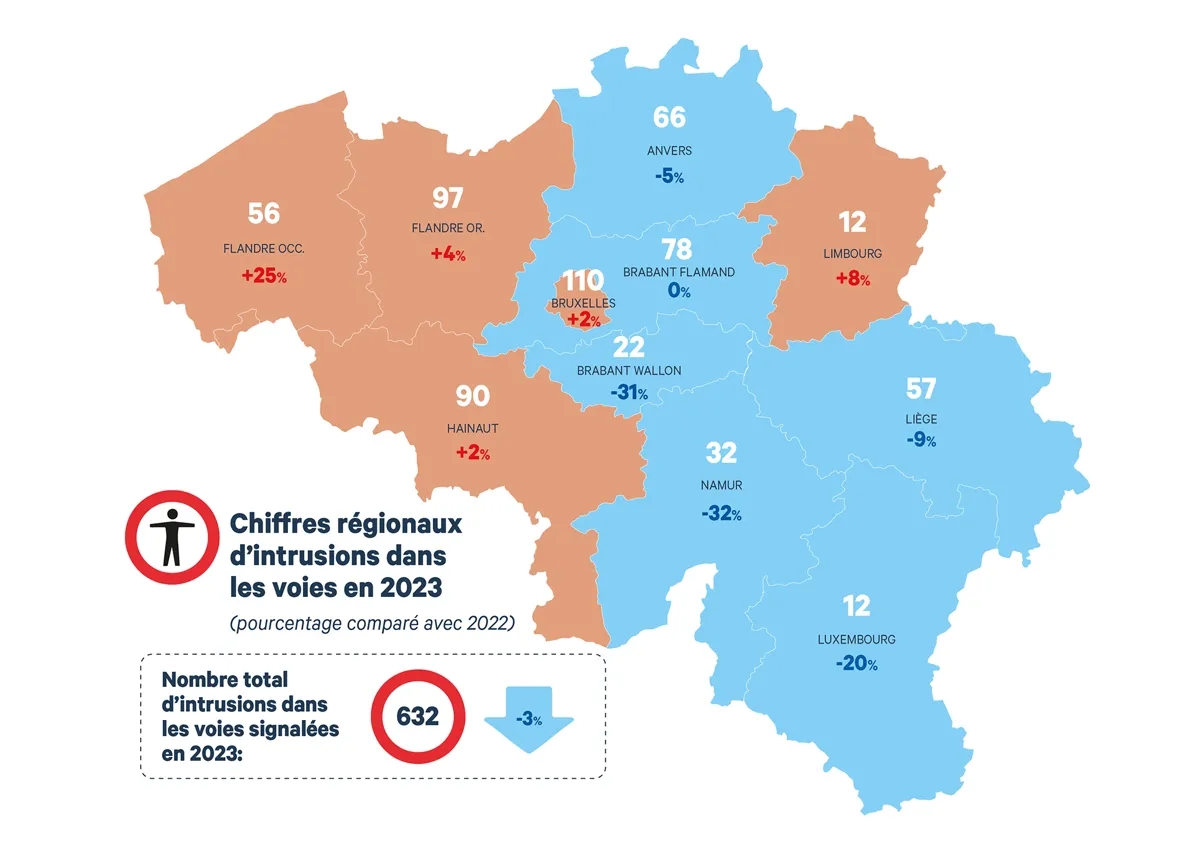
Trespassing on the tracks occurs throughout Belgium (see chart), but last year almost half of the reports concerned Flanders (309), around a third Wallonia (213) and the remainder Brussels (110). Most trespassing takes place on open track, between 2 stations (60%), but it is also common in stations (30%) and, finally, at level crossings (10%).
Action plan: safety measures, checks and awareness-raising
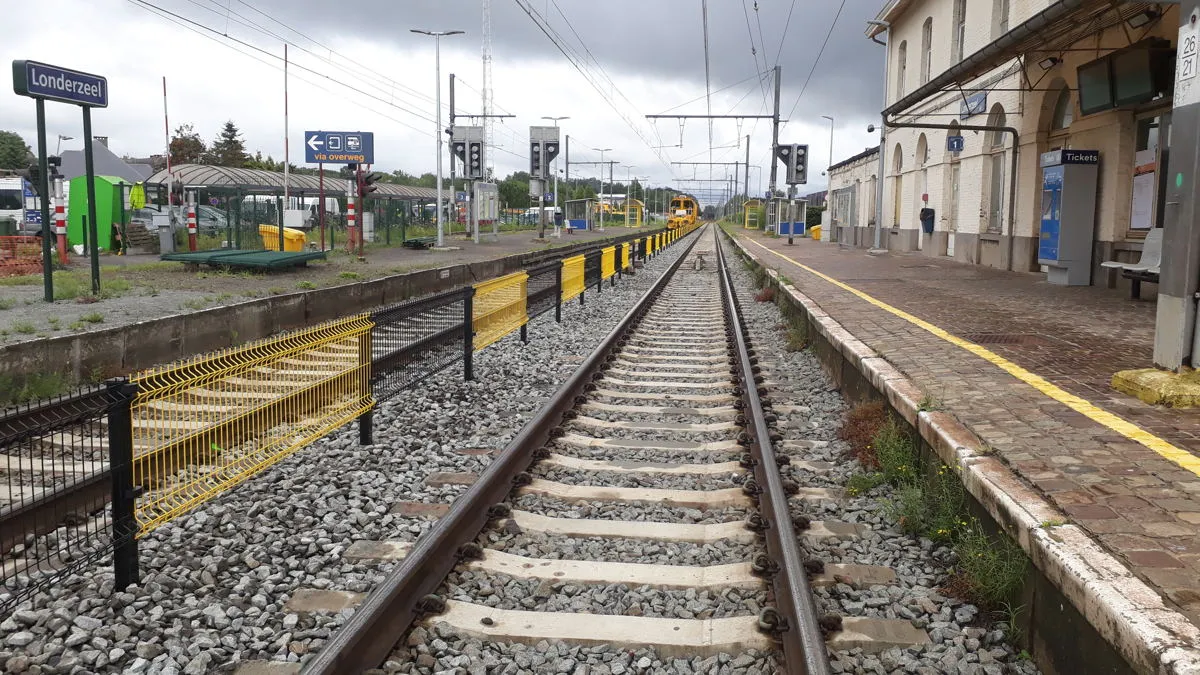
The downward trend in the number of instances of trespassing on the tracks since 2018 is partly linked to safety measures at ‘hotspots’ (44 on open track and 51 in stations). These are locations where trespassing is more common than elsewhere on the network. Infrabel is focusing on infrastructure measures such as fencing alongside the tracks, barriers between tracks, concrete blocks, obstacle mats near level crossings, deterrent cameras to prevent trespassing, raised platforms in stations, and so on.
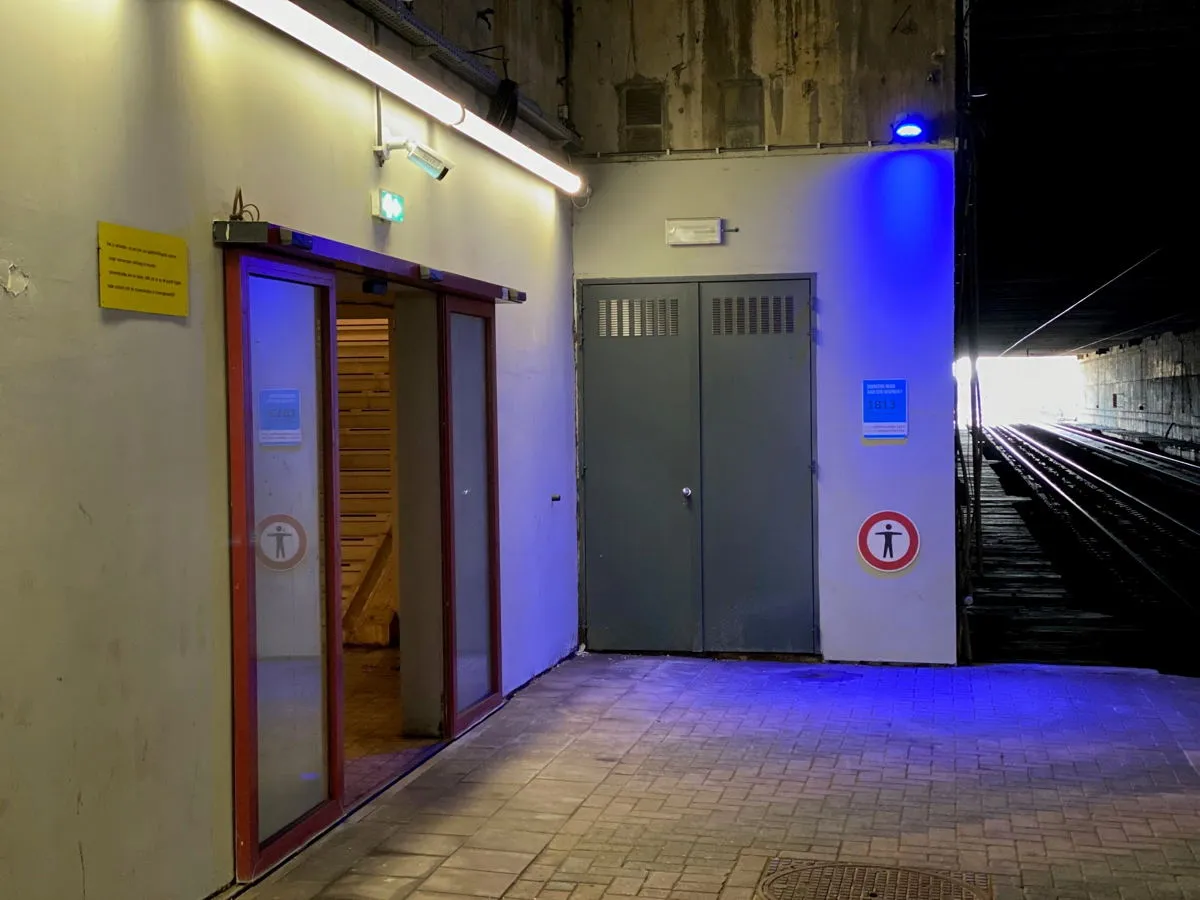
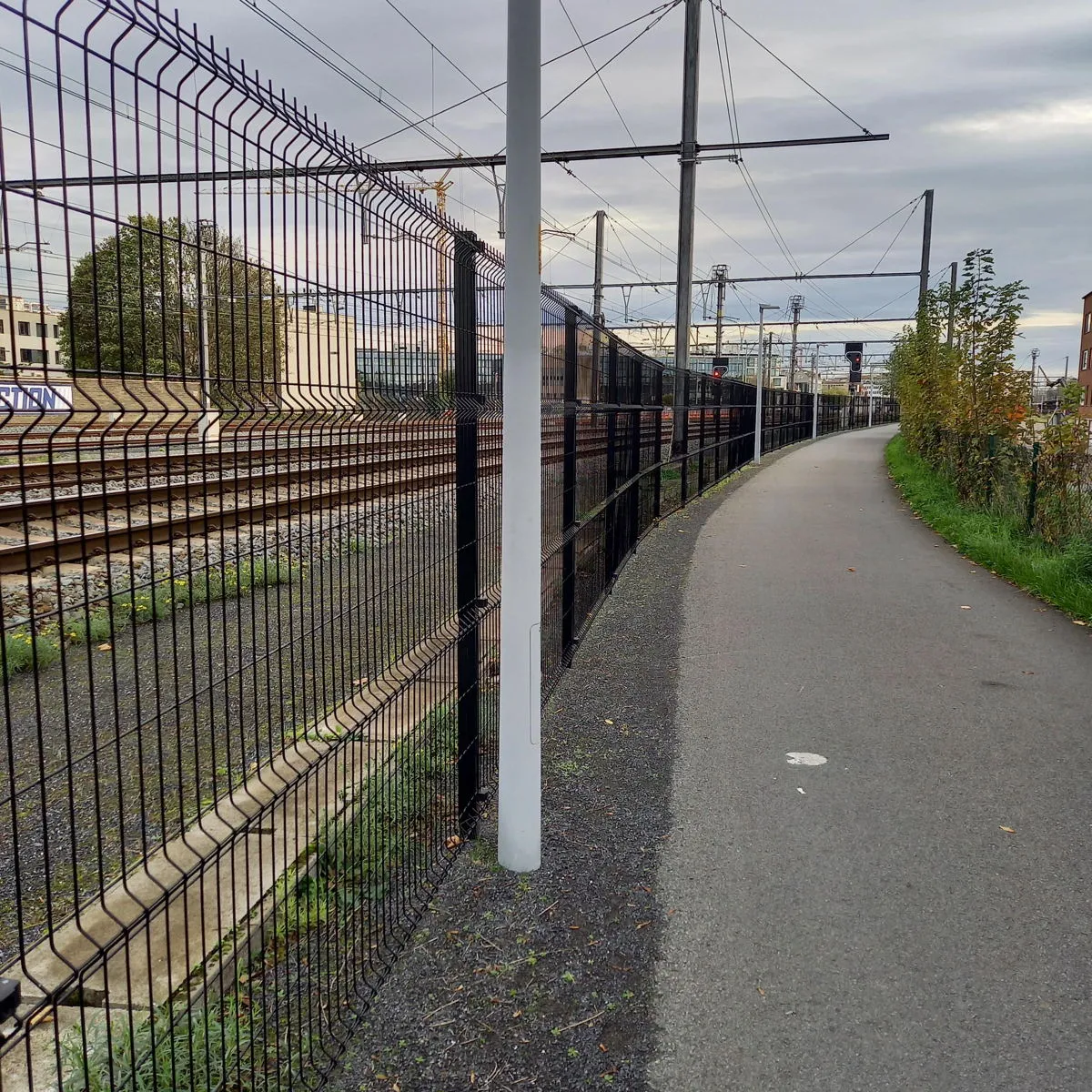
In addition, Securail and the police regularly carry out enforcement operations to combat trespassing on the tracks (offenders face a fine of 300 euros, or 500 euros for a repeat offence). Infrabel also raises awareness among schoolchildren by providing educational resources and games, as well as organising awareness-raising activities.
In 2023, trespassing on the tracks (more than 40% of incidents occur during the evening peak) caused an average of nearly 10 hours of delays per day. When an incident is reported, rail traffic must be stopped or speeds restricted until the trespassers have left the tracks.
Question about this story? Ask your question
Keep following this
Get an email when a new story is published. No account needed.
- ThemeTransforming infrastructure and territories
- SubjectNews







