











Infrabel and SNCB draw up plan to restore rail services in Wallonia
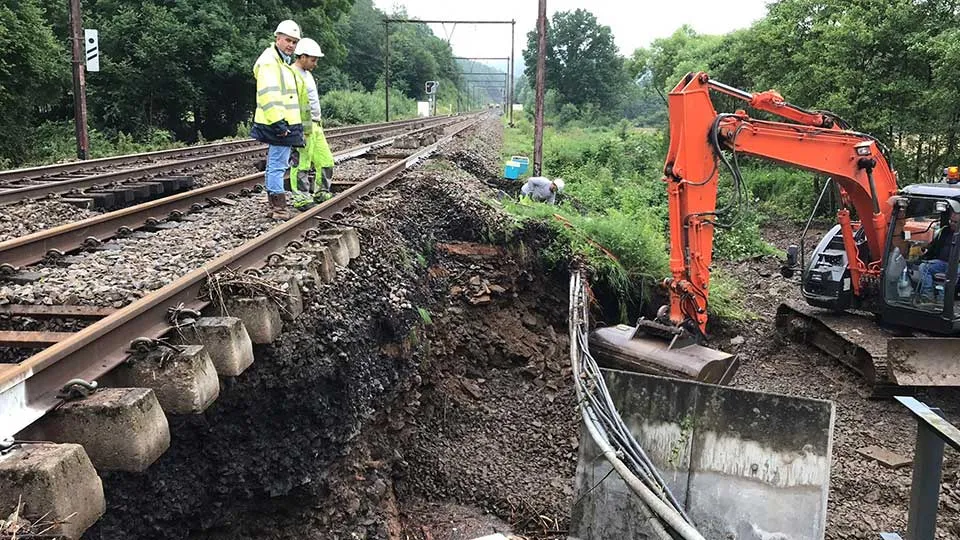
The outlook, line by line.
Rail services remain severely disrupted in Wallonia this Friday following the extreme weather that hit the provinces of Liège, Namur, Luxembourg, Walloon Brabant and Hainaut. Trains are still at a standstill on around 20 lines. Infrabel and SNCB are putting a plan in place to restore services, line by line.
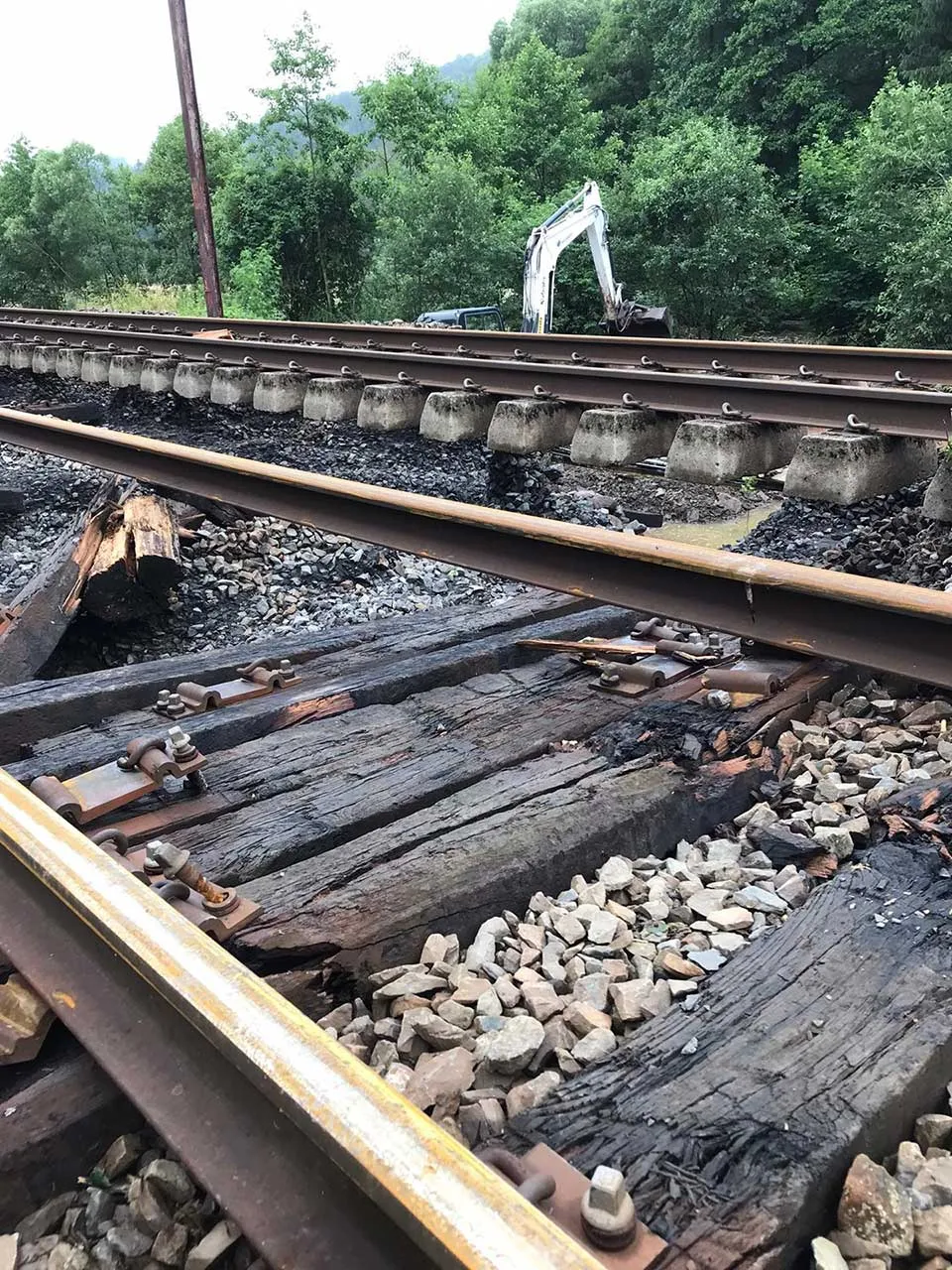
Infrabel and SNCB would first like to express their heartfelt support for the victims of the extreme weather that has affected our country this week.
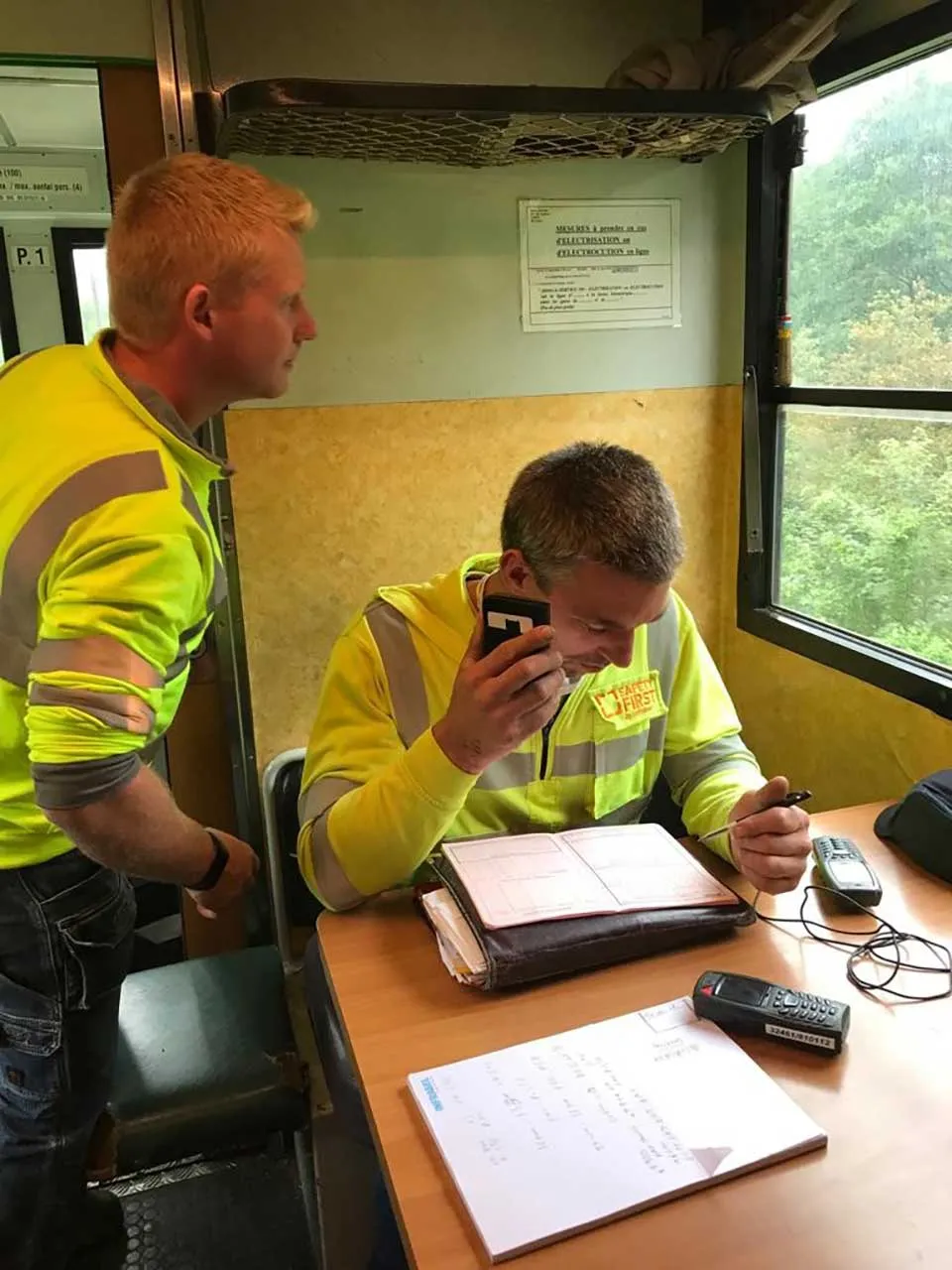
As regards rail services, trains have been cancelled on several lines since the morning of Thursday 15 July. This exceptional measure was taken to ensure the safety of passengers and railway workers. Following a comprehensive inspection of the network over the past two days and nights, sometimes using drones, to assess the damage, Infrabel and SNCB are now putting a phased plan in place to restore rail services. In addition, once repair work has been completed on each line, test trains with no passengers on board will run before services resume, to check that the infrastructure is safe.
Infrabel and SNCB thank their teams, who are working tirelessly to restore rail services as quickly as possible.
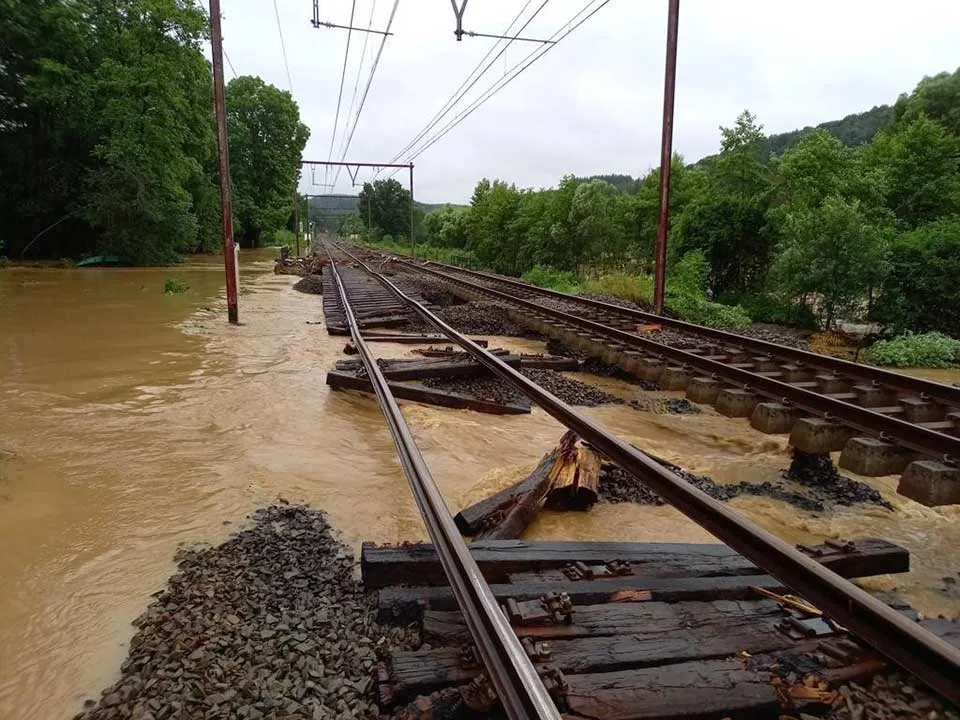
RESTORATION, LINE BY LINE
The service restoration plan provides for lines to reopen progressively between 19 July and 30 August. Trains will run at reduced speeds in some areas. Liège-Guillemins station, which had to close on Thursday 15 July, was able to reopen on Friday afternoon, 16 July.
In the province of Liège
- Liège-Guillemins-Namur (L125): 19 July
- Trois Ponts: Gouvy (L42): 19 July
- Dolhain Gileppe- Welkenraedt (L37): 19 July
- Liège-Guillemins: Bomal (L43): 2 August
- Rivage: Trois Ponts (42): 2 August
- Verviers- Dolhain Gileppe (L37): 2 August
- Visé-Maastricht: 2 August
- Liège-Guillemins: Verviers (L37): 30 August
- Pepinster: Spa (L44): 30 August
In the provinces of Namur, Luxembourg and Walloon Brabant
- Gembloux: Namur (161): 19 July
- Namur: Dinant (L.154): 19 July
- Dinant: Bertrix (L.166): 19 July
- Poix Saint Hubert-Libramont (162): 19 July
- Gembloux: Jemeppe-sur-Sambre (L144): 2 August
- Ottignies: Sint-Joris-Weert (L139): 2 August
- Ottignies: Gembloux (161): 9 August
- Rochefort-Jemelle: POix St Hubert (L162): 9 August
- Dinant-Houyet (166): 9 August
In Hainaut
- Charleroi-Sud: Namur (L130): 19 July
- Charleroi-Sud: Ottignies (L.140): 19 July
- Fleurus-Auvelais (147): 19 July
- Charleroi-Sud– Couvin (L.132/L.134): 26 July
The map below shows an overview of the service restorations, using colour coding
FREIGHT TRAFFIC
Freight rail services remain disrupted in several places. The good news is that the Montzen route (L24) is back in service. It is an important freight corridor between the Port of Antwerp and Germany.
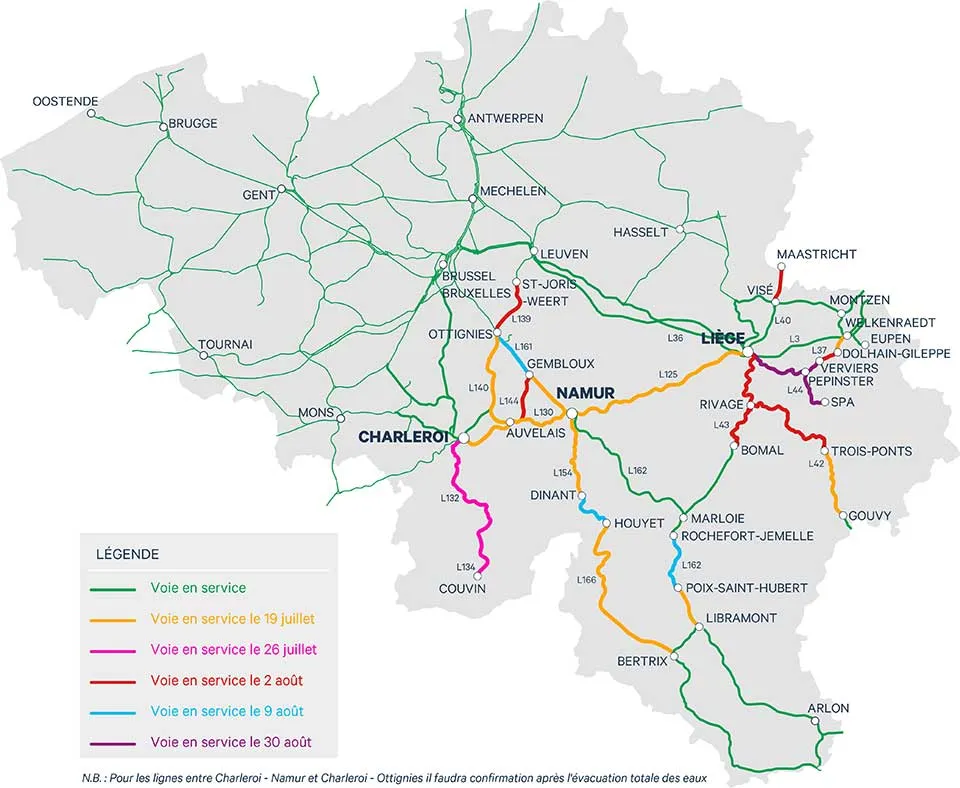
The important freight corridor linking the North Sea and the Mediterranean continues to be severely affected by the storm. Trains are still unable to run, either on the main route or on the alternative diversion routes. The following railway lines are affected (see map above):
L139 (Sint-Joris-Weert: Ottignies)
L140 (Ottignies: Auvelais)
L161 (Ottignies: Gembloux)
L144 (Gembloux: Jemeppe-sur-Sambre)
L154 (Namur: Dinant)
L166 (Dinant: Bertrix)
The outlook for the Walloon route between Charleroi and Liège is encouraging. If all goes to plan, lines 125 and 130 should be able to resume operations next Monday, 19 July.
The railway line between Liège and the Dutch border at Maastricht is closed at the border. The water damage there is also considerable, and a return to normal is not expected before 2 August.
Infrabel is working closely with its customers and foreign infrastructure managers to find and propose solutions.
In Flanders, freight trains can run between the ports of Antwerp, Zeebrugge and Ghent. Freight services are also possible between the ports and the Netherlands and France. The Genk-Goederen local hub is also accessible from Flanders and Germany.
HIGH-SPEED TRAFFIC
The only high-speed line that had become unusable, between Liège and the German border, was restored to service in the early afternoon.
REPAIR WORK UNDER WAY
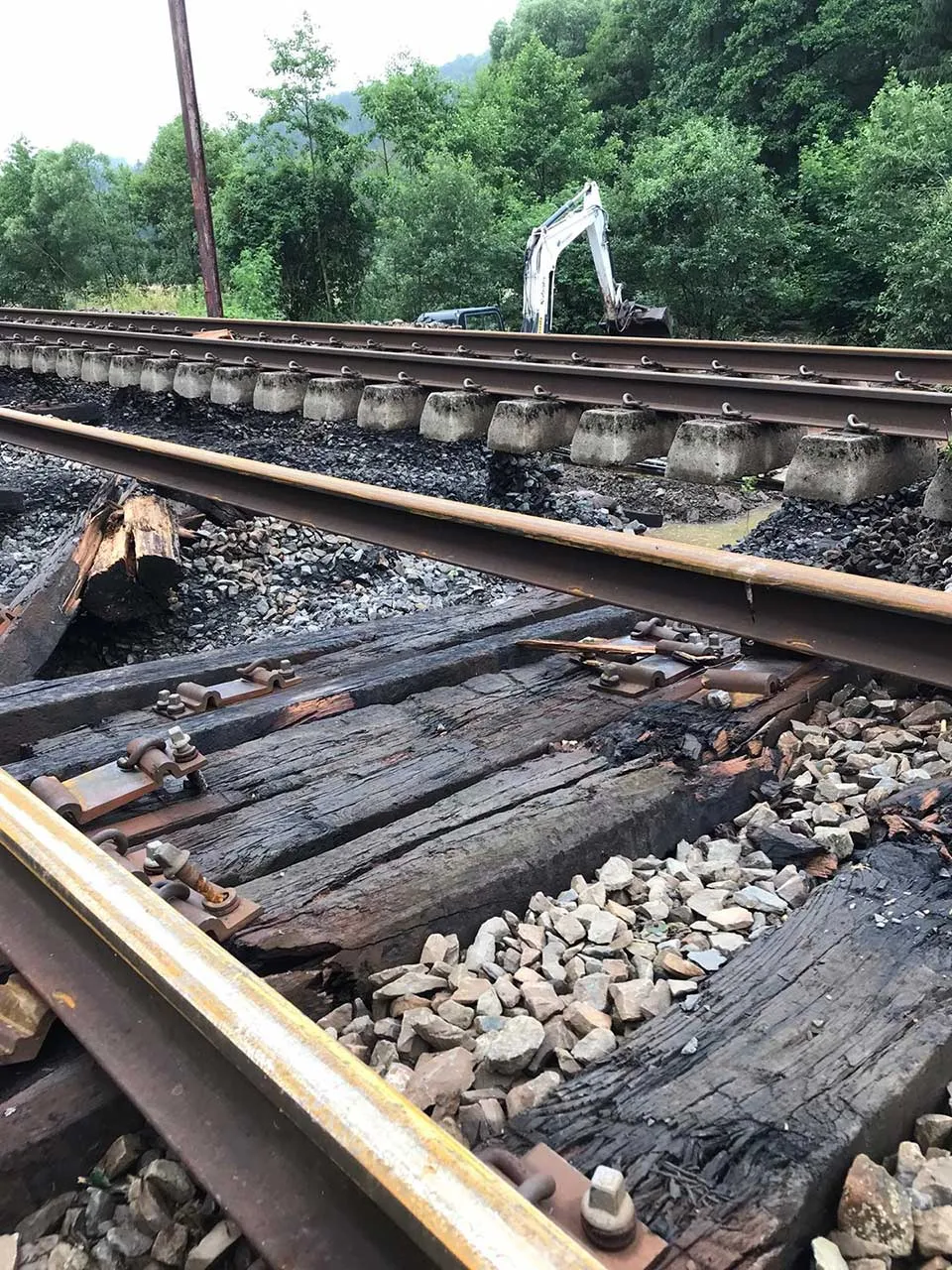
The scale of the damage is particularly striking. Numerous lines are blocked, a bridge has collapsed, mudslides have washed away ballast in many places, and several sections are no longer usable because the embankments supporting the tracks have collapsed. Several structures have also been weakened and electrical installations damaged.
Work to clear and repair the infrastructure is continuing. Several hundred railway workers are working 24 hours out of every 24 to repair tracks damaged by the floods. Teams have been mobilised across the country to support colleagues in the worst-affected areas, and many railway workers are also giving up their holidays to deal with the situation. Infrabel is also calling on private companies in the construction sector.
ALTERNATIVE TRANSPORT PLAN AS LINES GRADUALLY RETURN TO SERVICE
The alternative transport plan for the coming weeks will take into account the availability of the rail infrastructure. Where rail services cannot yet resume, replacement buses will operate where possible. For details of the alternative transport plan, passengers are advised to visit the SNCB website, www.sncb.be, which will be updated regularly.
Question about this story? Ask your question
Keep following this
Get an email when a new story is published. No account needed.
- ThemeTransforming infrastructure and territories
- SubjectNews







