











Industrial electrification drives grid reinforcement in Wallonia
Texte & photos Lithobeton
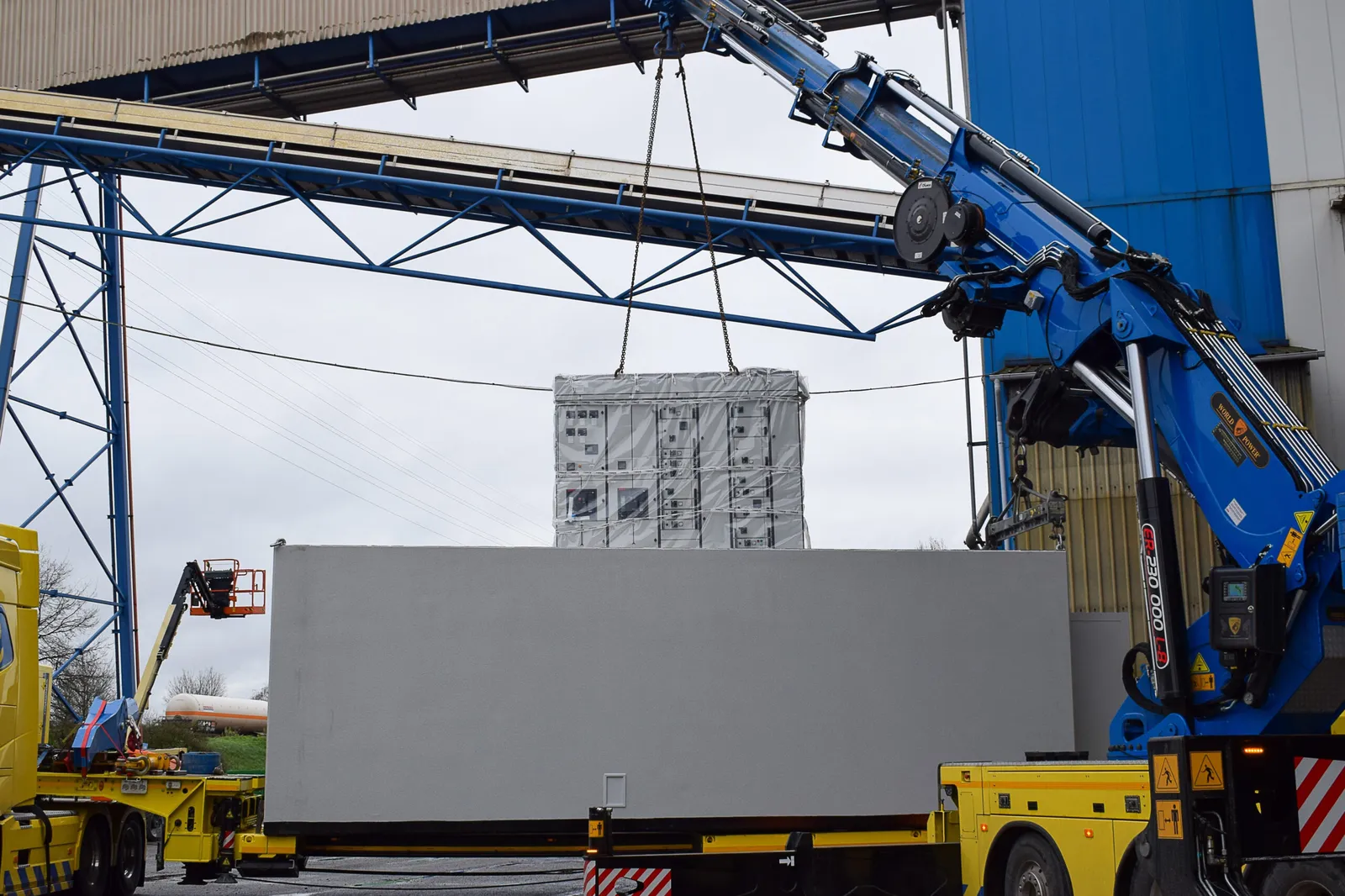
Demand for electrical infrastructure has grown sharply in recent years, driven in particular by the increasing electrification of industry and the need for a stronger, more flexible grid. In Wallonia, this is reflected in investment in grid reinforcement and modernisation, while industrial sites adapt their installations to new energy requirements.
Against this backdrop, a high-voltage concrete substation was recently installed at YARA’s site in Tertre. The project is part of a broader shift towards a more reliable, future-focused energy supply for industry.
Installation in an industrial environment
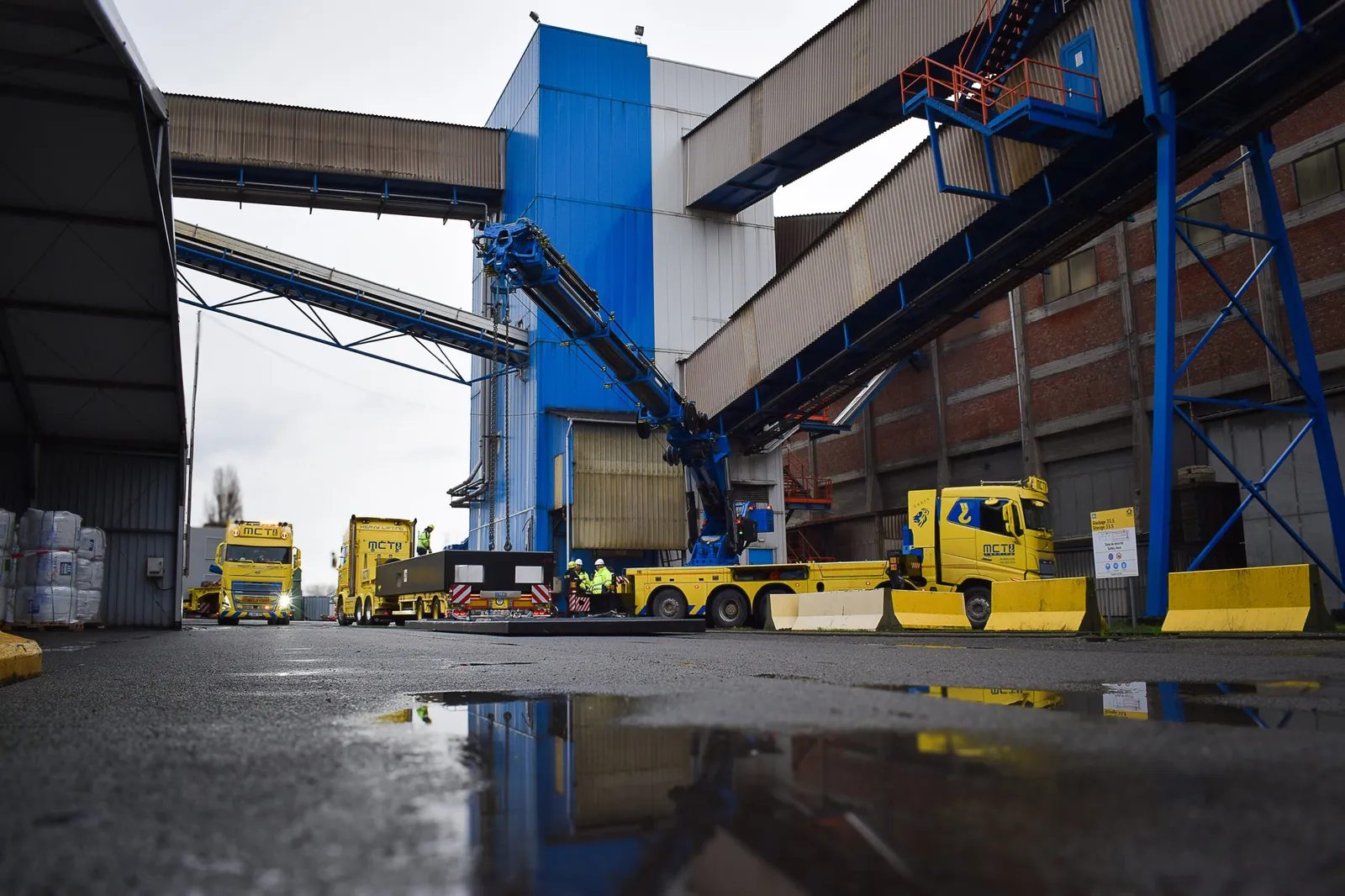
Compared with more conventional projects, this installation presented several specific constraints. Space was limited both in height and width, and a slope lay above the planned location. This meant adapting the lifting operation to the conditions on site.
While substations are generally lifted and positioned in a single smooth movement, a more gradual approach was adopted here. The prefabricated substation was moved in a controlled manner through the available space, then rotated to align correctly with the planned cable entries and the orientation of the door.
Two cranes were used to carry out the operation, ensuring the necessary control while positioning the substation.
Developments in the sector
Alongside rising industrial investment, the way high-voltage infrastructure is built is also changing. Prefabricated solutions are playing an increasingly important role, making it possible to integrate new installations into existing industrial environments without surprises and in line with expectations.
As much of the production takes place in controlled conditions, the impact of external factors such as the weather on quality and scheduling is greatly reduced. A significant proportion of the work is carried out in the factory, substantially reducing the actual installation time on site.
This combination of prefabrication and targeted installation makes it possible to schedule deliveries and works precisely. In industrial settings, where keeping installations available and minimising downtime are essential, this is a major advantage.
Industrial and energy context
YARA is an energy-intensive industrial operator active in the production of fertilisers and chemicals. These sites now face major challenges in terms of energy supply, reliability and sustainability.
The installation of additional or upgraded electrical infrastructure is part of a broader trend in which industrial companies adapt their equipment to meet future needs. High-voltage substations play a vital role as the link between the grid and the internal distribution of electricity.
For manufacturers of prefabricated solutions such as Lithobeton, these developments represent opportunities, particularly thanks to their ability to deliver solutions that can be deployed quickly, offer consistent quality and are tailored to each project. Combining series production with bespoke solutions makes it possible to meet the diverse requirements of industrial sites, where standardisation and flexibility increasingly need to go hand in hand.
Question about this story? Ask your question
Keep following this
Get an email when a new story is published. No account needed.
- SubjectNews







