











Improving healthcare through knowledge sharing and co-creation
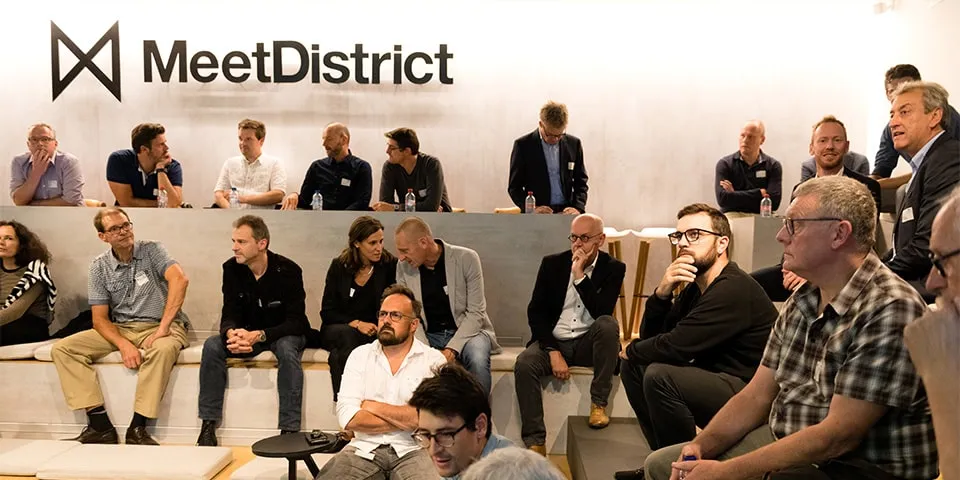
Like buildings and cities, healthcare environments are becoming increasingly ‘smart’. The ‘smart hospital’ concept is all the rage, opening the doors to the hospitals of the (near) future and their technological marvels. However, this also means it is becoming almost impossible for installers and developers to maintain an overview of the whole. ESHE aims to anticipate this trend by bringing together a range of expertise and encouraging co-creation. “Integrating healthcare technologies is no longer a pipe dream, it’s a hot topic!”
ESHE stands for EEG SMART HOSPITAL ECOSYSTEM, a dynamic platform that aims to tackle current and future construction challenges in the healthcare sector by bringing together developers of innovative technologies so they can benefit from one another’s strengths. The initiative comes from EEG Group, which has joined forces with healthcare furniture specialist Haelvoet, the ‘engineering masterminds’ at Unmatched, installation and service company 25-8, energy management and automation expert Schneider Electric, and HVAC software developer Hysopt. The partnership has already delivered some interesting results, which were presented in detail at a recent event at the Ghelamco Arena in Ghent.
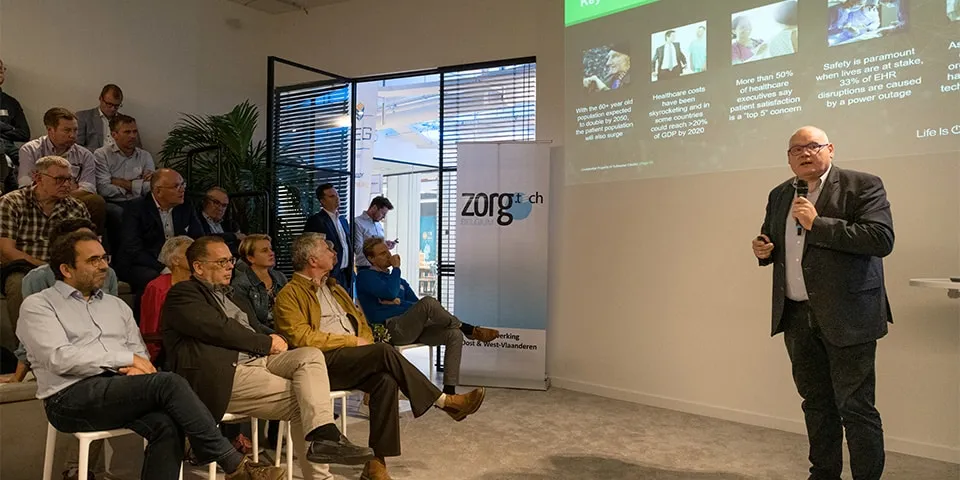
The key message was: “Integrating healthcare technologies is no longer a pipe dream, it’s a hot topic.”
Stronger foundations
“The rapid evolution and digitalisation of techniques and technologies in hospital infrastructure and healthcare facilities pose a huge challenge, but at the same time offer new opportunities to improve care delivery and operational performance. Making the many innovative products, technologies and services work in practice requires knowledge and experience from a range of disciplines. Arrangements such as PPPs, combined with the growing complexity of healthcare projects, require solid foundations. Meanwhile, under the banner of ‘data science’, a great deal is being measured, often without any concrete follow-up planned. We can no longer think in silos, because care, logistics and buildings are now inextricably linked. Collaboration between different stakeholders, including public authorities, integrators and manufacturers, is naturally one of the keys to success. That is why ESHE was set up,” explains EEG Group.
“We pursue innovation and cost-effectiveness in healthcare environments, firstly by validating and standardising solutions that incorporate existing products and services, and secondly through co-creation, enabling the development and validation of new products and services. All this takes place within a clear, open framework for cooperation, with well-defined organisational agreements between partners and suppliers, so that clients receive an excellent service.”
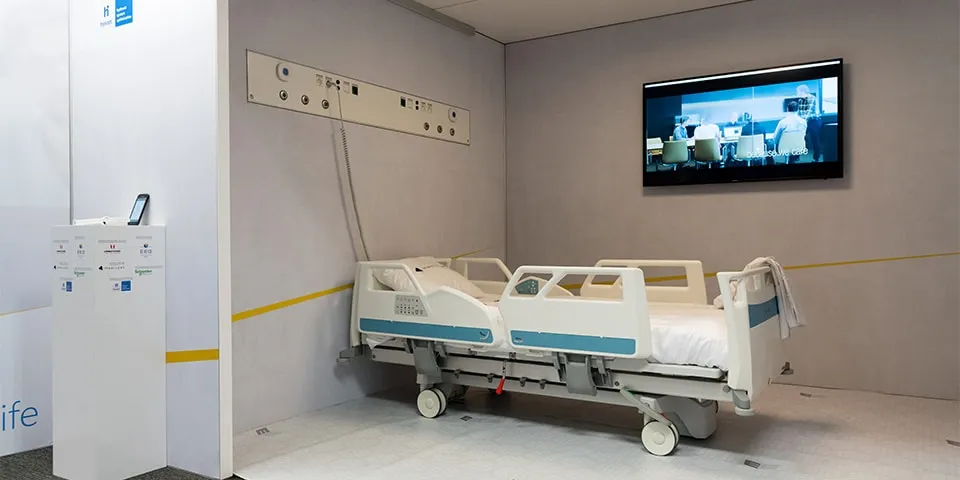
This year, ESHE partners have already developed several innovative concepts together, including this smart hospital bed.
Promising innovations
The innovative concepts developed jointly by ESHE partners last year show that this is more than just talk. Unmatched and EEG Group, for example, have worked on ‘predictive lighting’ through LynX® lifeline, a system in which LED lighting is controlled by the alarm system according to different scenarios. Patient calls, resuscitation, wayfinding around the building, alerts for deaf people … the possibilities are endless. Unmatched was also involved in developing the bed equipped with Haelvoet Connect Solutions. Designed as a ‘communication hub’, it features Duo-Safe safety sides, integrated controls and LynX® first (safety position, location tracking, home automation, ‘out of bed’ detection …).
Schneider Electric, meanwhile, was the driving force behind BuildingAdvisor, a tool that checks installations every five minutes for faults and deviations relating to comfort, energy and operation, making it possible to resolve potential problems proactively.
The result is a 29 % reduction in unplanned maintenance work, 35 % fewer complaints and 20% lower energy costs. Finally, Hysopt and EEG Group have focused on hydraulic optimisation, using intelligent software to bridge the gap in HVAC. Given that 90 % of HVAC installations are oversized, potentially resulting in 30 % higher energy costs and CO2 emissions, the scale of the opportunity is clear. “Hydraulic optimisation means that building services will not drive up costs, but instead generate savings!”
In short, these are just some of the promising innovations that could significantly improve the efficiency of healthcare. The practical demonstrations that followed the ESHE partners’ presentations once again proved that integrating healthcare technologies is no longer a pipe dream, it’s a hot topic.
Question about this story? Ask your question
Keep following this
Get an email when a new story is published. No account needed.
- SubjectNews







