











Home automation, a fast-growing field
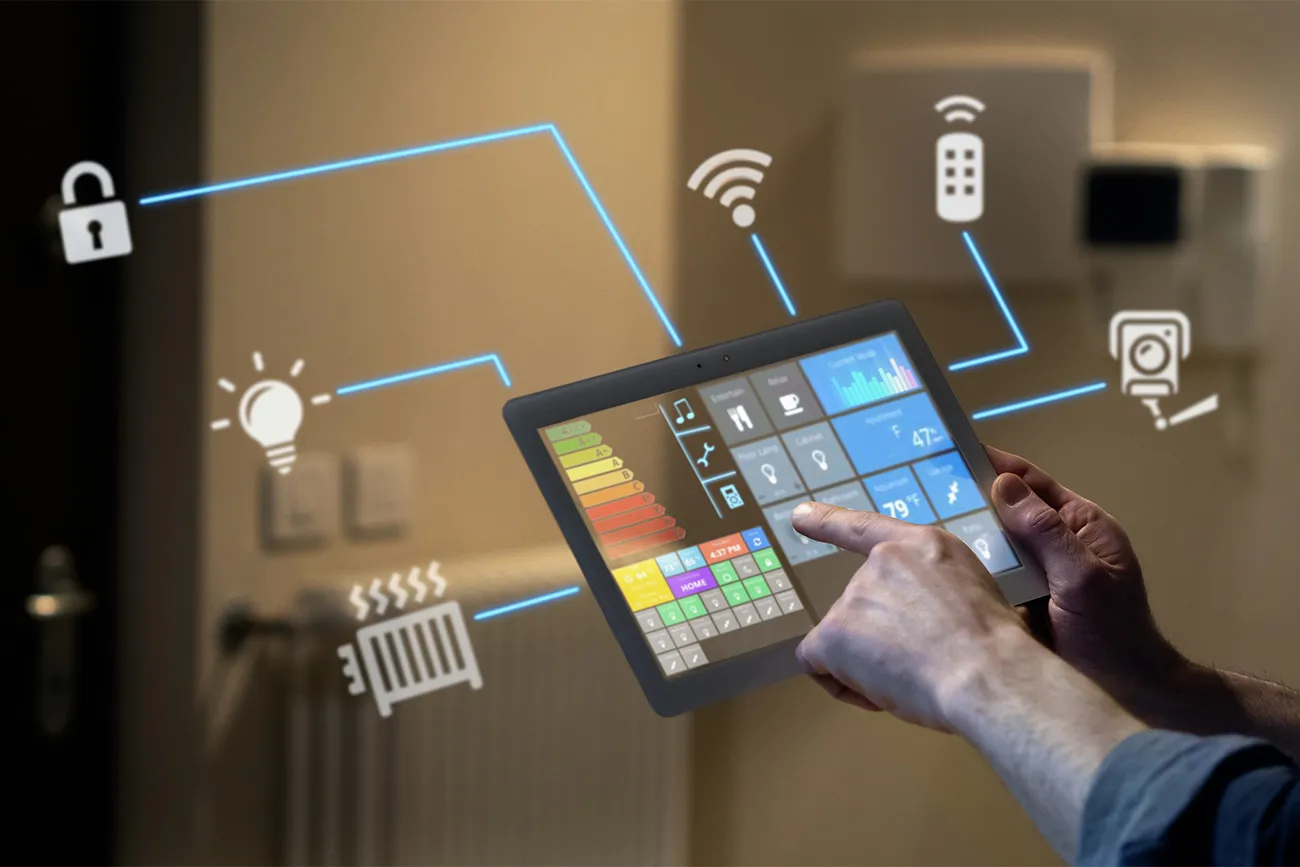
In its early days, home automation was limited to simple push-button or dimmer functions, such as controlling lighting, blinds and heating, and was often restricted by proprietary systems. Today, its potential is limitless.
Today’s communication systems, combined with the inventiveness of home automation manufacturers and new technologies such as connected devices and voice or visual recognition, enable almost total interaction, not only between users and all the devices in their homes, but also between the systems themselves.
Energy efficiency: smart energy management
Overall energy management is now possible, covering natural energy sources, solar or photovoltaic panels, small wind turbines, heat pumps, heating, air conditioning, ventilation and electric vehicle charging points. Energy flows in and out can be optimised in real time. This approach is based on eco-design from the initial design stage of a new building.
Entertainment
Internet connectivity is ubiquitous, whether for remote working or controlling connected devices. A computer, tablet or smartphone, using a home automation app or an app dedicated to a specific device, allows users to control all their devices, and even a home cinema system, selecting sources and sound levels and choosing which media to play in each room. These can be combined with one or more programmed mood settings.
Security
In addition to an intruder alarm and/or camera surveillance system, home automation enables remote monitoring and control by activating the appropriate scenario in response to a detected situation. This can include checking whether doors are open or closed, switching on the lights, voice interaction, calling relatives or activating cameras for the monitoring centre.
Health and quality of life
Even when living alone, a person with care needs or a disability can enjoy greater independence by controlling their surroundings from a wheelchair using a touchscreen or even voice interface.
Wired or wireless?
Wired systems, an electrician’s first choice, are preferred when a new home is being designed, thanks to their reliability. Wireless systems, using Wi-Fi, radio waves or infrared, are more commonly used in renovation projects.
Incompatibility between systems?
Multi-system interfaces can now bring these different systems and connected devices, once incompatible, together in a single app.
Question about this story? Ask your question
Keep following this
Get an email when a new story is published. No account needed.
- SubjectNews







