











Glued clay blocks for high-rise construction
Texte & photos Wienerberger

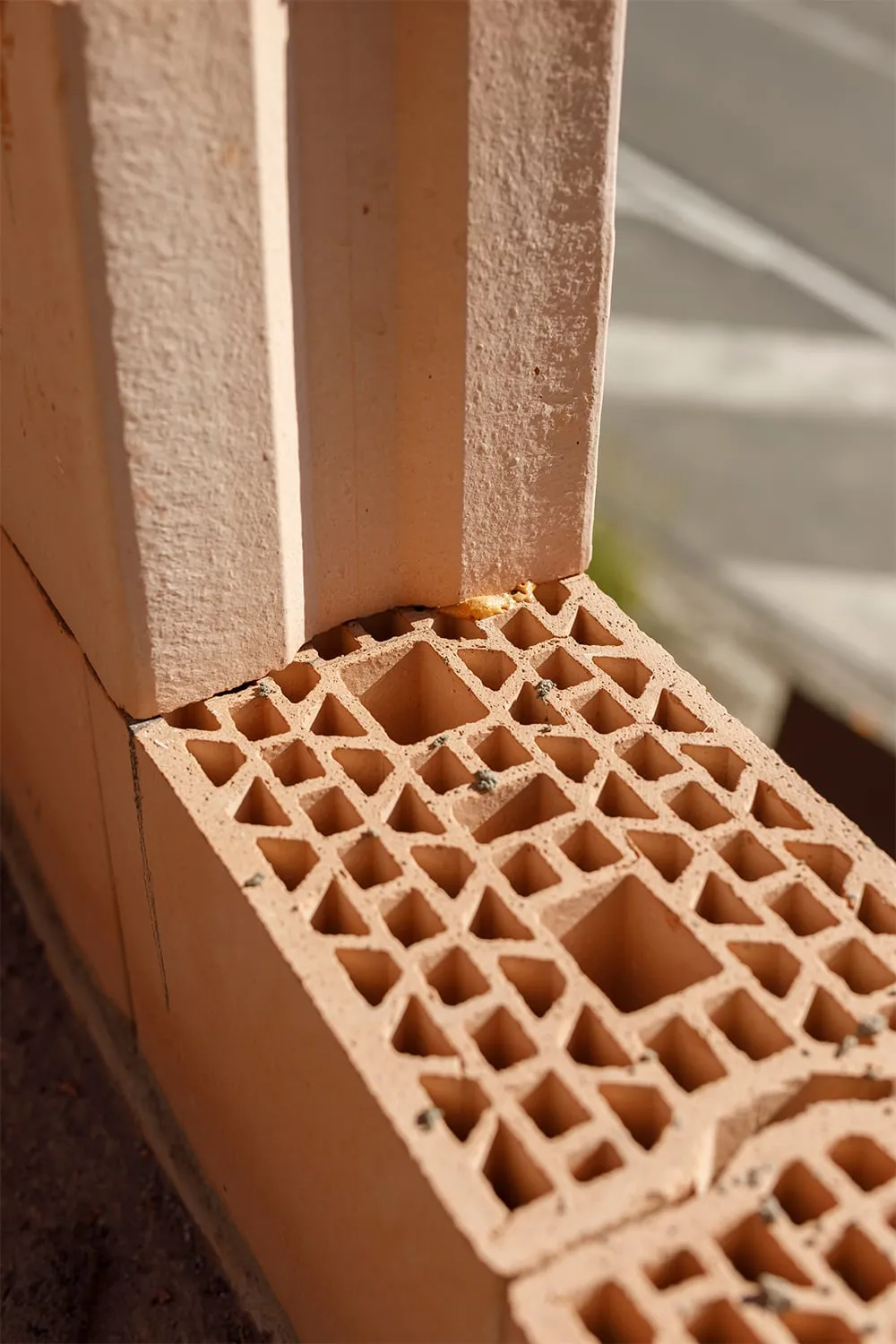
Building load-bearing walls with Wienerberger clay blocks ensures high productivity on site. That is why many contractors prefer this solution, particularly when the blocks can be glued. With the launch of Wienerberger’s PLS Newton gluing block, building height is no longer a constraint when using load-bearing blocks to construct medium-rise apartment buildings. FAMI-Construct demonstrated this in Herstal, where the contractor built a 7-storey building using 19 cm PLS Newton blocks, meeting acoustic and compressive strength requirements.
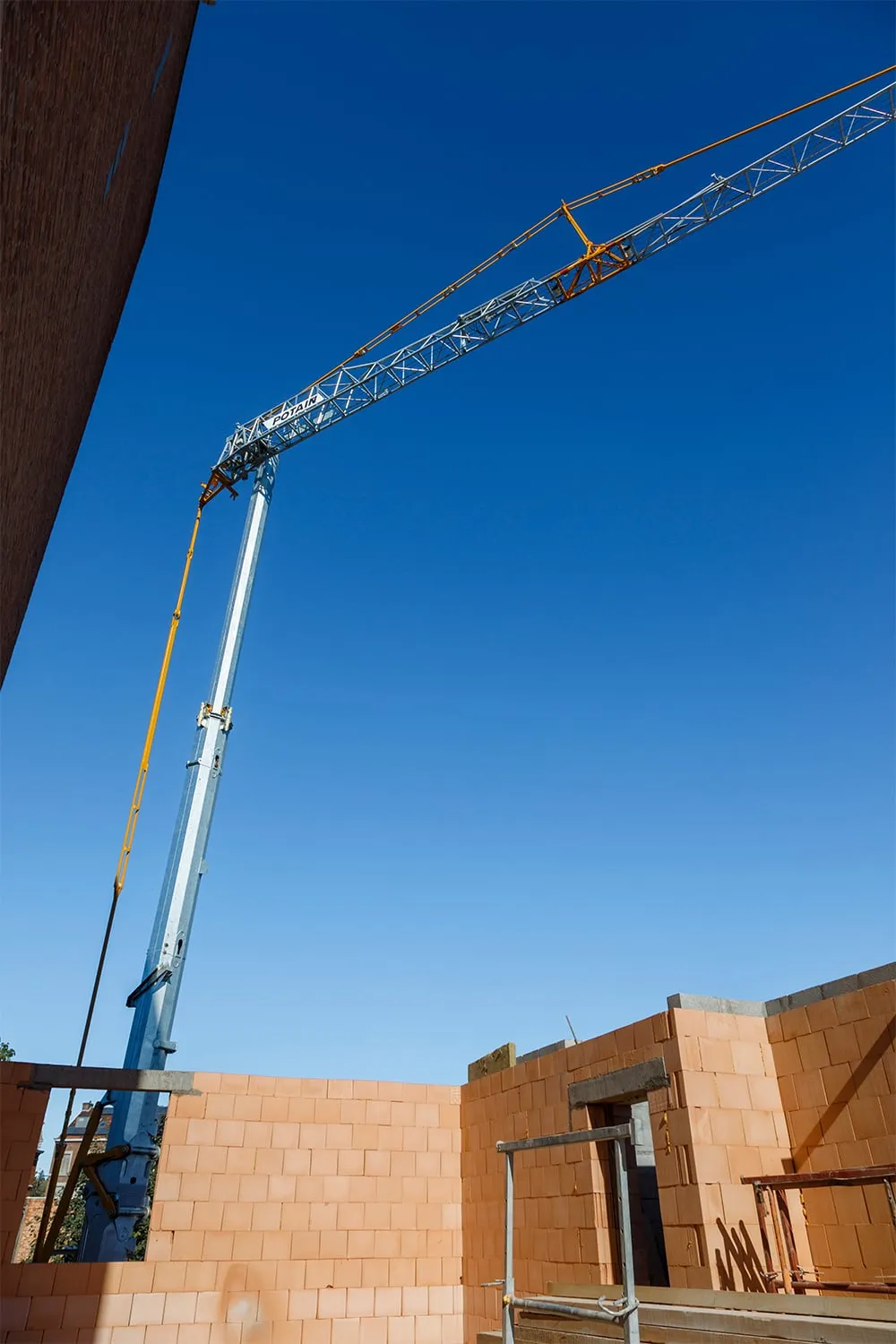
The Albert I quay on the banks of the Meuse in Herstal is set for a complete transformation. Construction of the large-scale Coronmeuse residential project and the extension of the Liège tramway to Herstal town centre will radically change the quay over the coming years. This transformation will act as a catalyst for the redevelopment of the entire neighbourhood. The change is already apparent in some new residential developments, such as Confluence. The MH Equity Residential project comprises 31 apartments on a disused former industrial site surrounded by a predominantly residential area. “The challenge was to create a transition in our design between the adjacent buildings, one of which has eight storeys and the other three. To achieve this, we incorporated a gradation effect into the design. To give the façade a greater sense of lightness, we opted for different surface finishes. To create the desired interplay of surfaces, we combined Terca Basia Nero Noir Manganèse and Terca Riego Plata, two Eco-brick facing bricks in Waal format (WF). The dark block is framed by volumes in black brick. For the base, we chose Terca Riego Plata. Another distinctive feature of the design is that all apartments have an open-plan layout and a planted outdoor space, either as a green roof or a planted balcony,” explain architects Thomas Fréson and Martin Lecrompe of Atelier d’architecture DSH.
High compressive strength confirmed twice over
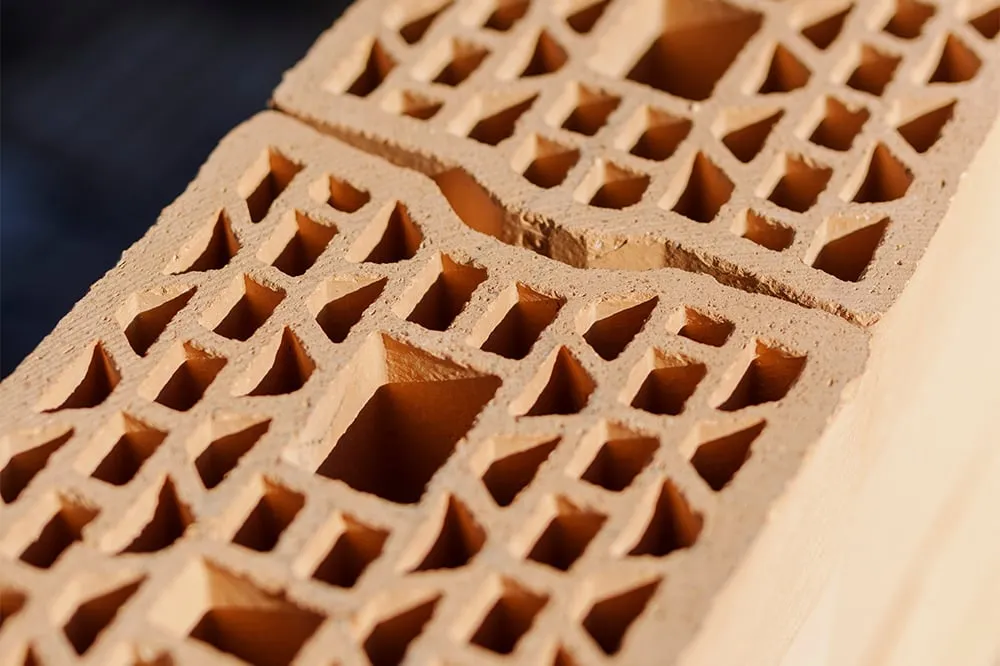
MH Equity Residential selected FAMI-construct as its contractor. The construction company has extensive experience building apartment blocks and, for reasons of productivity, favours gluing ceramic load-bearing blocks. Salvatore Mirabella also wanted to make use of these benefits for the project on Albert I quay in Herstal. However, he faced an unprecedented challenge: he had never before built a 7-storey building using perforated clay blocks. He nevertheless decided to take it on. “Salvatore Mirabella approached us for advice and support in convincing the architect and client,” explains Jens Van Hoecke, construction technical adviser at Wienerberger. “Working with the structural engineer, we wanted to establish whether our 19 cm PLS Newton perforated clay blocks would provide the required compressive strength and meet acoustic requirements. The calculations were positive,” says Jens. This comes as no surprise, as the blocks’ optimised clay composition and carefully designed perforations ensure high compressive strength in the walls. The characteristic compressive strength of the walls is 8.5 N/mm².
Convincing advantages
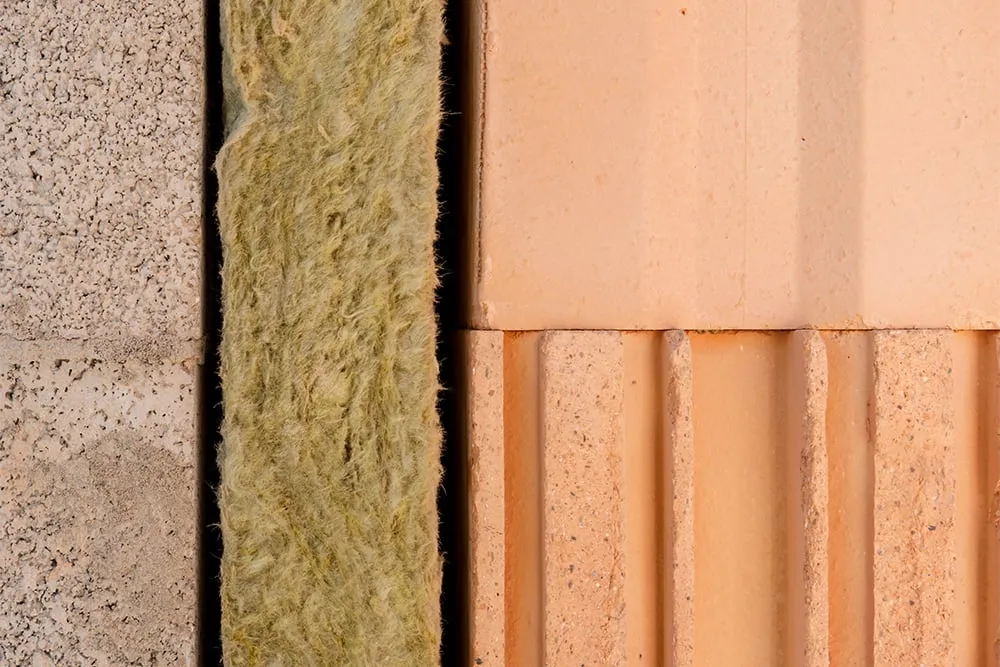
Armed with these figures, Salvatore Mirabella met with MH Equity Residential and Atelier d’architecture DSH. “The calculations were reassuring. What is more, using load-bearing blocks offered additional advantages. The load-bearing capacity of the PLS Newton block made it possible to build 7 storeys using relatively conventional load-bearing blocks, which would not have been possible with conventional concrete blocks of the same thickness. In addition, the Porotherm PLS Newton block has a higher thermal insulation value than traditional building blocks. For a building of this height, we would normally have had to use calcium silicate blocks. But these are thicker than ceramic load-bearing blocks. By choosing PLS Newton, we were therefore able to save a few precious centimetres in the building,” explain the architects. The ceramic gluing block also met the designers’ expectations in terms of construction: “The work is fast, and costs are streamlined and kept under control. Working with smaller blocks also ensures great flexibility. Among other things, this allows us to adapt dimensions easily, for example when buyers request it,” conclude Martin Lecrompe and Thomas Fréson.
Question about this story? Ask your question
Keep following this
Get an email when a new story is published. No account needed.
- SubjectNews







