











Execution certification for road restraint systems is gearing up for launch
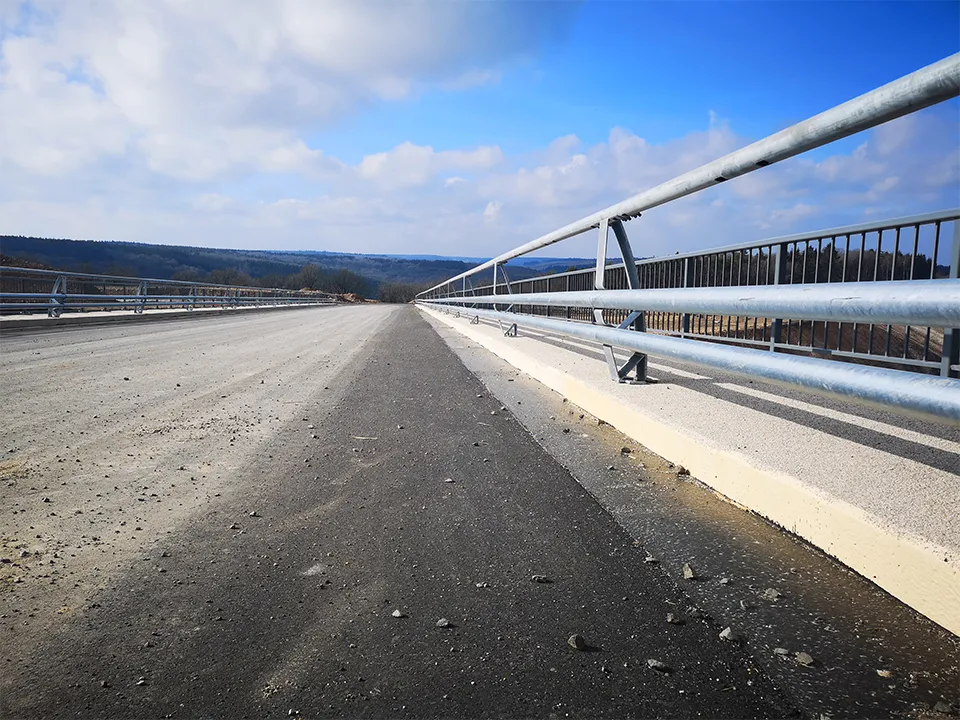
2021 will be an important year for the safety and quality of our roads. Long awaited, execution certification and the associated COPRO.EXE mark are about to be launched.
One of the areas covered is the installation and repair of road restraint systems. “The products themselves may be of excellent quality, but if they are not installed and/or maintained properly, their performance and safety in general are put at risk. With execution certification, we want to prevent this and make contractors accountable,” COPRO explains.
Execution certification is a hot topic in the road and infrastructure works sector. The concept was initiated by a number of key stakeholders, including AWV, VLARIO, Infrabel, Farys, SPW, FBEV and Bouwunie. COPRO, as an independent inspection and certification body, was tasked with turning all the expectations, ideas and requirements into a practical system. “As a product certification body, we were keen to take this on ourselves, because we are well aware that flawless execution is essential to achieving the right result. Execution certification allows us to complete the picture,” explain Ruben Verbeke and Kim Vandenhoeke of COPRO. “In conventional public contracts, price is the deciding factor, and guaranteeing quality is not always straightforward. Many clients were therefore looking for a different approach. Execution certification now gives them the assurance that contractors follow specific procedures to achieve the required level of quality, which is also checked by COPRO. Contractors that meet these requirements are awarded a certificate, which they can demonstrate by using the COPRO.EXE mark, a kind of quality label.”
Anything but an unnecessary luxury
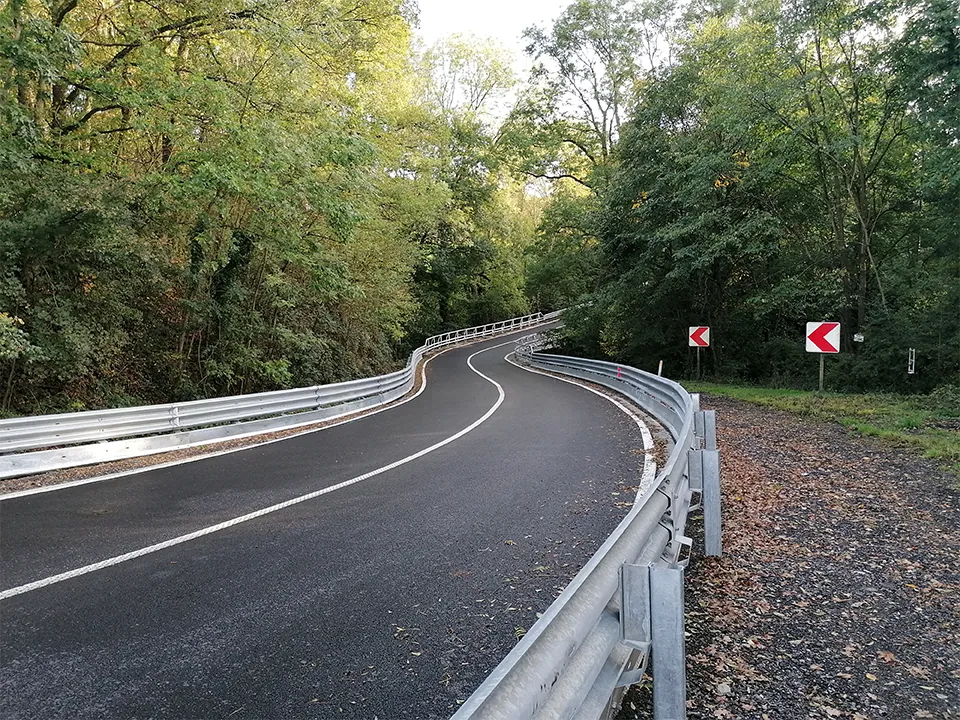
The COPRO.EXE mark is already used in Flanders for the removal of tar-containing asphalt, and is now being extended to other specific applications, such as road restraint systems. “These are highly specific applications, including safety barriers, crash cushions, transitions between safety barriers, end terminals and motorcycle protection rails, all of which are subject to a standard. In such cases, quality execution can be a matter of life or death, so execution certification for these restraint systems is anything but an unnecessary luxury,” stress Ruben Verbeke and Kim Vandenhoeke. “Based on recommendations from an advisory council comprising representative bodies for clients, contractors, users and experts, the requirements for quality execution are set out in a Technical Prescription (PTV), while a Special Regulation (BRS) sets out the rules certificate holders must follow. Contractors will not only have to carry out their own checks, but will also be subject to periodic site inspections by COPRO experts. The principle is that road restraint systems should perform as well as they did in the laboratory where they were previously tested. Points to watch include using the right materials, ensuring suitable bolt-and-nut connections, installing the system at the correct height, and so on.”
Making an active contribution to road safety
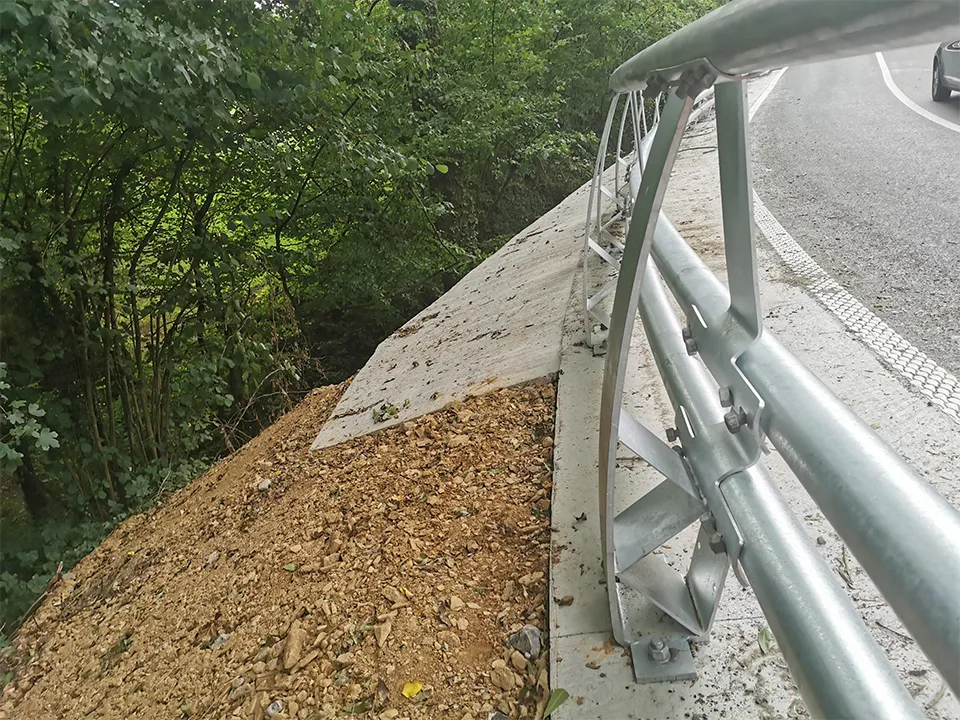
Execution certification for road restraint systems has been included in the ‘Standaardbestek 250’ since 2019. We hope the other standard specifications will follow suit. Clients can therefore require certain works to be carried out by a contractor holding an execution certificate, giving them assurance of quality installation and maintenance. “A major step forward,” says Erik De Bisschop, road equipment adviser at AWV. “Unnecessary gaps, poorly connected transitions, substandard reinforcement in concrete structures, applications that are unsuited to the soil conditions: these are all defects that must be avoided at all costs when safety is at stake. We also believe it is important to make contractors accountable and encourage them to deliver quality work. Execution certification gives us a valuable tool to do just that. The PTVs for steel and precast concrete road restraint systems are ready, but the ones for in-situ concrete systems will take a little longer. That is why we are giving contractors some extra time to obtain the COPRO.EXE mark. It is not until 2021 that we will explicitly require an execution certificate for road and infrastructure works.”
Getting the balance right
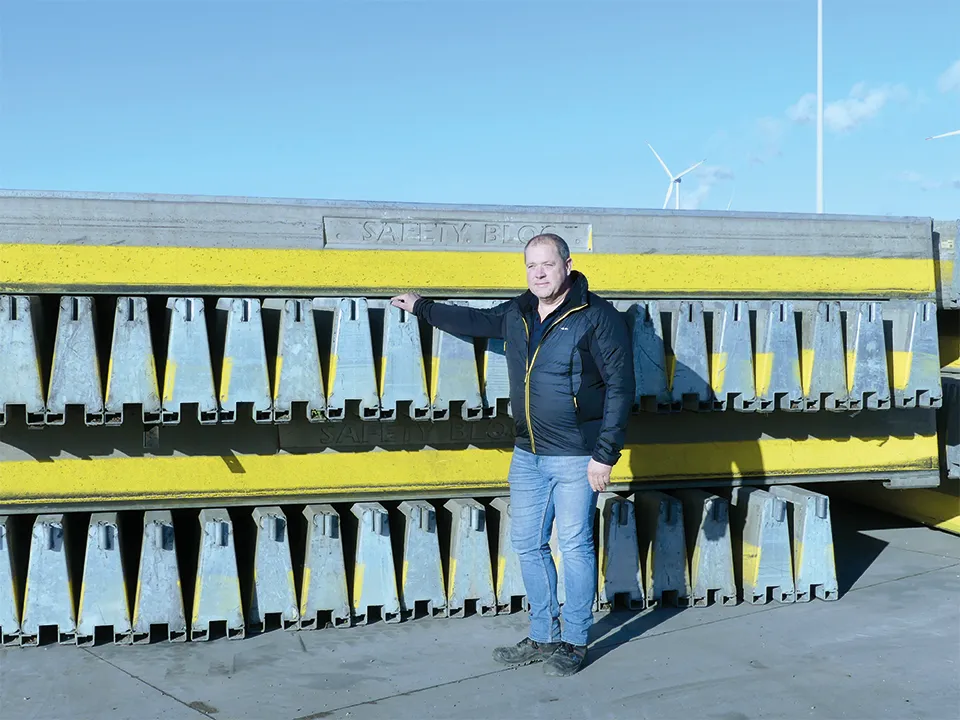
In short, the execution certification system for road restraint systems has been thoroughly studied, developed in consultation with the sector and is ready to launch. One of the many contractors hoping to obtain the COPRO.EXE mark in the near future is WG-Aannemingen, whose activities include installing temporary SafetyBlocs made of precast concrete on roadworks sites. “Introducing execution certification is an excellent idea,” says managing director Wim Gillis.
“It recognises contractors who do a good job and is therefore an ideal way to separate the wheat from the chaff. I sat on the advisory council myself and saw how much weight was given to contractors’ recommendations in order to come up with something realistic. Excellent collaboration helped strike the right balance for both the parties carrying out the work and those inspecting it, with better execution quality and road safety as shared goals. We had no hesitation and immediately started the process of obtaining the COPRO.EXE mark!”
Ready to go
As a contractor specialising in the manufacture and installation of metal safety barriers, David De Saedeleer, managing director of DESAMI sprl, also sat on the advisory council. To him, it makes sense for COPRO to audit the final stage of the process, having already validated crash tests, checked the quality of products leaving the factory and even inspected materials delivered to site. “COPRO can therefore draw on its objective expertise to further improve quality when installations are inspected. For us, as well as the satisfaction of having a properly installed barrier that is therefore more effective in terms of safety, our liability will be better covered in the event of a dispute. Clearly, since this is about saving lives, a small additional cost is well worth it. I’m ready to submit an application for certification as soon as the process is up and running. In fact, we have already put an equivalent procedure in place internally to ensure administrative traceability, so our staff will be fully prepared when the time comes.”
Question about this story? Ask your question
Companies in this story

Keep following this
Get an email when a new story is published. No account needed.
- ThemeTransforming infrastructure and territories
- SubjectNews
- CompanyCOPRO







