











Exceptional mobilisation for an extraordinary double project
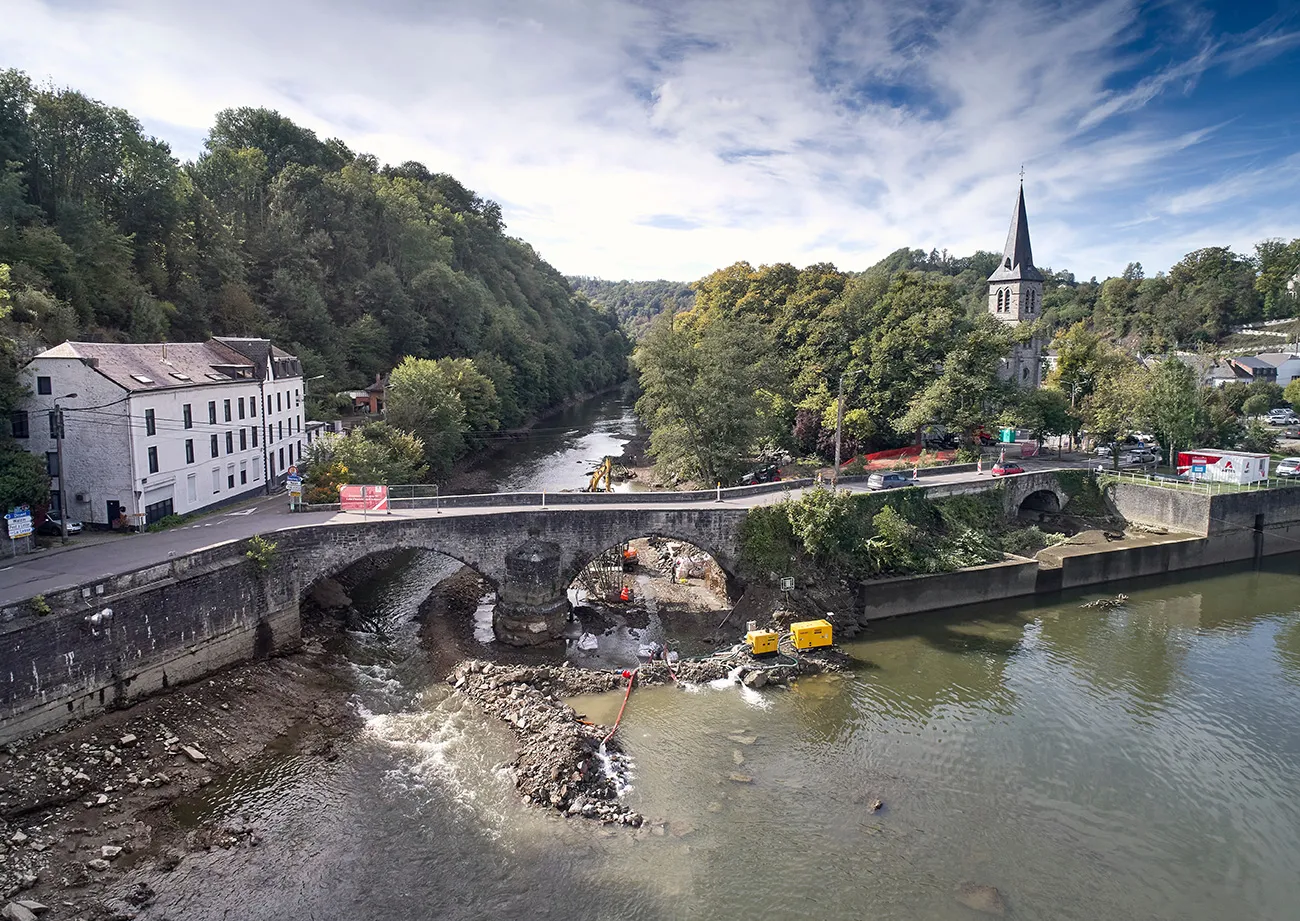
From 24 September to 17 October last year, the Meuse was closed to navigation along almost 45 km between the French border and the La Plante barrage in Namur. SPW had entrusted ARTES TWT with two projects to carry out in parallel: the refurbishment and major maintenance of three locks, and the maintenance and repair of riverbanks and paths along the river. Meeting the very tight three-week deadline called for expertise, organisation and significant resources!
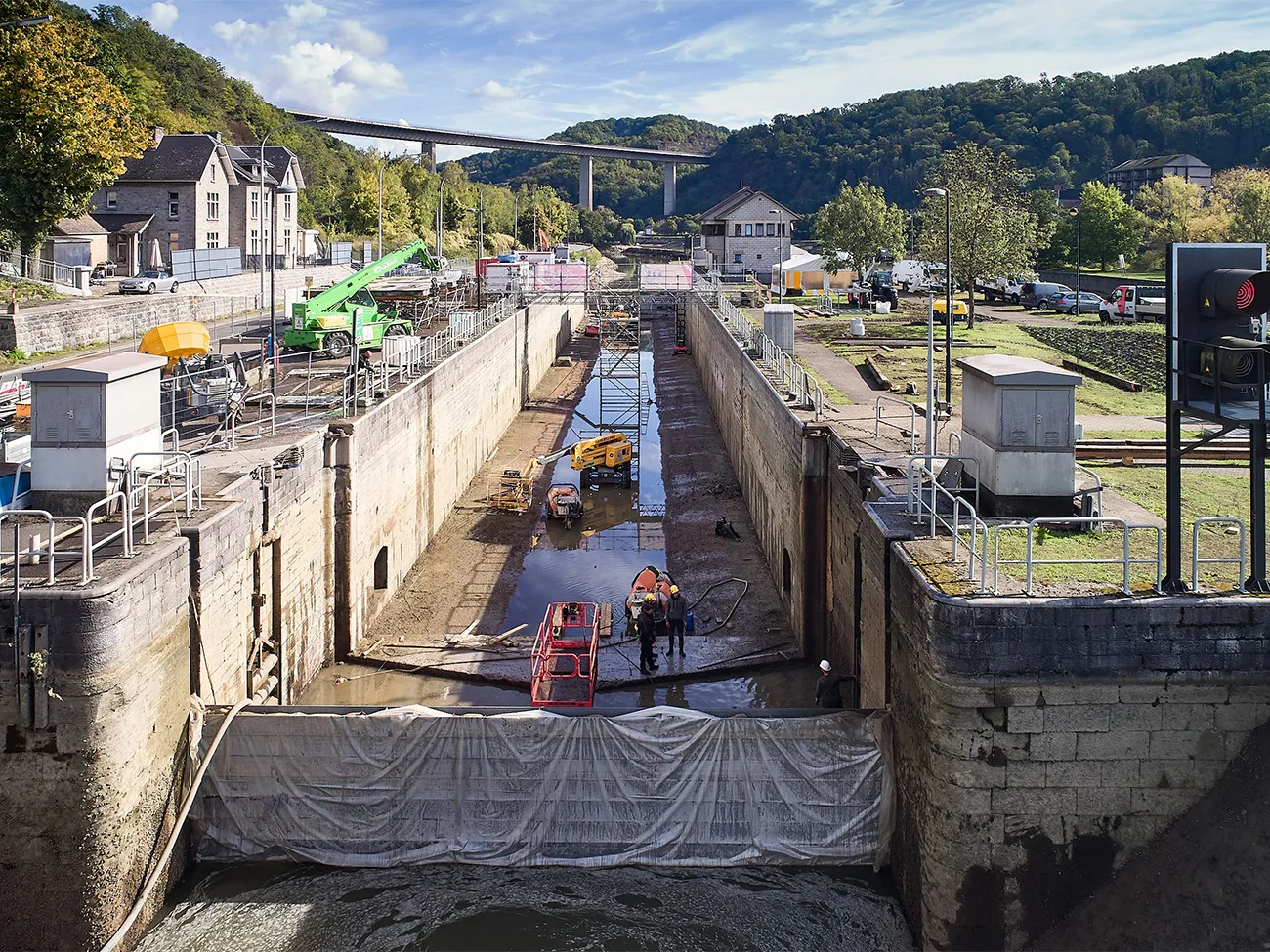
At Waulsort and Anseremme, the work, overseen by site managers Martin Thonon and David Lannoy, involved dismantling and refitting the lock gates to refurbish them, including replacing defective parts, cleaning and repainting, as well as cleaning and repointing the lock chambers. At Hun, the work was limited to a gate pivot.
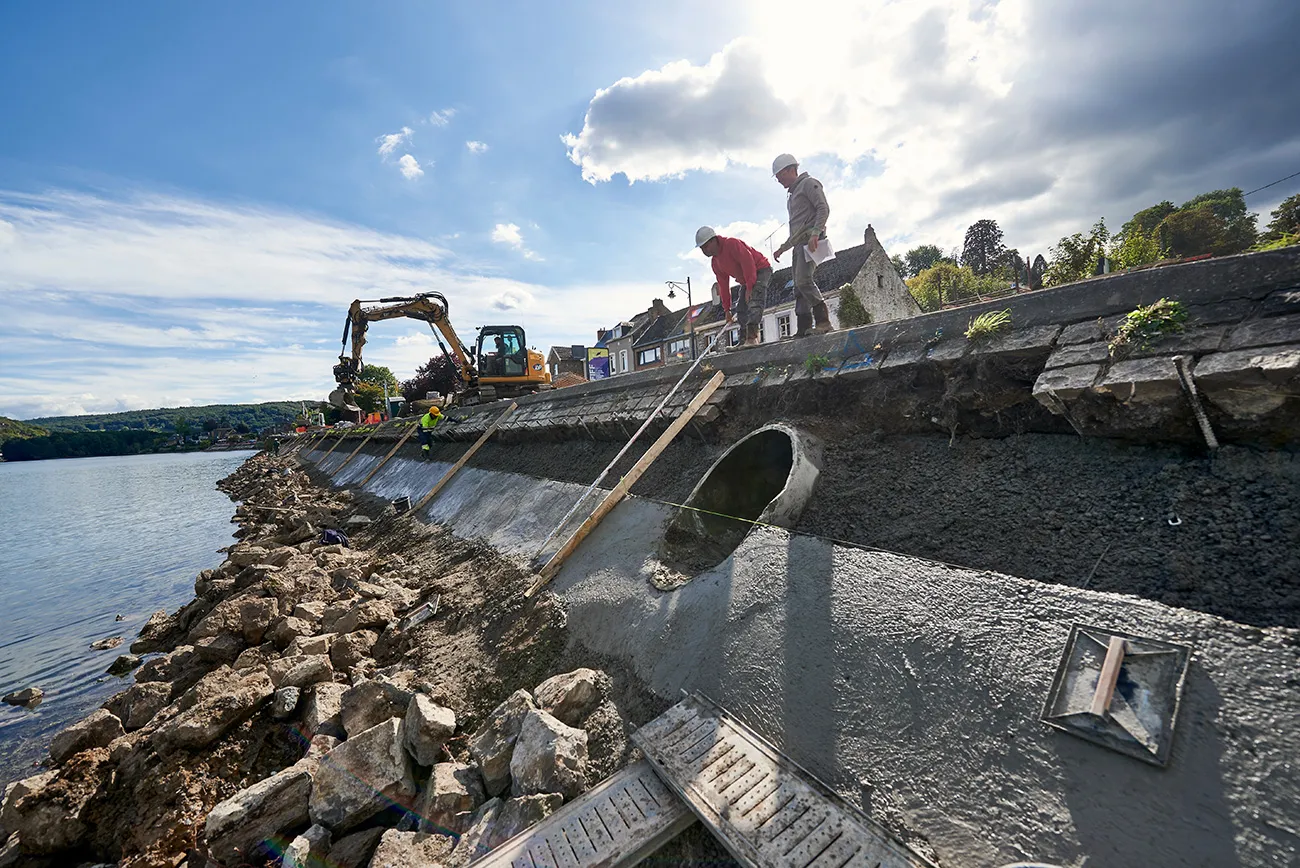
Miguel Couto Do Casal, site manager at ARTES TWT, was part of the team responsible for restoring, rebuilding and strengthening masonry, including walls, revetments and steps, and the toes of revetments and riverbanks, as well as clearing and cleaning tributary outlets.
All for one, and one for all
Completing so much work in such a short time required an unprecedented mobilisation. Martin Thonon: “At Anseremme lock, we had an average of 15 people working from 7 am to 10 pm every day, including weekends. At Waulsort, the work proved considerably more extensive than initially expected, and we had to quickly find additional resources to increase the team to 20 or more.”
Miguel Couto Do Casal: “In my team, we had around 55 people, not counting all the subcontractors we supervised. We were of course supported by people from outside ARTES with the specific skills required, but I don’t consider them subcontractors. They were fully integrated into our teams: we were all in the same boat. On a project like this, the human factor is essential, and we knew we could rely on this extra support to meet the deadline.”
Planning ahead and adapting
The two site managers agree that anticipating the many tasks as far as possible was one of the keys to success, along with the flexibility needed to cope with the additional work that became apparent once the riverbed was dry. If extra hours were needed to avoid holding up the teams the next day, everyone put them in, whether they were ARTES staff or not. They were all driven by the goal they had to achieve.
The Pont Saint-Jean at Anseremme is another example of a worksite where ARTES had to adapt the plans set out in the specifications. Damaged by the floods of July 2021, the structure proved severely weakened around the central pier and abutments. ARTES therefore proposed more durable strengthening solutions: in-situ concrete walls.
The scale of the riverbank repairs along the drained section is impressive given the time available: 1,000 m3 of concrete and the same volume to excavate beforehand, as well as around 700 m2 of masonry rubble and 3,000 m2 of pointing to rake out and renew.
A project that left everyone stronger
This was not ARTES TWT’s first Meuse closure. SPW has been calling on the company for hydraulic works for more than thirty years. Miguel Couto Do Casal: “This is already my fourth intervention during a Meuse closure. It’s always a great collaborative project involving all parties, bringing younger and older workers together, with the more experienced sharing their knowledge.” His colleague Martin Thonon agrees: “Although I had already carried out all the tasks separately on different projects, this was a new experience for me. I learned from my colleagues Miguel, Fernando and Paul, who are very experienced in this kind of work. It was physically and mentally intense, but also a great challenge.”
Site teams:
- Locks: Martin Thonon, Fernando Casal and David Lannoy
- Riverbanks and paths: Miguel and Fernando Casal, Benoit Kaisin, Paul Meurisse, Esteban Zorrilla
Question about this story? Ask your question
Keep following this
Get an email when a new story is published. No account needed.
- SubjectNews







