











Comfort and ecology go hand in hand
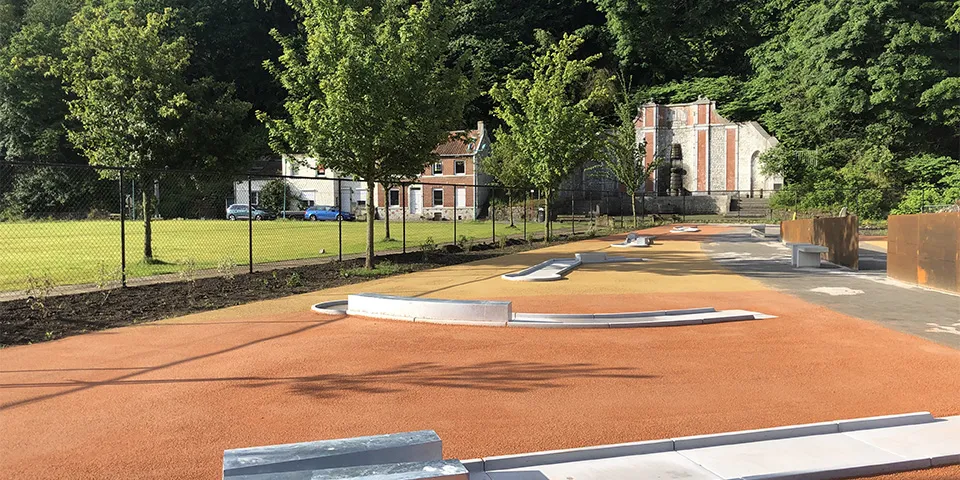
Ecology is increasingly in the spotlight. Yet green thinking too often comes at the expense of comfort and cost. “That is regrettable, because ecology and comfort can go perfectly well together,” says Veerle Ryde, Product Manager at Green Road sa, a specialist in the renovation and maintenance of semi-rigid surfacing and unpaved paths.
Green Road’s offering has three main pillars: the Classic Process, greenROAD® semi-rigid surfacing and Zoomranden. The latter two techniques are patented. “In each case, comfort and ecology go hand in hand,” says Veerle Ryde.
Classic Process
The Classic Process essentially involves three steps: milling, grading and compacting. This technique is mainly used to renovate or refurbish low-speed routes, recreational paths and forest tracks. Here, comfort and ecology work in harmony. Veerle Ryde explains: “The existing stone material is reused and processed (and, if necessary, supplemented) to create the structure required for the new surfacing. Reusing it reduces transport requirements as well as costs. Resurfacing, meanwhile, improves user comfort while retaining the feel of a forest track or walking path. That is the strength of the Classic Process.”
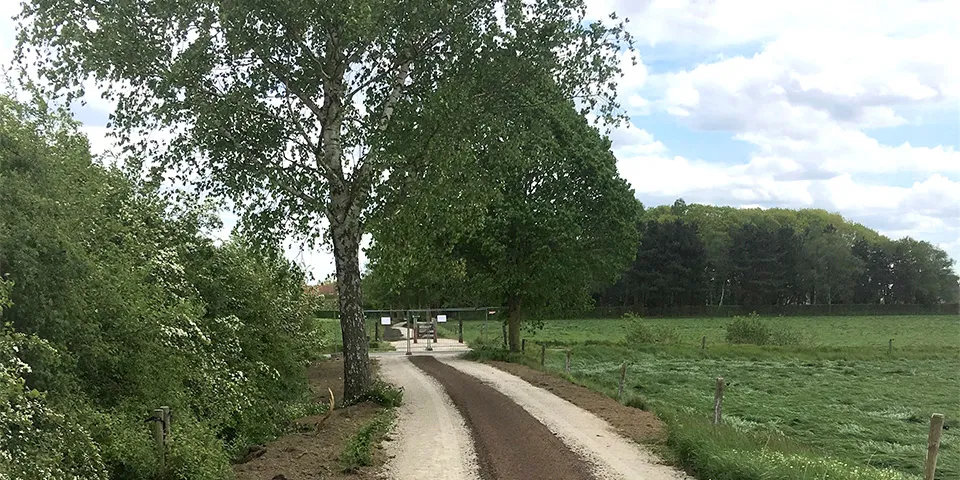
The Classic Process essentially involves three steps: milling, grading and compacting.
greenROAD® semi-rigid surfacing
greenROAD® is a permeable semi-rigid surfacing made from hard natural stone aggregate bound with a plant-based primer. “Its permeable function ensures maximum comfort for every type of user, while allowing water to replenish the water table rather than overloading the sewer network. Given the growth of the market for permeable semi-rigid surfacing, we believe it is very useful to establish objective criteria. The lack of standards means customers cannot distinguish reliable information from other claims. Semi-rigid surfacing products on the market are not yet subject to standards defining the requirements they must meet. The Belgian Road Research Centre has launched studies on the subject, which we welcome.”
Zoomranden
Vegetation encroaching on path edges reduces the usable width and causes standing water to collect on the surface. This is a nuisance, particularly on cycle paths. “Installing Zoomranden extends the life of the surfacing. Vegetation and soil are removed, allowing rainwater to drain away normally again. This significantly improves user comfort and is also environmentally sound. In a single operation, the cut material is collected and shredded into small fragments before being returned to the embankment. No material therefore needs to be taken away. A durable, cost-effective solution,” concludes Veerle Ryde.
Question about this story? Ask your question
Keep following this
Get an email when a new story is published. No account needed.
- SubjectNews







