Archi-mixing
When I was invited to contribute this piece, we were opening a magnificent building in Brussels, part of a protected architectural complex. The project represents one of those special moments in an architect’s career: a job well done and, above all, an exemplary client, both understanding and sensitive. Two practices were appointed to the project: our practice as architect and Lionel Jadot’s practice for the interior architecture. The brief included restoring the building, as well as a major intervention to install an indoor swimming pool.
On the evening of the opening, during a small exhibition in the building, fresh from the construction site, I mingled with the public, genuinely delighted and sincerely amazed by people’s enthusiasm for our work, and also for our partner’s vision of interior architecture. The satisfaction I felt was truly linked to the synergy between the two practices. The architecture was plural: it did not stem from a single vision, but harmoniously brought together different worlds. My partner, Marc Gossé, would have called it “archi-mixing”.
With hindsight, I realise that we have taken part in many collaborations.
Each time, I have felt a great deal of satisfaction. The results have often been rich, combining surprises with deeply held convictions. We may have been fortunate to collaborate with excellent architects and interior architects, but what I find most enriching and interesting is the depth that the diversity of ideas brings to a project.
Collaboration involves dividing up the work between practices that work together without trying to claim all the credit, while also avoiding systematically shifting blame or problems onto the other party. It is also essential that both parties have expertise in their field and carefully oversee their part of the construction work for the client. In this case, each practice oversaw its own part of the work.
Financially, the fee calculation base may be slightly lower, but a higher percentage can legitimately be applied to account for the additional coordination work. We estimate that around 10 to 15% additional work is needed to ensure effective coordination.
Among our many collaborations, we have had the privilege of working with renowned architects such as Charles Kaizin on the curved wing of the Grand Hornu, Lionel Jadot and Francis Metzger on several co-housing projects, Cooparch on Espace Magh, Lescaut with Olivier Bastin on Chapelle Musicale Reine Élisabeth, and Lionel Jadot again on this house and swimming pool project. We are currently working with the Snøhetta practice on a private building project.
In fact, architecture is never an entirely personal work. It is always the product of collaboration and the result of a complex social and cultural consensus, which gives it incomparable richness. A good project always needs a good client, a good contractor, a competent administration and, of course, a good architect. Fundamentally, ours is a collaborative profession.
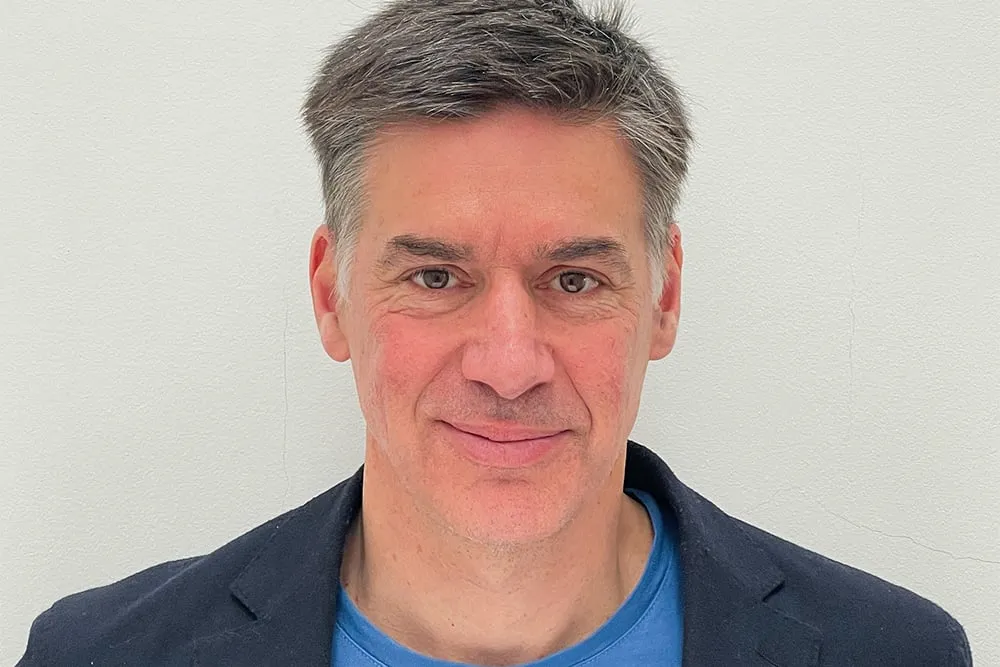
Sébastien Cruyt
Civil Engineer-Architect
Director of SI
Question about this story? Ask your question
Keep following this
Get an email when a new story is published. No account needed.
- SubjectOpinion