











André Barendregt, FEBESTRAL’s new president:
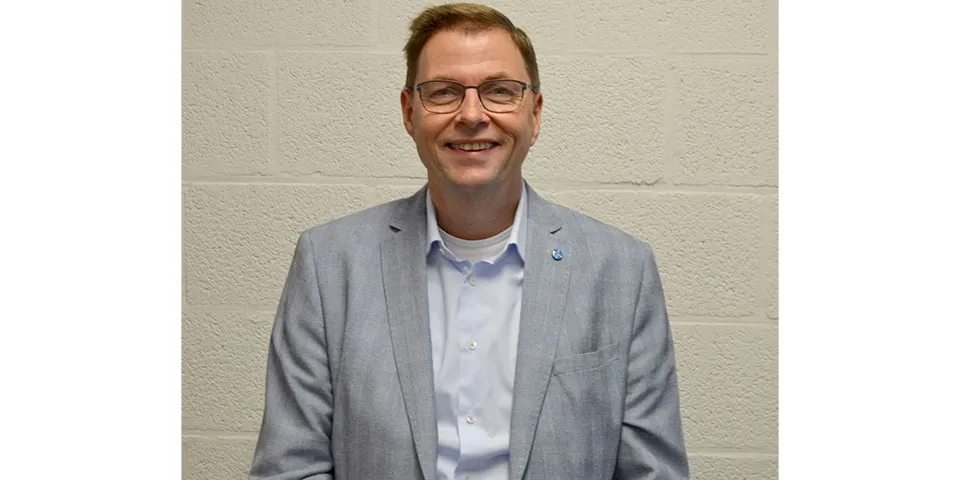
“Do citizens know why they should build a permeable driveway? And how can materials be properly compared in terms of durability?” These are questions André Barendregt wants to address within FEBESTRAL, the FEBE group bringing together manufacturers of products for the paving and garden market. The new president explains how he sees the future of a group whose agenda includes concrete paving blocks, concrete slabs, linear elements, patio slabs and accessories.
“The focus is on products and what they have to offer.”
Mr Barendregt, you are no stranger to the world of concrete, and it seems you bring a wealth of “concrete experience” to your new role as president.
ANDRÉ BARENDREGT: “I have indeed been active in the sector for some time. I started my career in 1982 at a Dutch family business specialising in dike surfacing, which was later acquired by the Holcim group. In 2006, I joined Marlux and Klaps in Belgium. In 2018, I became Managing Director of Marlux-Stradus. I have spent much of my career in paving, but I also have some experience with walls, prefabricated houses, pipes and wells. I also know ready-mixed concrete well.”
How do you view FEBESTRAL’s work over the past few years?
“Its external communications have been very positive. The focus is on the products and what they have to offer. Members have risen to the challenge of sustainability, which in our sector is largely centred on water. With today’s heavy rainfall, which is more frequent than in the past, a lot of water needs to be captured. In recent years, our manufacturers have brought some excellent products and solutions to market to address this societal challenge.”
Under your presidency, will FEBESTRAL also pay more attention to social issues?
“Yes, I think that is very important. FEBESTRAL has not focused solely on water in recent years, either. Manufacturers have also worked together to develop the cycle path paving block, a first-rate achievement. In time, it would be wonderful if we could convince society that concrete is the most sustainable material. I deliberately say
‘society’ in general, because I would also like to reach citizens. One of the most important aspects of the sustainability strategy is reducing the carbon footprint. Our children and grandchildren will undoubtedly take this into account when making purchases. It would be wonderful if concrete came to mind spontaneously. Concrete is too often seen as a hard, grey and outdated material, but it has much more to offer.”
Your experience in the cement industry in the Netherlands could come in handy.
“When it comes to CO2 emissions, many people raise their eyebrows at the mention of cement, but huge efforts are being made in the sector, including the use of alternative energy sources for cement kilns and carbonation. There are also alternatives such as geopolymers. In the Netherlands, I am also involved in the ‘Betonakkoord’, which aims to reduce the carbon footprint through multi-year planning. I often refer to the Lansink ladder principle behind this agreement. It reflects how we should deal with waste, starting with the most environmentally friendly option and ending with the least. Sustainable design is at the top of the ladder. You design a building as a hospital, for example, but it could later be used as a school. The sustainability options then continue down the ladder, right through to recycling waste materials into new products. That is still some way off in the concrete sector. For me, one of the keys to proving that concrete is the most sustainable material is a level playing field. By that I mean that everything must be assessed in the same way. If we can take the service life of our products into account, we come out top of the class.”
Are potential users sufficiently aware of the solutions offered by FEBESTRAL manufacturers?
“To some extent, yes, but when we attend trade fairs or conferences, we see there is still room for improvement. We have just launched a water campaign in collaboration with FEBELCO, the group representing pipe manufacturers. Since then, we have received many more questions. The public sector seems to know our products and their benefits well. The private market less so. We want people to understand the importance of building their driveway with permeable paving blocks. Some local authorities already require a certain number of m² of permeable paving blocks to be laid before granting a building permit. That is real progress.”
How do you see the sector developing over the next few years?
“We are living through unusual times. Most members had to halt production for two weeks as a precaution to protect their workers. Companies have invested heavily in equipment. For now, the market is performing well. The public market follows an electoral cycle, and that is still the case at the moment. As for the private market, we must continue to hope that consumers remain sufficiently confident. As a group, we will certainly do everything we can in the years ahead to keep our products on the map.
It is therefore important to respect the interests of the different members. The fact that members compete with one another does not mean we cannot pursue common interests. That is both the best and the biggest challenge.”
Question about this story? Ask your question
Companies in this story
Keep following this
Get an email when a new story is published. No account needed.
- SubjectNews
- CompanySTRADUS







