











Address the accessibility shortcomings in your building
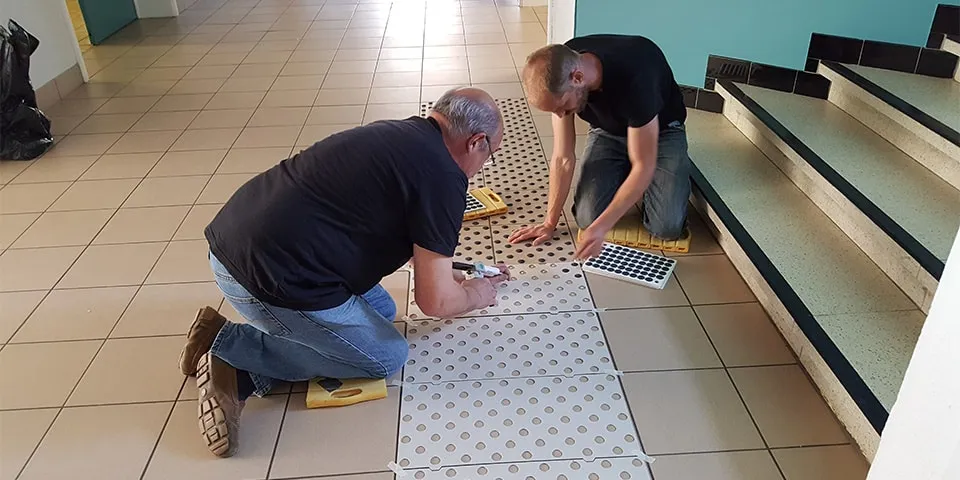
Since it was founded in 2002, VIAKAN has constantly sought new solutions to make public spaces more accessible to everyone. Its founder and managing director, Christian van Kan, has a very clear vision of what accessibility should mean for buildings and their surroundings. He urges clients, designers and contractors to see it as a way of improving ease of movement for everyone, whether or not they have a disability.
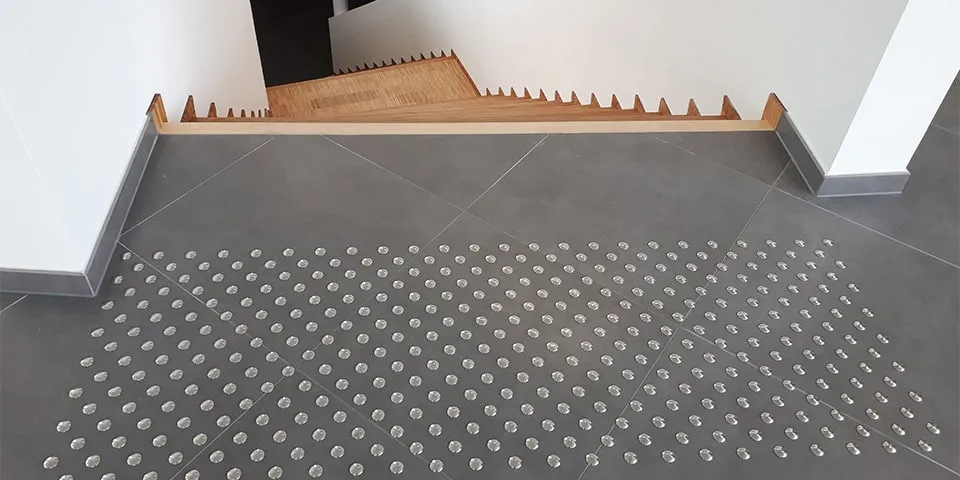
The studs are positioned with great precision in accordance with standards, particularly near stairways.
Stairs, platform edges and protruding objects such as letterboxes are all potential hazards for people with visual impairments, or simply older people. The aim is therefore to alert the public as they approach these hazards. This is the mission that an enthusiastic former road-marking paint specialist took on after discovering resin tactile paving at a trade fair in England.
Hazard warning studs
Christian van Kan: “I initially sold solutions for outdoor use, then realised that the same needs arose inside buildings. So I developed indoor tactile studs, adapting the design of the stud base to combine two complementary bonding methods: self-adhesive backing and liquid adhesive.” This unique combination provides excellent resistance to pull-out, impact and wear. Initially made from composite material, the studs were later also produced in aluminium, brass and stainless steel to meet functional and aesthetic requirements as effectively as possible.
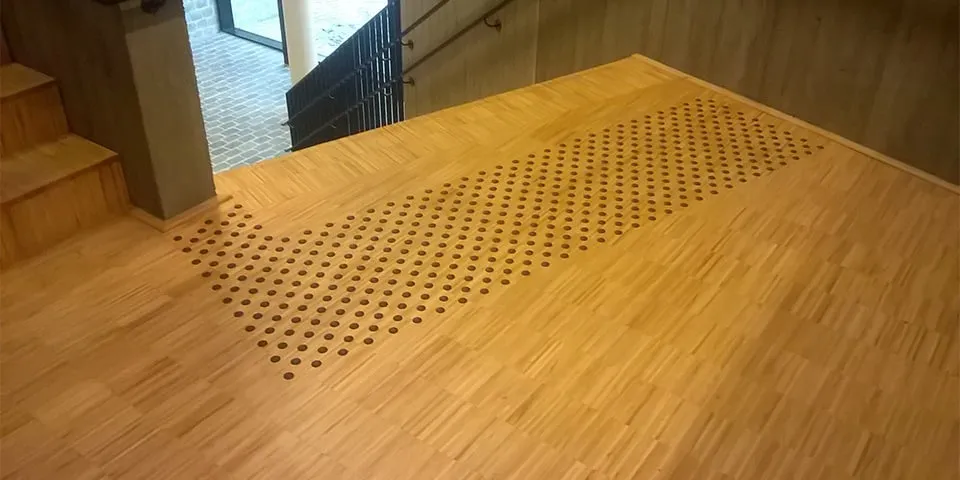
Unlike resin tactile paving, tactile studs do not alter the underlying surface.
The studs are positioned with great precision in accordance with standards, particularly near stairways. Christian van Kan: “Think of older people who don’t notice a step and fall. The studs are like a handrail: you may not necessarily need them, but they provide reassurance. Standards are important, of course, but you also need to put yourself in the shoes of someone with a visual impairment, someone who is distracted, someone who is panicking… The key is to put the right information in the right place, while keeping it as relevant as possible.”
Tactile guiding lines
VIAKAN also offers tactile guiding lines for people who are blind. Unlike studs, which warn of a hazard, these help people find their way. In care homes, for example, residents often struggle to find the exit after visiting reception, having been disorientated by the abundance of glazing.
Like the studs, tactile guiding bars are available in composite material or aluminium and benefit from the patented dual bonding system that gives the system its strength.
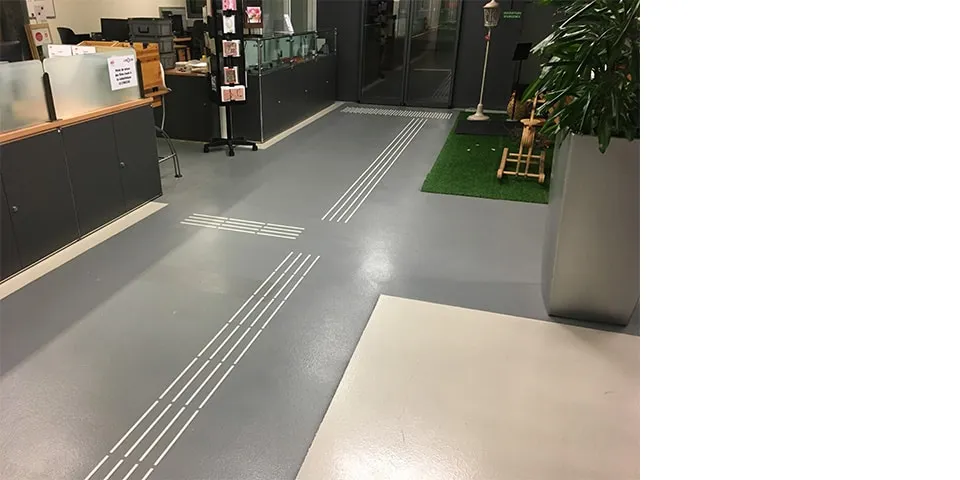
Unlike studs, which warn of a hazard, tactile guiding lines help people find their way.
Don’t settle for a half-hearted approach
The Tour des Finances and Liège-Guillemins railway station in Liège, the new Créagora headquarters in Namur, the European Parliament and the Council of Europe in Brussels, numerous museums and care homes, H&M stores and many bank branches are among VIAKAN’s finest references. Yet improving building accessibility with tactile studs or guiding lines is sadly not yet second nature for clients. Christian van Kan: “My biggest competitors are those who do nothing or only do half the job. Too often, people do something just to be seen to be doing it: they install them only on the new main staircase and leave the others for another day… But for a blind person, a half-hearted approach is one more obstacle.”
Convinced? Studs or guiding lines can be installed during construction or while a building is in use, without inconveniencing anyone or blocking access for long periods.
Question about this story? Ask your question
Keep following this
Get an email when a new story is published. No account needed.
- ThemeTransforming infrastructure and territories
- SubjectNews







