











A thicker little brother for the PLS Newton block
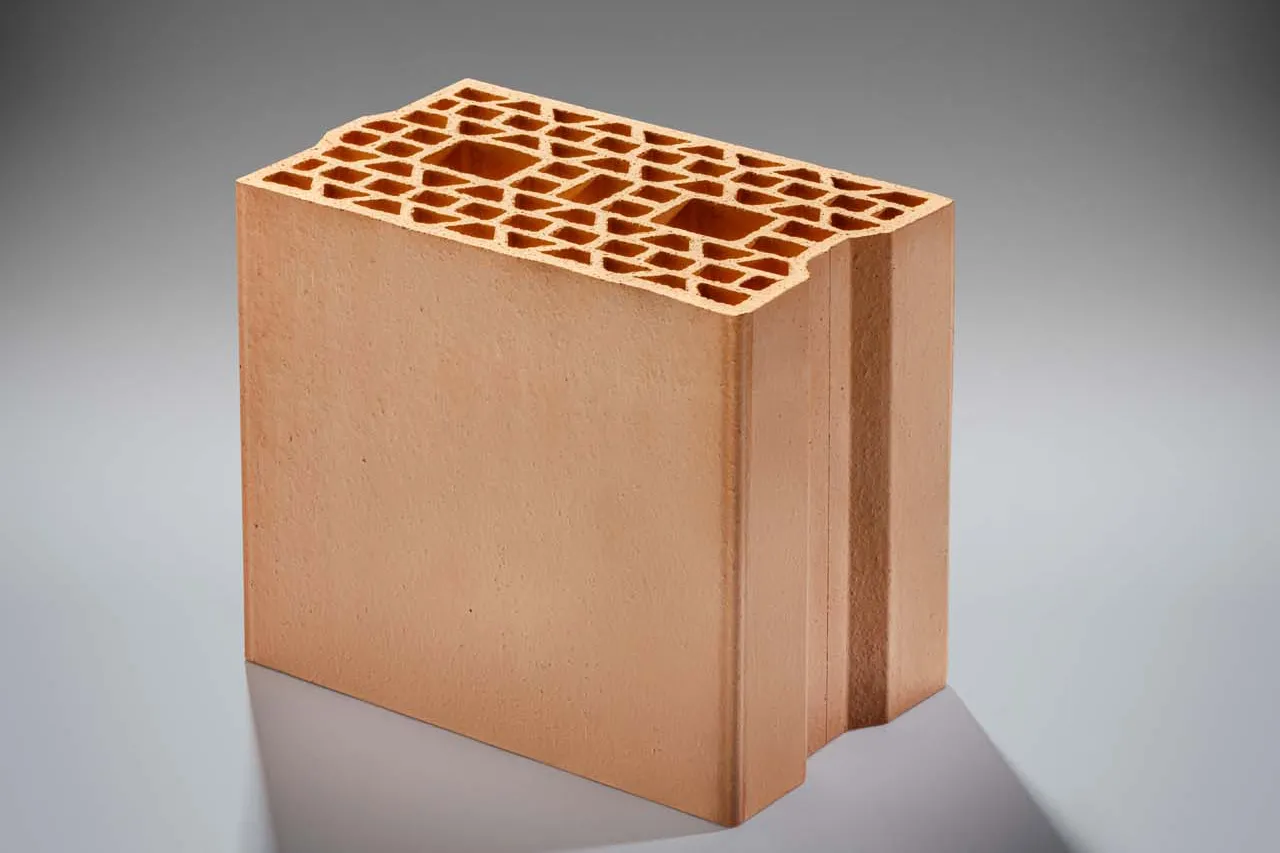
The Porotherm PLS Newton thin-bed block for internal walls is now available in a 19 cm thickness
Wienerberger previously launched the PLS Newton block in response to market demand for thin-bed blocks that would enable taller buildings to be constructed. The positive reception of the 14 cm-thick PLS Newton block immediately led to demand for a 19 cm-thick version. Wienerberger is now meeting that demand. The new Porotherm thin-bed blocks offer high compressive strength and excellent wall compressive strength, and measure 300x188x249 mm. They are easy to install, and their performance has been extensively tested and demonstrated.
The demand for a thicker version of the PLS Newton block is easy to understand. The 19 cm-thick PLS Newton thin-bed block gives architects greater flexibility when using clay blocks in taller buildings. These thicker blocks can support a higher linear load, in some cases up to 35% more. In addition, a thicker block helps limit slenderness when constructing taller walls. A final benefit is their greater mass per m², which is sometimes required for acoustic performance.
Carefully designed perforations
PLS Newton owes its success to the exceptionally high wall compressive strength achievable with walls built using these innovative blocks. They make it possible to construct apartments and utility buildings of up to six storeys using clay blocks. This performance is due to the combination of an optimised composition of the clay used in their manufacture and carefully designed perforations. The clay composition gives the blocks their high compressive strength, while the pattern creates a larger contact area between the blocks above and below, whether or not they are laid with a half-brick overlap.
The wall compressive strength values achieved by PLS Newton are higher than those obtained through theoretical calculations. Internal and external laboratory tests confirm these wall compressive strength values.
It is also striking that this higher wall compressive strength does not affect thermal performance. The PLS Newton block has the same lambda value as the well-known PLS 500 blocks and, among all ceramic and non-ceramic building blocks, boasts an excellent ratio of compressive strength to lambda value.
Easy to install
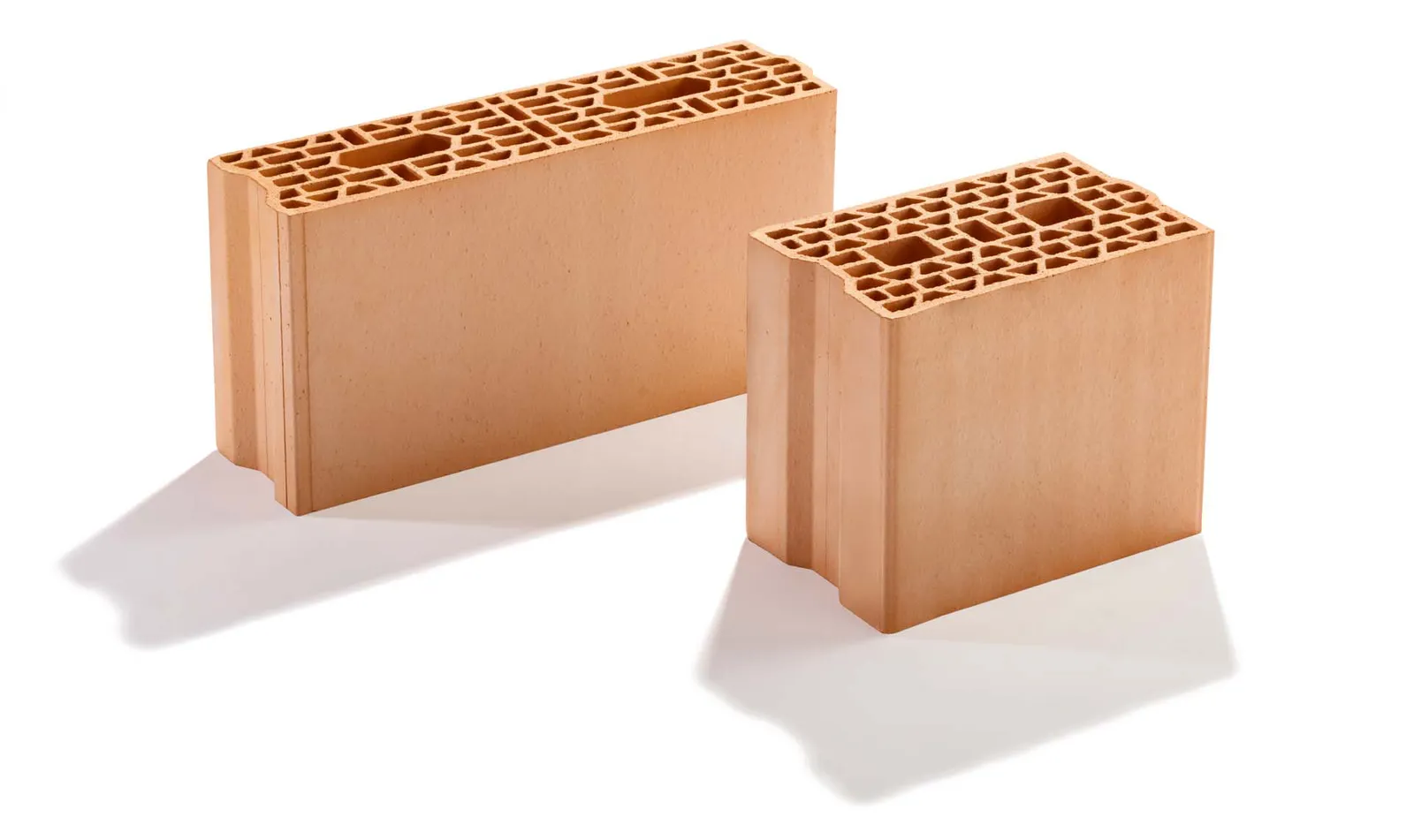
PLS Newton blocks are installed using the Porotherm Système-Collage or Porotherm Dryfix method. PLS Newton has also been added to the Porotherm Dryfix ATG approval. This means that when installing PLS Newton with Porotherm Dryfix, you can continue to rely on the reliability and premium quality of this ATG-certified bonding system. In addition, weighing around 13 kg per block, the 19 cm-thick PLS Newton remains comfortable and easy to install. Unlike the thinner PLS Newton version, which is 500 mm long, its weight is kept down by its 300 mm length. This makes it easier and more ergonomic to lay. The PLS Newton range as a whole is also lighter than comparable building blocks offering the same wall strength.
In addition, PLS Newton thin-bed blocks are compatible in height with the other thin-bed blocks for internal walls in the Porotherm range and offer the same benefits: they are easy to cut or chase and, thanks to their dimensional stability, do not require an expansion joint.
Quality support
The new PLS Newton thin-bed block is also available in the NRd calculator (www.calculmaçonnerie.be), which can be used to test the stability of an internal wall built with this block and subjected to vertical loads. The calculator can also be used for the entire Porotherm range.
Like its thinner counterpart, the new PLS Newton block has also been BENOR-certified, which is an advantage when determining the design values for wall compressive strength.
Key figures:
Declared mean block compressive strength fmean of 25 N/mm²
Characteristic wall compressive strength fk of 8,5 N/mm²
Question about this story? Ask your question
Keep following this
Get an email when a new story is published. No account needed.
- SubjectNews







