











A solution to combat gypsum staining
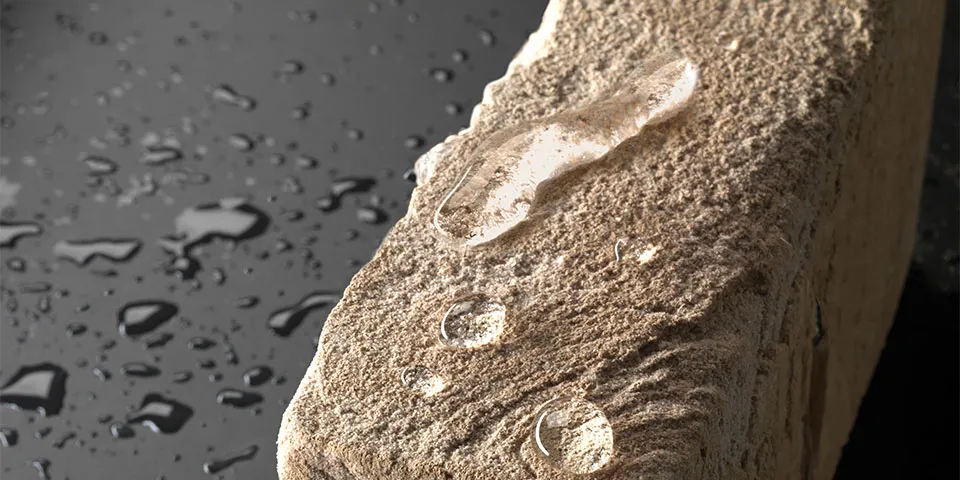
Vandersanden Group produces beautiful, long-lasting facing bricks. For some time now, its 3 Belgian plants have been ready for the future. The brick manufacturer will soon equip its facing-brick production site in the Netherlands with an impregnation system, a good solution to combat the growing problem of gypsum staining on façades.
“What matters most to us is having beautiful façades that stand the test of time,” explains CEO Jean-Pierre Wuytack. “To make our facing bricks better, more attractive and more environmentally friendly, we set up an innovation unit 10 years ago. It came up with the idea of impregnating the bricks. After firing, we treat the outer edges of the bricks with a special liquid to make them water-repellent. This protects façades against gypsum staining, a problem that has worsened in recent years.”
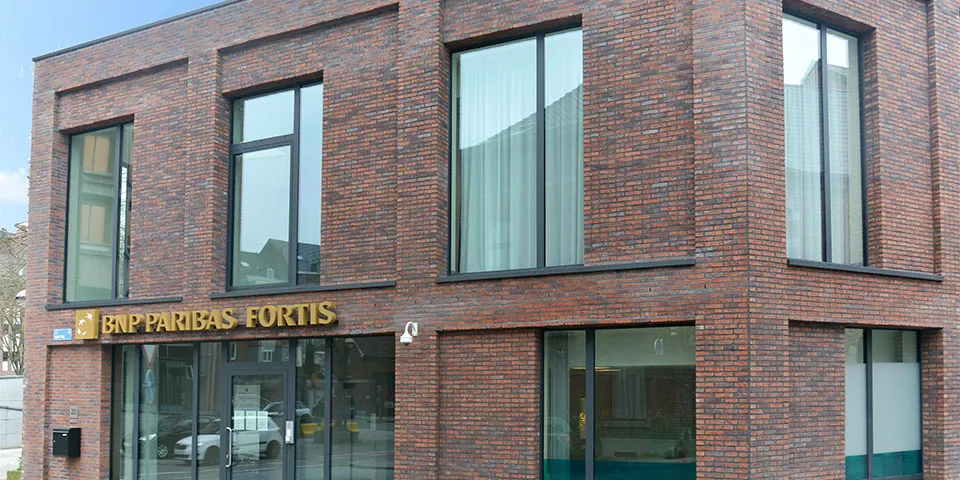
Gypsum staining on façades has become more common in recent years.
Increase in efflorescence on façades
Gypsum staining is a grey-white film that appears on many brick walls a few months or years after construction. It is most common on parts of the façade exposed to a lot of rain and sunshine. The film worsens over time, cannot be removed with water and only disappears after sandblasting.
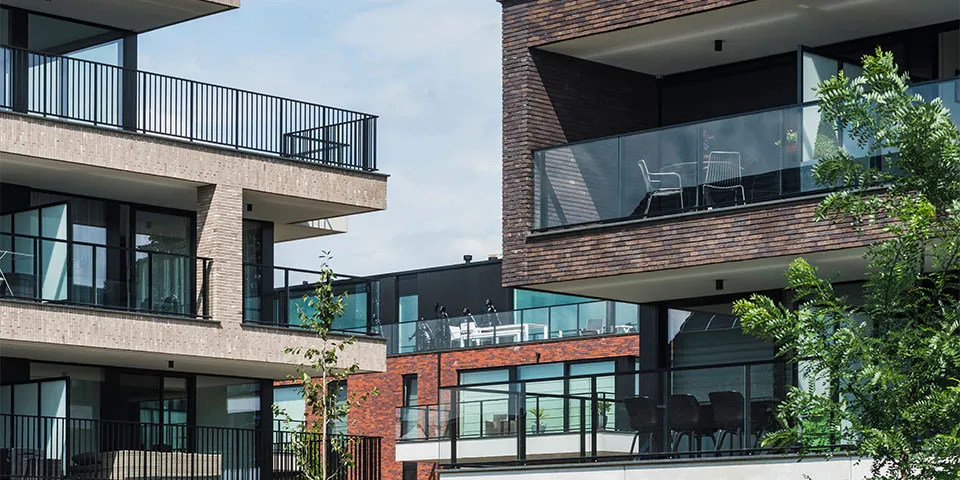
Vandersanden Group has invested €35 million in impregnation systems.
Belgian brick manufacturers have already commissioned several studies into gypsum staining. Its main cause is the increase in CO2 levels in the air. Plaster is generally added to cement mortar to prevent it from hardening too quickly. The reaction between plaster and cement produces ettringite and monosulphate. CO2 in the air breaks these substances down again. When it rains, plaster penetrates the pores in the mortar and reaches the facing bricks. As the bricks dry, efflorescence gradually appears.
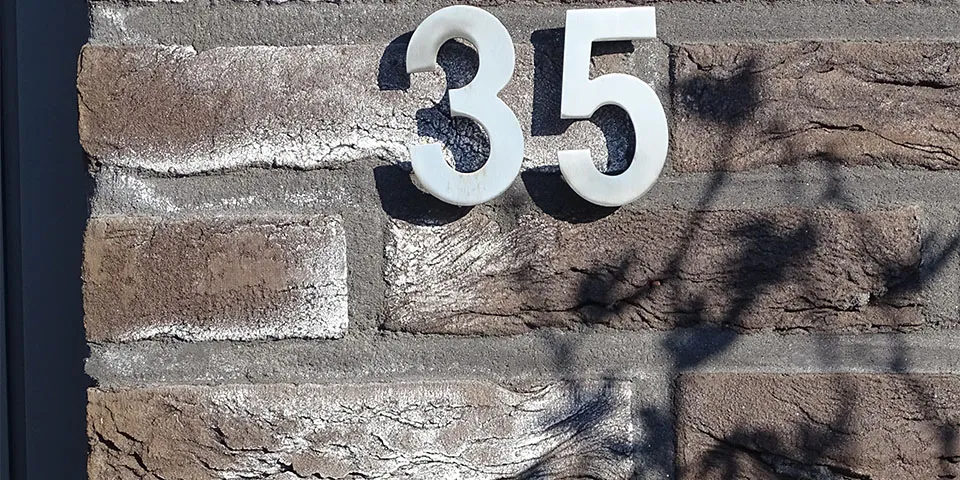
The plaster in cement mortar leaves a grey-white film on facing bricks.
The second cause of gypsum staining is that construction companies are increasingly using pre-mixed, air-entrained cement mortars to improve workability. But the more pores and air there are in the mortar, the more plaster it can take up. Plasticisers in the mortar cause the plaster to migrate to the surface. This is exacerbated by the lack of eaves on many modern buildings. As a result, façades are even more exposed to the effects of rain, wind and sun.
Beautiful façades that stand the test of time
How can gypsum staining be prevented? Jean-Pierre Wuytack: “The bricks can be bonded, as the adhesive is practically watertight. But of course, the result is not the same as with a neat, traditional mortar joint. In 2017, KU Leuven awarded a PhD on alternatives to cement mortar for preventing gypsum staining. But these alternatives are currently too complex to manufacture and therefore too expensive.”
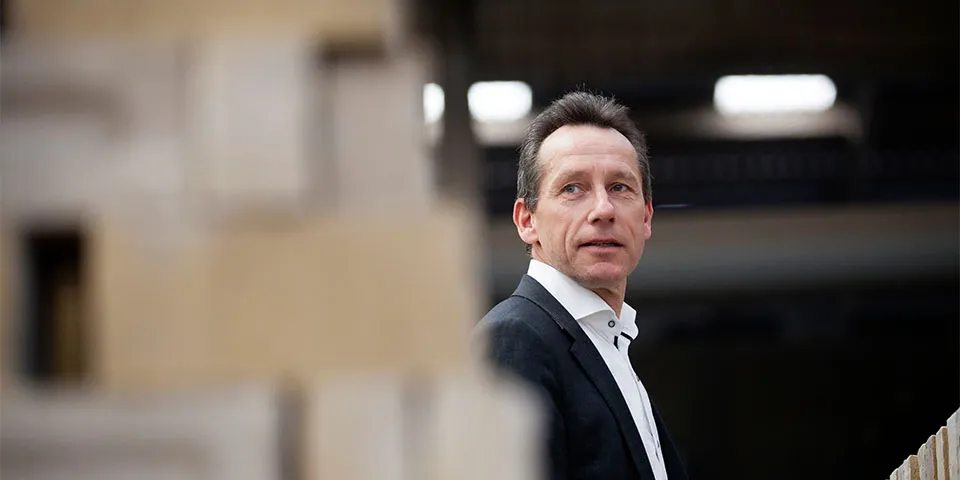
Jean-Pierre Wuytack, CEO of Vandersanden Group.
“However, we didn’t wait for that PhD. In 2015, we decided to make our bricks water-repellent using a water-repellent agent, a technique that has long been used for clay roof tiles. The product penetrates 5 to 10 mm into the brick. It repels water but allows moisture to escape, which is very important to prevent the bricks from freezing.
With this water-repellent treatment, gypsum staining, efflorescence and dirt have no chance to take hold on the façade. A related side effect is that efflorescence no longer occurs. As with untreated bricks, water-resistant bricks must be allowed to dry in the open air during installation. In cold, damp winter weather, you need to dry the mortar slightly.”
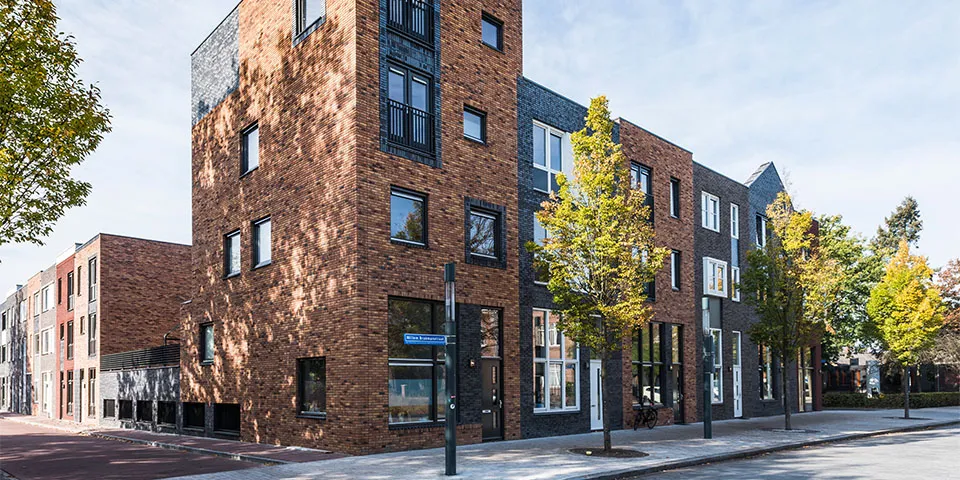
With impregnated bricks, gypsum staining, efflorescence and dirt have no chance to take hold.
A €35 million investment
Vandersanden Group has had brick impregnation systems installed at all 4 of its plants, representing an investment of €35 million. Jean-Pierre Wuytack: “This has no impact on our customers, as the price is the same as for other bricks. For 95 years, we have been making products that enhance our surroundings, and we want to keep doing so. That is why we believe it is our duty to make this investment: we want to build façades that retain their appearance, even after 100 years.”
Question about this story? Ask your question
Keep following this
Get an email when a new story is published. No account needed.
- ThemeFaçades and building comfort
- SubjectNews







