











A robust, purpose-designed retention basin for Fleurus station
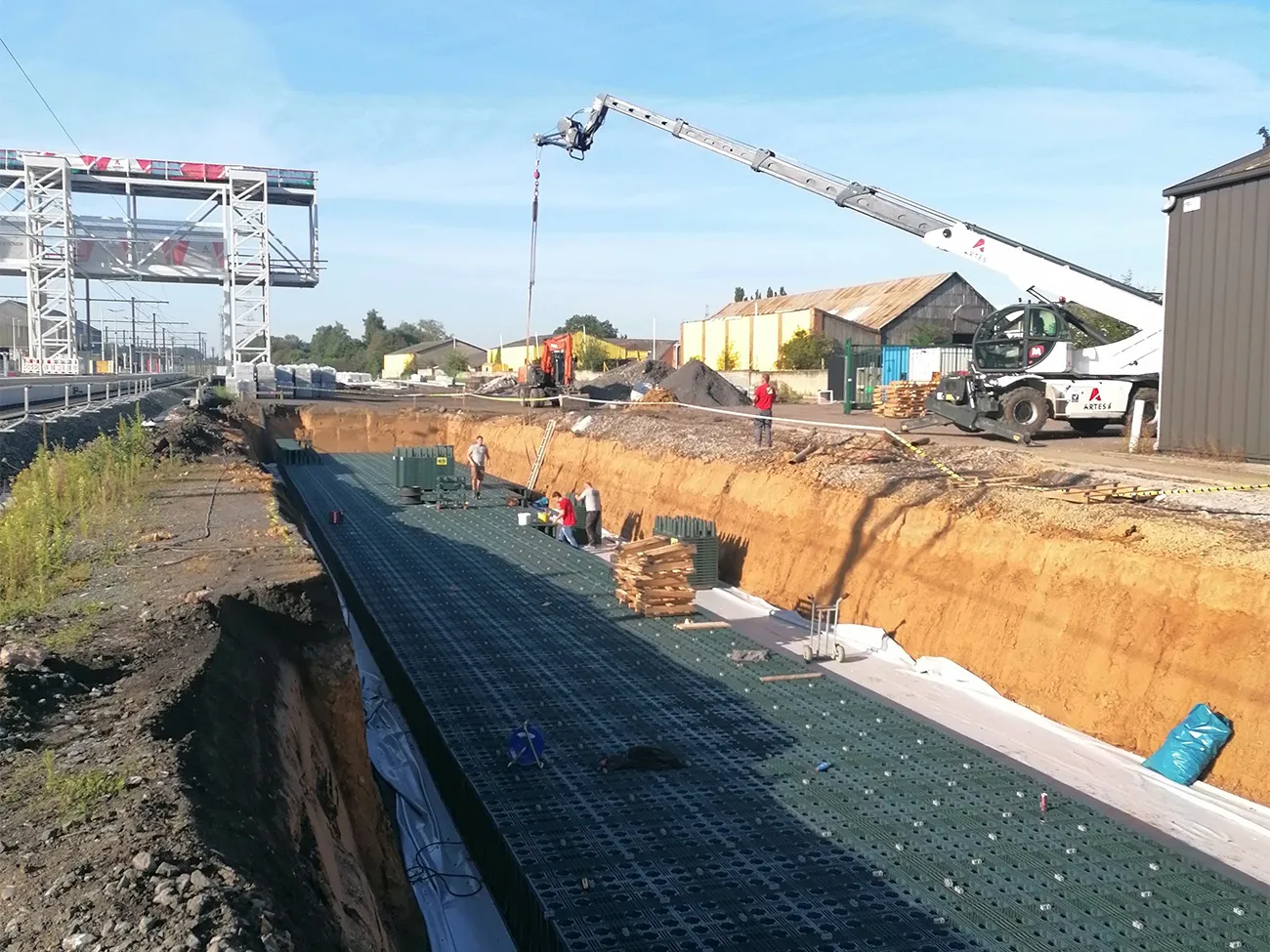
It is no secret that climate change is bringing increasingly severe and frequent flooding. Building a retention basin, whether designed for infiltration or watertight, is logically becoming standard practice for every new project. At Fleurus, the station renovation project provided an opportunity to install a watertight basin with a capacity of 766 m3. Superplastic supplied the materials and carried out the installation. We spoke to Jean de Brouwer and Xavier Cornet, Superplastic’s sales director and estimator and tender specialist respectively.
Unlike conventional open-air basins, underground solutions save valuable space at the surface. At Fleurus, a watertight retention basin was selected for construction beneath the road leading to the main car park. Xavier Cornet: “The model we proposed has a load-bearing capacity of 60 tonnes. The basin is essentially squeezed between the railway tracks and a building, which is why it is long and narrow. Infrabel also required a safety distance to be maintained from the tracks.”
German quality
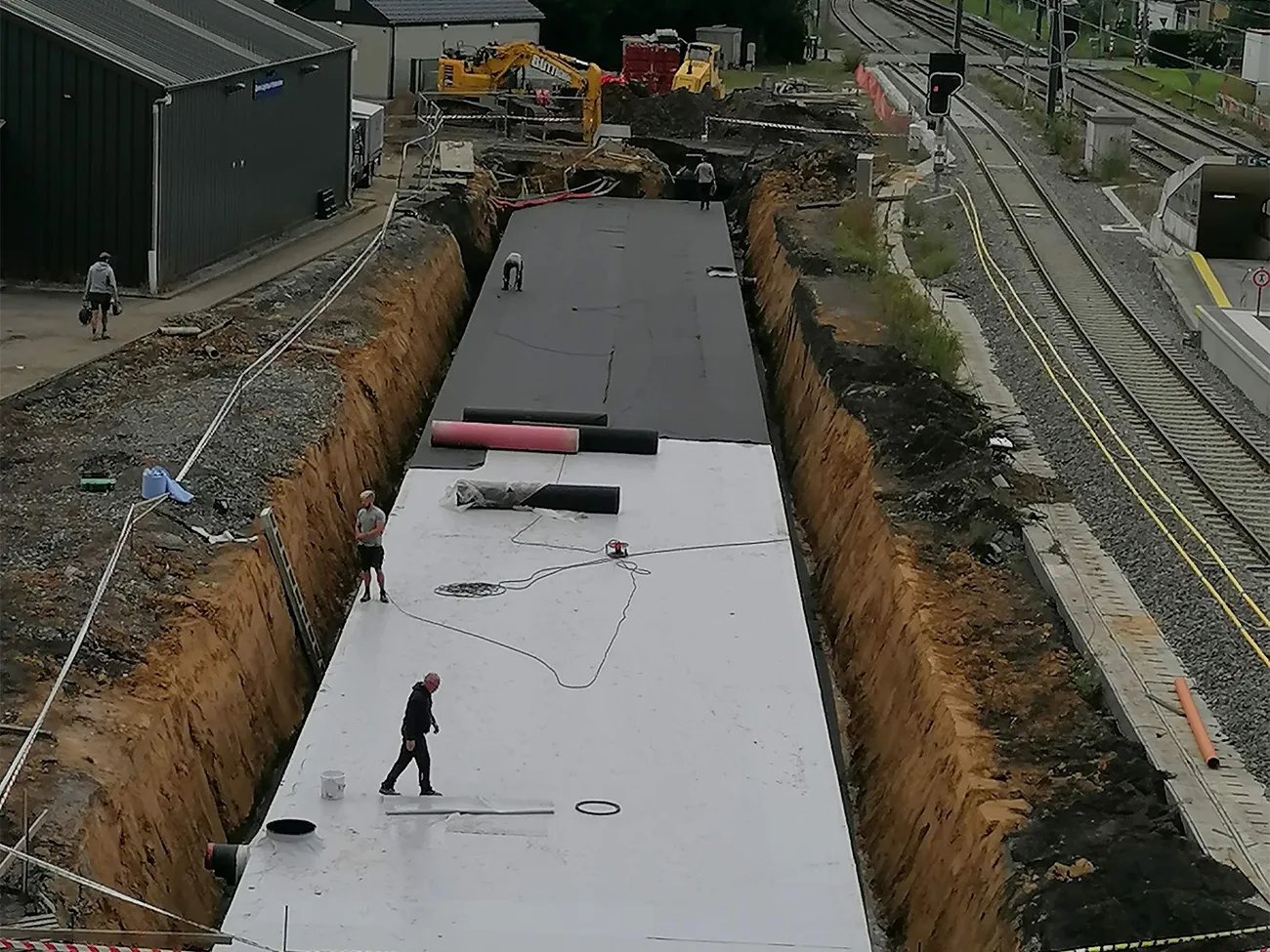
Working as a subcontractor for ARTES, Superplastic chose a modular, stackable polypropylene system that is lightweight, easy to install and highly durable: Rigofill ST (FRÄNKISCHE). The design office calculated the flow rates and basin dimensions based on the water collection areas. Superplastic then supplied the components and entrusted installation to a contractor familiar with the system, in an excavation prepared by the earthworks contractor. Xavier Cornet: “The crates, made in two parts to make transport more cost-effective, were stacked in two layers, and inspection chambers were provided for inspection or cleaning. As this is a watertight basin, it was completely covered with a waterproofing membrane, itself protected by geotextile.”
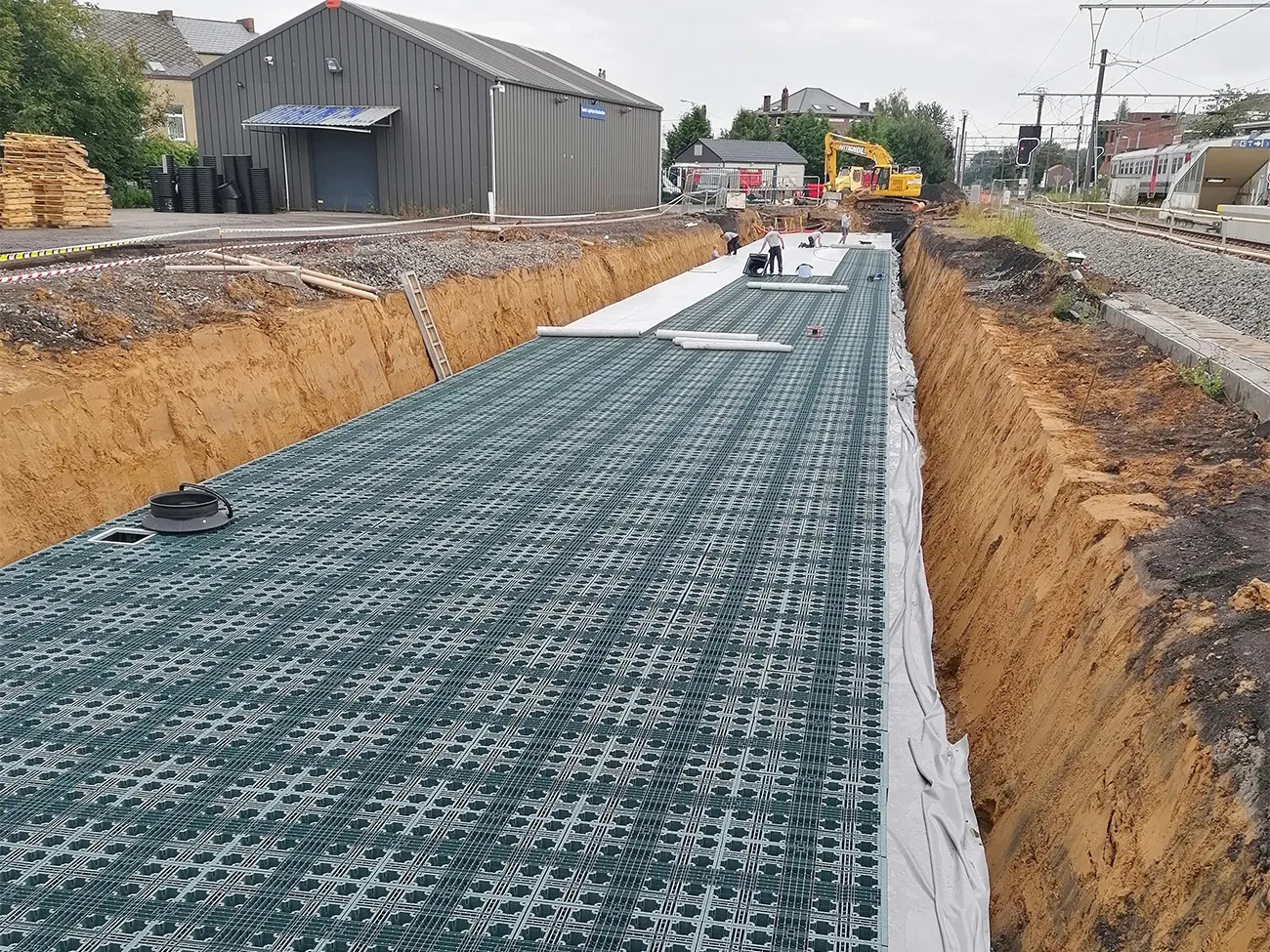
A retention basin stores water from heavy rainfall to prevent it flowing too quickly into the sewer network and overwhelming it. As a result, such a structure is empty 95% of the time. Jean de Brouwer: “The advantage of these crates is their very high load-bearing capacity, making them ideal for use beneath roads and car parks, unlike buried tanks, which tend to deform under external pressure when empty. Our product is also unaffected by soil acidity, so it has an exceptionally long service life.”
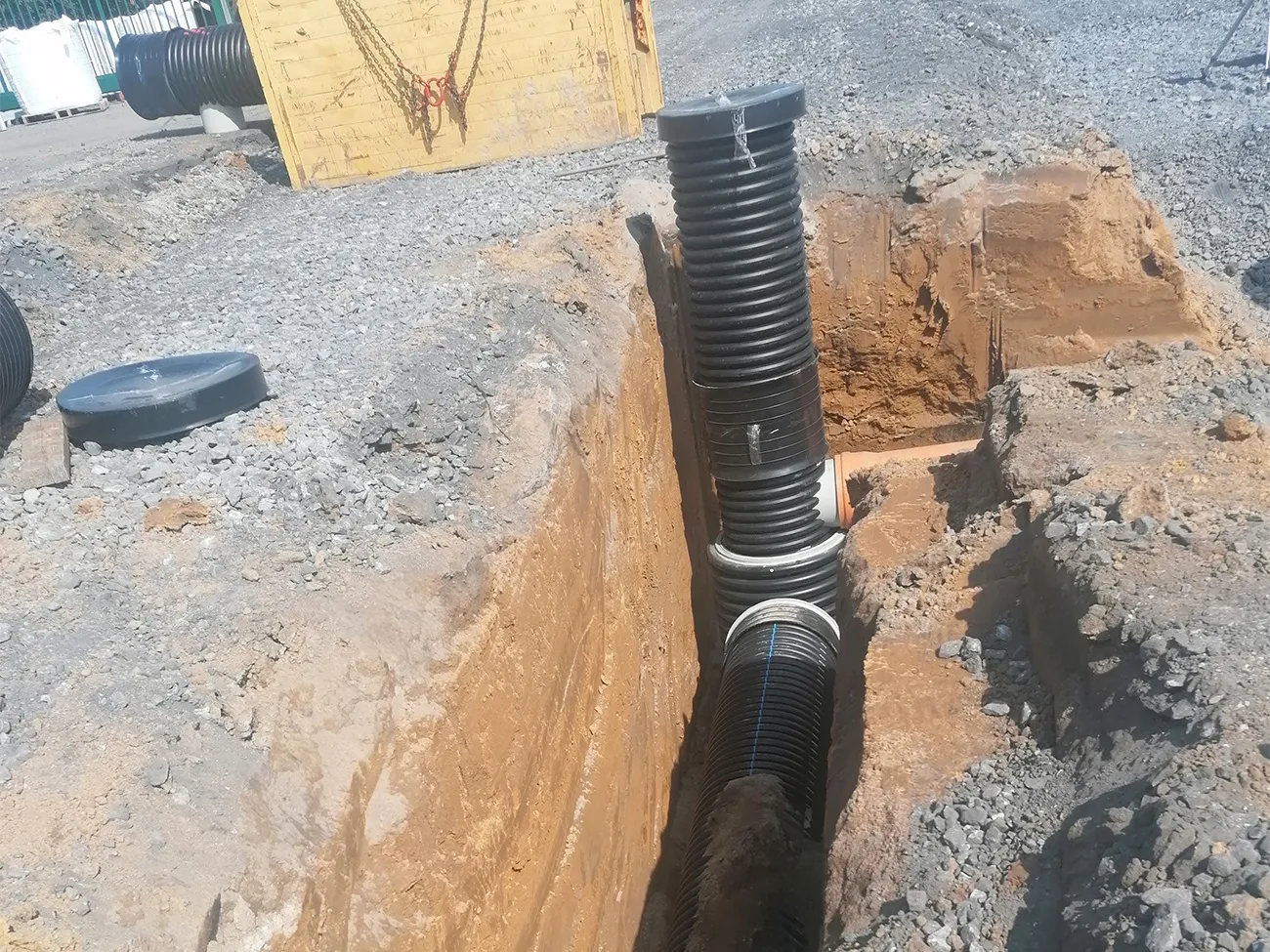
Two water pre-treatment units (Sedipipe) were installed upstream of the basin. Their role is to filter the water and keep the basin clean over time, with the pre-treatment unit’s chambers cleaned as appropriate for the water passing through them.
Out of sight, yet so important
Superplastic has built up specialist expertise over time. The company has operated under its current management since 1984 and is available to clients, architects, contractors and design offices to help them optimise sewer networks. It is a complex field, with a wide range of possible solutions. What is more, the retention and infiltration of rainwater only became a requirement recently. In Flanders, it is even compulsory for private individuals. Wallonia is preparing to follow suit. Jean de Brouwer: “People are less interested in what lies beneath the ground, even though it is hugely important. When something goes wrong, the costs are enormous because the road has to be dug up. To avoid that kind of problem, it is worth thinking carefully about which solution is best suited to the situation.”
Superplastic can point to a number of impressive projects, including infiltration basins for Bpost in Tinlot and Andenne; watertight basins for sorting centres in Mons (two basins totalling nearly 1000 m2) and Hermalle-sous-Huy (1150 m2); and another for Trilogiport.
It is also possible to combine efficiency with good looks, even in a retention basin!
Question about this story? Ask your question
Keep following this
Get an email when a new story is published. No account needed.
- ThemeTransforming infrastructure and territories
- SubjectNews







