











A new hydroelectric power station at Anseremme to generate the equivalent of the annual consumption of nearly 2,000 households
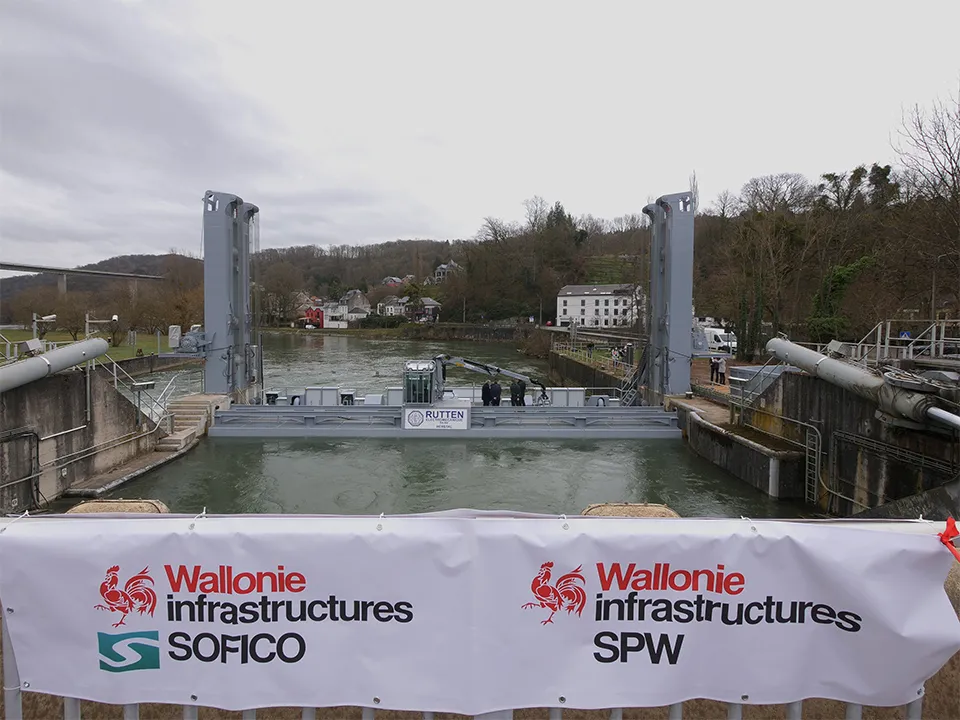
This Tuesday morning, the Anseremme hydroelectric power station on the Upper Meuse was officially opened by Walloon Minister for Energy Philippe HENRY, together with the various stakeholders: S.A. Energie-Fleuves, SOFICO and SPW Mobilité et Infrastructures.
Now officially generating power, this new station is expected to produce nearly 7 million kWh/year, equivalent to the annual consumption of nearly 2,000 households.
Minister HENRY welcomed the inauguration: « The delivery of this project is an excellent example of an ‘alliance between jobs and renewable energy’. It helps promote and sustain local expertise while also contributing to the necessary transformation of our energy landscape in response to the climate emergency. »
The Anseremme hydroelectric power station, operated by Energie-Fleuves, comprises:
- 5 Kaplan Omega-D turbines, each with a nominal flow rate of 15 m³/s;
- 1 steel structure housing the turbines, measuring 20 m long, 12 m wide and 7 m high, with a total weight of 300 tonnes;
- 4 lifting cranes, each with a capacity of 100 tonnes;
- 1 trash rack cleaner to remove debris from each turbine and transfer it into a 20 m³ container;
- 1 electrical cabin with a transformer enabling electricity to be fed into the grid via a 11000-volt transformer.
The power station was built by Rutten Electromécanique, a 100% Walloon company based in Herstal.
3 major challenges successfully overcome!
One of the main challenges of the project was to fit the power station into sluice opening no. 1 on the right bank of the dam. A bespoke installation was therefore built.
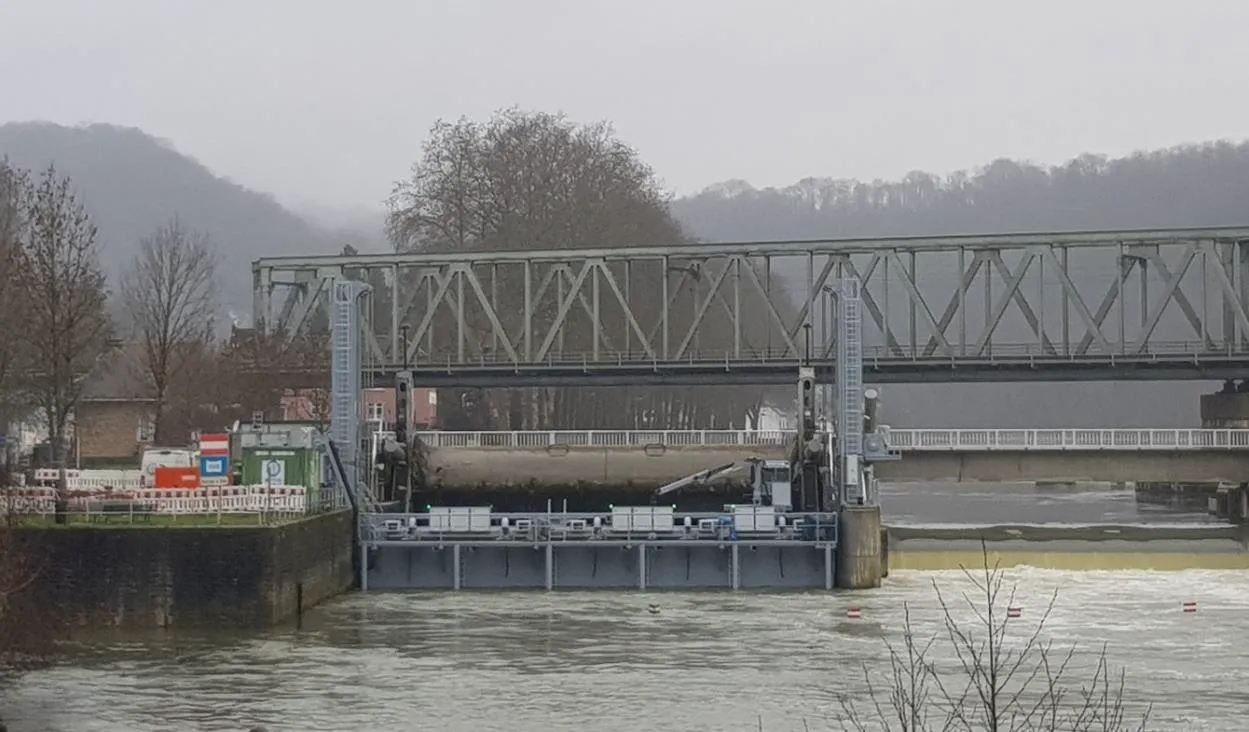
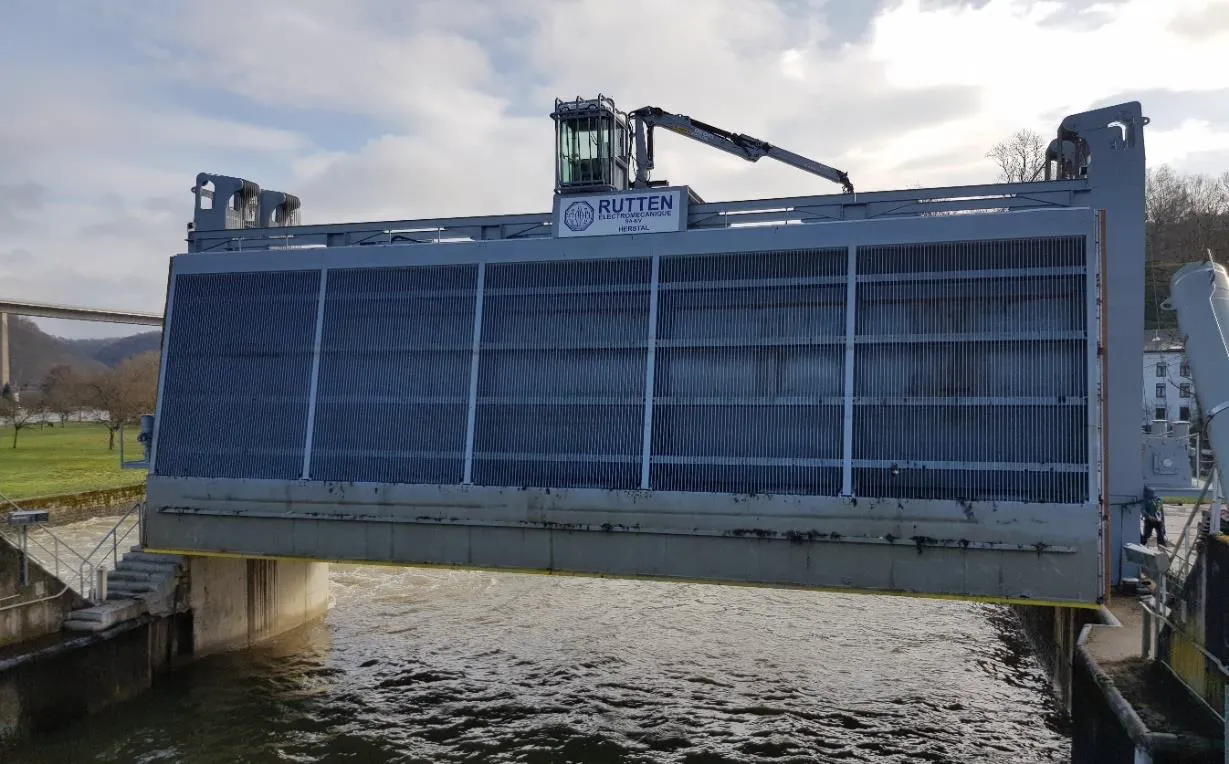
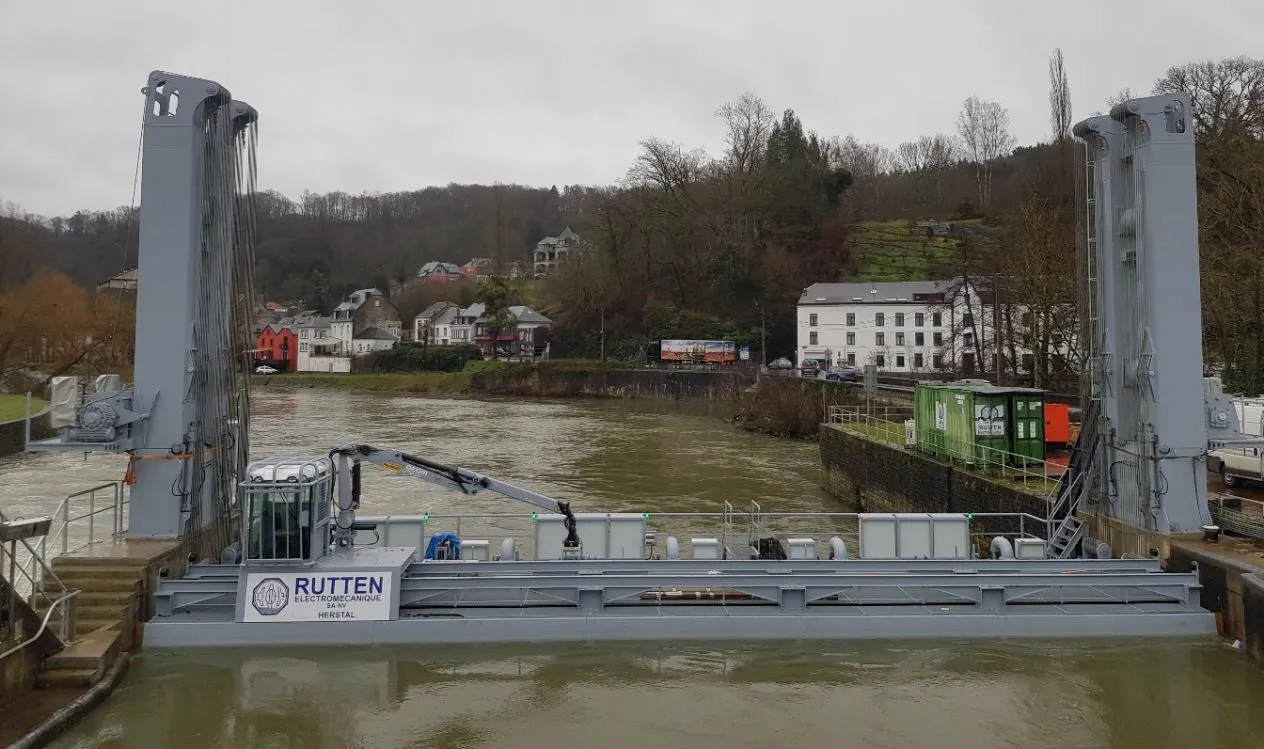
Another challenge was finding a way to clear the sluice opening in the event of flooding. This is why the power station is removable. It can be lifted above the water level in the event of a flood. The 4 cranes positioned on either side carry out the operation in 30 minutes. This is no mean feat, given that the power station weighs 300 tonnes.
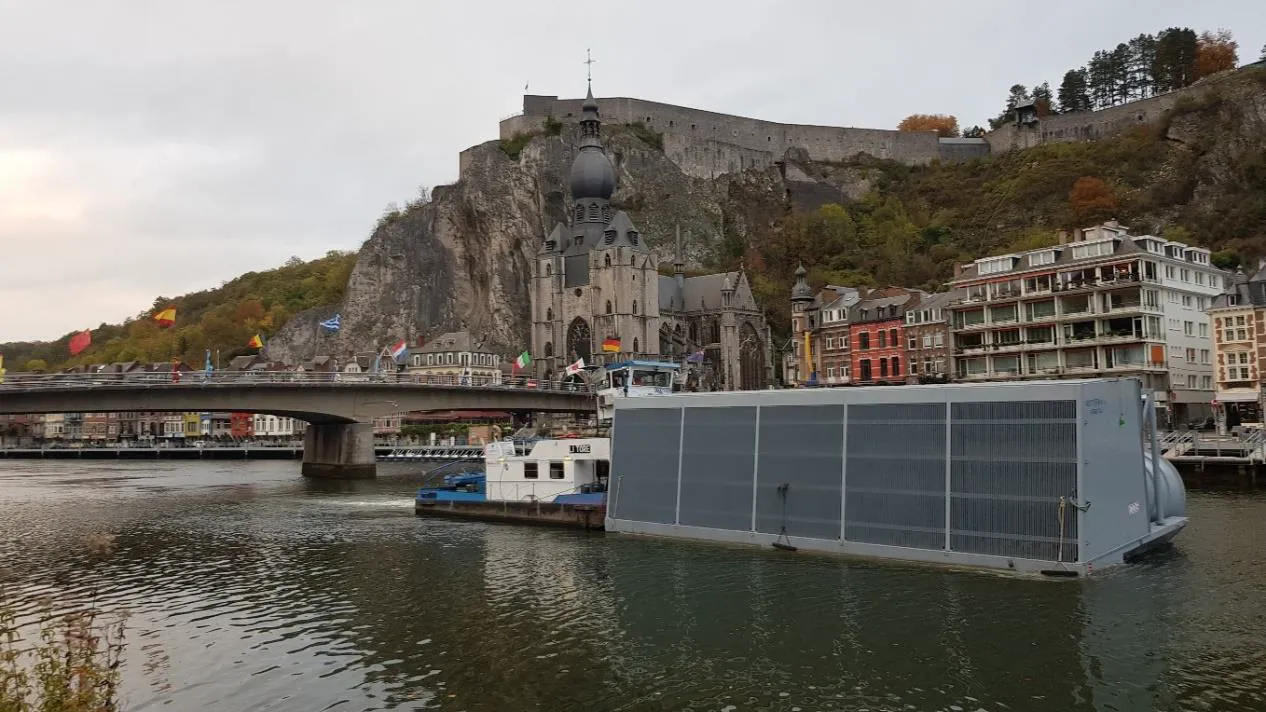
A third, equally significant challenge concerned transporting the power station by water. It was designed to be transported along the Meuse by a pusher tug. Its dimensions allow it to pass through the Upper Meuse locks, which are only 12 m wide. However, with an air draught of 6 m, the level of the Meuse had to be lowered by 1.20m to enable it to pass beneath the Dinant bridge, which has an air draught of 5 m.
Key dates
- Work to install the power station began in September 2017 with civil engineering works. These works were carried out in advance during the Meuse maintenance period. The pier next to the future power station was extended and raised, and a downstream apron was built to prevent erosion.
- It was not until August 2020 that the cranes and the power station itself were installed on site.
- The power station was transported by water at the end of October, then positioned and fitted out in early November.
- The past few months have been used to carry out tests on the turbines and control systems.
- Although fish passes are already in place at Anseremme, one on the island’s left bank and the other on its right bank, a new fish pass will be built in 2022. It will be suitable for large migratory fish and will meet European requirements in this area. Specific coordination will be required to build the fish pass while allowing the power station to remain in place and continue generating power.
An automated, coordinated system
Control systems operate the power station and communicate with the dam’s control systems. The dam’s control systems continuously transmit the maximum flow rate that the power station is permitted to turbine. SPW Mobilité et Infrastructures, which is responsible, among other things, for managing flows on the Upper Meuse, will ensure hydrological safety and environmental continuity. To this end, the concessionaire will be given instructions to maintain water levels, minimise flow fluctuations in the reaches between dams and prevent flooding.
A programme to equip dams
This power station is part of a SOFICO programme to award concessions for the water drops at dams on three Walloon waterways, enabling concessionaires to equip them with hydroelectric power stations.
On the Upper Meuse, the programme, awarded to Energie-Fleuves, provides for the possible equipping of 9 dams.
6 power stations are currently operational:
- Hun (generating power since 2013),
- Hastière (generating power since 2016),
- Waulsort (generating power since 2016),
- Tailfer (generating power since 2018),
- Houx (generating power since 2020),
- Anseremme (generating power since today).
3 power stations are planned:
- Rivière (civil engineering works carried out during the Meuse maintenance period in 2017, installation work will begin in the second half of 2021);
- Dinant (civil engineering works carried out during the Meuse maintenance period in 2017);
- La Plante.
Anseremme is the sixth power station in the Upper Meuse programme to start generating power. Completing the programme on this waterway, with 9 power stations, would enable it to produce nearly 63.700.000 kWh/year, equivalent to the annual consumption of more than 18,000 households.
The equipment is being installed in phases, subject to compliance with certain technical constraints, such as maintaining the waterway’s level, and to keeping cumulative fish mortality below a set limit.
PROJECT STAKEHOLDERS
SOFICO, the concession-granting authority
By making water drops or land alongside its infrastructure available through concessions, SOFICO helps promote the development of renewable energy.
As well as generating revenue, these projects enable SOFICO to act as a key partner on which Wallonia can rely to help meet the target of 21% renewable energy in the Walloon Region by 2030 as part of the fight against global warming.
In line with this principle, SOFICO awards concessions for water drops at dams to develop both removable and fixed hydroelectric power stations.
The programme to equip dams with removable hydroelectric power stations covers 18 dams on 3 waterways:
1. the Upper Meuse (9): La Plante, Tailfer, Rivière, Hun, Houx, Dinant, Anseremme, Waulsort and Hastière;
(concession awarded to Energie-Fleuves SA)
2. the Basse Sambre (6): Salzinnes, Auvelais, Roselies, Montignies-sur-Sambre, Marcinelle and Monceau-sur-Sambre; (concession awarded to SA Merytherm)
3. and the Ourthe (3): Grosses Battes, Fêchereux-Hony and Chanxhe.
(concession awarded to SA Merytherm)
These power stations could generate a total of 79.800.000 kWh/year, equivalent to the annual consumption of nearly 23,000 households (almost the same as the total number of households in the city of Verviers).
9 power stations are currently in operation:
➢ Tailfer, Waulsort, Hastière, Hun, Houx, Anseremme (Upper Meuse),
➢ Marcinelle and Monceau-sur-Sambre (Basse Sambre),
➢ Grosses Battes (Ourthe)
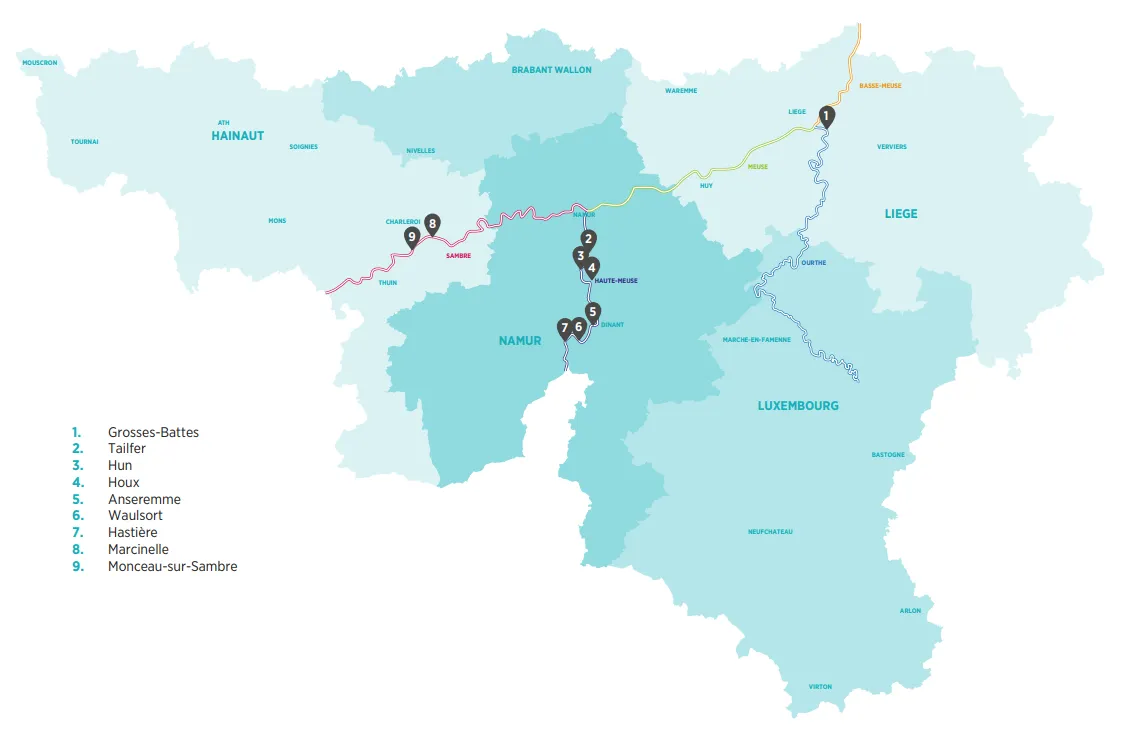
The operational removable power stations generated nearly 34.000.000kWh in 2019, equivalent to the annual consumption of more than 9,500 households.
12 power stations are expected to be operational by the end of 2021, representing 2/3 of the SOFICO programme:
➢ The Chanxhe power station (Ourthe) is expected to officially start generating power during the first half of 2021.
➢ The Roselies and Auvelais power stations (Basse Sambre) are expected to officially start generating power in the second half of this year.
SPW Mobilité et Infrastructures and the SPW Department of Nature and Forests (DNF)
As manager of the Walloon Region’s navigable waterways network, SPW Mobilité et Infrastructures is a key stakeholder in the project. It is responsible for the day-to-day hydrological management of the network. In this capacity, it retains control of the dam gates to regulate water levels and prevent any overflow during floods.
The Department of Nature and Forests, working with the Environmental Studies Directorate of SPW-MI, is responsible for checking that the project minimises its impact on fish, particularly migratory fish, and forms part of efforts to restore ecological continuity along the waterway. Its role includes assessing the impact of the turbines on fish, allocating reserved flows that cannot be turbined according to the time of year, and approving the fish pass and its capture trap.
The DNF will subsequently work with the Universities of Namur and Liège to carry out scientific monitoring of the fish pass and study the species that use it. This work forms part of an ecological restoration programme (the Saumon-Meuse programme), monitoring the quality of Walloon waterways and a study of the effectiveness of this new fish pass.
The concessionaire: S.A. Energie-Fleuves
The Upper Meuse dams were built to enable navigation by regulating water levels, but without provision for hydroelectric power stations. Seeking to promote green energy and make use of these untapped water drops, SOFICO launched a call for tenders, which was won by Energie-Fleuves.
Energie-Fleuves, a company specialising in the operation of hydroelectric power stations, entrusted the study, design and construction of the power stations to Rutten Electromécanique.
Rutten Electromécanique has specialised in hydraulic turbines for low-head sites without civil engineering works for 40 years. At low-head sites, the high cost of civil engineering works often makes it impossible to install hydraulic turbines. Rutten Electromécanique’s Omega-D turbines provided a solution to this constraint. Energie-Fleuves also entrusted the company with turbine maintenance.
Question about this story? Ask your question
Keep following this
Get an email when a new story is published. No account needed.
- SubjectNews







