











A care home fully protected against lightning
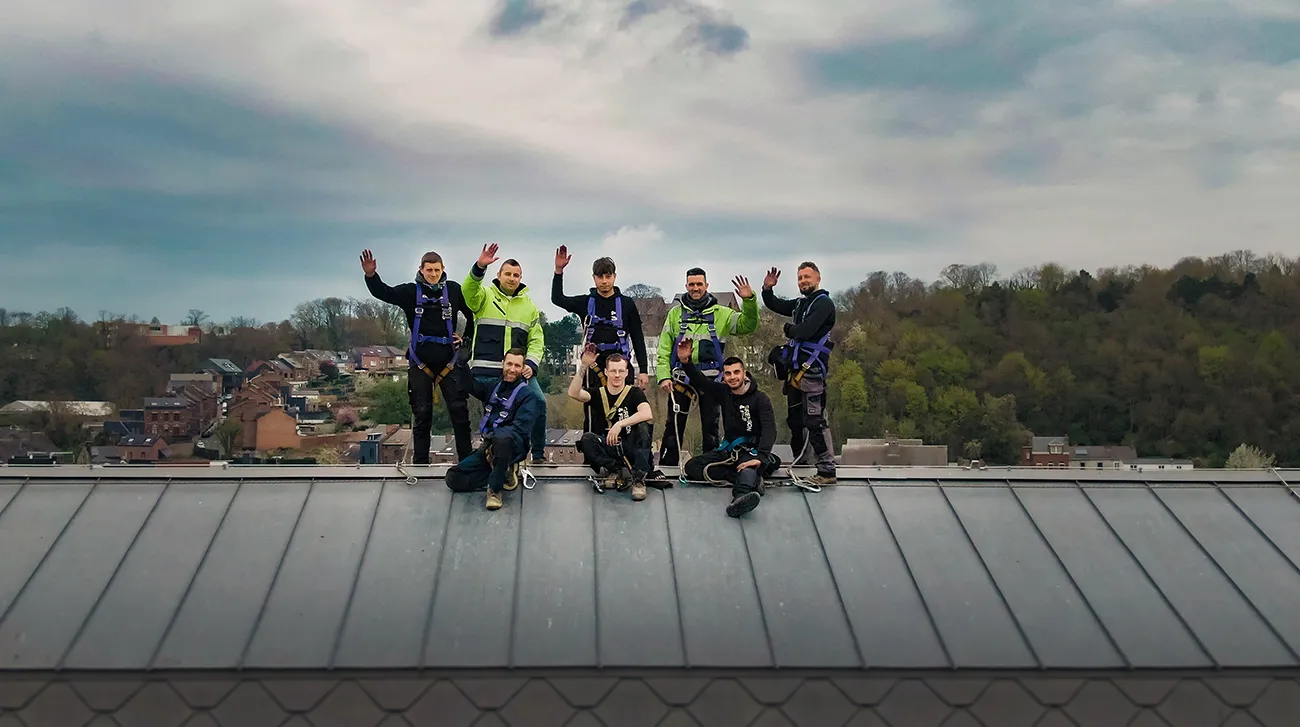
Based in Andenne, Grenson & Fils has specialised in lightning protection and earthing for more than 46 years. It is a niche business where experience is paramount. There are few competitors, and father Henri Grenson has been able to rely on his son Hirwin to grow the business, which now employs 18 people in Belgium and a dozen in the Grand Duchy. Residents of the « Les Oliviers » care home in Virton can rest assured.
In neighbouring Luxembourg, the ITM requires lightning protection on many buildings, regardless of their height. In Belgium, this is only required for buildings over 25 m tall. In all other cases, a risk assessment determines whether lightning protection is needed. Hirwin Grenson, managing director: « The new RGIE, which is not legally binding but is more of a code of good practice, recommends such a risk assessment. It is no surprise that we have seen an increase in requests for them in recent years. »
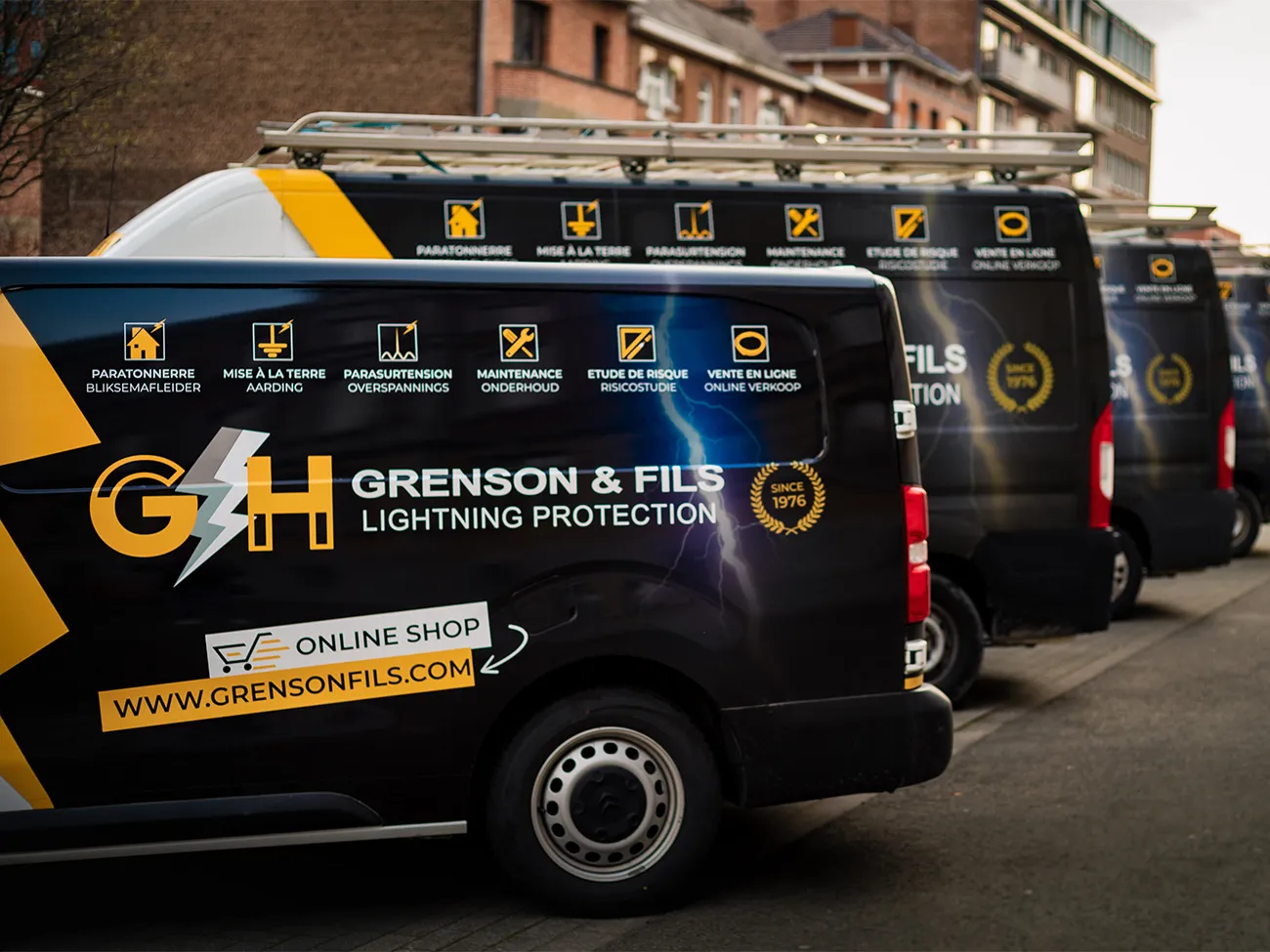
Grenson & Fils is organised into several units that operate independently of one another: a design office that carries out risk assessments, an installation team and a maintenance team. Earthing is a separate activity altogether. Hirwin Grenson: « The experience we have built up over the years has enabled us to adapt to all types of soil, whether clay, sand or schist, and find a solution to every problem. Demand is high: when earthing is needed, at low or high voltage, people call Grenson! »
Growing awareness of the risk
With safety now receiving greater attention, design offices are also beginning to recognise the potential risks posed by lightning. Although the likelihood of a building being struck remains low, strikes have become more frequent and destructive in recent years. One reason is that every household has a multitude of electrical devices, such as computers, televisions and appliances, permanently connected to the mains, creating a magnetic field. Solar panels and stainless steel chimneys are another factor. Lightning can therefore strike anywhere, not necessarily at the highest point in the landscape.
A care home protected by an invisible cage
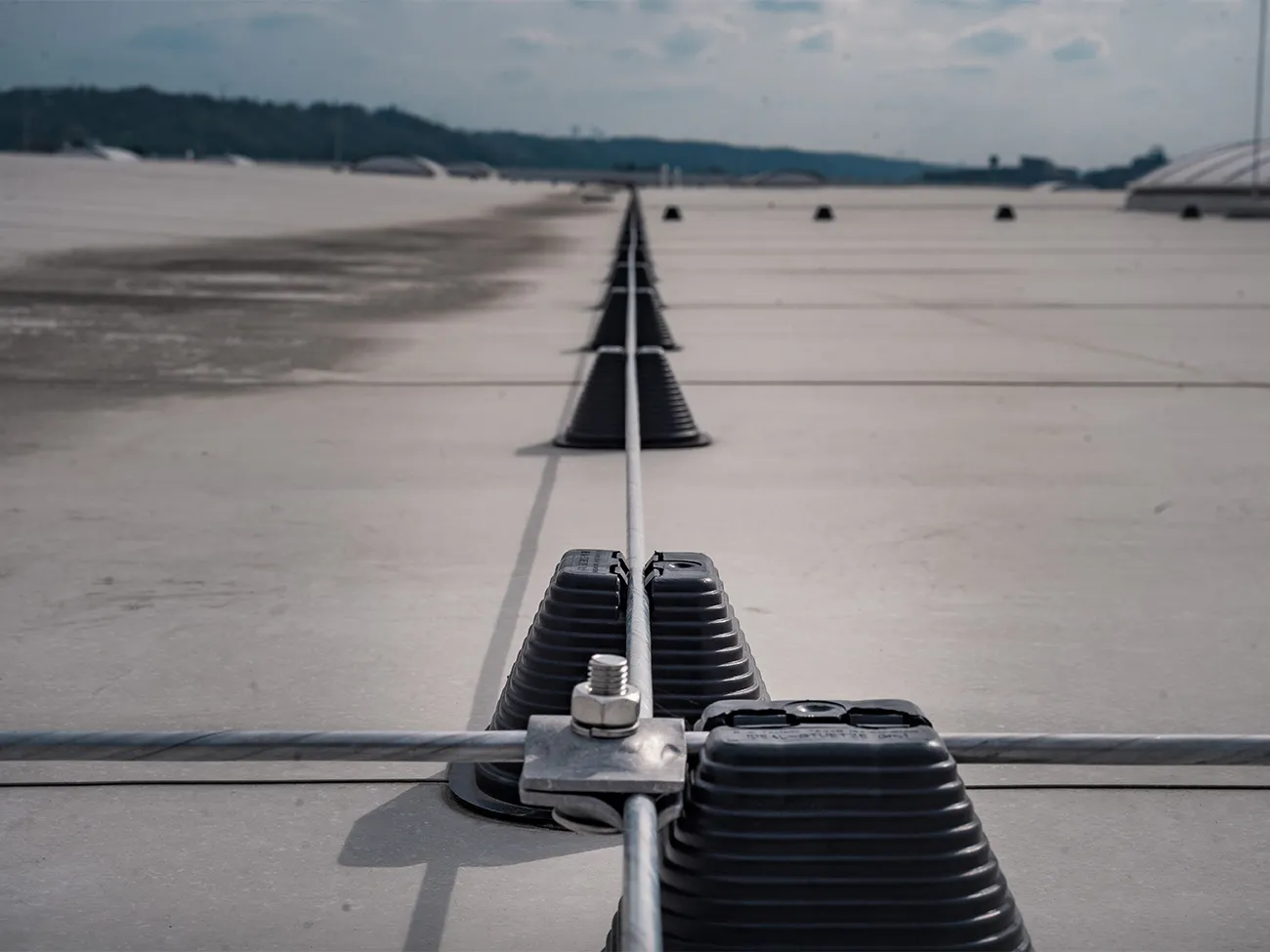
In Virton, where the new care home is located in a hollow and connected to an existing building, Grenson & Fils carried out the risk assessment on behalf of the design office. The risk is more human than geographical, as elderly residents would be difficult to evacuate quickly in the event of a fire. The existing clinic was already fitted with an early streamer emission lightning protection system, which is no longer recognised under Belgian standards. It was therefore dismantled to make way for a new installation protecting both the old and new buildings, which are connected. Hirwin Grenson: « The system we use today is essentially the one invented by Belgian Melsens in the 19th century: a conductor is laid along the edges of the building, with spacing determined by the protection class, and numerous earth connections. At Virton, for example, the building is class 4, so we ran a conductor along the entire ridge, with a down conductor every 20 m leading to an earth electrode. The conductor has a cross-section of 8 mm, so it is very discreet, but highly effective. »
From schools to collegiate churches and hospitals
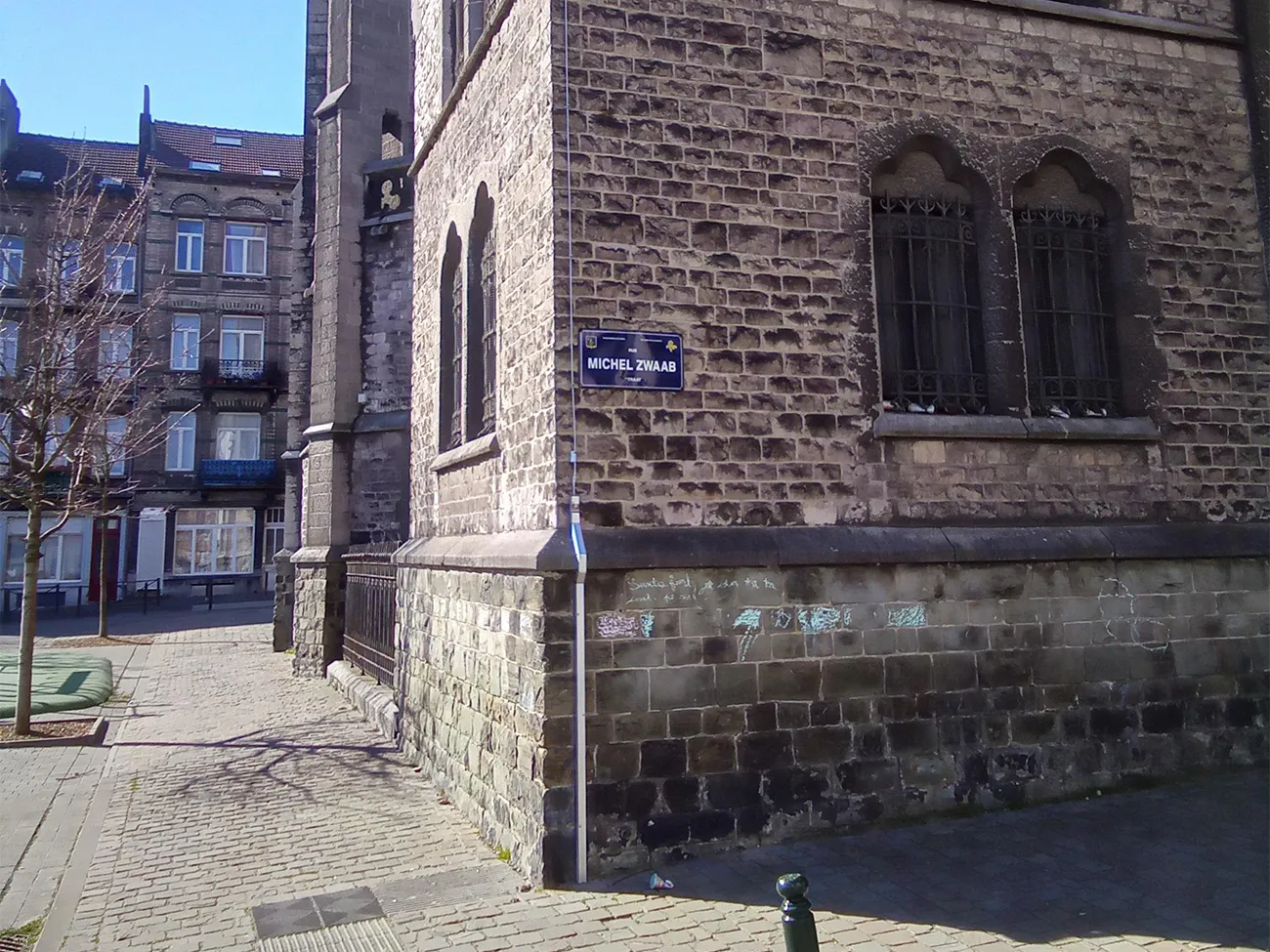
This Vivalia facility in the Gaume region adds to the impressive list of Grenson & Fils references, which spans a wide variety of building types: from Henri Maus school in Namur (« a relatively tall and complex building with a zinc roof ») to the Quatuor towers in Brussels and the collegiate church in Schaerbeek, as well as the Grand hôpital de Charleroi, currently under construction, and CHWAPI in Tournai. Another landmark project, covered extensively in this issue, is the new Institut Jules Bordet in Anderlecht.
Question about this story? Ask your question
Keep following this
Get an email when a new story is published. No account needed.
- SubjectNews







