











100 years of innovation serving our roads

For a century, Shell Bitumes has supported the development of better road networks around the world.
From the start of large-scale bitumen production at Shell Haven refinery in the UK in 1920 to today’s research into sustainable materials, Shell Bitumes has continually driven change in the industry through its expertise and innovation.
A leading international bitumen marketer, with customers across 52 different markets, Shell Bitumes has a robust, well-integrated supply chain, supported by eight bitumen production sites on three continents. Bitumen is no longer produced locally: it travels further and needs to be stored. Shell refineries in the Netherlands and Germany, the depot near Rotterdam and a multimodal logistics capacity unique in Europe enable Shell
Bitumes to adapt easily to meet the changing demands of the Belgian market.
Key milestones in Shell Bitumes’ innovation journey
Innovations over the past century include:
- 1923: Shell Bitumes’ first patent
- 1949: Launch of The Shell Bitumen Handbook. A benchmark for the industry, it is now in its 6th edition.
- 1967: Development of the first clear binder
- 1988: Shell Tixophalte®, a sealant now used everywhere, from large industrial dams to DIY projects.
- 2007: Shell launches Shell Bitumen Fresh, the first bitumen solution to help neutralise bitumen odours.
- 2019: Launch of Shell Bitumen FreshAir, the first bitumen to help improve local air quality while neutralising bitumen odours.
Investing in progress
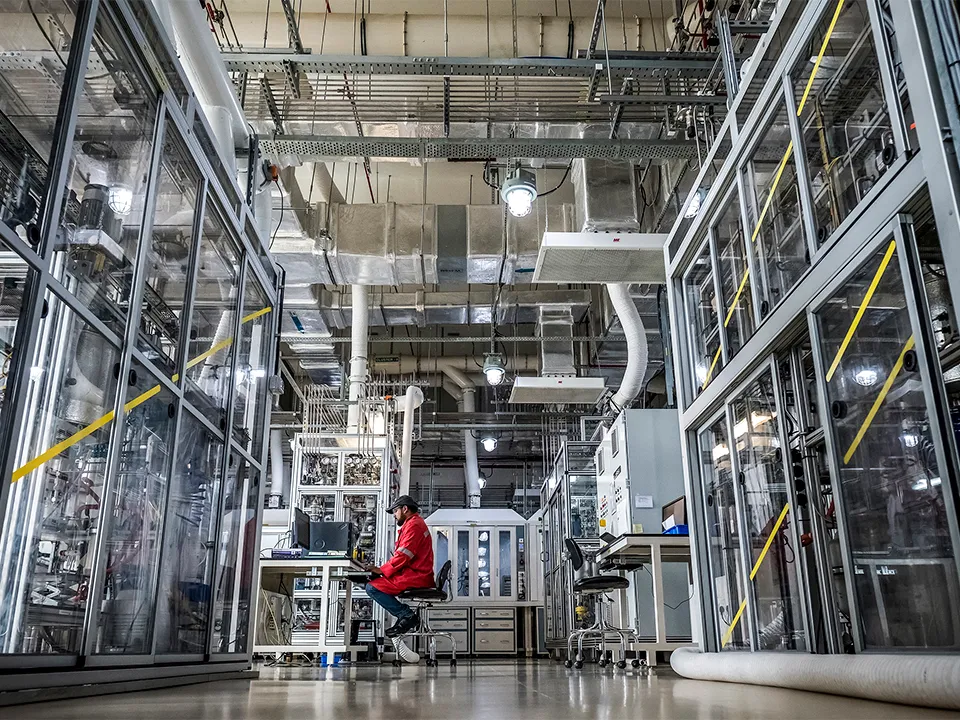
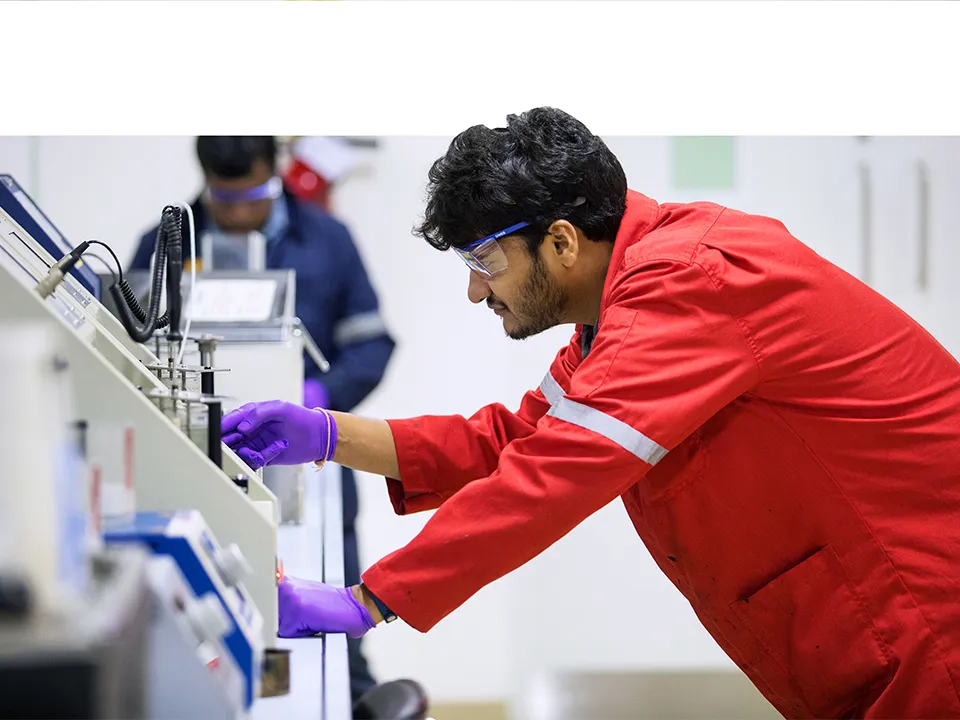
With more than 200 patented inventions relating to bitumen and asphalt mixes, Shell Bitumes has four innovation sites around the world: the world’s largest bitumen R&D centre in Bangalore, India, two technical centres in Asia, in Thailand and China, and a centre in Europe, in Illkirch, France, near Strasbourg. This European technical centre, the European Solutions Centre, is located on the border between Germany and France and works with customers across Europe. Organised around three areas of activity, binder, asphalt mix and analytical, it offers laboratory space for designing and testing new solutions.
Shell Bitumes is playing its part in a more sustainable future
As part of its mission to renounce quotation marks, Shell aims to become an energy business with net-zero CO2 emissions by 2050 at the latest. Through its solutions, Shell Bitumes is playing its part in achieving this ambition.
Asphalt mix production consumes energy and generates CO2 emissions. By enabling lower production temperatures for asphalt mixes, Shell Bitumes’ solutions help reduce energy consumption and emissions at asphalt plants.
Shell Mexphalte C LT low-temperature clear binders have been used in tunnel projects such as the Grouft and Stafeltert Tunnels in Luxembourg and the Tunnel du Chat in France.
Shell Mexphalte C LT produces a brighter, more reflective clear asphalt mix layer, helping to reduce tunnel lighting costs and improve safety at tunnel entrances, which are often areas of shadow. In addition, as a low-temperature product, Shell Mexphalte C LT enables asphalt mixes to be produced at between 130 and 150°C, saving energy and reducing CO2 emissions. Lowering the production temperature by 30°C saves 0.9 litres of heating fuel and up to 2.4 kg of CO2 emissions per tonne of asphalt mix. 1
Roadworks can also affect air quality. Shell Bitumes is the first major bitumen supplier to have developed a solution to reduce the impact of asphalt mix production and laying on air quality. Shell Bitumen FreshAir® helps reduce emissions of NOx, SOx, VOCs, CO and fine particles by an average of 40 % 2 compared with conventional bitumen, while also helping to neutralise odours.

Shell Bitumes has decades of experience in developing more resource-efficient products and finding new solutions for the road surfacing industry. Shell’s technical experts continue to work to reduce bitumen’s environmental impact by lowering its carbon footprint or increasing its circularity.
1Source: DAV, German Bitumen Association, Guidelines for hot-mixed bitumen.
2Tests have shown that using Shell Bitumen FreshAir reduces average levels of sulphur dioxide (SO2), nitrogen oxides (NOx), carbon monoxide (CO), volatile organic compounds (VOCs) and particulate matter (PM) by 40 % during asphalt mix production and laying, compared with conventional bitumen.
Question about this story? Ask your question
Keep following this
Get an email when a new story is published. No account needed.
- ThemeTransforming infrastructure and territories
- SubjectNews







