











10 essential requirements for flawless architectural concrete

Anyone specifying architectural concrete expects to receive architectural concrete. This may seem like a straightforward line of reasoning, but in practice it is not always so simple, as things can sometimes go wrong during execution.
The FEBELARCH Charter, a commitment from architectural concrete manufacturers
Concrete, particularly precast concrete, is a versatile product whose production method has a major impact on the final result. In many cases, the focus is primarily on the optimal production of structural concrete, for which load-bearing capacity and durability are the most important parameters.
Addressing the aesthetic aspects of concrete at the same time calls for particular professional expertise and is the speciality of a small group of manufacturers. Producing architectural concrete requires many parameters to be met, both during the preparatory process and throughout production. Architectural concrete manufacturers have drawn up a list of ten points that make the difference and are committed to meeting them.
10 commitments to meet the requirements
These ten commitments were not chosen at random. They meet a number of requirements: they are realistic, they genuinely contribute to the highest possible aesthetic quality of concrete products and, most importantly, they can be checked by the client, architect and contractor.
In short, this list makes it easier to find a partner for creating any architectural concrete product. Client satisfaction can be measured against the 10 action points below.
Every FEBELARCH member:
1. supports the designer from the preliminary design stage onwards to achieve a technically realistic and financially acceptable architectural concrete solution.
2. sees an order as the starting point for a partnership between the client and the manufacturer, based on smooth, honest and results-oriented collaboration that inspires all the other parties involved.
3. complies with current, generally accepted regulations, including the strictest environmental requirements. The rules of good professional practice are set out in PTV 21-601.
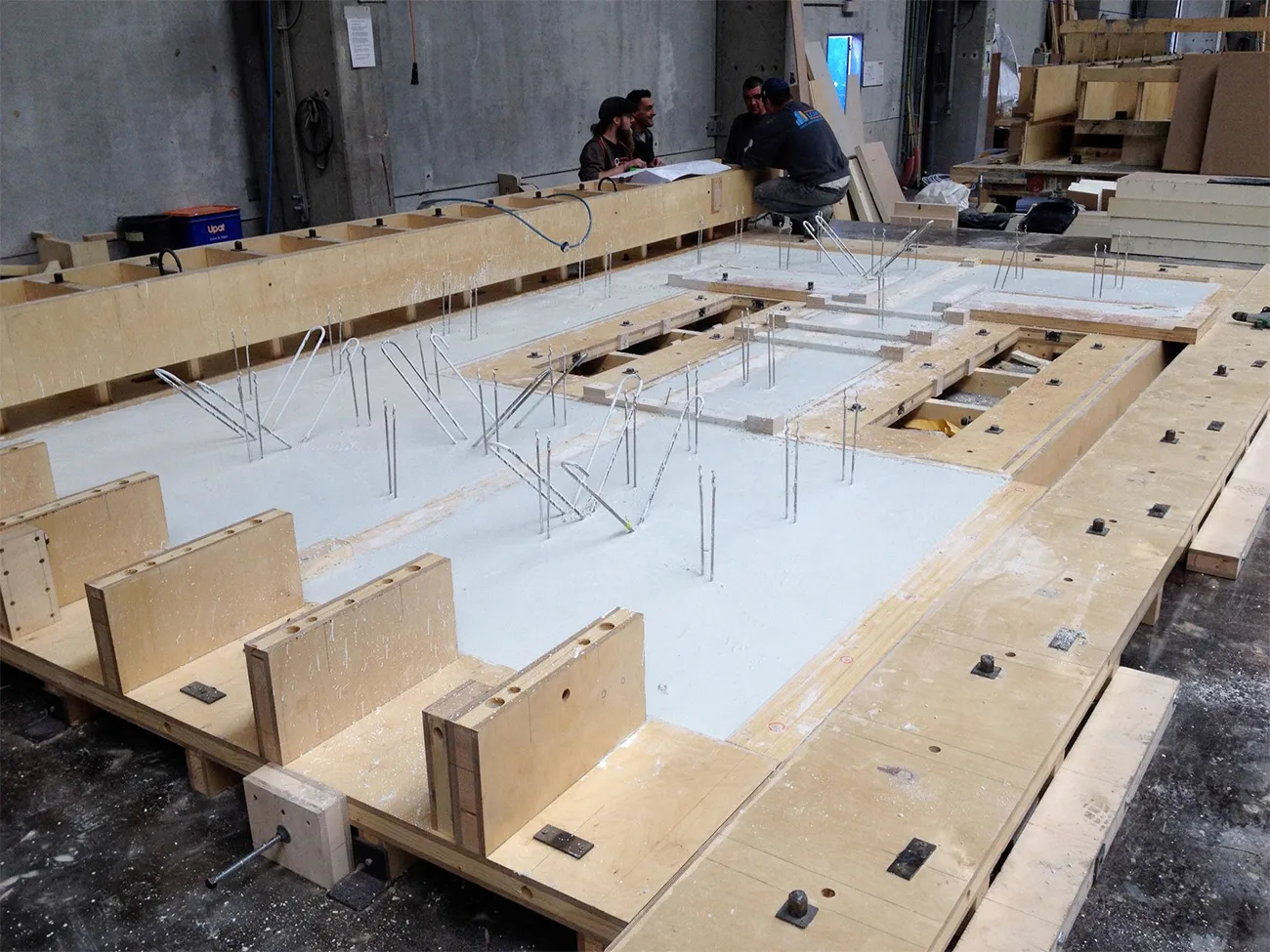
4. has an advanced joinery workshop that produces high-quality, precise formwork. No marks may be left on the concrete, such as nail holes. Precisely made formwork helps produce a flawless finished product.
5. produces the many concrete mixes required for a perfect end result at its own batching plant, thereby ensuring that the concrete meets the highest requirements for architectural concrete. The company’s own concrete laboratory meticulously monitors production quality.
6. uses natural materials wherever possible to colour precast concrete elements and limits the use of pigments as far as possible.
7. draws up a quality manual and rigorously follows the internal production checks set out in its checklist to achieve the quality level required for architectural concrete. This rigorous quality control is verified by an independent external inspection body.
8. provides its own service for repairing possible damage to elements in accordance with, and within the scope of, the relevant standards, so that the appearance of the architectural concrete is never affected.
9. also provides its expertise after delivery to the site and installation of the precast elements, within the agreed timeframes. After-sales service is an integral part of the core service offering.
10. complies with FEBE’s general terms and conditions of sale, drawn up in collaboration with the contractors’ federations. These terms clearly set out the rights and obligations of each party.
These are not empty promises, but a list of commitments that you can see for yourself and check against numerous reference projects. You can work with confidence with members of the FEBELARCH group.
Question about this story? Ask your question
Keep following this
Get an email when a new story is published. No account needed.
- SubjectNews







