“Digital tools make the transition to circularity easier”
Texte Tim Janssens | Photos Xella, KUBUS, Madaster
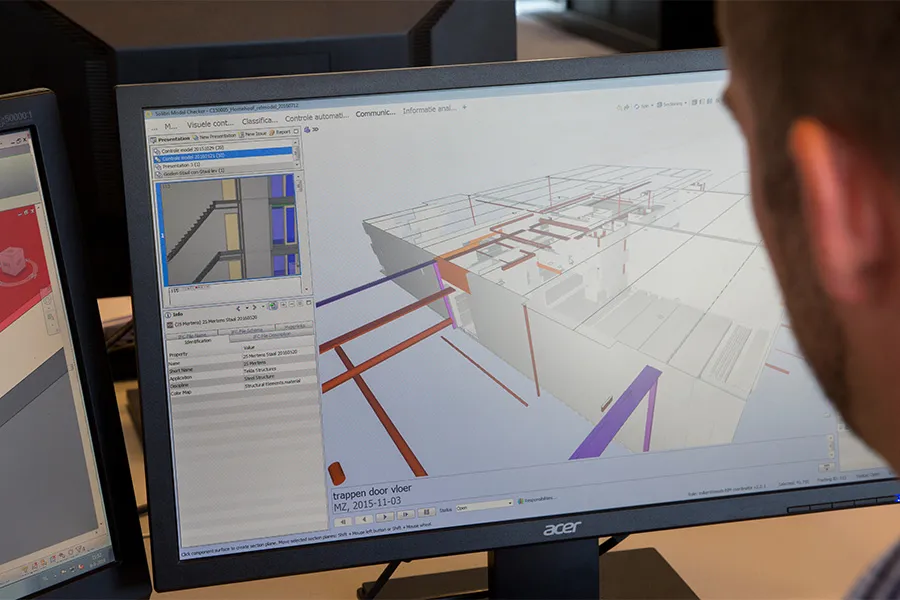
Circularity seems to be becoming the new gospel of construction, but in these pioneering years, making it practical and economically viable is no easy task (yet). Fortunately, digital tools are available to support and facilitate the transition to circular construction in practice. In episode 42 of the Architectura podcast, Joeri Beneens (Beneens bouw en interieur), Véronique Orens (Yugening Architects) and Johan Klaps (Madaster Belgium) discuss software applications that could add value in this context.
Is extensive digitisation an essential prerequisite for circular construction? Not necessarily, but it is an important enabling factor, our interviewees agree. “The only way forward is to keep track of all the data relating to construction and materials, link it all together and learn from it,” says Johan Klaps. Véronique Orens agrees wholeheartedly: “Circular thinking is, by definition, long-term thinking, because for a building to be truly circular, it must still be fit for use in two or three hundred years. As construction professionals, we must therefore also be willing to move with the times. In conventional renovation projects, we often have little or no information about the materials used, the load-bearing structure, the composition of the assemblies… Digital tools can help us with this and also prevent us from falling into the trap of greenwashing, for example by comparing materials and systems on the basis of objective data.”
BIM and beyond
BIM is a digital tool that is now well established in construction, although 3D modelling is certainly not an end in itself, Véronique Orens points out. “Who knows, perhaps we’ll soon be talking about BAIM: Building Artificial Intelligence Modelling, where drones scan a building and then project it into the Metaverse? It is difficult to predict what the next step will be, but digital development could bring about a social revolution that we cannot yet envisage. In the past, the upper floors of New York buildings were the cheapest, until the lift was invented. This gave rise to a completely new dynamic that changed the skylines of cities around the world forever. However, even today, we are still wondering how BIM and its derivatives will change the skyline of the construction industry.”
Materials and building passports
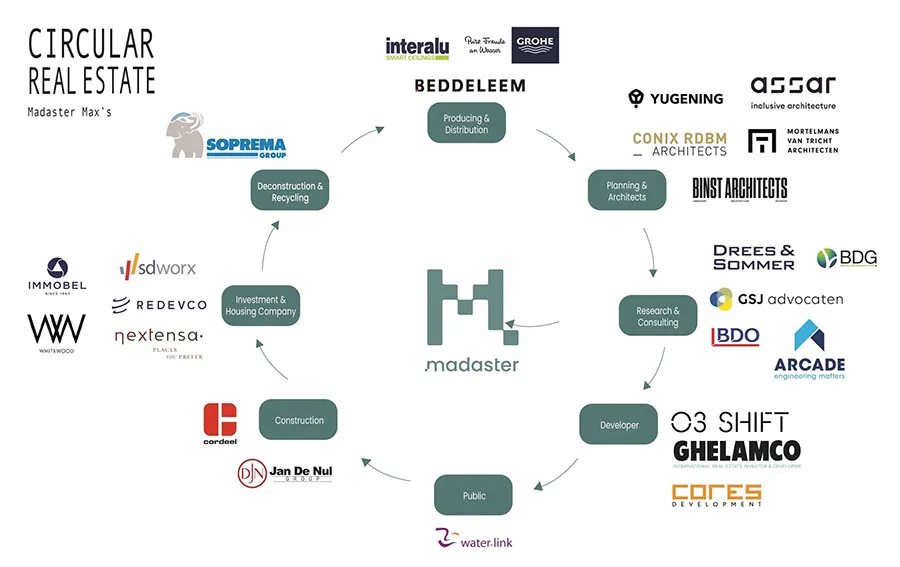
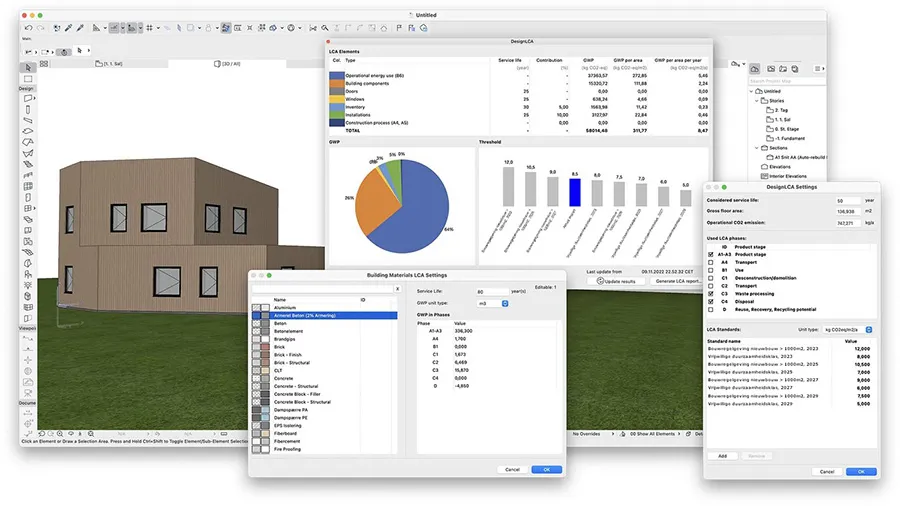
Joeri Beneens points out that there is still scope for many additions and extensions to expand the reach of BIM. “For example, we developed BIM-Integrum ourselves so that we could continue using the BIM model once the building was complete. This gave us a ‘passport’ listing all the materials it contains (including technical data sheets and installation and dismantling methods…) and a kind of circularity score, not only for the building as a whole but also for each part of the envelope. Every building material is given a unique NFC tag, allowing it to be tracked over the years and across projects.” Several software packages are available for creating such materials and building passports. “You have to experiment a little, just as there were different video recording systems back in the day. Product-specific information, EPDs, data on material assessments (in my view, the big revolution to come)… The main challenge is collecting all the data, because technically, everything is in place,” explains Johan Klaps.
Ecology and economics
Are materials and building passports essential for circular construction? “Absolutely,” replies Johan Klaps with conviction. “You need to know what can be found in a given place, what it is made of, what else can be done with it, how to remove it from the building, what its CO2 impact was when it was installed… In other words, materials need to be given an identity, because that matters when you later have to choose between a new or reusable alternative. A passport of this kind is essential for unlocking circular potential and estimating residual value.” For circular construction to take hold, the economic context must also be favourable, concludes Véronique Orens: “You might think that the economy and ecology go hand in hand, but in practice that is far from obvious. I think it would be timely for a new digital tool to be invented soon to keep all this accessible to individuals. It is through the digitisation of buildings that ecology will increasingly become economics, and vice versa. When circular construction starts making money, we’ll have made it!”
Question about this story? Ask your question
Keep following this
Get an email when a new story is published. No account needed.
- ThemeBuilding with less carbon
- SubjectSoftware