Infrabel acquires rails whose production generates around 70% less CO2
Texte & photos Infrabel
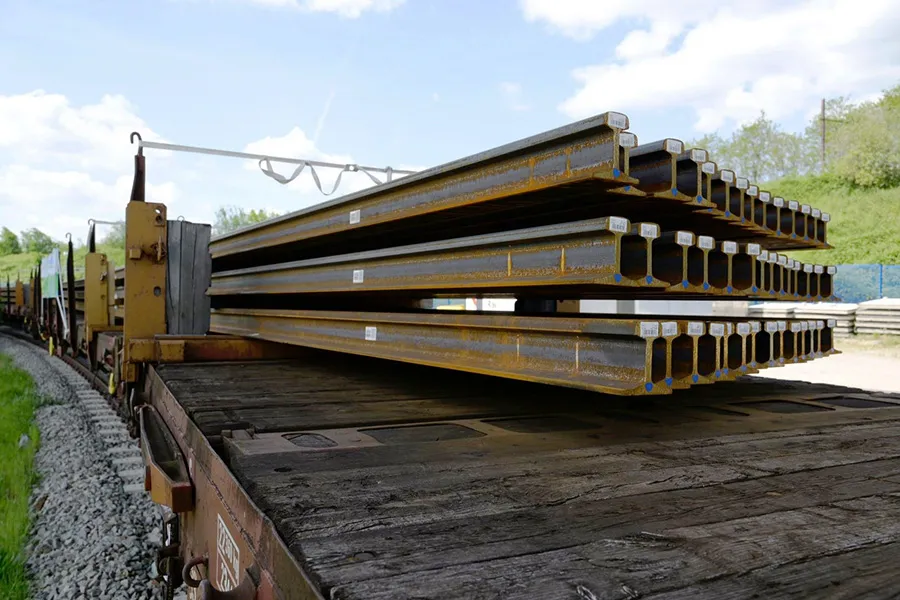
The first kilometres of these “next-generation” rails were laid on the Belgian rail network this summer! They are the result of a public contract worth 200 million euros awarded by Infrabel to “Saarstahl Rail” and its French production facilities. Using electric furnaces instead of coal-fired blast furnaces, together with recycled raw materials, reduces the carbon footprint of these rails by around 70%, while maintaining their strength and competitive pricing.
There is no visible difference between these “green rails” and those already laid on the Belgian network: they have the same characteristics (appearance, weight and strength) and are also transported in short sections by international rail convoys to Schaerbeek. There, at Infrabel’s workshop, they are joined using high-precision welding technology to form 300 m-long rails ready for installation on the tracks.
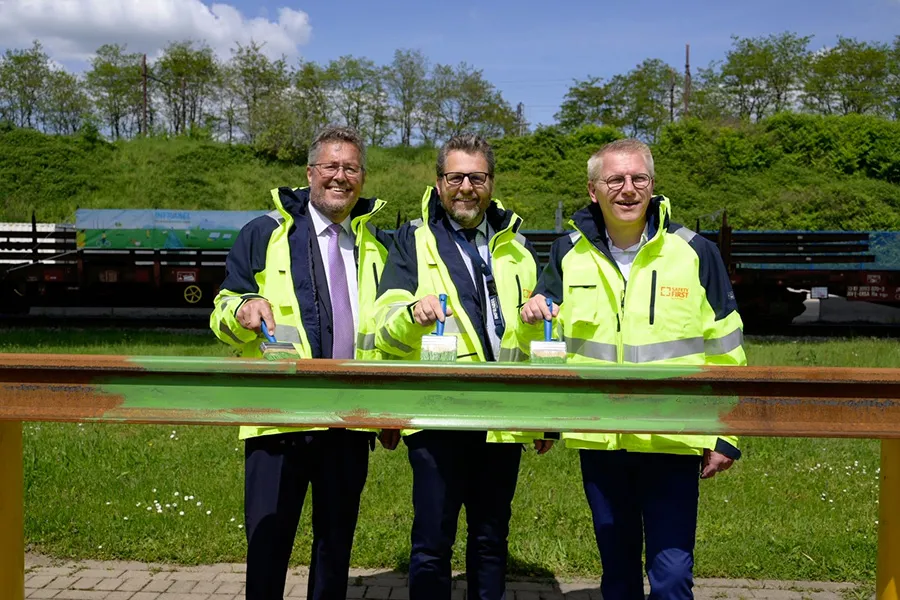
Saving the equivalent of the annual carbon footprint of 9000 households
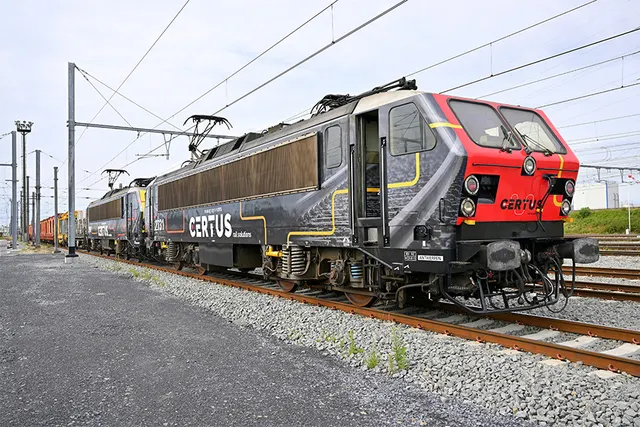
Yet the train that arrived on 17 May from the rail-rolling mill in Hayange (French département of Moselle) marks a minor revolution. The 480 m-long convoy carried 900 tonnes of rails, among the first examples of this new generation to be delivered to Belgium. The innovation lies in the manufacturing process, which requires no coke (a fuel produced by heating coal to a very high temperature), as the steel is made using electric furnaces. Another environmentally beneficial change is the use of scrap metal as the raw material, meaning recycled material. This production chain reduces the carbon footprint of these rails by around 70%. In practical terms, Saarstahl Rail will supply Infrabel with up to 2800 km of these “green rails” over the next four years, helping to cut emissions by some 224 000 tonnes, the equivalent of the annual carbon footprint of 9000 average households.
As part of its ongoing infrastructure renewal programme, between 450 and 500 km of rails are laid each year on the Belgian rail network. To secure the best prices and ensure continuity of supply, Infrabel works with several suppliers. This public contract, launched in late 2022, did not yet include environmental criteria, but Saarstahl Rail’s bid proved the most competitive, while also offering this “green rail” innovation. To limit the use of raw materials and reduce greenhouse gas emissions in its supply chain, Infrabel already applies environmental and social criteria in certain procurement processes, in line with the provisions of the Public Procurement Act.
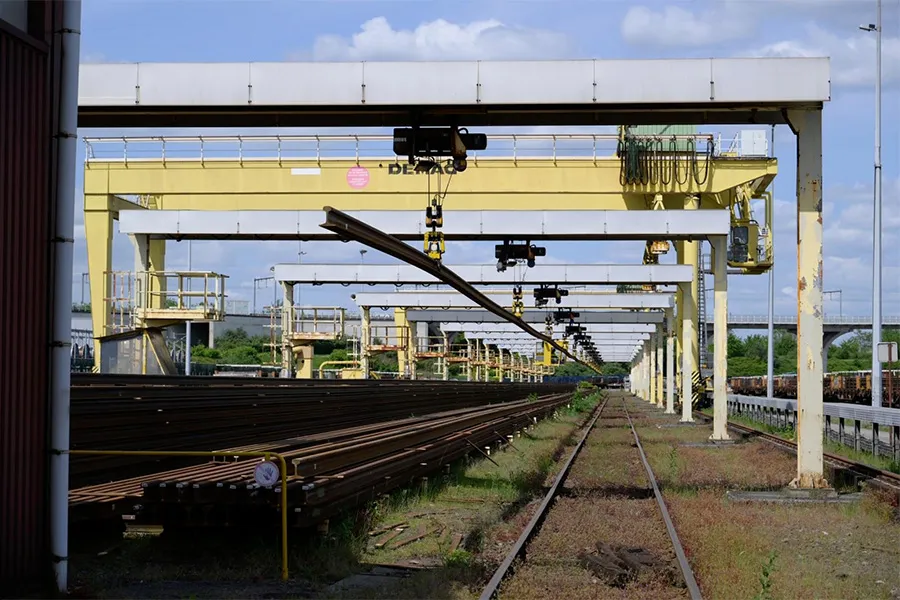
An innovative process developed by Saarstahl Rail
Saarstahl Rail is committed to the circular economy, offering its customers the recycling and recovery of their used rails. The Saarstahl Ascoval electric steelworks recycles scrap metal from the Saarstahl Rail plant in Hayange and from rail networks, melts it down in its electric arc furnace and produces high-quality steel, delivered in bloom form to the Hayange plant.
These blooms are used to roll new green rails. The complete manufacturing process for these green rails is particularly environmentally friendly, as it generates up to 70% fewer CO2 emissions than a conventional manufacturing process using iron ore and coal as raw materials.
In total, Hayange delivered 262 000 tonnes of rails in 2022, including 227 000 tonnes of green rails, resulting in a total saving of 415 000 tonnes of CO2. Green rails are used across the entire rail network, including on high-speed lines, heavily loaded tracks and public transport networks. Since August 2021, Saarstahl Rail, based in Hayange, France, has belonged to the German group SHS-Stahl-Holding-Saar and its subsidiary Saarstahl.
Question about this story? Ask your question
Keep following this
Get an email when a new story is published. No account needed.
- ThemeTransforming infrastructure and territories
- SubjectRailway technology