Renovation of a railway bridge vital to freight traffic
Texte Philippe Selke Photos Benjamin Brolet pour Infrabel
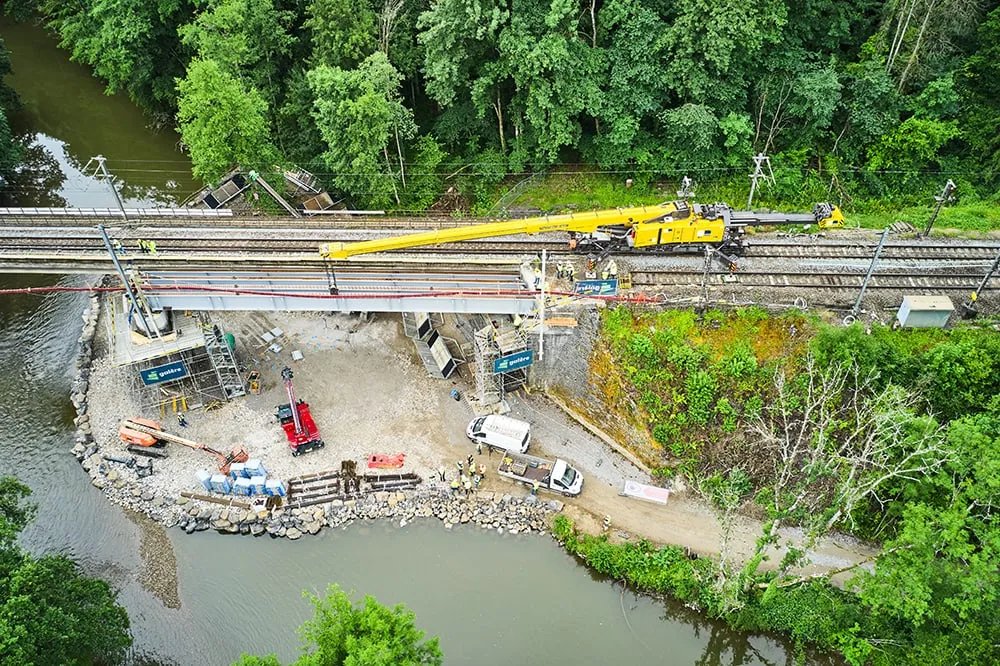
The state is investing in rail for both freight and passenger transport. At Houyet, south of Dinant, the Lesse winds through the landscape, crossed by numerous railway bridges over a stretch of around ten kilometres. This section of the network forms part of the “Athus-Meuse” route, a strategic freight rail corridor between the port of Antwerp and southern Europe. In 2013, Infrabel launched a major bridge renewal programme along the Lesse. In summer 2023, it was the turn of the Walzin bridge to be refurbished. Another railway project for Techno Métal Industrie (TMI), based in Seilles, 33 km away as the crow flies, carried out here as a subcontractor to Galère.
With its central pier standing in the river and 2 spans of 32 m each, this is a substantial bridge. One of the two tracks rests on a concrete deck that is still in very good condition. This track would remain in service throughout the works. The second track runs directly on a steel deck, corroded by time and the elements. The first phase of the works, carried out by main contractor Galère, involved dismantling 2 elements weighing 100 tonnes each. This was completed over the weekend of 10 and 11 June 2023. Three weeks later came the second phase: using an impressive Kirow railway crane, booked well in advance, 8 new steel beams (4 per span), each weighing just over 25 tonnes, were installed.
Constraints that posed a series of challenges
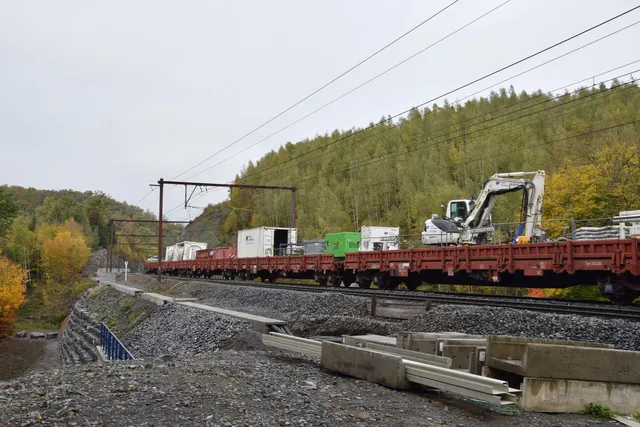
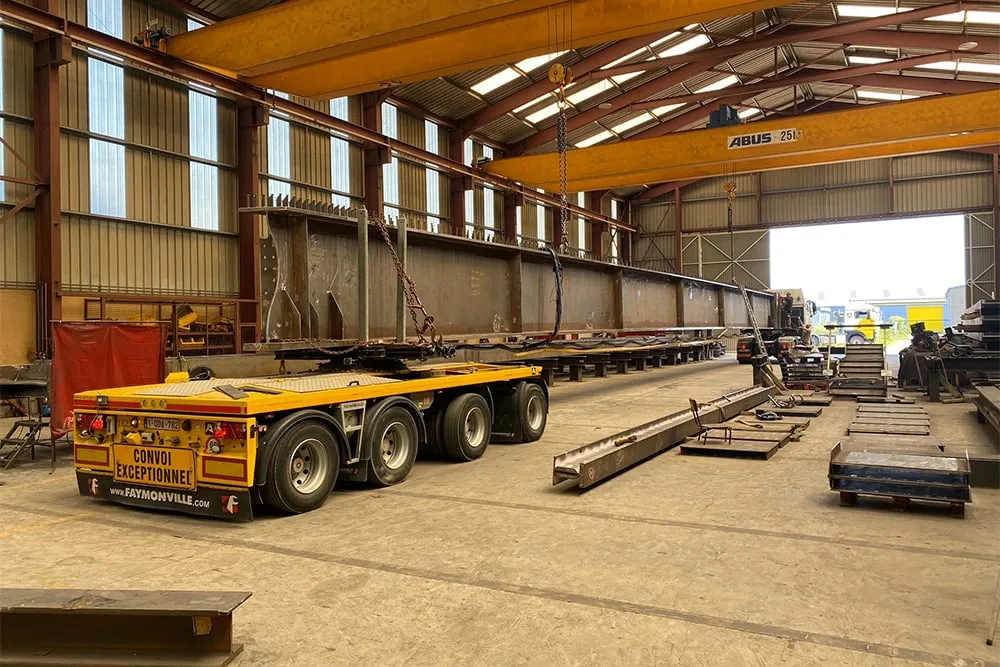
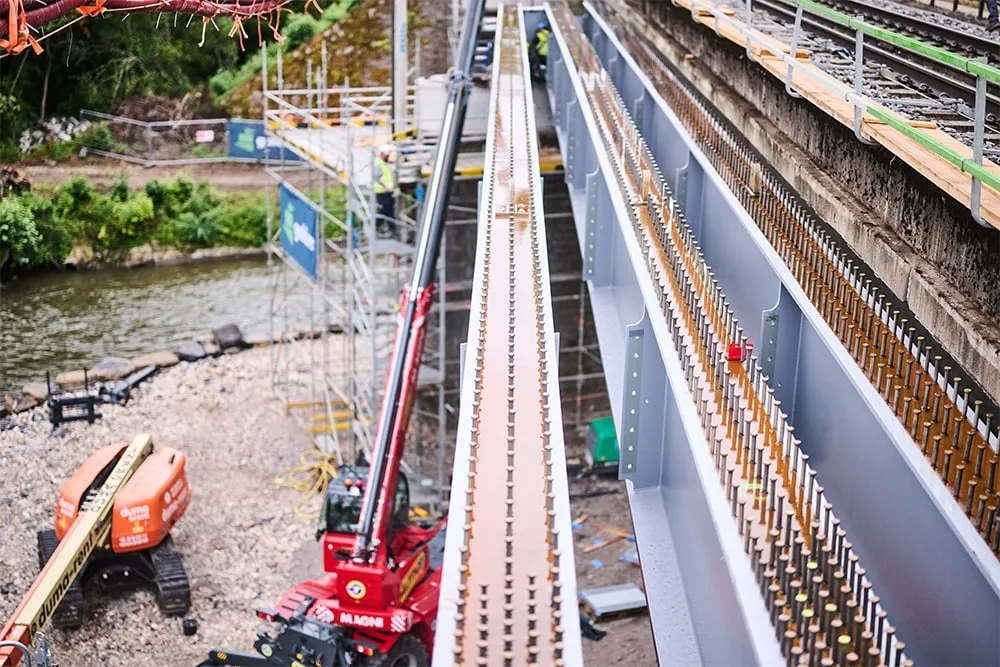
Arnaud Tourny, Project Manager at TMI, explains: “Each fabricated welded beam is 32 m long and 1.60 m high. The 8 beams are fitted with 4500 studs to support the concrete section of the structure. The beams were manufactured at our workshops in Seilles based on Infrabel’s plans, which we adapted slightly to facilitate production and transport. As well as manufacturing the beams, we designed some of the lifting equipment needed to handle them in the workshop. The beams were then transported under special haulage arrangements to the paint plant before being loaded onto wagons at Ronet station and finally delivered to the site by rail.”
There was no other way to do it, given the site’s poor accessibility. In this narrow part of the Lesse valley, the only access to the site was a small track that was barely passable by vehicle. Galère had also dammed off half the width of the river to allow work on the historic pier, which needed strengthening with concrete.
Another constraint was the timescale. TMI received the first drawings in February 2023, with the work scheduled for early July, while also having to meet Infrabel’s specific requirements, which extend delivery times. The steelwork contractor from Seilles therefore had to manufacture the beams and have them painted (with a 3-coat anti-corrosion system) at speed to meet the delivery date, with no leeway for delays. It is worth noting that the project was organised to cause as little disruption as possible to the kayakers and the many walkers.
High quality requirements
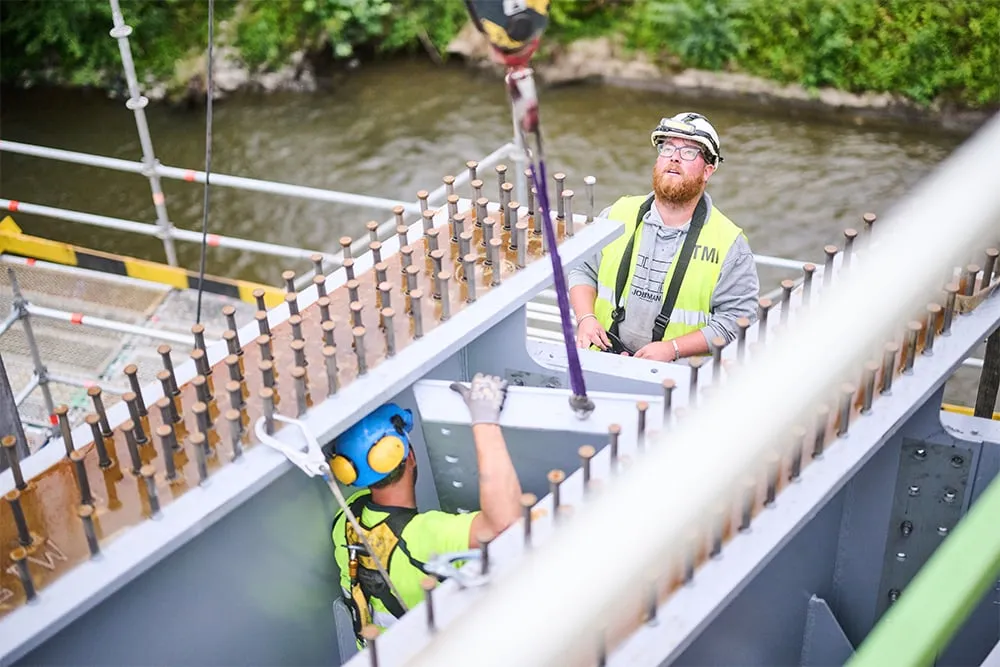
With many freight trains passing over it, each carrying around a hundred axles and exerting a load of 20 tonnes per axle, this EXC4 execution class structure must meet a range of quality criteria, including 100% inspection of welds and traceability of components. TMI is well versed in this kind of work. However, for this project, the Seilles contractor had to update a certification specific to Infrabel for fatigue-loaded PRS sections. To do so, it manufactured a small PRS section around 3 m long, which was subjected to a battery of tests by the University of Liège.
Question about this story? Ask your question
Keep following this
Get an email when a new story is published. No account needed.
- ThemeRenovating existing buildings
- SubjectInfrastructure