Multimodal mobility boosted by a cycle highway in Walloon Brabant
Texte Sweco & Philippe Selke Photos Sweco
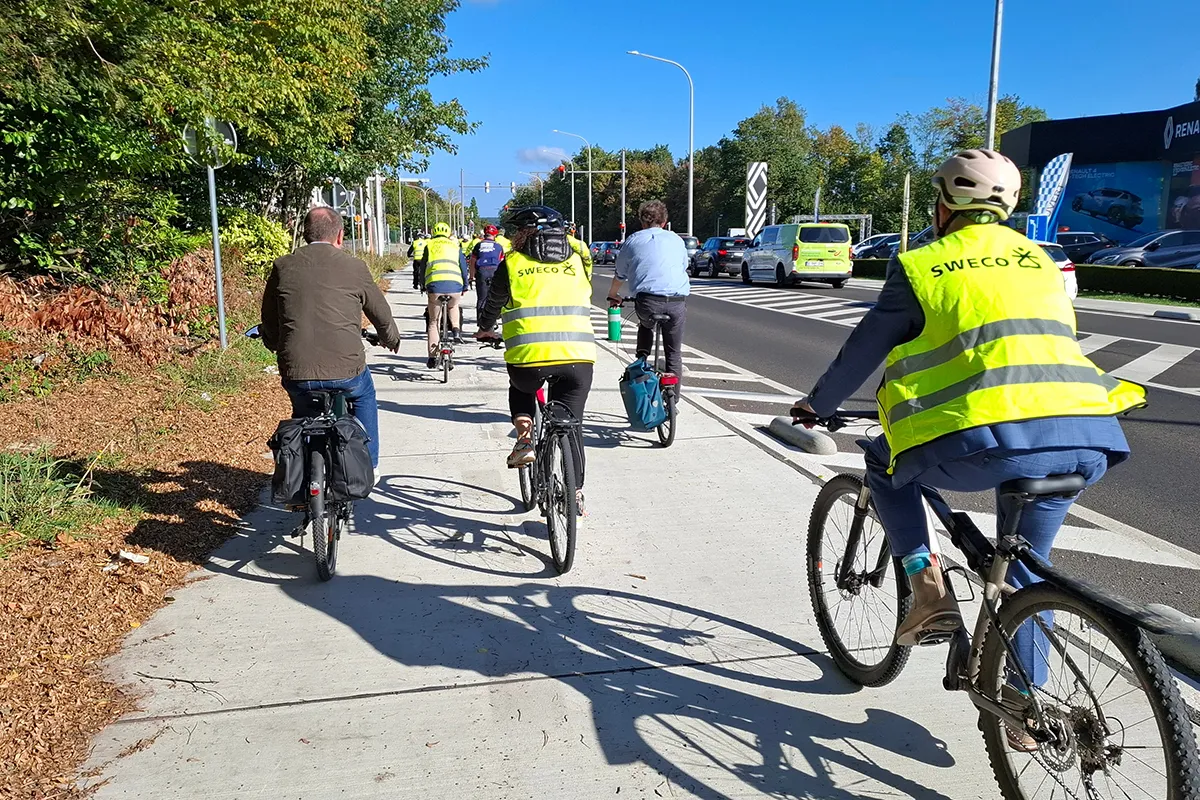
The E411 cycle highway gives Wallonia a major new cycling link. This vital connection between Brussels and the Walloon Region will link up with the F204 cycle highway. Sweco designed the first section between Wavre and Louvain-la-Neuve. Its consultants are also overseeing the works, which are due to be completed in June 2026.
Over a distance of ten kilometres, cyclists will be able to use a dedicated carriageway with two-way traffic. The cycle highway crosses several major roads, runs along a shopping street and through Wavre town centre, and connects to existing junctions. These conditions present complex challenges, so the project is being delivered in three phases, with each completed section opening to traffic immediately. The first section is already open, phase two is in the midst of construction, and phase three has just begun.
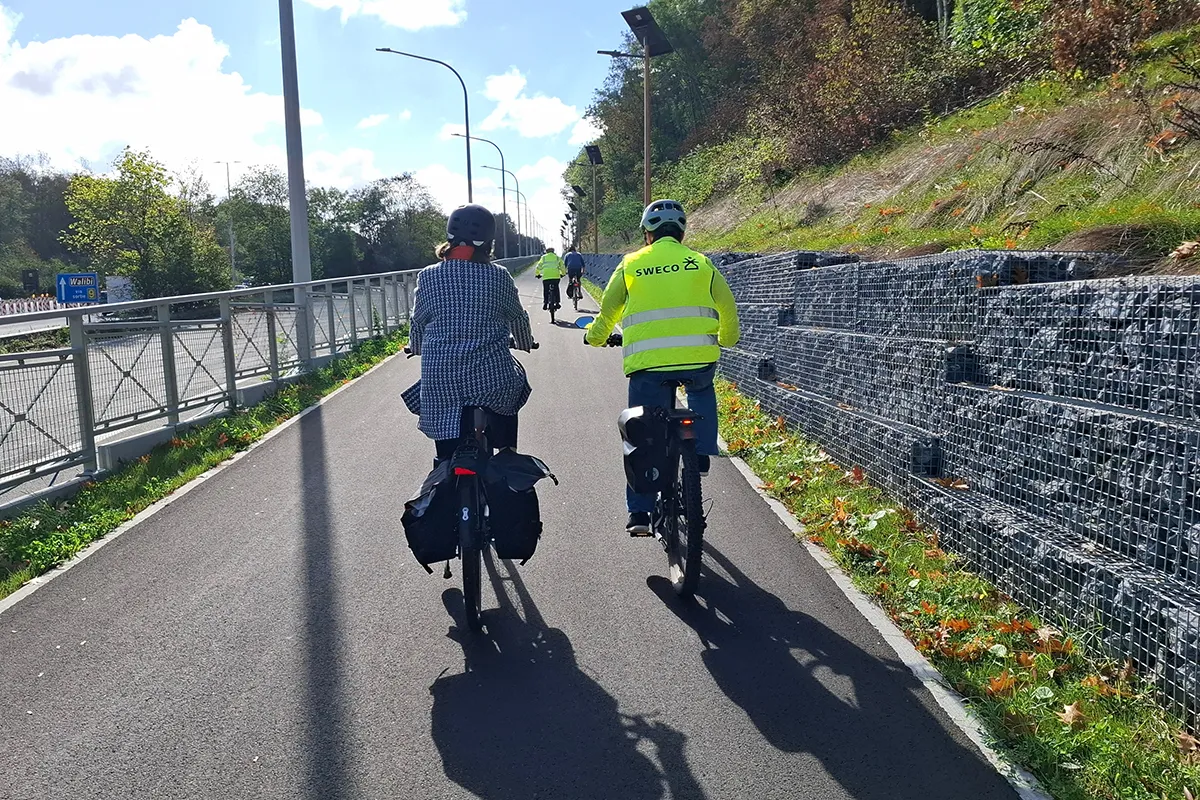
Cycling at height
Unlike Flanders’ relatively flat landscape, the terrain crossed by the cycle highway in Walloon Brabant is more hilly. The route includes several footbridges and a tunnel.
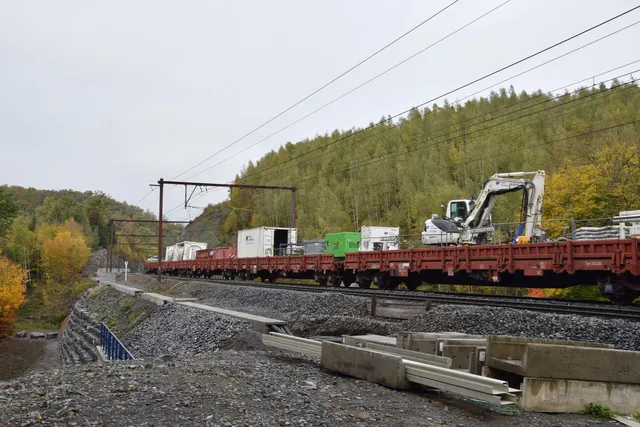
The first footbridge is 315.9 metres long and crosses above woodland, the Dyle and Boulevard de l’Europe in Wavre. The second footbridge is 110 metres long and passes over a railway line and the N239. These impressive structures have an average span of 20 metres between support points.
Both footbridges are made of metal, with metal railings angled ten degrees outwards. The deck has a two-degree gradient to help rainwater drain away.
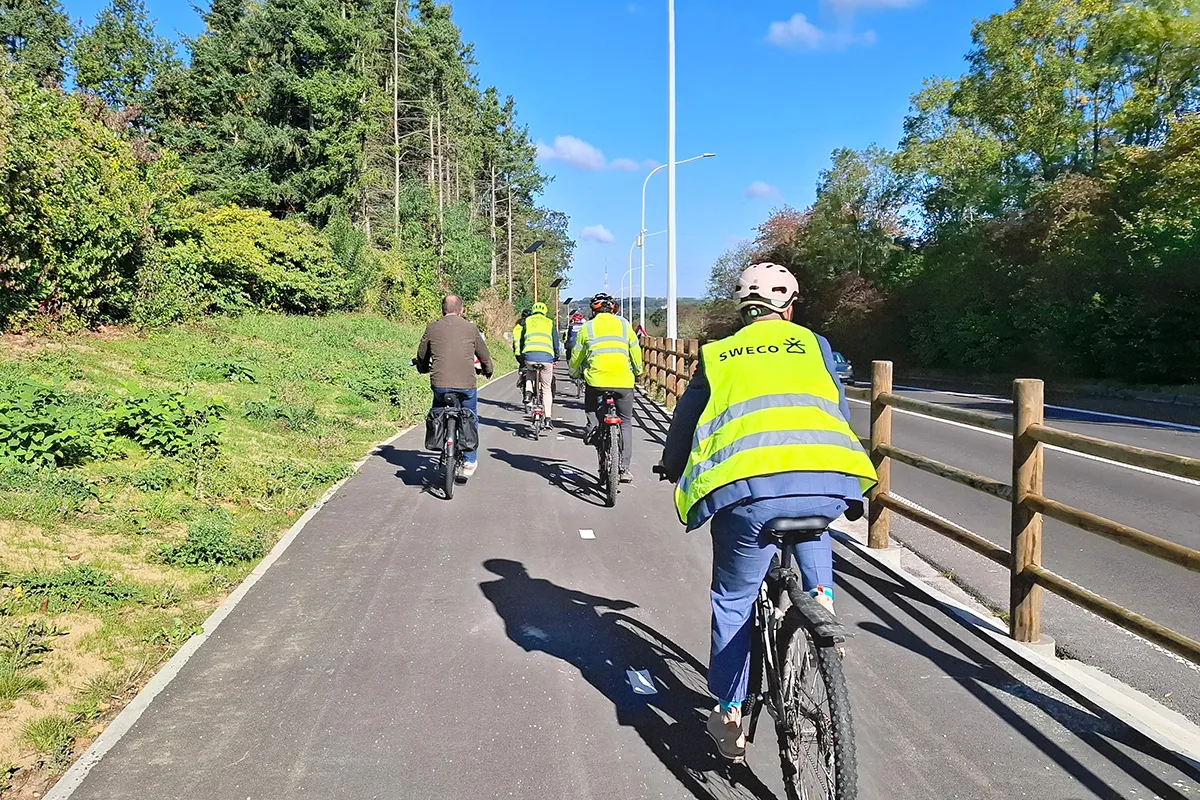
Cycling alongside the road
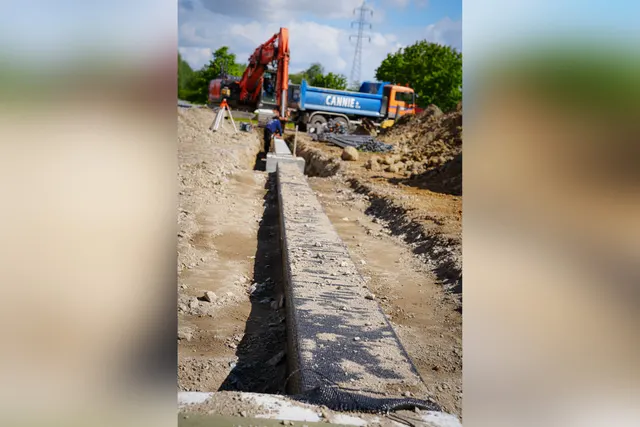
At ground level, the four-metre-wide cycle highway runs mainly along existing embankments, where five-metre-wide berms have been excavated. This required major adjustments to the embankments, including regrading them from 10/4 to 6/4. In total, 40 000 m³ of soil was excavated and reused on site. Various retaining structures along the route prevent erosion, which occurs naturally on steeper slopes.
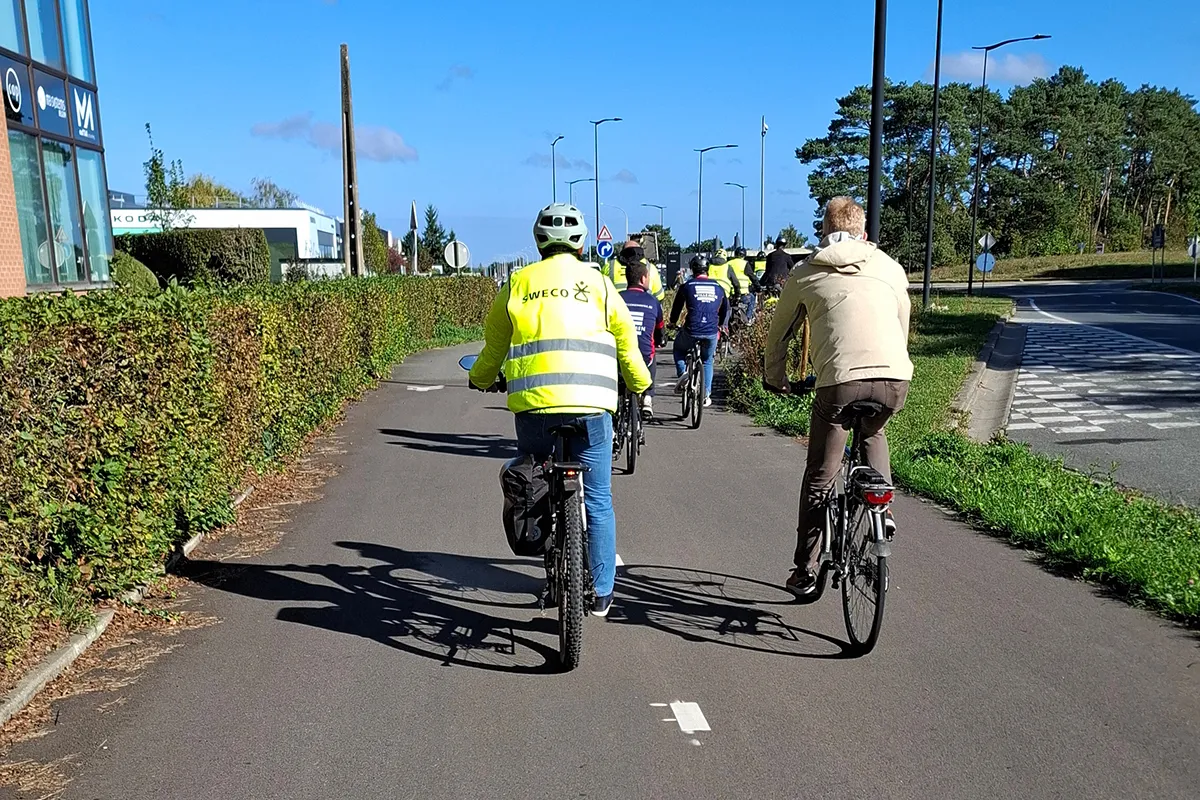
Safety first
The N4 is one of the key connections for the cycle highway. From here, cyclists can reach several shops via existing roundabouts. As cyclists merge with regular traffic here, Sweco’s designers reassessed the existing roundabouts. Remodelling the roundabouts ensures safe traffic flow for all users.
Although cycle highways are less established in Wallonia than in flatter Flanders, SPW Mobilité Infrastructures has launched a major catch-up programme. Sweco is pleased to be able to contribute to the transition towards smoother traffic flows, which, combined with a multimodal approach, support sustainable mobility.
Een zakelijke vraag aan Sweco Belgium? Get in touch
Companies in this story

Keep following this
Get an email when a new story is published. No account needed.
- ThemeTransforming infrastructure and territories
- SubjectInfrastructure
- CompanySweco Belgium