More climate-resilient cities thanks to concrete
Texte Febelcem
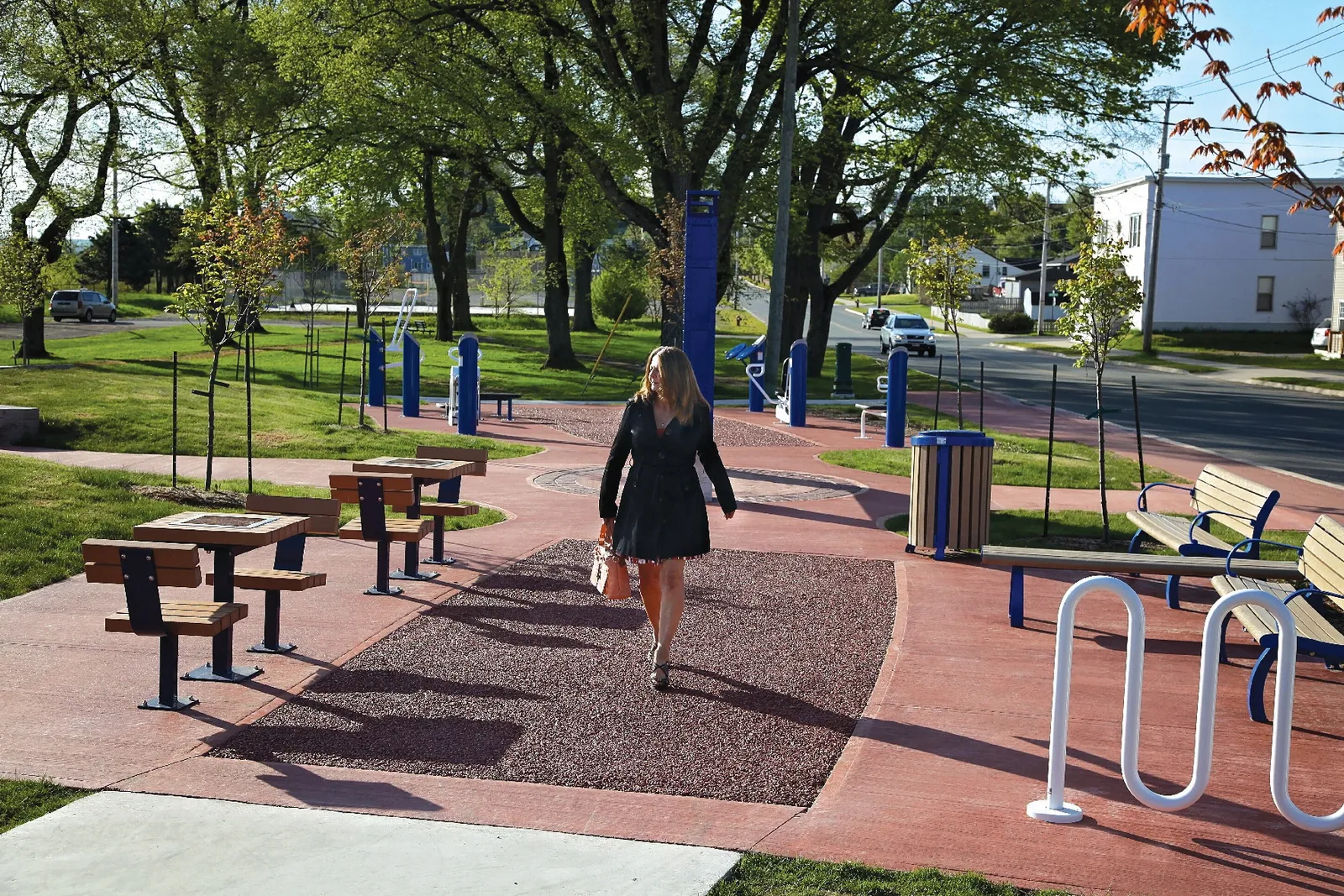
What if we saw water management not as a challenge, but as an opportunity? Creative approaches to water infiltration are increasingly being adopted in public spaces. By intelligently collecting and treating rainwater, we not only address climate challenges, but also enhance the quality of the space. Squares, streets and parks become greener, more attractive and more pleasant when water is an integral part of their design.
More and more towns and cities are choosing to collect rainwater on site, reuse it and incorporate it visibly, rather than drain it away quickly. This change is essential. Climate change is bringing more intense rainfall and longer periods of drought, while urbanisation is increasing the amount of impermeable ground. This leaves less opportunity for water to infiltrate the soil, resulting in falling groundwater levels and a greater risk of both flooding and water shortages.
Restoring the natural water cycle
The solution lies in restoring the natural water balance. Rainwater is collected as close as possible to where it falls, stored temporarily and, wherever possible, allowed to infiltrate the soil. This reduces pressure on the sewer network while replenishing groundwater, which is essential during periods of drought.
A range of techniques can help achieve this, including swales and infiltration wells, rainwater tanks and larger retention basins. Green roofs also play a role, temporarily retaining water and releasing it gradually. Permeable paving is also becoming increasingly important: it allows water to pass through, after which it is stored locally or infiltrates the soil slowly.
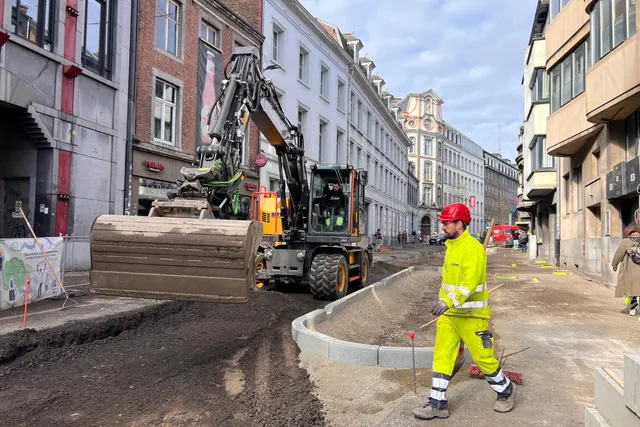
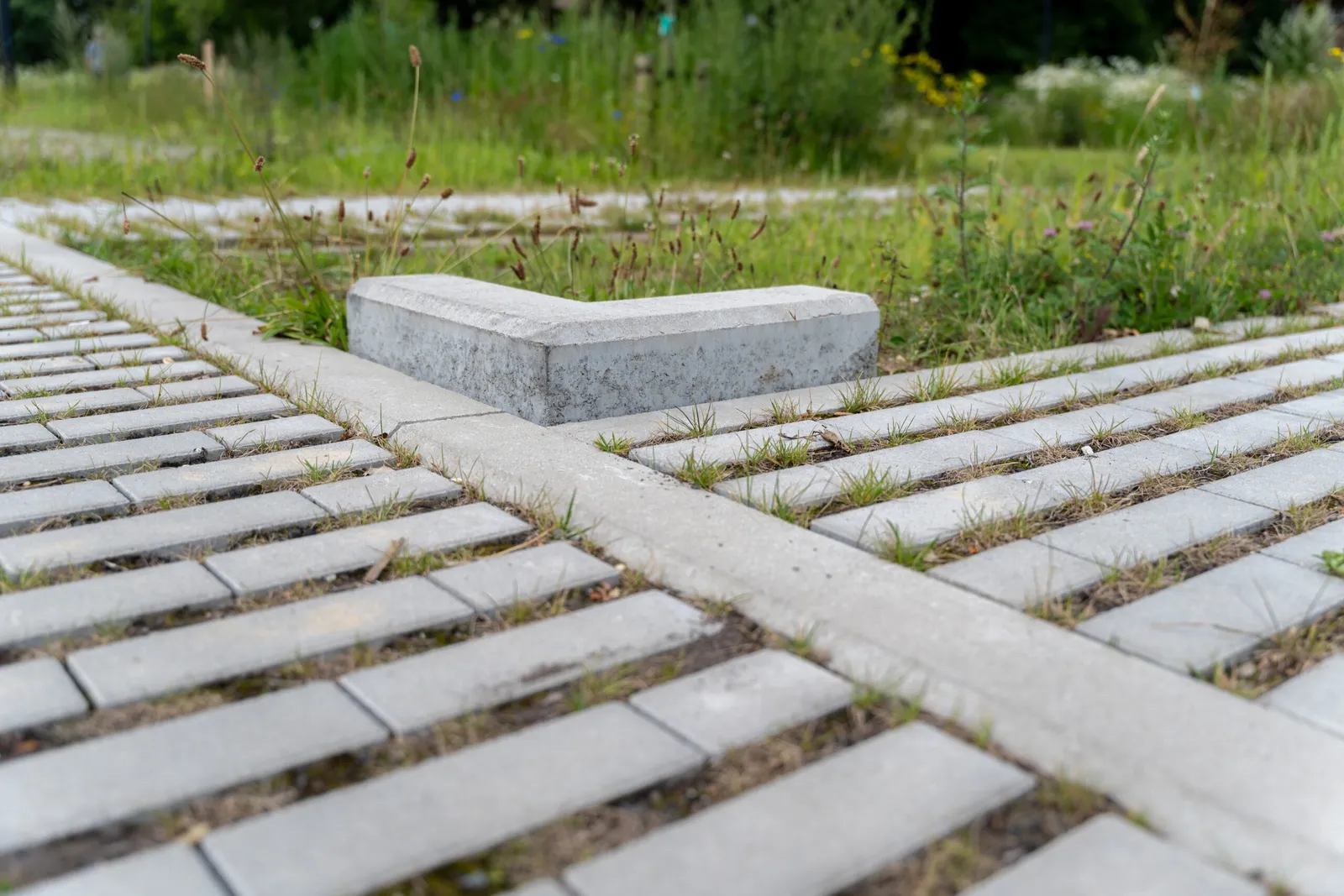
Innovative applications are also increasingly being used on roads. Green streets are being created in towns and cities, where traditional surfaces are giving way to permeable materials such as grass-grid concrete paving, permeable concrete pavers and in-situ permeable concrete surfacing. This allows rainwater to infiltrate on site, easing pressure on sewer networks while supporting urban greening and creating a more pleasant environment.
Making water part of the landscape
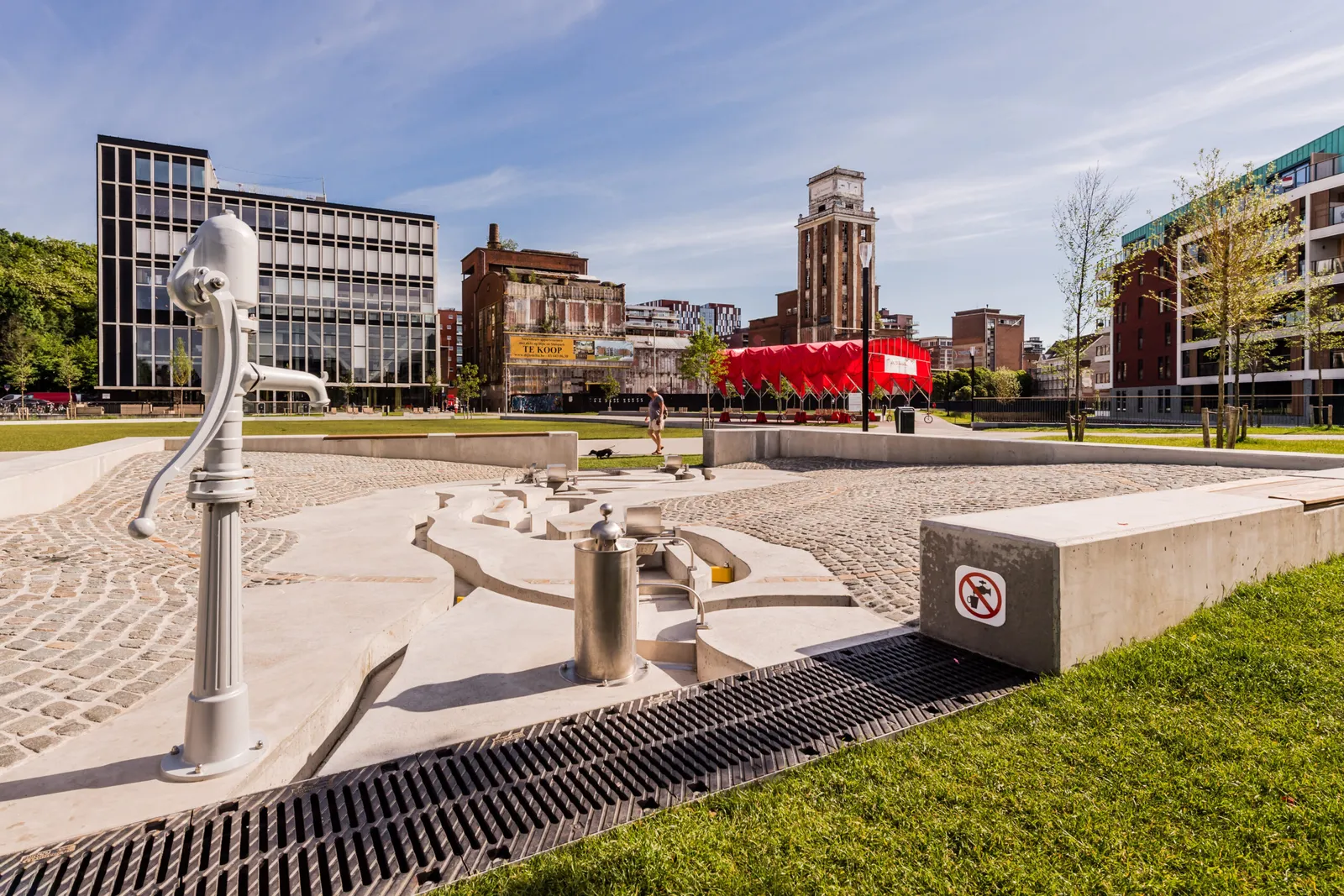
These technical solutions are increasingly being combined with a focus on the quality of the space. At Sluispark in Leuven, water is a visible feature of the design. Robustly constructed steps and banks ensure safety and accessibility, while a fish pass enhances the ecological value of the site. A subtly designed concrete slab echoes the contours of the landscape in the water play area and invites interaction. Water thus becomes both a defining feature and a source of rich experiences.
Innovations below ground
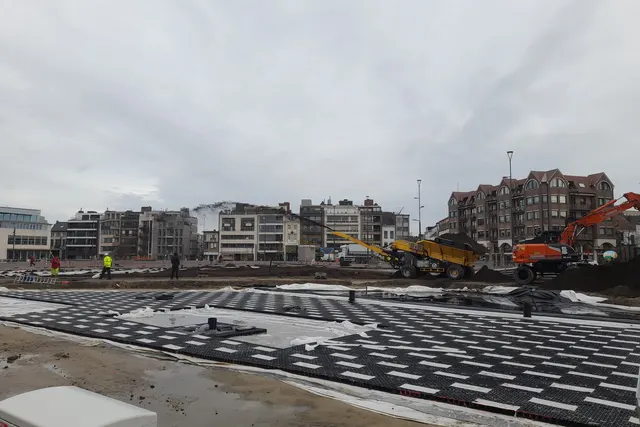
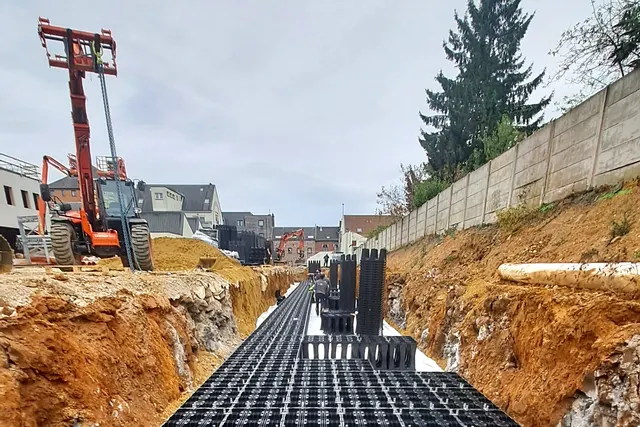
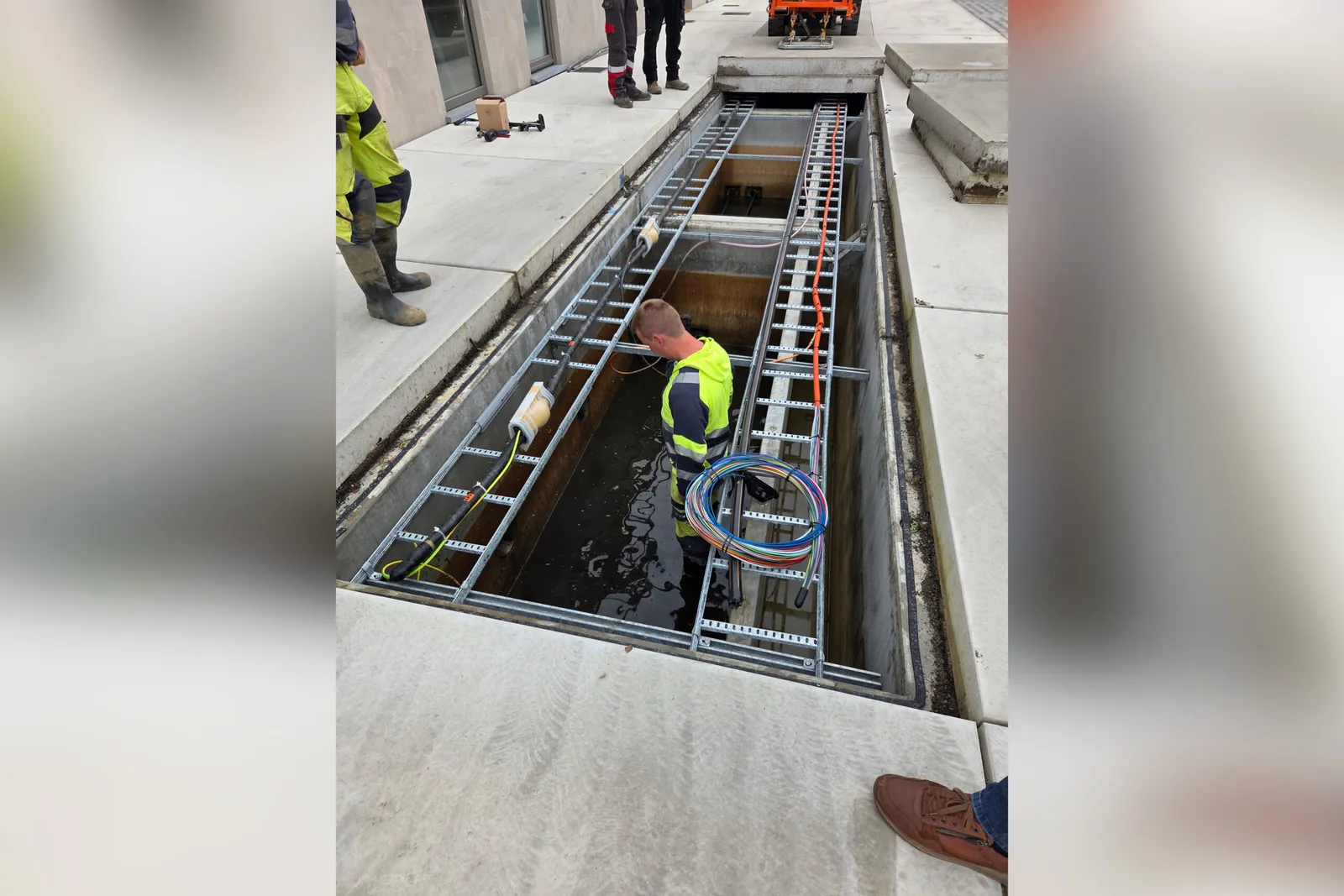
There is also scope for innovation below ground. In the « La rue intelligente » project in Wiekevorst, rainwater is stored temporarily in modular concrete storage chambers beneath the road. These systems can collect large volumes of water without taking up additional space. The water is then released gradually or allowed to infiltrate the soil. Utility pipes and a dedicated tree-growing area are also incorporated into the same structure. The result is a multifunctional system that combines water management, infrastructure and urban greening in a limited area.
Concrete, the material of choice
Choosing the right material is essential. Concrete is particularly well suited to water management applications, not only for retention, but also for transporting and treating water. Its structural strength, low environmental footprint and long service life enable it to withstand heavy loads and prolonged exposure to moisture with ease. This makes it a reliable solution for both surface and underground infrastructure.
Water, a precious resource
A clear shift in mindset underpins all these developments: water is no longer seen as waste to be drained away as quickly as possible, but as a precious resource. Managing it intelligently and incorporating it visibly creates a system that not only works, but also contributes to the quality of public spaces.
The future of urban water management lies in an integrated approach that brings together engineering, design and ecology. By putting water at the heart of public spaces, we can build cities that are both better able to withstand extreme weather and more pleasant places to live.
Question about this story? Ask your question
Keep following this
Get an email when a new story is published. No account needed.
- ThemeTransforming infrastructure and territories
- SubjectInfrastructure