Expanding its skills network in Wallonia
Texte Philippe Selke Photos BESIX Unitec
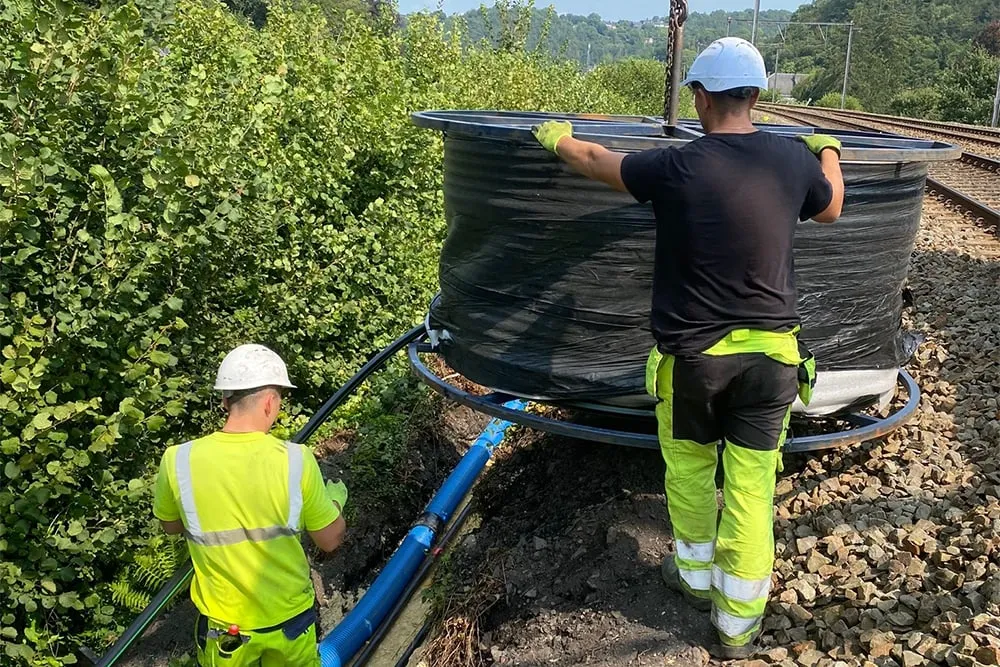
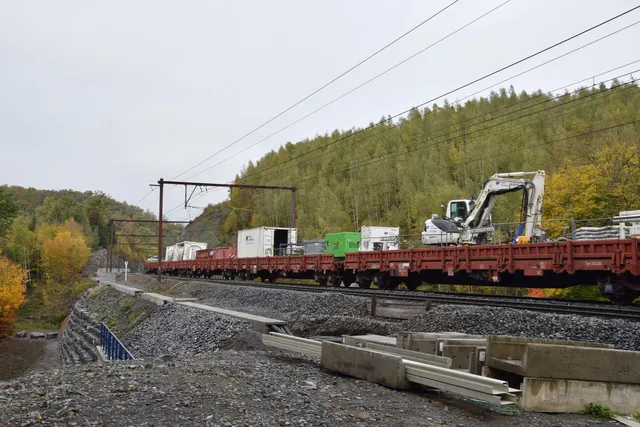
BESIX Unitec recently added staff in Wallonia specialising in signalling renewal for Infrabel, whether for projects to modernise existing installations or to install signalling on new tracks. It was the latter type of project that kept Dario Cavan, project manager at BESIX Unitec, and his team busy from late April to late August on line 162 near Libramont. Routine work for this experienced team, but one that still has to contend with the constraints specific to this type of site.
Fortunately, Dario Cavan knows the subject inside out. He worked for Infrabel and TUC Rail for many years before joining Appermont Gebroeders in 2019, a company specialising in railway signalling works and operating mainly in Wallonia. Five years later, it was acquired by BESIX, which did not yet have its own staff experienced in this specialism and was looking to expand its skills network in Wallonia.
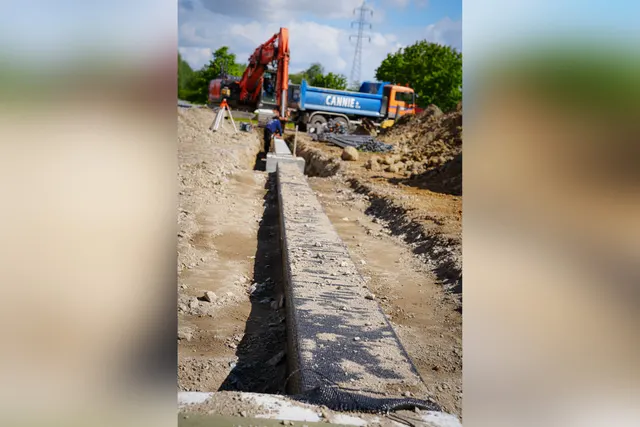
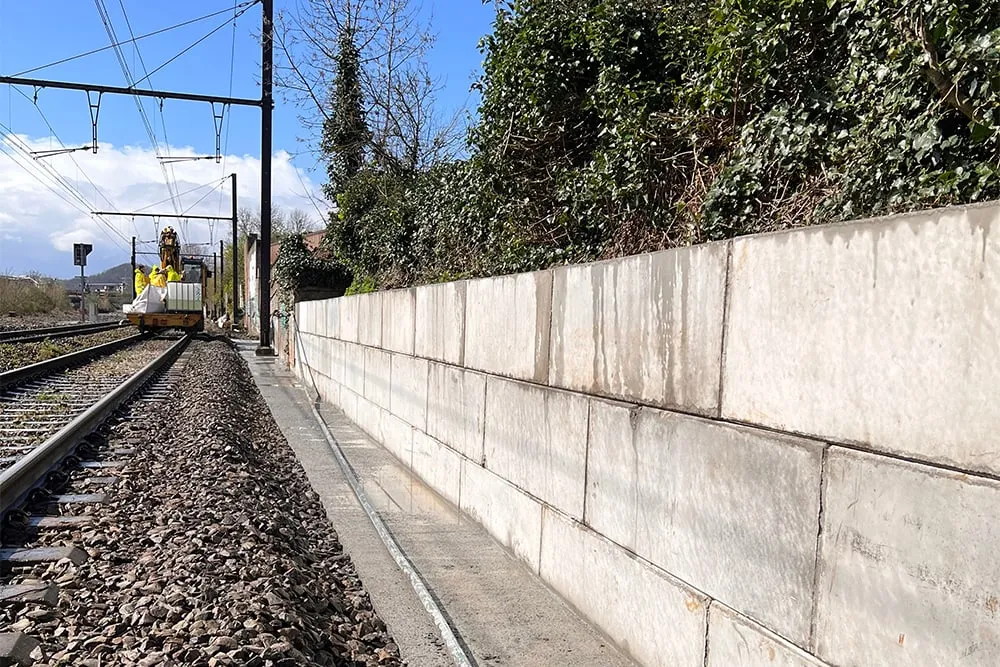
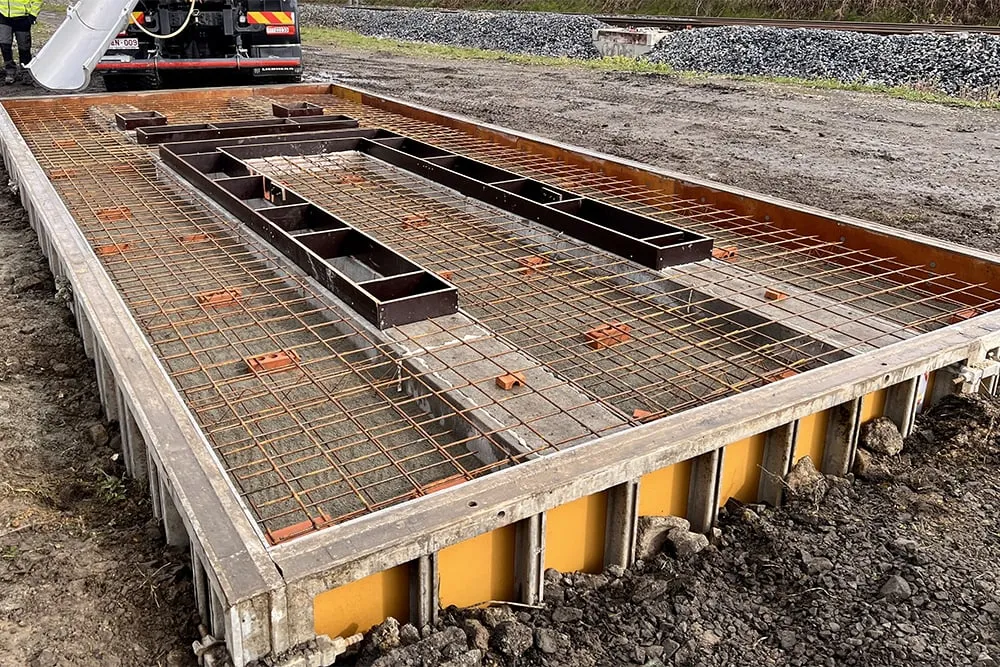
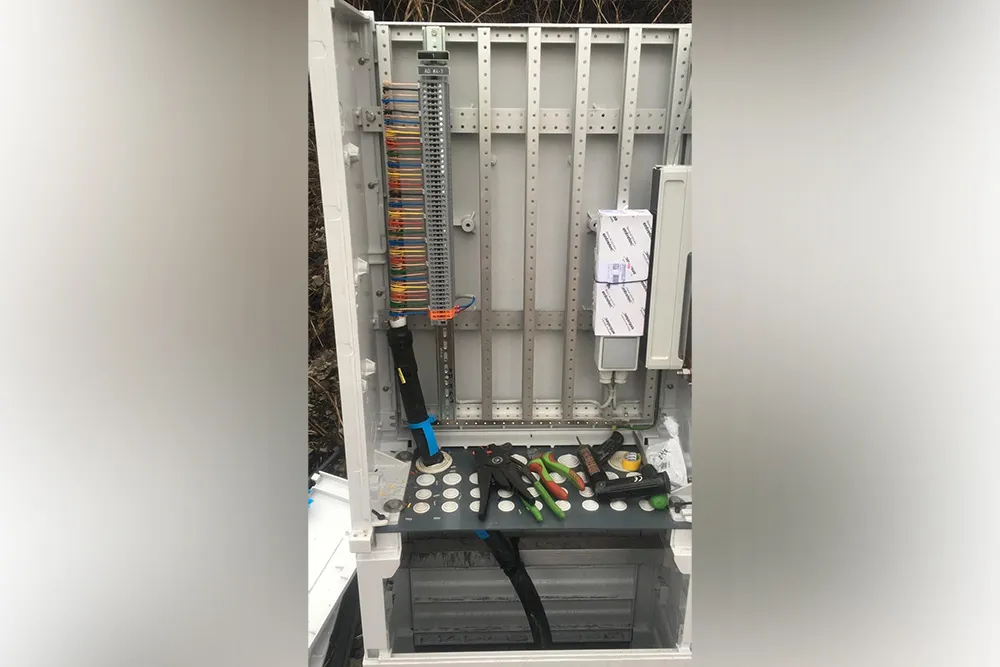
Dario Cavan explains what the work in Libramont involved: “A recently installed set of points will provide access to a new junction on this busy line, requiring dedicated signalling to be installed. The new equipment is due to be commissioned on 24 and 25 August. Broadly speaking, our work involved building foundations for the signal cabinets, laying cable ducts to connect the electrical cabinets, installing the signals, carrying out crossings beneath the tracks, pulling cables, … This calls for quite a range of skills, in minor civil engineering, electrical work, …”
Adapting to constraints
“You also have to be able to work around track closures, which are becoming increasingly difficult to secure and leave fairly limited working time. We work after the last trains have passed, at around midnight. Infrabel staff then have to deploy to put safety measures in place and protect us.”
Among the less predictable constraints, changeable weather during the works meant we had to adjust the schedule and adapt from day to day. “And when it wasn’t the weather, it was the supply of materials that struggled to keep up, because nobody keeps stock any more.”
The equipment used included road-rail cranes. “These are wheeled cranes fitted with two bogies, one at the front and one at the rear, so they can travel on the rails. We mainly use these road-rail cranes to carry out crossings beneath the tracks, install inspection chambers, pull cables and install signals.”
Targeted acquisitions
In Flanders, BESIX Unitec is highly active in many fields, such as installing gas pipelines and fibre-optic cables. This was not yet the case in Wallonia. The acquisition of Appermont Gebroeders and, more recently, the companies of the Namur-based T.F.C. group has changed that. It enables BESIX to secure framework contracts with the various energy and telecommunications network operators by forming joint ventures between its different companies. The Belgian construction and infrastructure giant is therefore continuing to build its presence and expand its network in Wallonia.
Question about this story? Ask your question
Keep following this
Get an email when a new story is published. No account needed.
- SubjectInfrastructure