A royal route for fish at the new Ampsin-Neuville lock complex
Texte Philippe Selke & SOFICO Photos Pascal Thémans
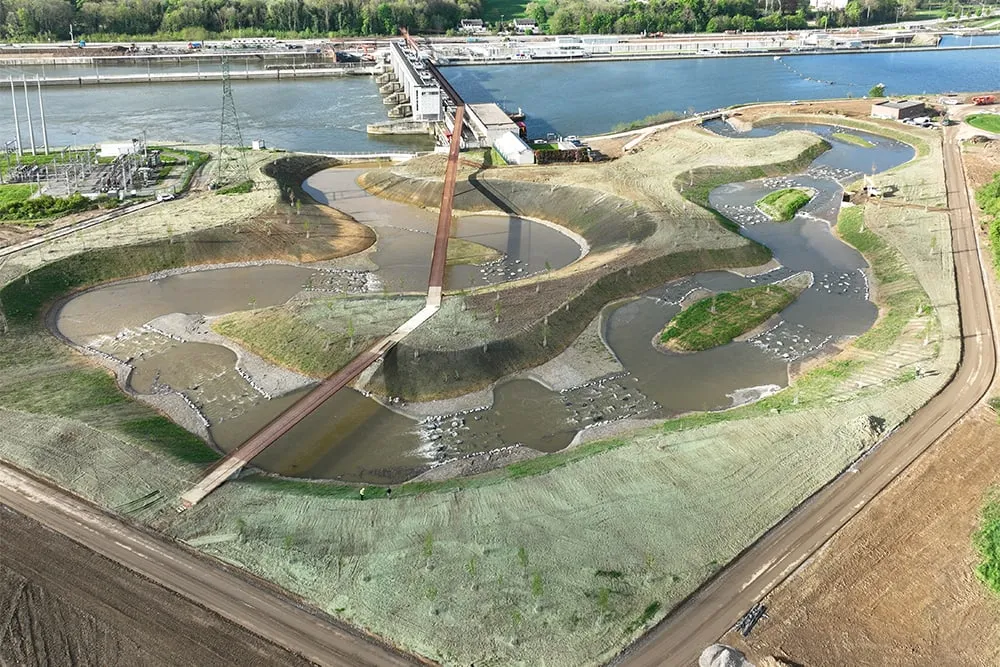
Officially opened on 28 June, the modernised, upgraded Ampsin-Neuville lock complex includes Wallonia’s longest fish pass among its new infrastructure. Various fish species, including salmon, will be able to use this route upstream to rest and spawn. The fish pass and works to the left downstream bank represent a budget of €2.4 million excluding VAT. Three design consultancies worked on the project: IMDC on hydraulic aspects, STREAM & RIVER CONSULT on the landscaping, and GREISCH on the civil engineering structures.
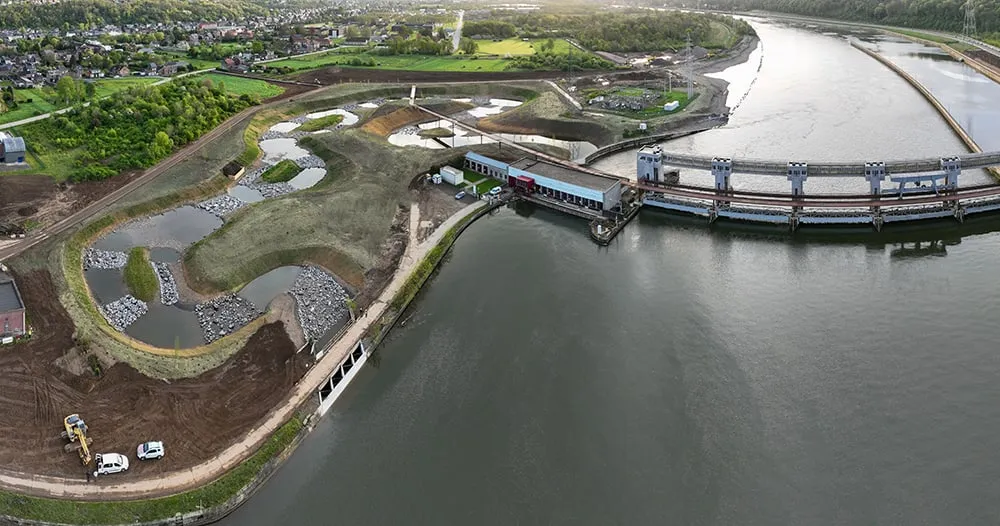
As part of the works to upgrade the Ampsin-Neuville lock complex, a series of measures were taken to encourage the development of flora and fauna. These include a fish pass that runs around the left-bank hydroelectric power station. At 700 metres, this is the longest fish pass in Wallonia. This type of project is unique on the Walloon Meuse, as a large area is needed to develop a river of this kind.
Artificial river
The fish pass is one link in restoring the free movement of fish throughout the Meuse basin. It allows different fish species to get past the weir and is specifically intended to restore the life cycle of the Atlantic salmon.
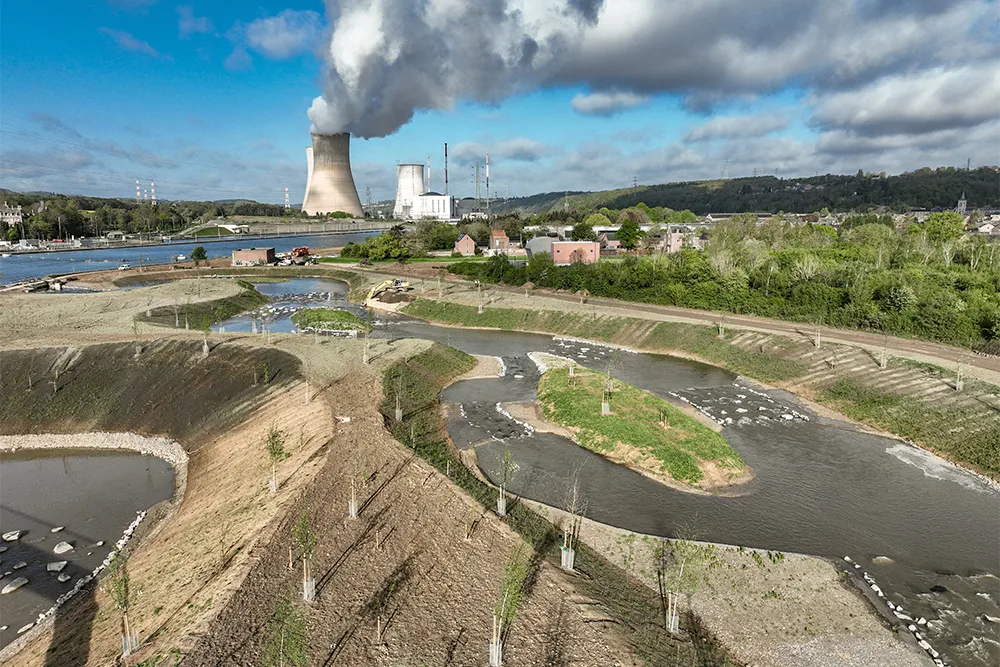
This artificial river comprises a variety of zones, including pools, riffles and spawning grounds. With varying depths (from 30 cm to 2 metres), different flow rates (calm areas and fast-flowing areas) and varied compositions (stonework, plants, etc.), these zones provide different species with places to rest, spawn and move upstream.
Some zones also provide habitats for other species, such as dragonflies and amphibians. A nest box for kingfishers has been installed downstream on the left bank, and a bank for sand martins has been incorporated into the artificial river.
Other works
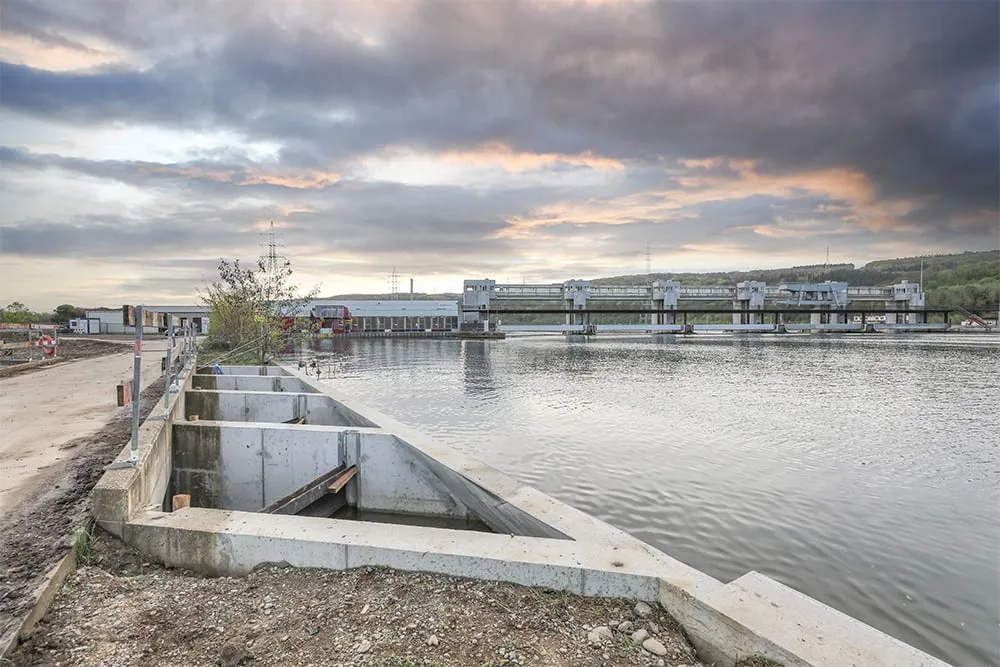
The works were extended along the left downstream bank. Their main aim was to restore links between the aquatic environment and the bank. The concrete bank was cut down to water level to create submerged transition zones in the north, where aquatic flora and fauna can develop.
Plant species were selected to diversify the habitats.
Recesses were cut into the wall to allow this transition zone between the bank and the river to be recolonised, while protecting it from wave action as far as possible.
The project also reduces disturbance to bats by limiting lighting across the site and using warmer-coloured light.
Ponds are also planned to encourage natterjack toads.
Finally, an eel pass was built on the right bank to improve upstream passage for this species.
Question about this story? Ask your question
Keep following this
Get an email when a new story is published. No account needed.
- SubjectInfrastructure