Timber construction, a driver of value creation
We all, collectively, have a major responsibility for the legacy we leave to future generations. At the level of spatial planning, this responsibility raises the question of architecture’s impact on the environment and the community. Specifically, finding the right balance between human activity and the living world lies at the heart of the civilisational challenge we are increasingly facing today. An urgent matter that obliges us to innovate.
Post-industrial capitalist overconsumption must give way to a new paradigm, one of frugality, recyclability and decarbonisation, to name just a few ecological concerns. But individual and collective behaviours must also undergo profound change, and that is far from simple.
In this respect, architecture is an opportunity. Combining a multitude of parameters and bringing together a great many stakeholders, each project is a concentration of intelligence. The process itself contains the conditions for setting an example: it requires expertise, commitment and determination. Every action we take, every line we draw, every decision we make has an impact on the region, the environment, biodiversity, the economy, individuals and culture.
Architecture brings together the challenges of programming and contextualisation, and the exact and social sciences, transcending the realities of the world to create the conditions for harmony. In this respect, it is a discipline that is both demanding and meaningful. It expresses values, a culture, a form of governance and an economy. At the scale of a region, it says something about the state of a society. Tell me what your architecture is like, and I will tell you who you are.
Architecture’s purpose is to create value. Tangible value, in the property sense or in terms of the economic activity it houses: optimised functionality, attractiveness and productivity. Intangible value, in terms of the links architecture weaves between past, present and future, roots, forward thinking and expertise, to shape a narrative in tune with the culture of a company, or the identity of a city or region.
The construction sector is also a driver of value creation at regional level, founded on its culture and economy and sustained by expertise passed down from generation to generation. Though known for being conservative, the process of transformation in this sector is particularly slow. Yet the ingredients for the ecological transition are all there. Timber construction now plays a leading role in this process, embodying the essential synthesis of ethics and aesthetics.
Timber is nothing new in construction. Its resurgence is due to the many advantages that make it a sustainable alternative to concrete construction, starting with its carbon footprint and biophilic qualities, which contribute to well-being.
A quintessentially traditional material, timber also represents the future of construction through new technologies and robotics, enabling prefabrication, dry construction, recyclability and material savings. It is also a welcome material in the renovation of heritage buildings, another major ecological challenge in spatial planning.
The future of architecture and construction is therefore an exciting one, just waiting to flourish and appeal to younger generations in search of meaning.
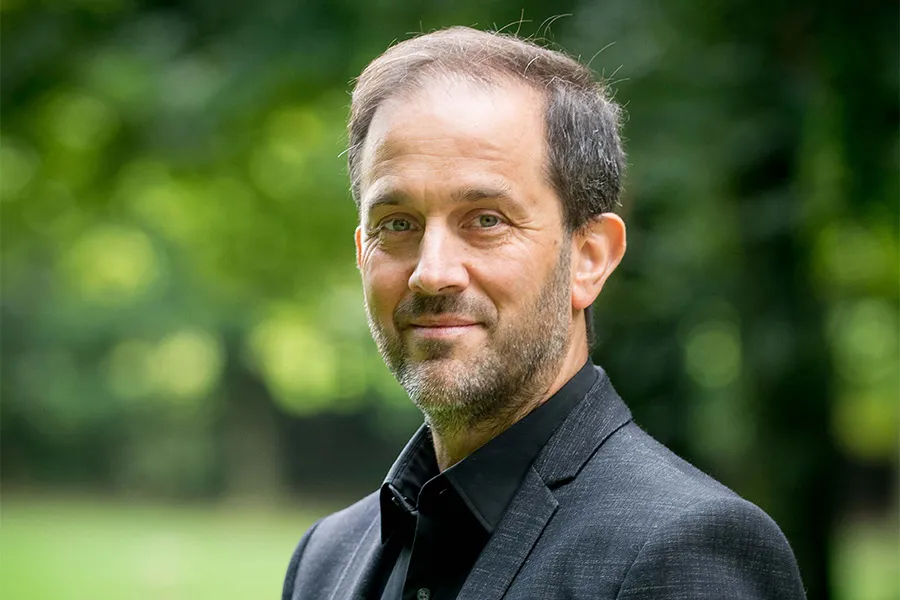
David Roulin,
CEO ArtBuild Architects
Question about this story? Ask your question
Keep following this
Get an email when a new story is published. No account needed.
- ThemeBuilding with less carbon
- SubjectOpinion