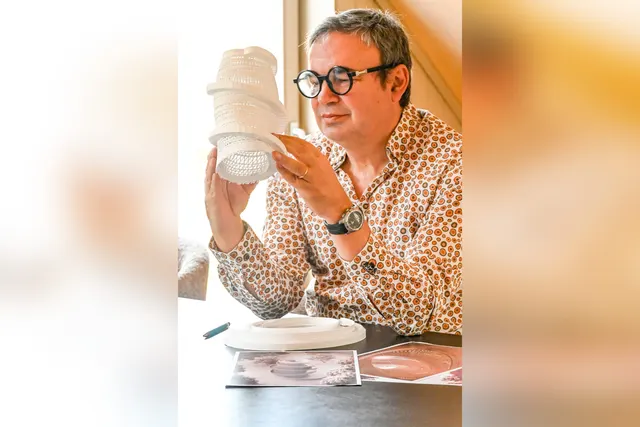
Carte Blanche | Arlette Baumans, Architect and Urban Planner, Baumans-Deffet
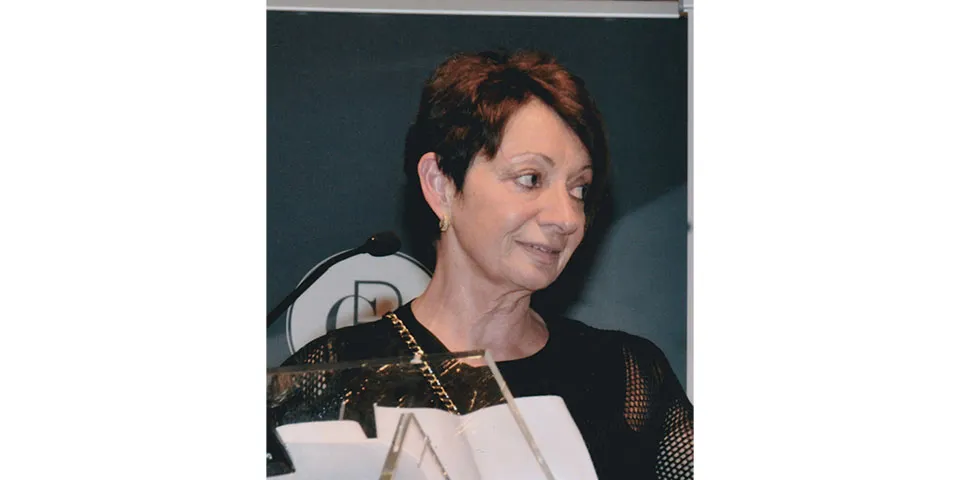
Member of the Royal Academy of Belgium
Knight of Walloon Merit
Building Wallonia: a question of collective responsibility
From the second half of the twentieth century onwards, Wallonia, a region known worldwide for its metallurgical, mining and wool industries, was no longer competitive at continental or international level.
The region, and its towns and cities in particular, whatever their size, have failed to make the transition from industrial to post-industrial urban centres. The knock-on effects are legion: economic, social, environmental and cultural crises.
The dominant models of metropolisation and property capitalism seek to rebuild impoverished, deserted city centres at the expense of urban sprawl into what was once known as the countryside.
It is urgent to adopt a responsible approach to the global and specific challenges of (re)building Wallonia.
The foundations of an urban planning response, which can only be collective, are threefold.
Include all Walloon territories in urban planning and architectural thinking
From the metropolitan areas to the heart of rural Wallonia, via the small towns, territorial management must be comprehensive and inclusive of today’s “left-behind” areas.
While the metropolitan role of the larger cities must be strengthened, the smaller towns, many of which have experienced a golden age, must renew their practices, prompting all those involved in shaping the region to question their approach.
These same stakeholders will also be responsible for safeguarding the economy of the region, its Grand Paysage, which is currently left to the logic of investors and developers of urban products such as industrial zones, shopping centres and housing estates.
Transform Wallonia in line with its DNA: prepare for the next transformation
In recent decades, our decision-makers have often dreamed of and called for Wallonia’s renewal by reference to models from elsewhere: the Guggenheim effect in Bilbao, the Vauban district in Freiburg, the transformation of Bordeaux. It is time to consider whether importing these models and star architecture into our Walloon towns, cities and landscapes is appropriate.
It is also time to “take an interest in what is, rather than in what we would like to be” (Peter Smithson, As Found).
It is time to take an interest in our built environment, which is in a state of relative abandonment, a legacy of a glorious past, and to see it as fertile ground for renewed reflection on our ways of thinking and acting. “Gather, restore and work with the ordinary” (As Found).
The Walloon region would thus become an active territory in a state of constant transformation, where every stakeholder is fully aware of their role as a custodian and their responsibility to take a long-term view (to begin what others will complete).
Rebalance market and non-market forces
In the February 2006 issue of L’Architecture d’aujourd’hui, Axel Sowa had already confirmed that, caught between the hysteria of spectacle and the laws of the market, where anything that cannot be turned into an event or a commodity is simply forgotten, the scope for action is limited. That scope may be limited, but it is real and meaningful, and should be the focus of all those involved in transforming Wallonia.
Two conditions will prove necessary and indispensable to rebalance market and non-market forces. Those responsible for planning territories, whether acting individually or as a group, must, on the one hand, reject the use of disconnected practices (theory/practice, architecture/urban planning, designer/builder, generalist/specialist) and, on the other, agree on a systemic vision for shaping the inhabited landscape, both natural and built.
From now on, every project should therefore be designed, assessed and approved in response to economic, societal, environmental and cultural requirements alike.
An opportunity to make Wallonia an exemplary laboratory for building resilience.
This is a matter of collective responsibility.
Question about this story? Ask your question
Keep following this
Get an email when a new story is published. No account needed.
- SubjectOpinion