Soil, excavated rock and sand: how can they be managed on site?
Managing excavated soil and rock is a complex issue from managerial, economic, regulatory and environmental perspectives. However, a solution is available to every construction site.
Although NASA’s Ingenuity helicopter has set its metal feet on Mars, Earth remains the only planet we can inhabit. The soil we live on is a non-renewable resource and must therefore be protected by every means possible.
When it comes to managing excavated soil, the first step towards preserving it is to reuse the soil itself, thereby maintaining the quality of the environment. The key is to recognise that excavated soil is not waste to be sent to landfill. On the contrary, it can become a valuable resource for everyone involved. The aim for companies and operators is therefore to recover as much soil as possible for reuse on the site itself or in nearby areas.
One of the first requirements is generally to separate the different types of material excavated so that the soil can be reused quickly. With the right machines, the solution is within reach.
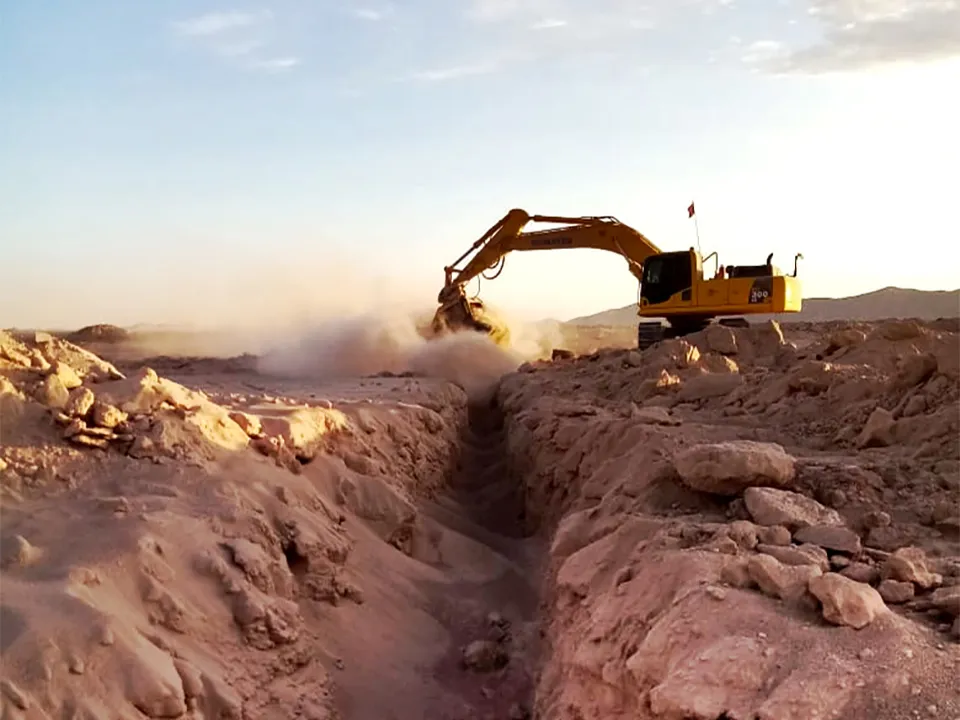
A unique case arose in Quillagua, a small town in Chile’s Antofagasta Province, considered by National Geographic to be the driest place on the planet. Just 0.2 millimetres of rain fell there over 40 years. In this inhospitable landscape, an MB-S18 screening bucket was used to screen the sand for reuse in covering the cables serving photovoltaic panels. This has finally enabled the town’s residents to communicate with the rest of the world. The unusual location and nature of the operation attracted extensive media coverage.
MB Crusher’s screening and crushing team has won over many operators in the sector, who have adopted its equipment for both operational efficiency and economic performance: lower operating, maintenance and logistics costs, together with increased productivity and faster operations.
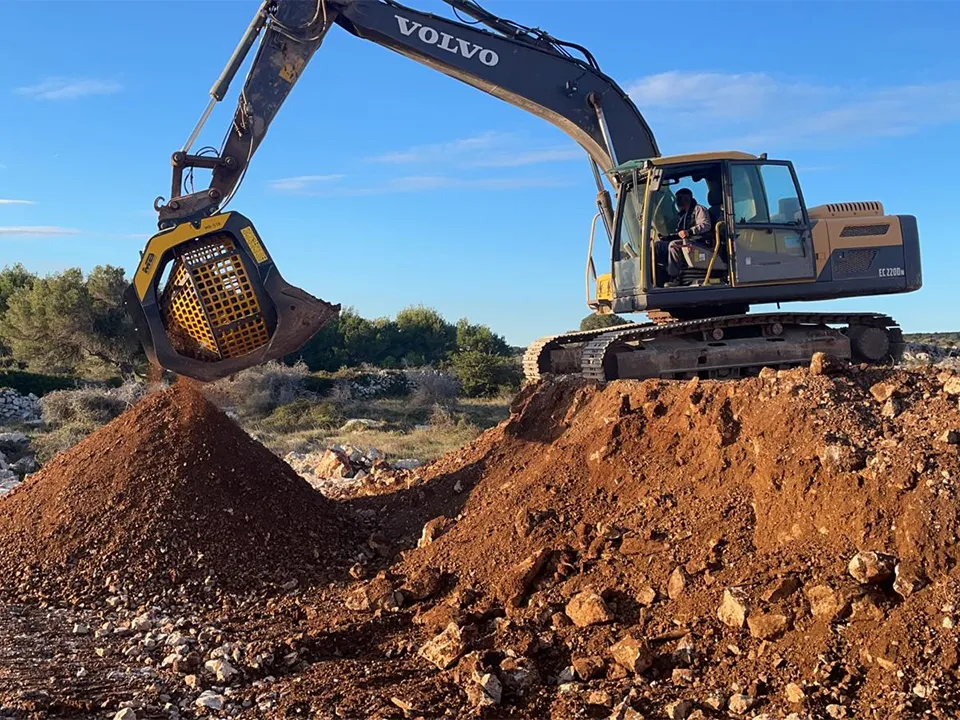
In Croatia, a company with several active construction sites solved the problem of separating rock from soil using an MB-S18 screening bucket, which can also be transported and used anywhere. Before adopting this solution, the company transported excavated soil to another site, incurring heavy management and transport costs.
With its equipment, MB Crusher provides companies with solutions for managing soil, excavated rock and sand, while maintaining soil quality and functionality. The benefits are numerous: the environment gains, the company operates more sustainably, complex regulations are complied with, and the construction site achieves a more than positive financial return.
Another delicate issue arises when excavated rock contains polluted material. Even in this situation, MB Crusher tools offer an excellent solution for reducing the level of soil contamination.
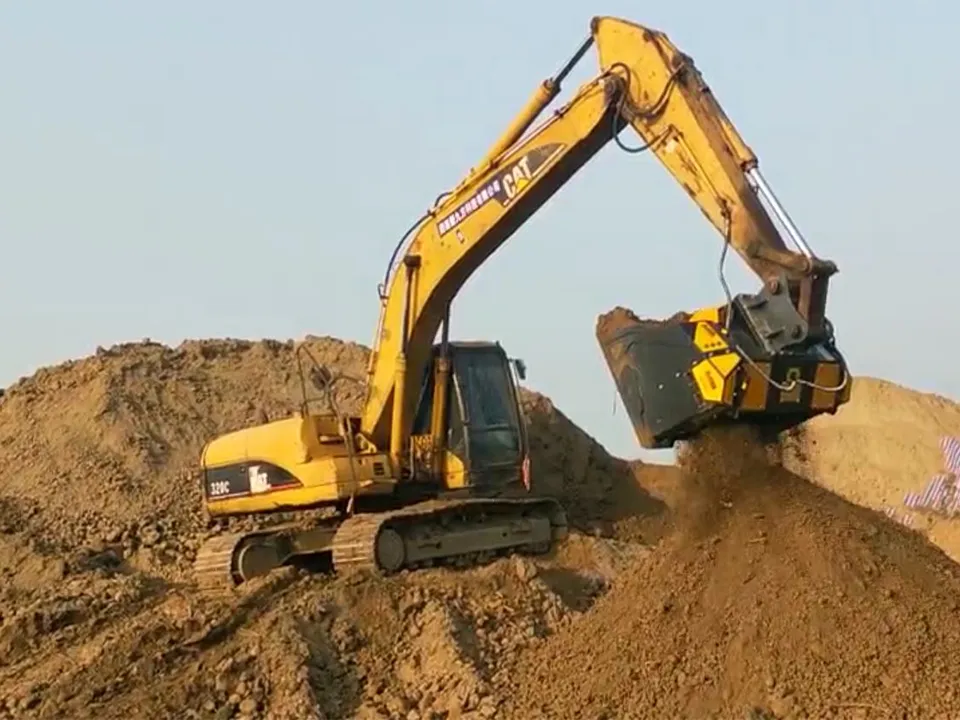
Recently, an MB-HDS320 screening and crushing bucket was used in China to move polluted soil and mix it with other products, thereby neutralising the pollution. High-quality soil was produced very quickly and was ready for immediate reuse. The major advantage of the MB-HDS screening and crushing bucket is that its shafts can be changed directly on site and safely. This makes it easy to switch from one material to another whenever necessary.
As these examples show, using the right tools makes it possible to speed up operations, improve profitability and limit the environmental impact of excavated soil management. Companies around the world have used MB Crusher tools to manage on-site work more sustainably, and their commitment to protecting the environment has also enhanced their reputation and led to more requests for work. Success on every front.
Question about this story? Ask your question
Companies in this story
Keep following this
Get an email when a new story is published. No account needed.
- ThemeConstruction machinery and equipment
- SubjectEquipment and machinery
- CompanyMB Crusher