Keestrack K5e in Frederikshavn: Consistent sustainability
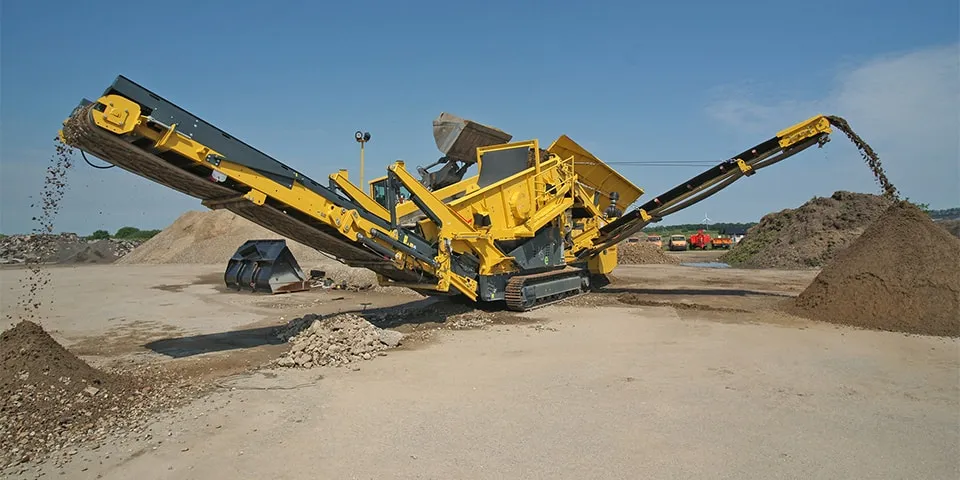
Last year, the civil engineering department of the Danish municipality of Frederikshavn replaced a mobile trommel screen for soil processing with a Keestrack K5e diesel-electric scalper featuring a fully electric plug-in option. Alongside its technical advantages, its high flexibility and equally positive impact on the environment and operating costs made the difference.
The Danish port of Frederikshavn is in the north-eastern region of North Jutland and is the administrative centre of the municipality of the same name, which stretches for around 85 kilometres along the Baltic coast towards Skagen. It is Denmark’s northernmost municipality, where the North Sea and Baltic Sea meet. The Park og Vej road and civil engineering department is responsible for the municipal road infrastructure, around 1000 km of roads and 300 km of unpaved roads, and, like all the other public utilities, is organised as a municipal company. These include the water, energy and waste sectors.
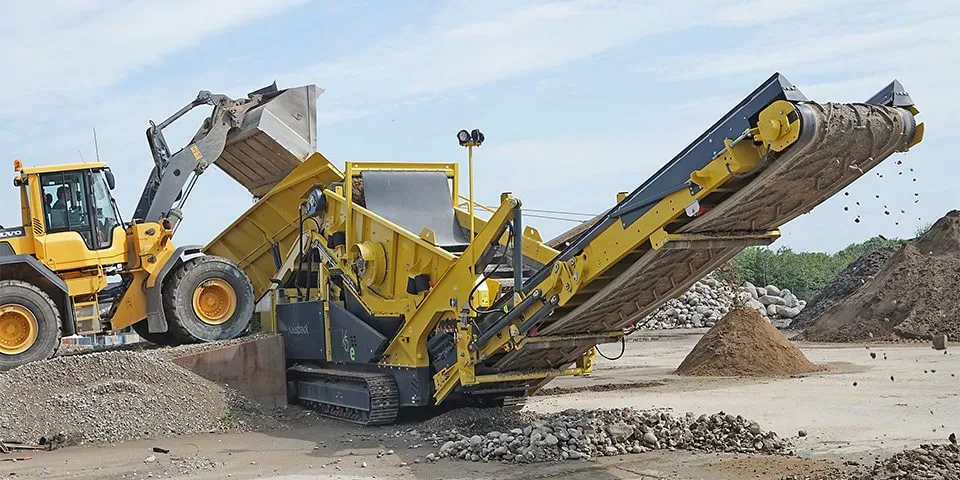
Alongside maintaining and building the road network, recycling construction and excavation waste is one of the tasks carried out by the department’s approximately 130 employees. Handling uncontaminated and contaminated materials from private and commercial suppliers, the central recycling site in Frederikshavn and the other collection point in Skagen process 15,000 to 20,000 tonnes a year, according to Gert Christensen, team leader responsible for application technology and the equipment fleet at Park og Vej.
Coarse mineral construction rubble (> 20 mm) is temporarily stockpiled at the central site and regularly processed by a crushing contractor. Each year, 10,000 tonnes of soil and excavated material are processed using the department’s own equipment. Until last year, this was done with a mobile trommel screen measuring 6 x 2 m, but it could no longer meet the demanding requirements. “The trommel screen was not efficient enough, particularly when processing soil containing large amounts of grass and roots, where we need to separate as much vegetation as possible from the soil residues before composting,” explains Gert Christensen, describing the switch to horizontal screening technology.
Environmental considerations also influenced the decision to choose the Keestrack K5e mobile scalper. “The municipality of Frederikshavn is committed to protecting the environment. When we invest in new plant or equipment, we therefore need to assess the environmental impact first and analyse energy efficiency, alongside the technical requirements,” says Gert Christensen. Park og Vej almost immediately opted for an electric drive concept, but did not want to give up the flexibility of a mobile machine, so that the equipment could remain versatile and work at the central site, at decentralised depots or on site at large construction projects.
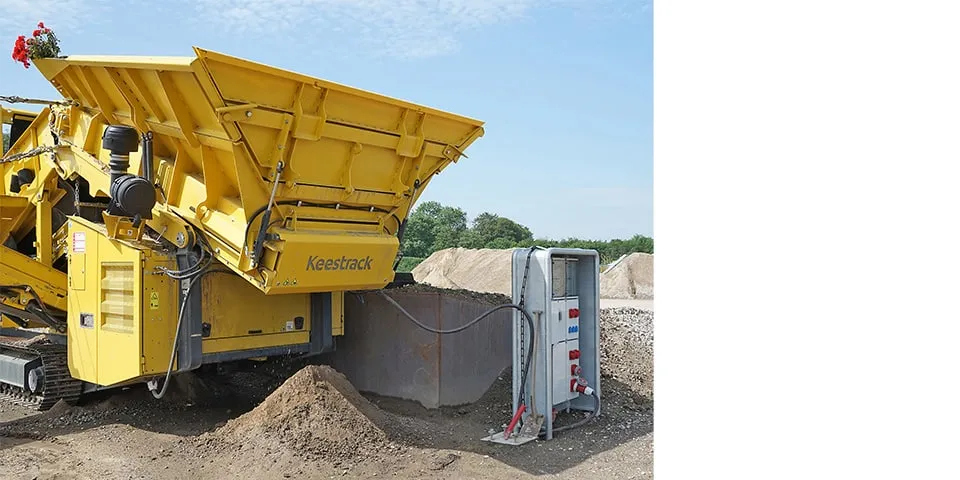
A 125 A connection supplies the central screening site with mains power.
“We tested a wide range of options on the market. Keestrack’s fully hybrid diesel-electric plug-in concept struck us as the most mature. It is not simply a matter of adding another engine: the entire process has been electrified in a very carefully considered way. In fully electric mode, all system functions are available with no loss of performance or functionality. In conventional diesel mode, we benefit from the independence of a tracked screen, with lower fuel consumption and significantly reduced emissions.”
Flexible electric solutions
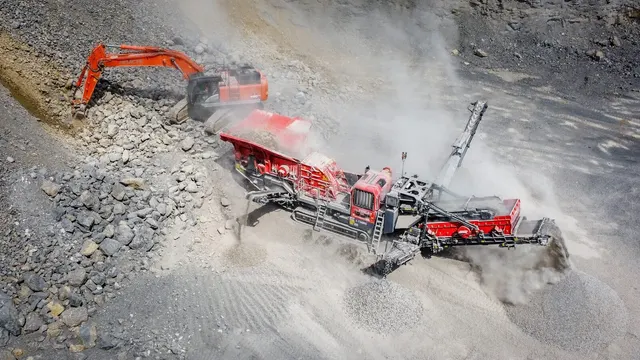
At around 30 tonnes, the K5 / K5e series represents the mid-range of Keestrack’s scalper line-up, which comprises 6 models. A wide choice of screen media for the 5000 x 1500 mm two-deck screen (actual screening area of 7.5 / 6.75 m²), along with a hydraulically adjustable screening angle, ensures a broad range of applications: from highly efficient scalping of rock to soil processing at capacities of up to 450 t/h, and from screening construction waste to producing marketable end products in three fractions. Like all Keestrack scalpers, the K5 series is optimised for transport: all conveyors and other components can be folded hydraulically for low-loader transport (transport width of 2,600 mm). On site, the machine is quickly ready to work, with no support legs required.

The heavy-duty apron feeder and screen drive are among the few hydraulic consumers on the Keestrack K5e.
The same applies to the fully hybrid plug-in version of the Keestrack K5e. Weighing less than 1000 kg more than the diesel-hydraulic model, it can be transported without restrictions. At the heart of the K5e is its onboard 105 kVA generator, connected to the diesel engine and supplying power directly to all electrical consumers, including drum motors, auxiliary equipment and lighting. All hydraulic components, including the apron feeder, screen drive, lifting cylinders and track drive, are powered by a central 45 kW unit comprising an electric motor and a load-sensing hydraulic system.
The diesel-electric drive concept reduces the load peaks typically found in diesel-hydraulic systems and plays a major part in the low fuel consumption in diesel mode (Ø: 7-9 l/h). Efficiency can be improved further by connecting downstream equipment to the K5e’s external “plug-out” connection, for example the new fully automatic S1e stockpiling conveyor, dust suppression equipment from the Keestrack range or a high-performance lighting system.
Another benefit of the K5e’s highly electrified onboard technology is the significant reduction in pipework and hydraulic oil volume. Pipework is around 40% shorter, with connections much less exposed to wear at bends, particularly on the conveyors. The oil volume is also substantially lower, at 235 litres compared with 370 l for the purely hydraulic K5, reducing operating and maintenance costs as well as environmental risks.
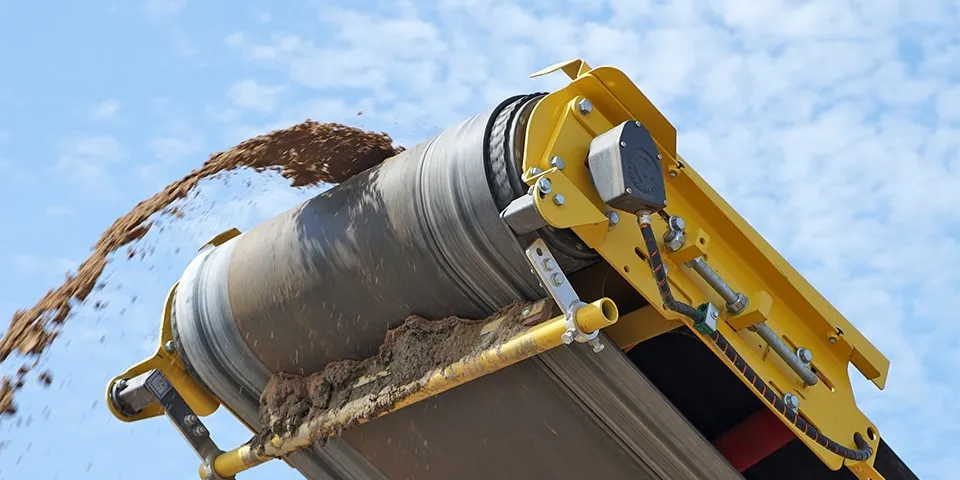
All conveyors are driven by maintenance-free electric drum motors. This shortens the pipework and reduces the risk of leaks during operation.
Connecting the Keestrack K5e to the existing power supply, a standalone generator or the sufficiently robust plug-out connection of an upstream crusher is straightforward (connection specifications: 125 A, 400 V, 50 Hz). Once the machine has been roughly positioned, the onboard diesel engine can be switched off. After the three-phase plug is connected, the Keestrack control system takes over all energy management. Even without starting the diesel engine, the screen can still be repositioned using its track drive, or the hydraulically driven conveyor belts can be operated.
Proven in practice
In December last year, Keestrack’s Danish dealer TNS Imex of Løgumkloster delivered the K5e to Frederikshavn. Until the power supply was installed at the central screening station at the Park og Vej site, the K5e ran on diesel. Since May, it has been powered solely by electricity. In normal operation, the machine is fitted with a 45 mm finger screen on the top deck and a 20 mm square mesh screen below. For particularly difficult-to-screen materials, such as the very dirty sand swept up by the city’s street sweepers (around 360 t/year), operators switch to a 40×40 mm mesh on the lower deck.
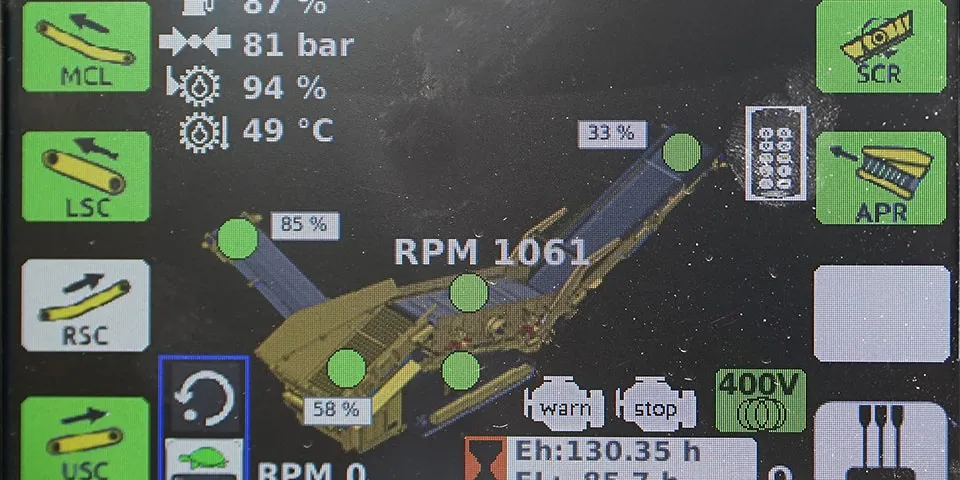
The Keestrack control system manages all energy use and displays diesel-electric (“Eh”) and fully electric (“EL”) operating hours separately.
The K5e achieves a throughput of 100 t/h when processing soil in Frederikshavn. This figure varies according to the material and, above all, the availability of the 4.5 m³ wheel loader, which is also used to load lorries. Even in this situation, plug-in electric operation pays off: there is no diesel consumption at idle and no maintenance-related operating hours. Once wheel loader operator Peter Bragaard has set the machine to “standby” using the radio remote control, it can be brought back up to operating speed in no time.
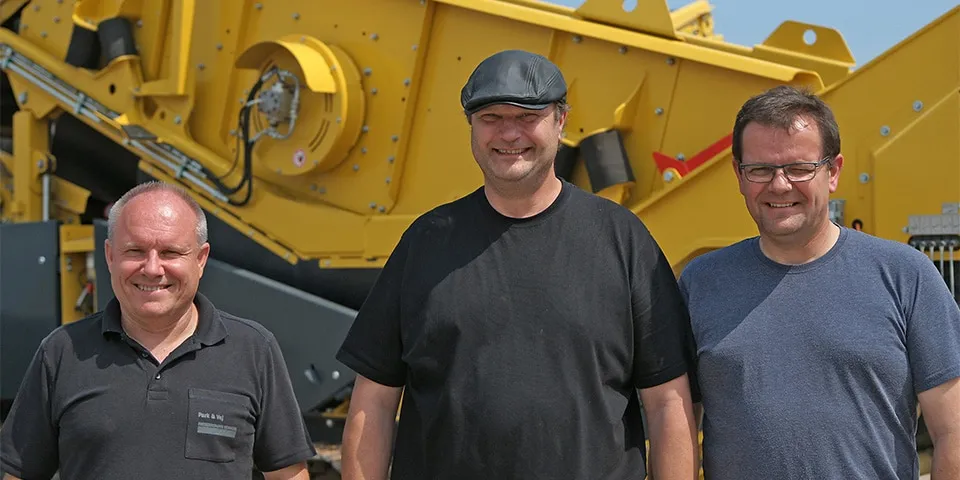
Park og Vej technical manager Gert Christensen with Keestrack dealer Thomas Sørensen of TNS Imex and machine operator Peter Bragaard, from left to right.
Technical manager Gert Christensen has access to medium-term consumption figures. He reports average fuel consumption of 6.61 l/h in diesel-electric mode and average electricity consumption of 23.15 kWh per operating hour in electric mode. The latter is recorded separately by the controller and, optionally, by the Keestrack-er satellite remote monitoring telematics system. Based on local fuel and electricity prices, energy savings in Frederikshavn already amount to 27%, excluding the public subsidy available in Denmark for environmentally friendly production processes.
Question about this story? Ask your question
Keep following this
Get an email when a new story is published. No account needed.
- ThemeTransforming infrastructure and territories
- SubjectEquipment and machinery