Hydrocarbon separators with bypass for the car park at a business park in Liège
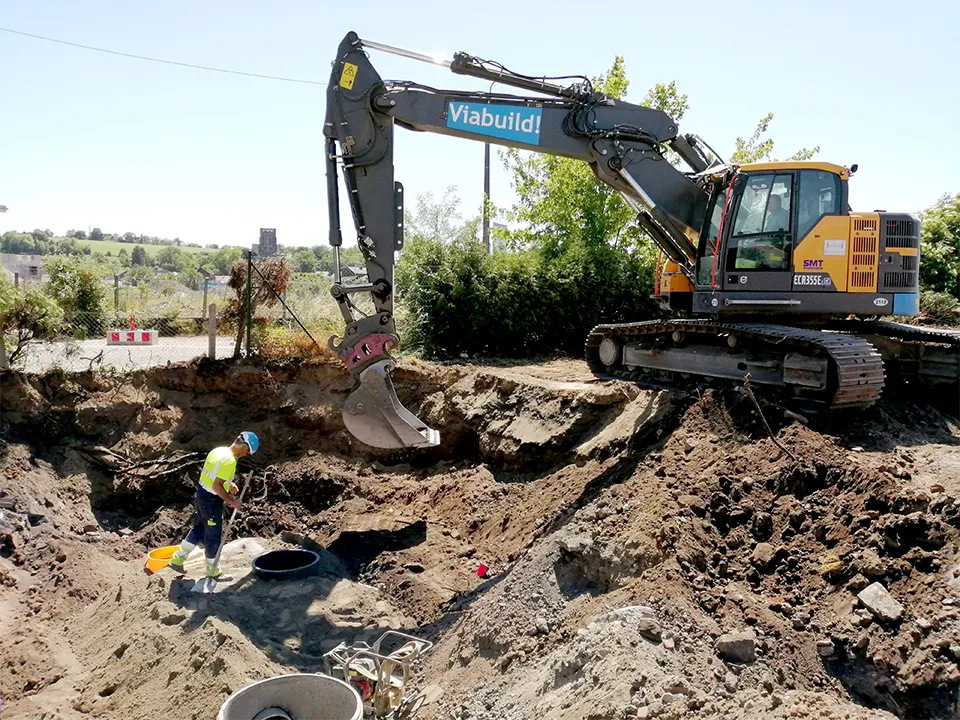
In Bressoux, an area of the city of Liège, Global Estate Group is redeveloping the site of the former Engie Electrabel power station to create the new Droixhe Business Parc.
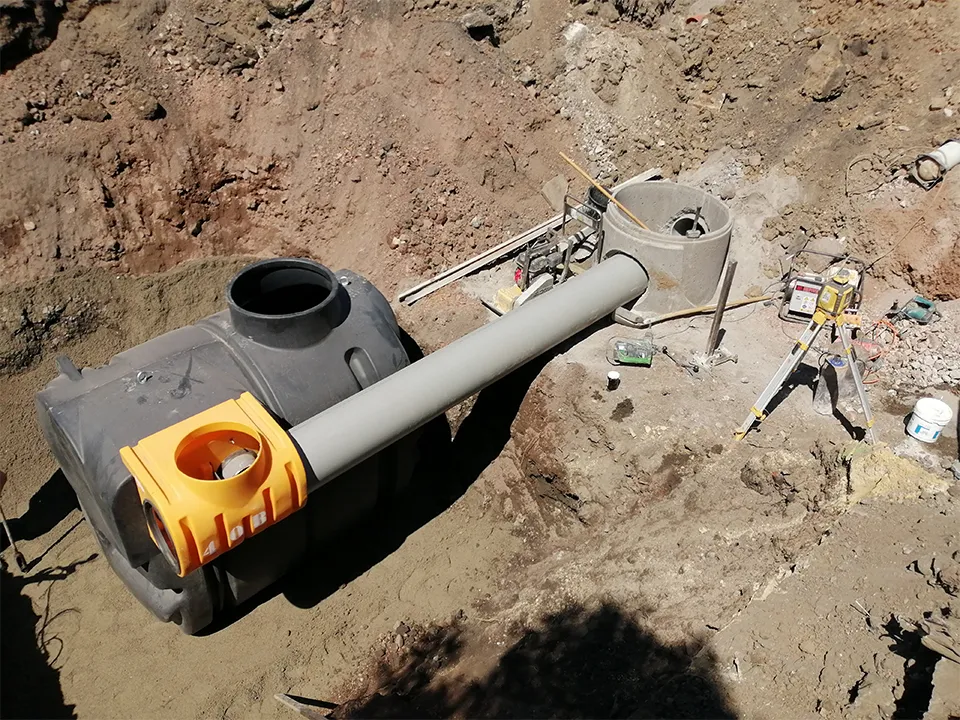
DS Plastics supplied two hydrocarbon separators for the 2 x 7,000 m² car park.
Tom Henneman, Managing Director of DS Plastics: “For Viabuild, we supplied and installed two 40 l/s separators with bypass. The two separators have a maximum flow rate of 200 l/s (4×50). This is sufficient to drain the entire surface effectively.”
Bypass
Depending on the nature of the surface being treated and local regulations, some of the effluent may be allowed to bypass the separator. In this case, a storm overflow (bypass) is installed. Hydrocarbon separators with bypass are among the most commonly installed units supplied by DS Plastics. “Designed in accordance with EN 858.1-2, they belong to the Class 1 separator family, with hydrocarbon discharge levels below 5 mg/litre,” explains Tom Henneman. “The bypass makes it possible to treat large areas with a relatively small separator, such as the 40 l/s units used for this project. Our bypass is also easy to inspect, as it consists of a single chamber with just one manhole.”
Alarm system
DS Plastics also supplied and installed an alarm system for each separator. Required under the European standard (EN 858-1), the system detects when the hydrocarbon layer reaches its maximum thickness. Tom Henneman: “The alarm gives both a visual and audible warning when the maximum capacity is reached. The operator then knows that the separator needs to be emptied.”
HDPE
Made from HDPE, or high-density polyethylene, the separators offer a long service life. In addition, oils and other particles do not stick to the material. When the separator is emptied, no residue is left behind,” says Tom Hennemans.
DS Plastics is known for working quickly and well. “We prepare the quote and submit our offer within 24 hours. We can also deliver separators within one week, with models ranging from 1.5 l/s to 80 l/s, including bypass.”
Question about this story? Ask your question
Keep following this
Get an email when a new story is published. No account needed.
- SubjectEquipment and machinery