How much does it cost you not to recover reinforcing steel?
Texte & photos MB Crusher
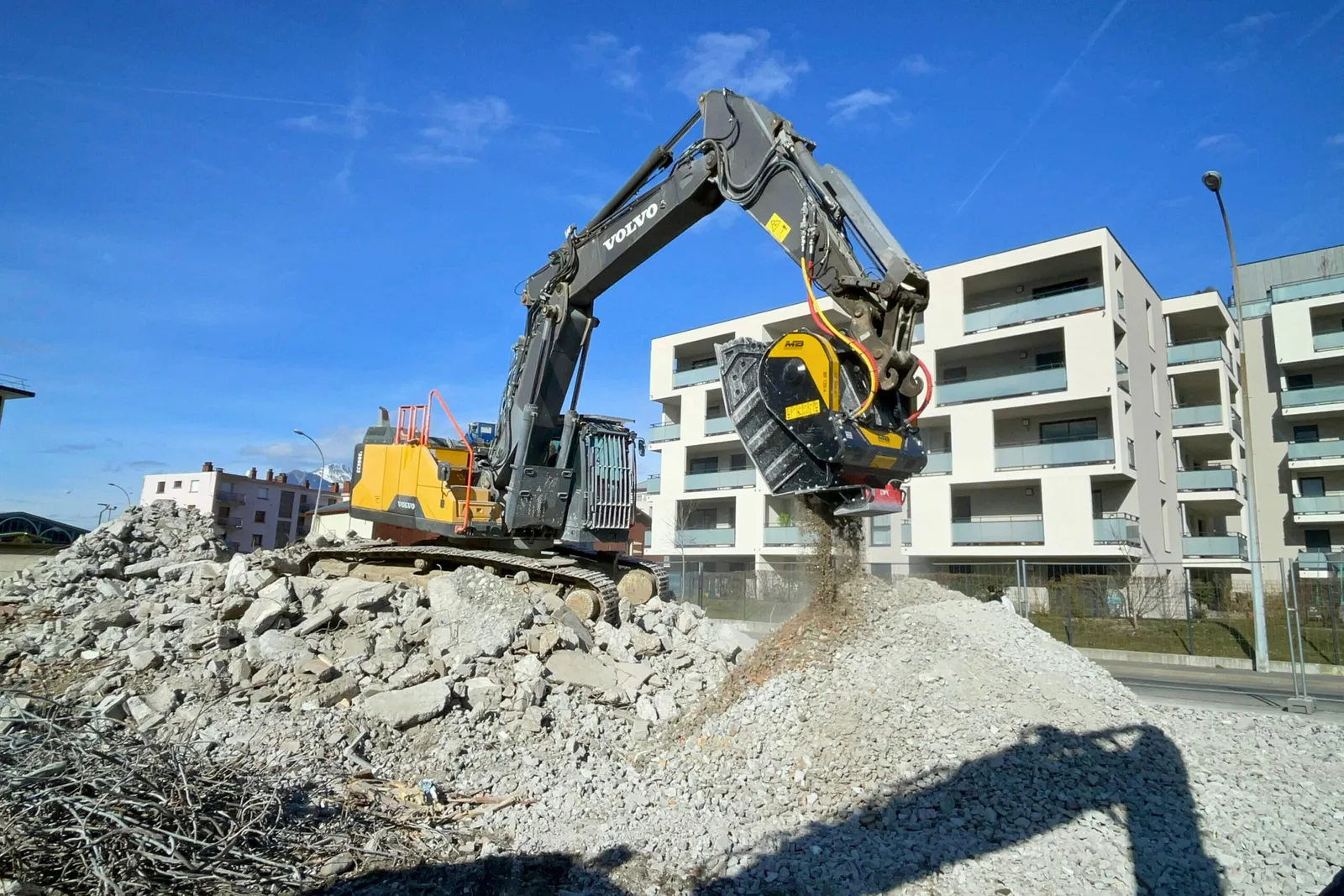
Recovering steel directly on site: a single-cycle process that cuts time, costs and operational steps
Demolition sites have a critical cost that rarely features in estimates but directly affects margins: reinforcing steel, or rather how it is managed.
When the process drives up costs
For years, reinforced concrete has been processed in a series of separate stages: demolition, transport, crushing and removal of reinforcing steel at off-site facilities. This long, costly and logistically complex chain leads to longer timescales, multiple handling operations and a gradual loss in the material’s value.
On sites where reinforced materials are the norm, this setup has a direct impact on project profitability.
One operation instead of three
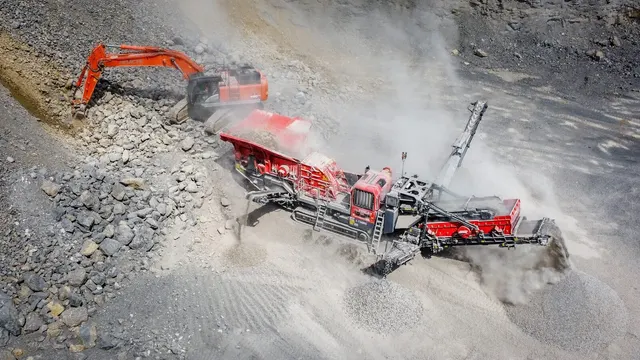
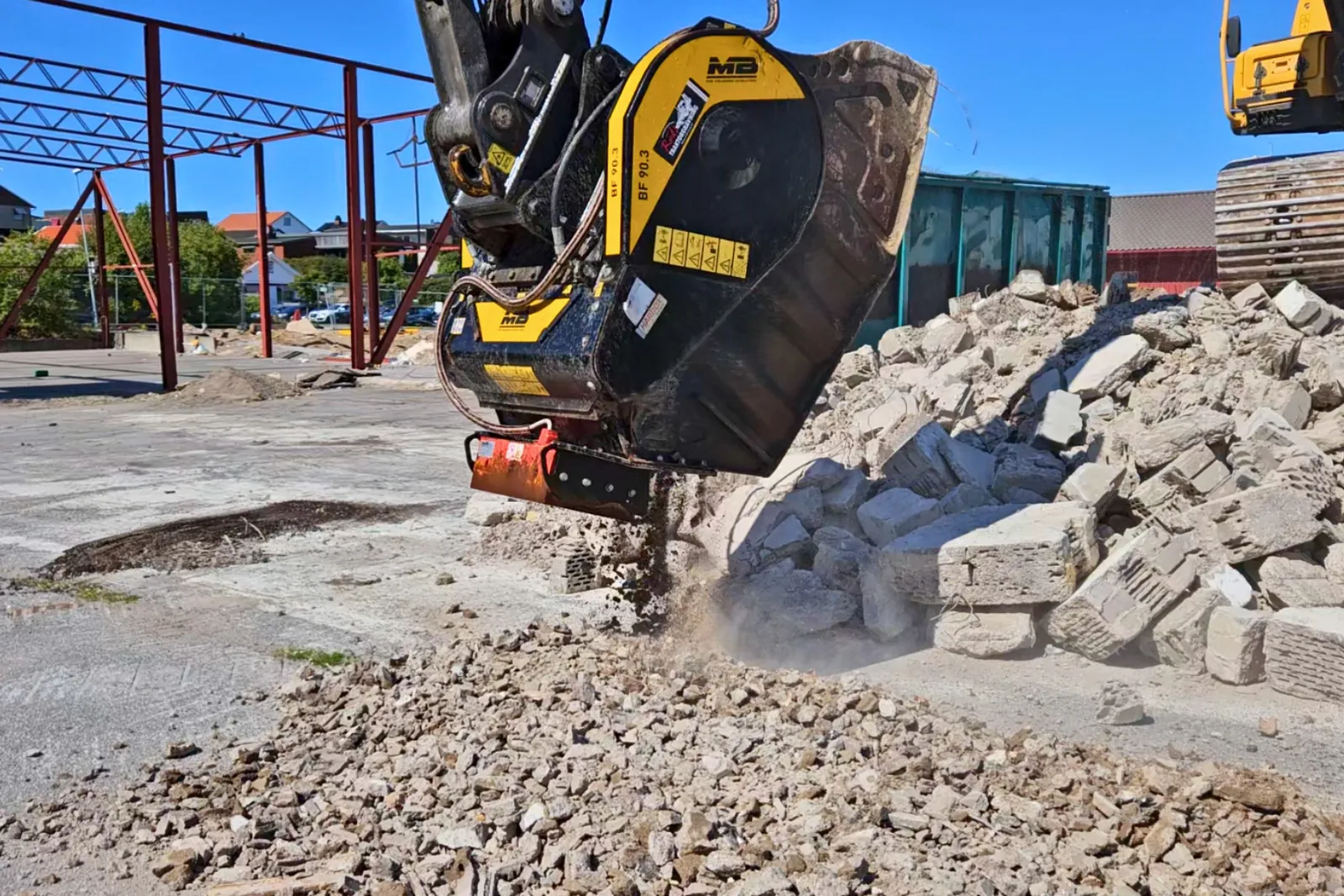
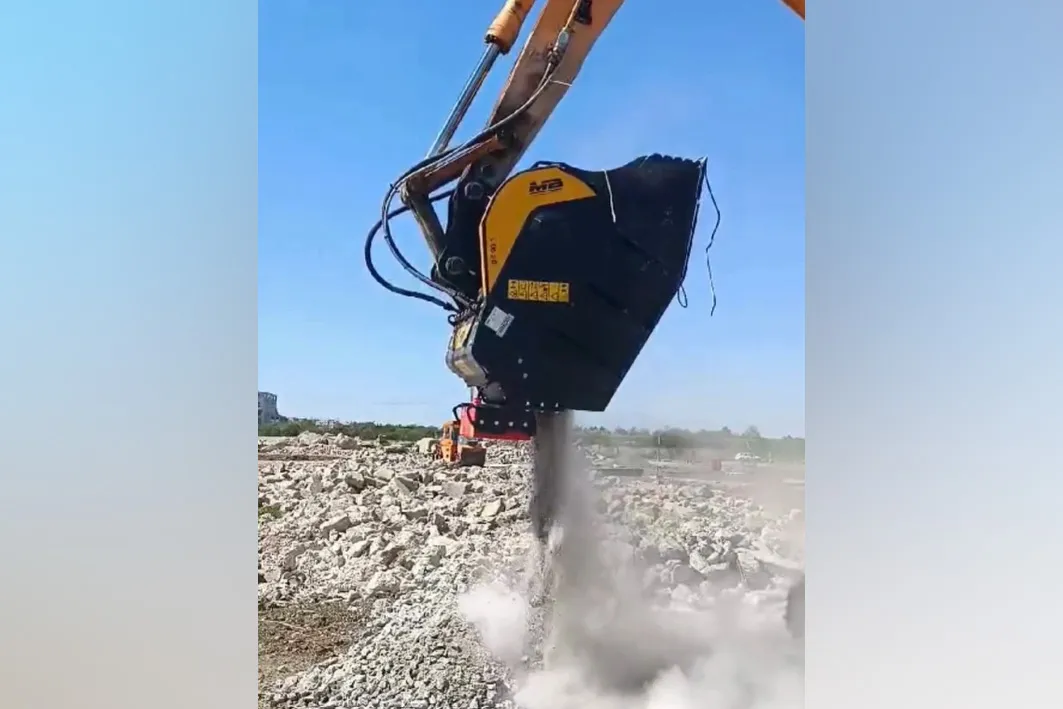
MB Crusher takes a different approach: a jaw crusher fitted with an electromagnet can crush demolition materials and recover reinforcing steel directly on site, reducing multiple stages to a single operation.
The result is two separate output streams: clean aggregate ready for reuse and recovered steel for recycling. The aim is not to add another machine, but to eliminate unnecessary and costly steps.
European sites: the single-cycle process in action
In Sweden, an MB Crusher customer working in the demolition sector processes reinforced concrete using a BF90.3 crusher bucket. The equipment crushes the material directly on site, while the integrated magnet separates the reinforcement. This not only reduces the volume that needs handling, but also produces quality aggregate ready for reuse, turning a problematic material into a tangible resource.
In Arad, in western Romania, the demolition of a former industrial site follows the same approach: no material leaves the site. The reinforced concrete was crushed using a jaw crusher, with the steel removed on site and 100 % of the material reused, while the recovered steel became a revenue stream.
Finally, on a residential site in Haute-Savoie with limited space, the single-cycle process eliminated transport and intermediate steps. The material, crushed with a BF120.4 crusher bucket and cleared of its steel content, was immediately reused to prepare the new foundations.
Recovering steel to protect margins and timescales
Separating the steel as the material is processed dramatically cuts timescales while preserving the quality of the recycled aggregate. The crushed material stays on site, ready for reuse. Scrap metal, meanwhile, becomes a resource that can be sold. The benefits are not only environmental, but also operational and economic.
From technical choice to operational standard
In a market where timescales and margins are increasingly squeezed, the advantage lies not with those who move more material, but with those who eliminate unnecessary steps. Recovering steel directly on site is becoming an operational standard for companies looking to keep costs and timescales under control.
The question today is no longer whether to recover scrap metal. It is: how much does it cost not to?
Een zakelijke vraag aan MB Crusher? Get in touch
Companies in this story

Keep following this
Get an email when a new story is published. No account needed.
- SubjectEquipment and machinery
- CompanyMB Crusher