A world first: RDS Electronics launches the all-new AMCS DCS 61-S anti-collision system, compliant with the new European legislation
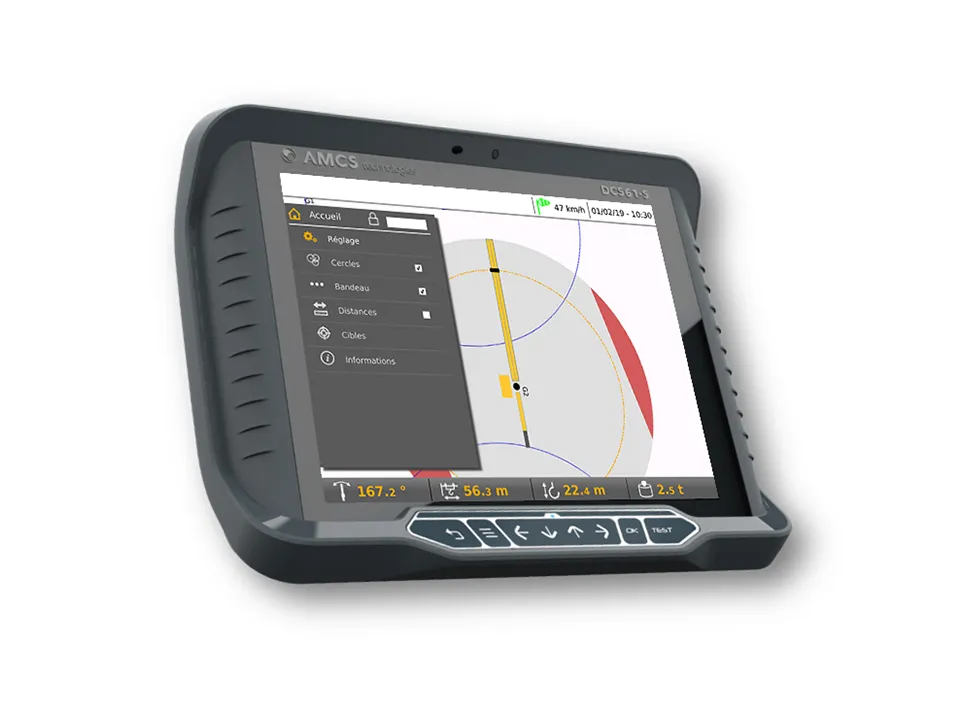
Following numerous requests from industry professionals, the project began in February 2018. Several phases of laboratory and on-site testing were carried out by RDS Electronics and other partners to develop a reliable, high-performance solution that meets the forthcoming European standards for anti-collision systems, EN 17076. The upgraded anti-collision system features safety components compliant with European standard EN 13849-1. With a performance level of PL d in accordance with EN 13849-1, the system is compatible with future inspections of lifting equipment machinery. It has also been certified to SIL 2 under EN 61508.

Distributed exclusively by RDS Electronics in Belgium and the Netherlands, the DCS 61-S is a world first for cranes and anti-collision systems. The scalable product has been designed to accommodate new features, such as anti-collision management between tower cranes and mobile cranes, and between tower cranes and concrete placing booms.
Installed on tower cranes and mobile cranes, the DCS 61-S communicates information over a radio network and continuously tracks the position of each machine using GPS antennas. Older anti-collision systems were limited to temporarily disabling restricted zones. By contrast, the new system automatically detects crane movements and incorporates control of tower cranes. This enables it to create an interference zone for the machines concerned in a sophisticated manner.
Unlike older anti-collision systems, the DCS 61-S also allows restricted zones to be activated or deactivated remotely, and interference management between certain components, such as masts and jibs, to be switched off. The DCS-61-S system for mobile cranes retains its two other essential functions for maintaining site productivity and safety.
Zoning
The system allows no-fly zones to be created quickly in three dimensions, directly on the screen, by assigning geometric shapes to perimeters and static obstacles.
Data logger
The DCS 61-S continuously records and saves data relating to events, movements and all crane parameters, allowing it to be viewed directly on the system screen in the cab and/or downloaded to a USB drive.
The added value of the DCS 61-1 is that the system is equipped with a 3G/4G GSM modem, enabling crane output to be displayed accurately and in real time from anywhere in the world. The latest IoT Lifting innovation, comprising a web platform and a mobile app, allows AMCS devices to be managed, crane data to be collected, statistics to be generated, productivity to be monitored and crane systems to be diagnosed remotely in real time.
The new anti-collision system remains just as easy to install and programme, thanks to the screen installed in the crane operator’s cab, which provides all the information needed to operate the machine in real time.
A few months ago, the DCS 61-S for mobile cranes was installed on its first site, at the future Les Ardoines railway station in France, east of Vitry-sur-Seine. At this Grand Paris Express site, the mobile crane and the two tower cranes were all equipped with the DCS 61-S. This first deployment at a customer’s site was a real success. The site also presented another challenge, as it was subject to interference from another site featuring a tower crane and an overhead travelling crane. The upgraded anti-collision system proved its effectiveness and demonstrated its necessity.
The DCS 61-S’s success was recognised with the Technical Innovation of the Year award at the Trophées Grues à tour 2020, presented at JDL last September.
The anti-collision innovation addresses safety and operational challenges, helping to prevent numerous incidents and meet the growing use of mobile machinery on site. The system is ideally suited to immediate decision-making and the day-to-day needs of construction sites, while ensuring productivity and safety.
Safety and efficiency are priorities for RDS Electronics. In addition to AMCS anti-collision systems, RDS Electronics sells and hires out Orlaco camera systems for tower cranes, mobile cranes, telescopic cranes and lattice-boom cranes. With an Orlaco camera system, crane operators can work more safely and efficiently, as they no longer have to rely on others and can therefore act more quickly. The operator can maintain a correct body position for optimum ergonomics.
In short, RDS Electronics’ systems, with the innovative DCS 61-S anti-collision system as a prime example, ensure safety and productivity at all times in the working environment.
Question about this story? Ask your question
Keep following this
Get an email when a new story is published. No account needed.
- ThemeConstruction machinery and equipment
- SubjectEquipment and machinery