A pioneer in water baths for crushers and screens
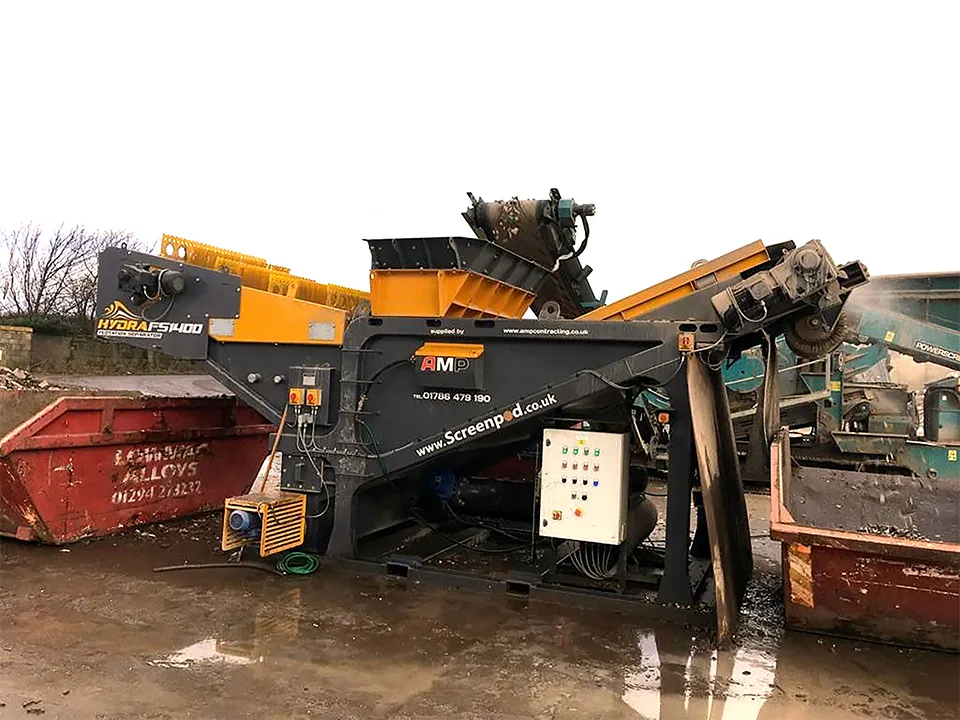
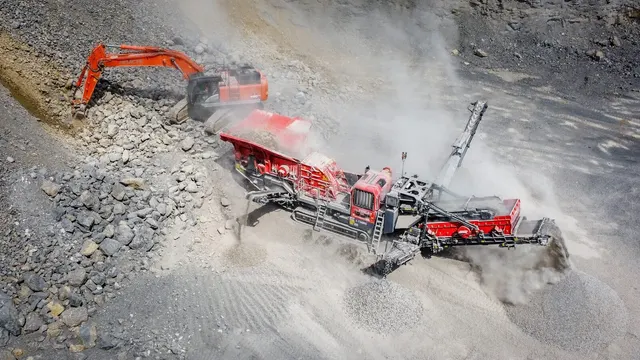
Quality over capacity: this has been GM Recycling’s philosophy for many years. The company is responsible for the sale, hire and repair of crushers, shredders, screens and conveyors from the Gipo, Powerscreen and Terex Ecotec brands.
To meet the demand for high-quality products, company manager Freddy Gillis has designed an innovative system in which debris is washed and sorted in a water bath.
Crushers and screens that use airflow to clean aggregates are well known. But a water bath that washes the aggregate, thereby separating out sludge and waste, is a new development, according to Freddy Gillis of GM Recycling: « In the past, the focus was first on maximum efficiency and capacity, and then on quality. Over the past two years, quality has come first. So we designed the water bath system with our Irish manufacturer », explains Freddy Gillis. The Hydra FS1400 system is available as a static unit, on a skid-mounted container system and on tracks. Two models are currently available, depending on the required capacity and size.
An efficient system
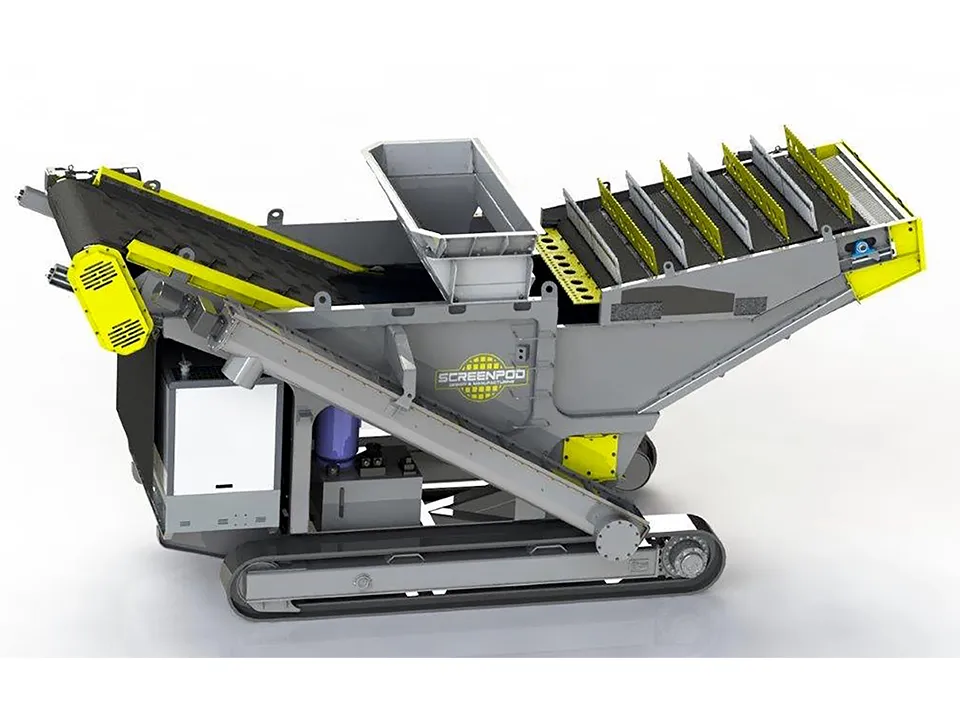
The water bath can be combined with a crusher and screen to produce high-quality aggregate. But how does it work? Freddy Gillis explains: « The water bath receives, for example, material from a medium-sized crusher, with a 20/40 grade. The bath is fitted with a float system that raises or lowers the water level as required. Brushes rotate slowly above the water level and remove small items of waste, such as wood or plastic particles. These are carried along a conveyor and end up in a separate container. The stones are carried along a different conveyor and washed, removing the sludge from the machine and sending it to another container. A magnet removes iron and metal particles. Finally, the rubble falls onto a stockpile. It is a compact, technically simple system, but a very effective one », says Freddy Gillis. « A bath uses 2 to 3 m³ of water per day. »
Visual inspection
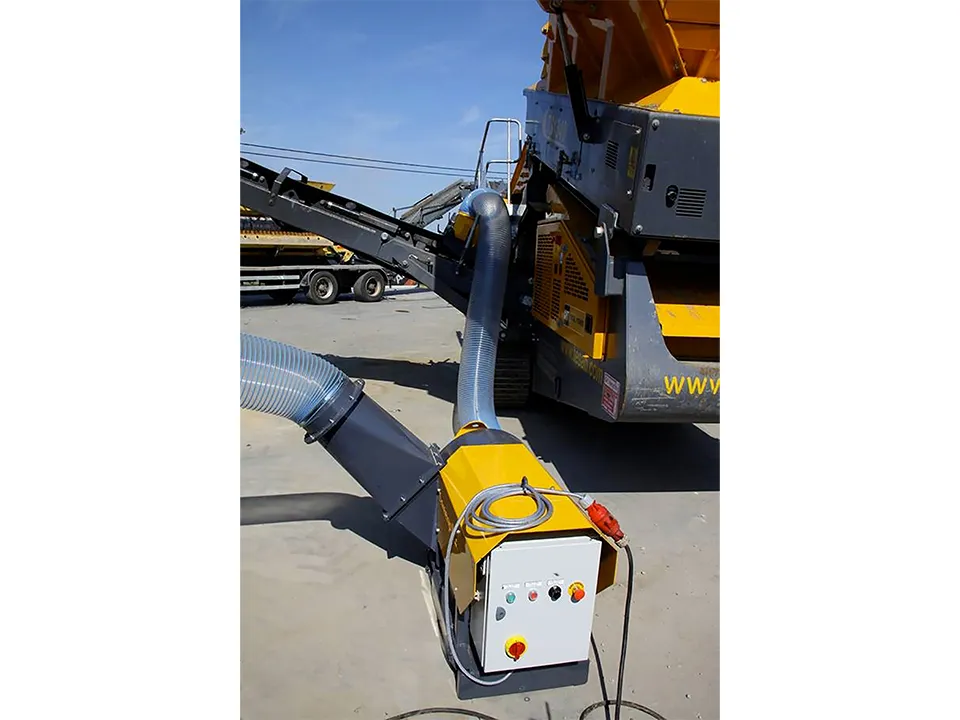
With the latest generation of Gipo and Powerscreen crushers, GM Recycling can supply suction units to clean the second deck. For older machines with a two-deck screen, where no fan is installed on the second deck (the 20/40), the water bath is a good solution. « We used to work with a water screw, whose drawback was its low processing capacity, which meant it quickly became blocked if overloaded. The screw is housed in a pipe, making it extremely difficult and time-consuming to unblock. Our water bath, by contrast, is an open system that allows for continuous visual inspection. If it is overloaded, there is a little more material on the conveyor, but no blockage. »
80 tonnes per hour
Developing the water bath system took around a year. « We had to carry out tests to determine the right flow rate. The conveyors have to run slowly enough to clean the rubble, but fast enough to keep pace with the crusher or screen. And the system has to remain affordable. We can currently wash and clean 70 to 80 tonnes of 20/40-grade rubble per hour. »
Not just debris
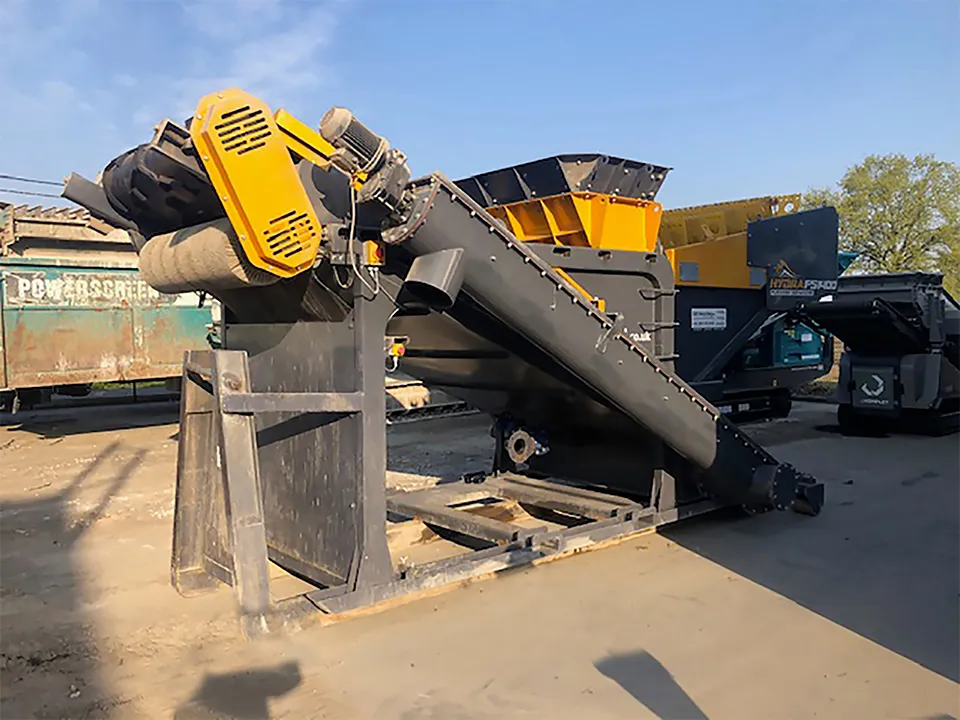
The system has since proved itself on several sites. But that is not its only application. Freddy Gillis explains: « We installed it for a client in Rochefort whose compost shredder hammers had been destroyed by stones and metal in the compost. Our water bath helped extend the service life of his hammers by 30%. » Other tests have been carried out to remove stones from shredded tree roots and to separate ‘ordinary’ rubble from porous Ytong stone. « In the latter case, we saw the importance of an open system and variable-speed control of the discharge conveyors. The two conveyors are the same width, so the ‘dirty’ product can pass along either one, while ensuring a constant feed rate to the shredder or screen. » The water bath can even be used in industrial applications, including to separate shredded aluminium from insulation.
Question about this story? Ask your question
Keep following this
Get an email when a new story is published. No account needed.
- ThemeConstruction machinery and equipment
- SubjectEquipment and machinery