The market’s lowest-carbon concrete, for a wide range of applications!
Texte Philippe Selke | Photos eloy
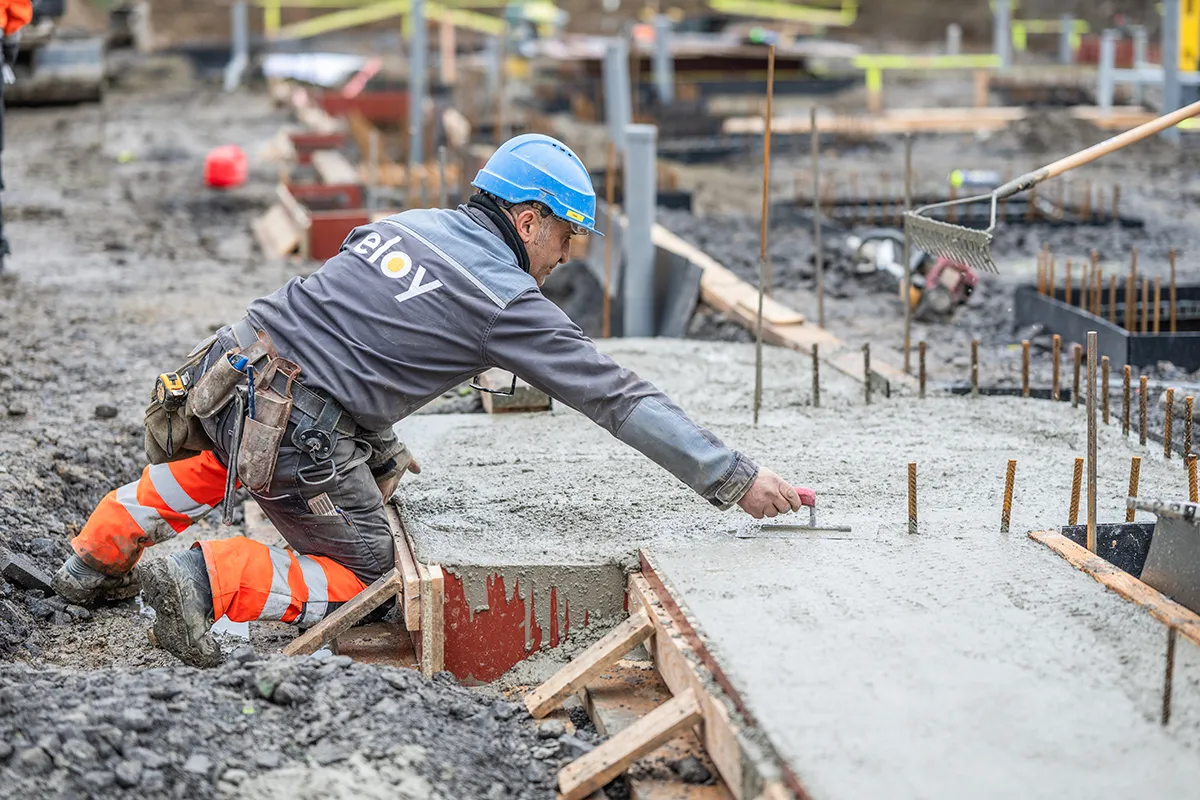
As we revealed at the start of the year, true to its values, eloy tested low-carbon concrete on the VivArdent winery project in Sprimont. 10 months of R&D later, the eZC label, short for eloy Zero Clinker, was born! Available in different strength and consistency classes, these concretes are produced using a completely clinker-free cement developed by Hoffmann Green Cement. Lounis Azibi, eloy’s Sustainability Development Manager, explains how this technological breakthrough could change the game, starting now.
All the benefits, without the risks
Unlike traditional Portland cement, made from limestone heated to a high temperature (1450°C), a process that releases around 900 kg of CO2 per tonne of clinker and consumes huge amounts of energy, the cement developed by French cement manufacturer Hoffmann and used to produce eZC concrete is made cold. Clinker is completely replaced by industrial by-products (blast-furnace slag) and geopolymer activators from the chemical industry. This delivers a twofold benefit: lower energy consumption and reduced CO2 emissions.
Compared with concrete made using CEM III/A, now the benchmark on the Belgian market but still containing a significant proportion of clinker, eZC concrete reduces CO2 impact during use by 30%. It is therefore the lowest-carbon concrete currently available on the market. The product meets BREEAM requirements, and eloy’s quality teams will be happy to help you calculate the actual savings for your project.
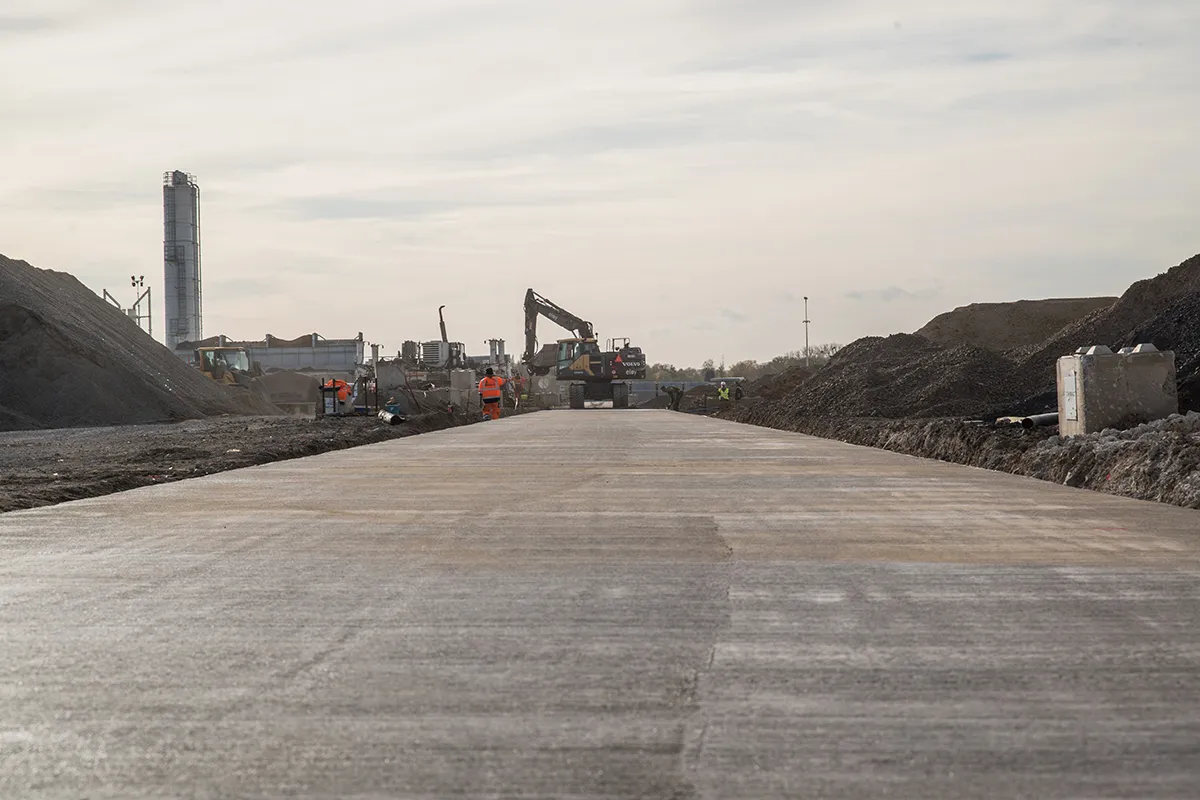
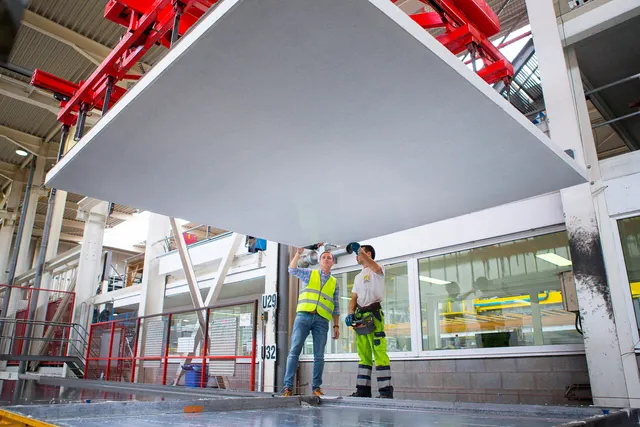
While the low-carbon concrete used in the VivArdent pilot project was simply poured into precast double walls, eZC concrete is now suitable for a wide range of structural and non-structural applications! Lounis Azibi: “Developing eZC concrete took around 18 months of research and testing to ensure its performance and compatibility with different aggregates. It has a wide range of applications, from foundations to floor slabs, and this new type of concrete also stands out for its whiteness, giving it architectural potential. In theory, it could also be used to produce precast elements.” eZC concrete performs as well as conventional concrete and can replace it on a 1-for-1 basis in many applications, once a few new installation practices have been adopted.
A local lead to build on
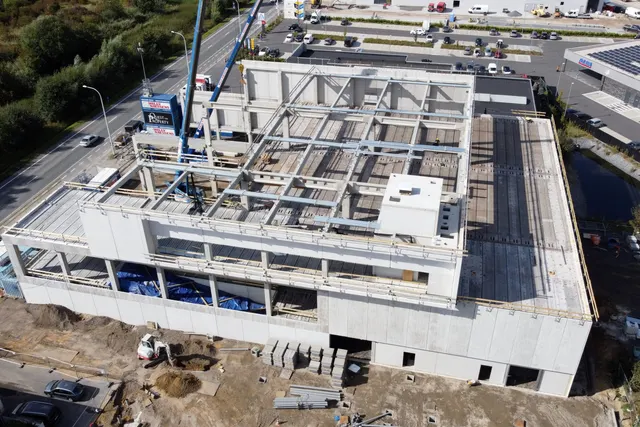
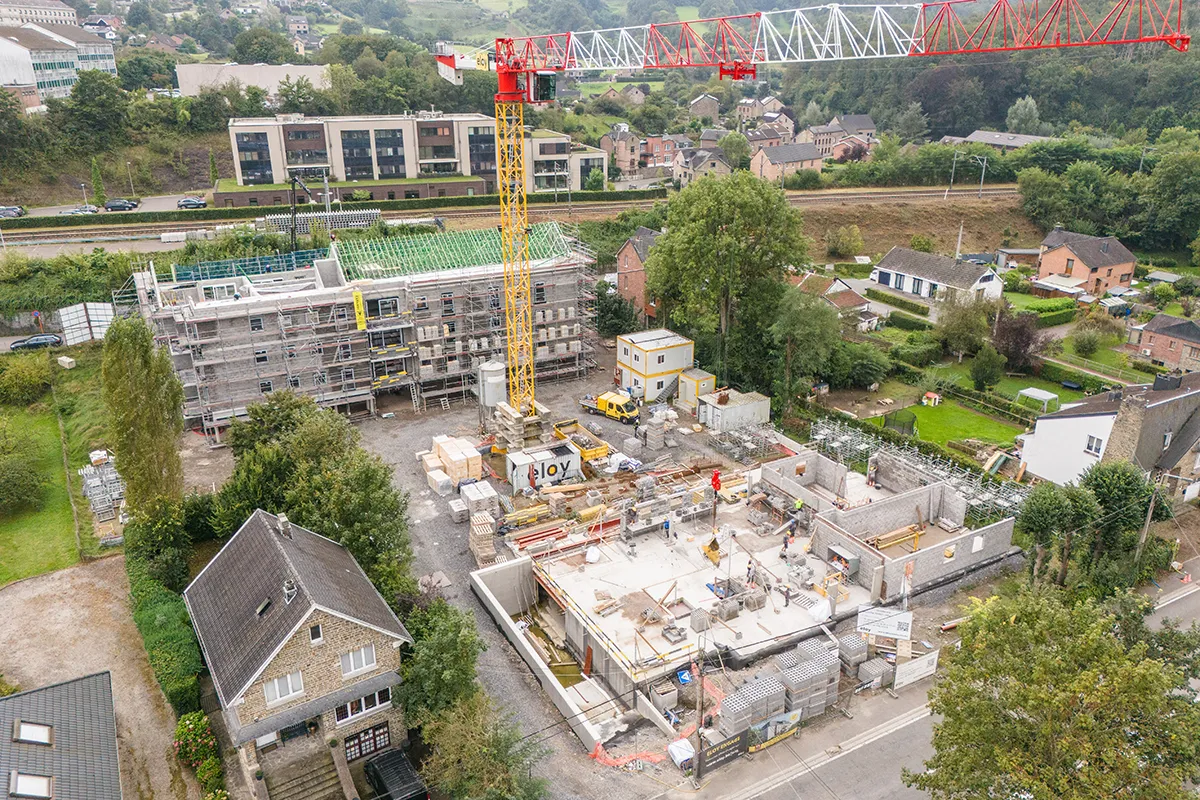
eloy currently produces its eZC concrete at its Sprimont batching plant, but could also produce it at its Bierset site in future. In its roles as property developer and general contractor, eloy is already using eZC concrete on its own projects. One example is just a few hundred metres from the centre of Aywaille, where the Lekanto (19 apartments) and Levita (21 apartments) residences are currently taking shape. To date, 44% of the concrete used on this project has been eZC concrete, amounting to 727 m3 out of 1,657 m3. This has cut CO2 emissions by no less than 42 tonnes, equivalent to 42 flights from Brussels to New York. As eloy continues to build its expertise with the product, using it in an ever-wider range of applications, an extensive portfolio of projects is already available to demonstrate the versatility of low-carbon concrete, both in neighbouring France and around the world. The product’s robustness is therefore proven.
Seeking forward-thinking specifiers
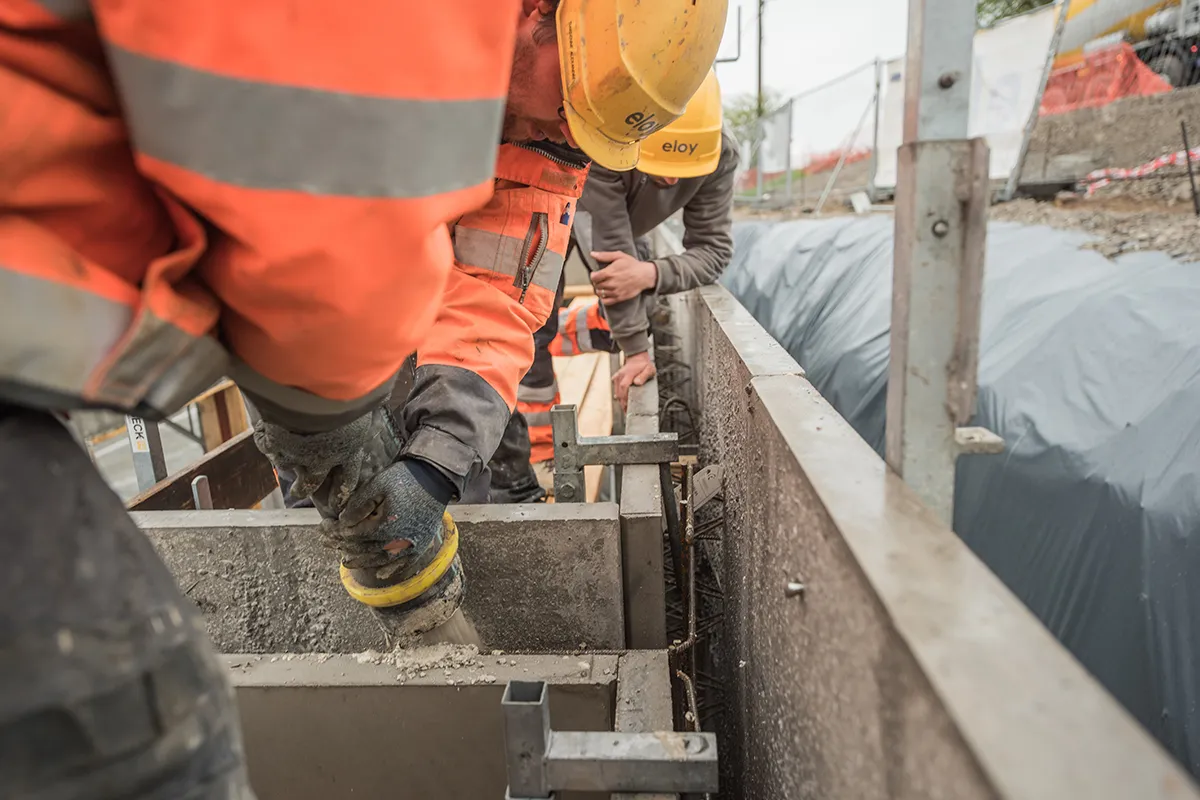
Clients are increasingly conscious of environmental impact, which should encourage the uptake of eZC concrete. eloy aims to obtain the globally recognised CSC (Concrete Sustainability Council) label by the first quarter of 2025, further strengthening the product’s credibility. Its current sales strategy is to maintain its traditional concrete offering while gradually introducing eZC concrete to the market. eZC concrete is priced slightly above traditional concrete, but the premium can be considered marginal in relation to the total cost of a project. The price gap should also narrow, as traditional concrete is more exposed to rising energy costs and CO2 quotas. However, Lounis Azibi notes: “Technological innovation is advancing faster than standards, so engineering and inspection firms still need to get to grips with these new products. And it is impossible to obtain the BENOR label, because its definition simply does not allow for the possibility of cement without clinker. That is why it is important for us to work with pioneers who want to develop buildings with a lower carbon impact.”
Question about this story? Ask your question
Keep following this
Get an email when a new story is published. No account needed.
- SubjectDirectory