Inter-laboratory testing improves overall construction quality
Texte Tim Janssens | Photos BE-CERT
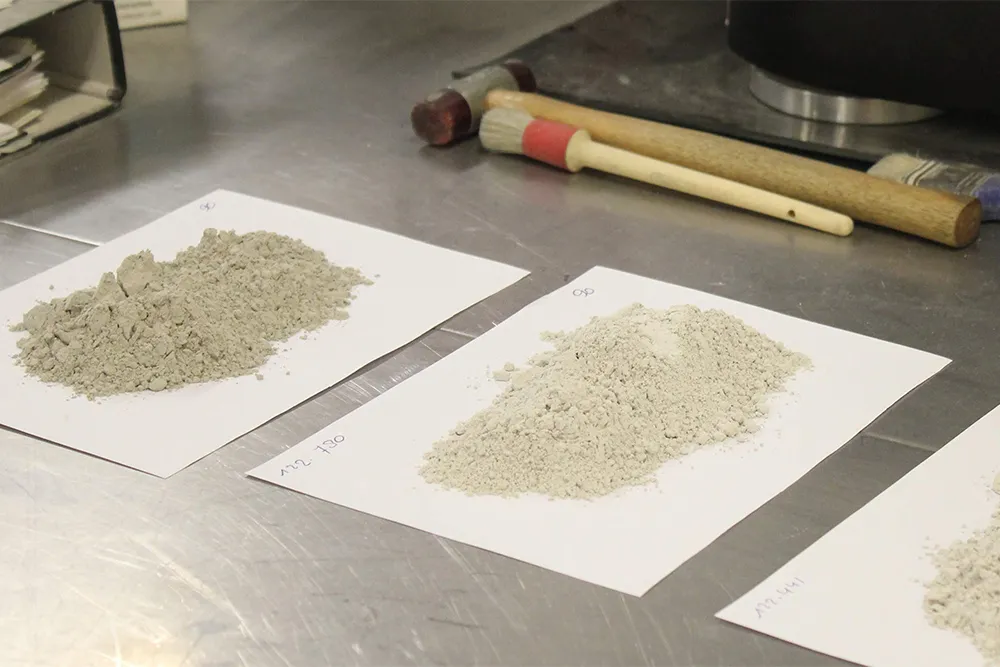
Measurement means knowledge, including in the construction sector. That is why thousands of material tests are carried out every year in manufacturers’ laboratories and external testing laboratories. But how can you know whether these tests are accurate and of high quality? To answer this important question, BE-CERT regularly organises inter-laboratory testing campaigns. For cement, this has even become an annual tradition. “As the statistical results of our inter-laboratory campaigns provide an ideal indicator of laboratory performance and the reliability of test methods, we intend to focus even more on this aspect in the future,” says BE-CERT.
As a certification body for ready-mixed concrete, mortar and associated raw materials, BE-CERT covers a wide range of activities. In addition to certification and inspection under CE, BENOR and ATG certification schemes, BE-CERT is also active in metrology, calibrating and verifying laboratory equipment. Inter-laboratory testing campaigns are held regularly to support all these activities. “The idea is for different laboratories to test the same product, so they can compare their performance with that of other laboratories,” explains Laurence De Meyst, Certification Expert & Auditor and also general coordinator of BE-CERT’s inter-laboratory testing campaigns. “We have been doing this for almost 20 years across many of the sectors in which we operate: cement, lime, fly ash, admixtures, aggregates, masonry mortar… So this is nothing new in itself, but it is an important part of our services.”
In-depth statistical analysis
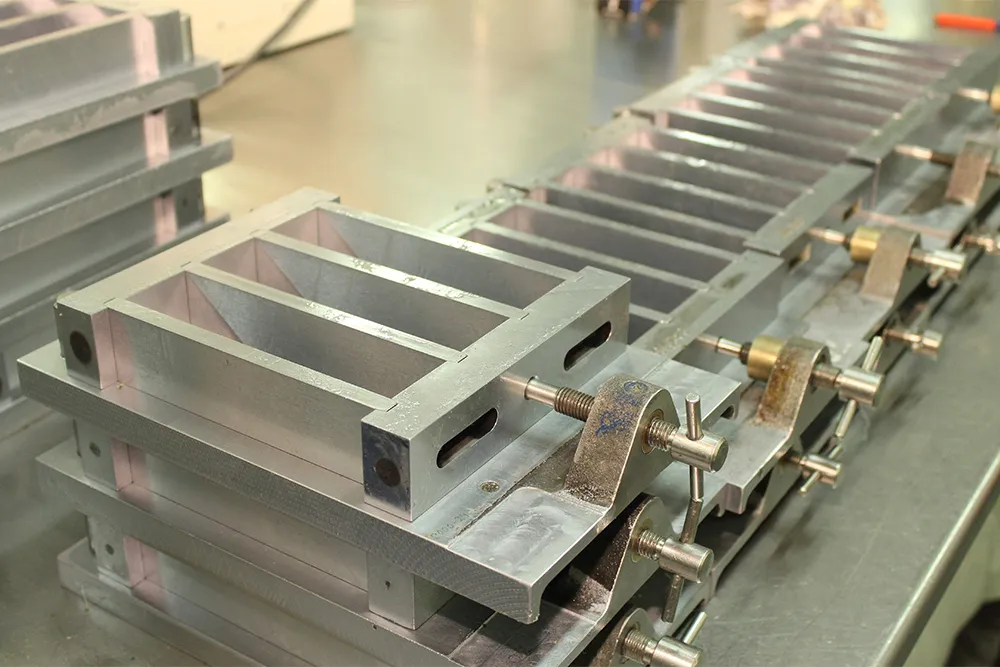
Laboratories taking part in a BE-CERT inter-laboratory testing campaign are regularly required to test an identical sample from the same batch. “We collect all the test parameters and results, then subject them to an in-depth statistical analysis. We then include them in a comprehensive report, clearly showing how the results from each laboratory compare with one another and with the overall average. This is, of course, done anonymously, using a unique serial number for each laboratory. The results can be accessed freely via our Extranet,” explains Dimitri Peeters, Inspection & Metrology Officer at BE-CERT.
“One crucial point: we do not state what the correct test value is, or should be,” stresses Laurence De Meyst. “That is not possible for most of the test methods used. The value lies in the large volume of objective data and the recorded averages and standard deviations: laboratories whose results are far from the average know that there is probably an issue with their procedure or equipment, and can use this as a starting point to identify potential problems. Laboratories also often use tests conducted as part of an inter-laboratory campaign to train their staff. If the results from the shared tests differ, they can identify an internal issue, whether with staff practices, the calibration of measuring equipment, the test procedure, etc., and make immediate adjustments.”
The ultimate goal
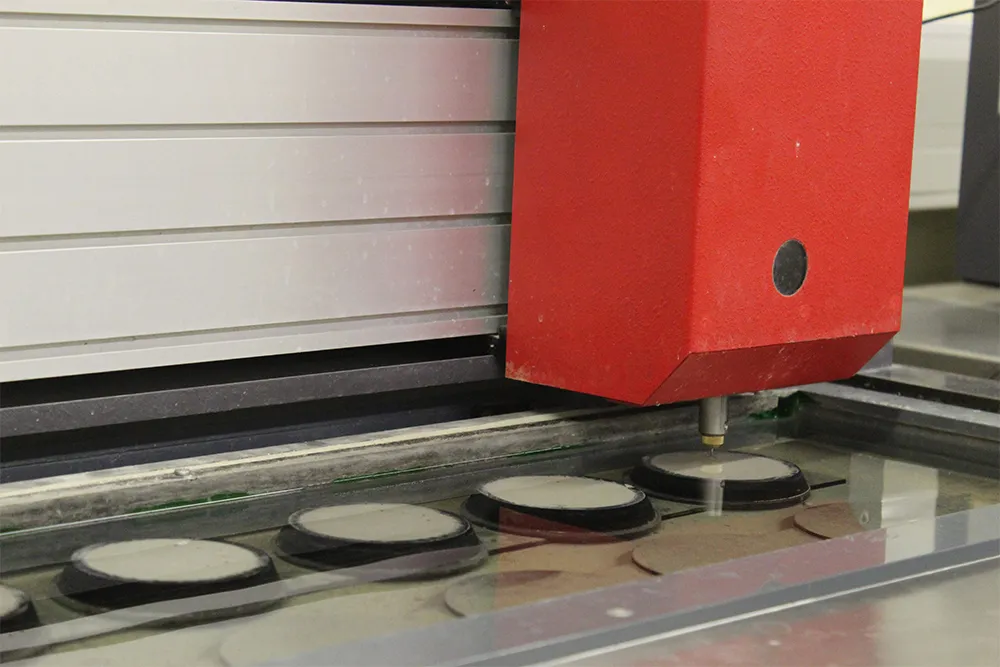
While the inter-laboratory testing campaign for cement is held every year, in other sectors it is organised more on an “as-needed” basis. “If there is uncertainty about a particular test method or significant discrepancies arise between laboratories, the sector can request an inter-laboratory campaign. Similarly, when manufacturers complain about certain external testing laboratories, the results of our inter-laboratory campaigns can provide an important benchmark. We can also launch a campaign ourselves, for example to validate certain criteria we use. The ultimate goal is clear: to work with even greater precision and thereby improve the overall quality of construction,” explains Laurence De Meyst. “Furthermore, for certified production plants, participation in BE-CERT’s inter-laboratory campaigns is mandatory in certain sectors, enabling producers to demonstrate the reliability of tests carried out as part of certification.”
The current debate on determining C3A is one example of how BE-CERT’s inter-laboratory testing campaigns can make a real difference. “One of our cement ‘interlab’ campaigns immediately showed that the two permitted measurement methods produced different results. That is why we are currently looking at the possibility of amending the standard at European level by requiring a specific measurement method. Our inter-laboratory campaigns can therefore help refine certain procedures,” stresses Dimitri Peeters.
Both manufacturers’ laboratories and external testing laboratories stand to benefit. The cement inter-laboratory campaign attracts around 70 participants each time, mainly from Belgium, but also from other European countries and beyond. “That’s not bad, but the more participants, the better,” says Laurence De Meyst. “In other sectors, we would like to see a little more regularity, for example through campaigns every two years, so that we can better track developments. In any case, we are putting a lot of effort into optimising the process. Ultimately, everything will be handled digitally via BE-CERT’s Extranet. We are also very keen to hear from the sector. We warmly invite all laboratories to take part, as these campaigns provide genuinely valuable information!”
Would you like to find out more about organising inter-laboratory testing campaigns or put yourself forward to take part? Email [email protected] or [email protected].
Een zakelijke vraag aan PROCERTUS? Get in touch
Companies in this story

Keep following this
Get an email when a new story is published. No account needed.
- SubjectDirectory
- CompanyPROCERTUS