“Heat recovery is an essential part of the energy transition”
Texte Tim Janssens | Photos David Plas, EQUANS
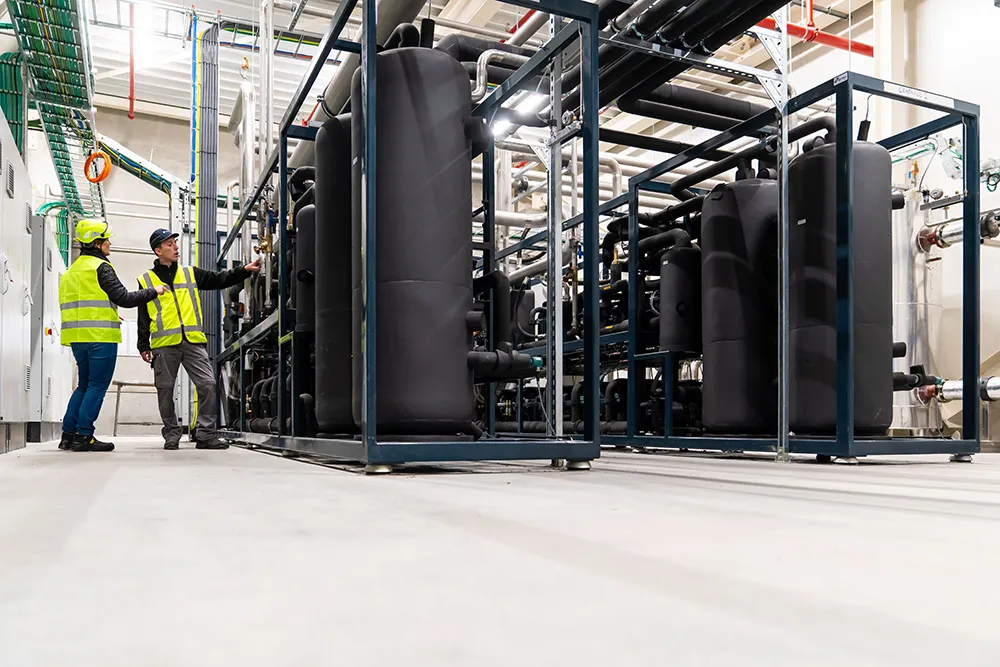
Today, public authorities and businesses are fully committed to the transition to renewable energy, with the European 2050 targets as their main objective. This means not only investing in renewable technologies, but also making efforts to optimise energy use and avoid waste. Combined heat and power, a technology that generates heat and electricity together and enables heat recovery, along with other technologies, is a priority in this respect, both environmentally and economically. Equans has specialised in this field for many years, as part of its comprehensive energy management offering. “In many cases, heat recovery can be an important piece of the puzzle.”
The principle behind heat recovery is as simple as it is ingenious: rather than simply pumping the (residual) heat released or dissipated into the atmosphere, it is captured and reused to heat buildings or produce domestic hot water. Despite its undeniable benefits, the concept is relatively recent, explains Jeroen Vander Eeckt, Business Developer at Equans BeLux. “Ten years ago, primary energy was relatively cheap and the European Green Deal did not yet exist. There was therefore no immediate need for heat recovery. Since then, however, we have been through a severe energy crisis, and the legislative framework is now entirely focused on achieving carbon neutrality by 2050. Demand for energy-efficient and economically viable solutions has soared. As an essential part of the energy transition, heat recovery can be an important piece of the puzzle for many public authorities and businesses.”
Huge potential
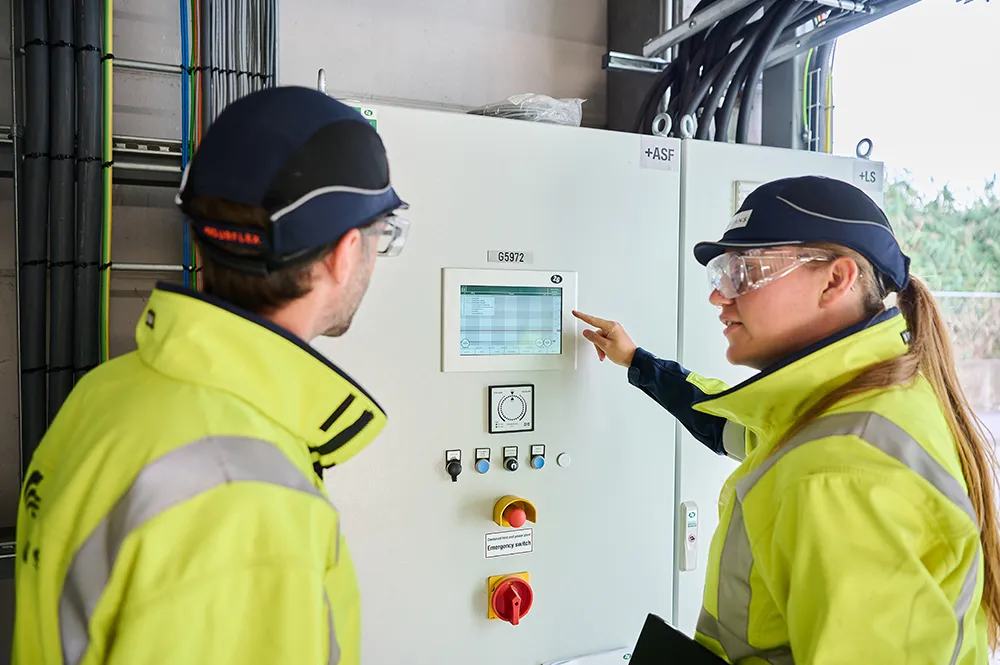
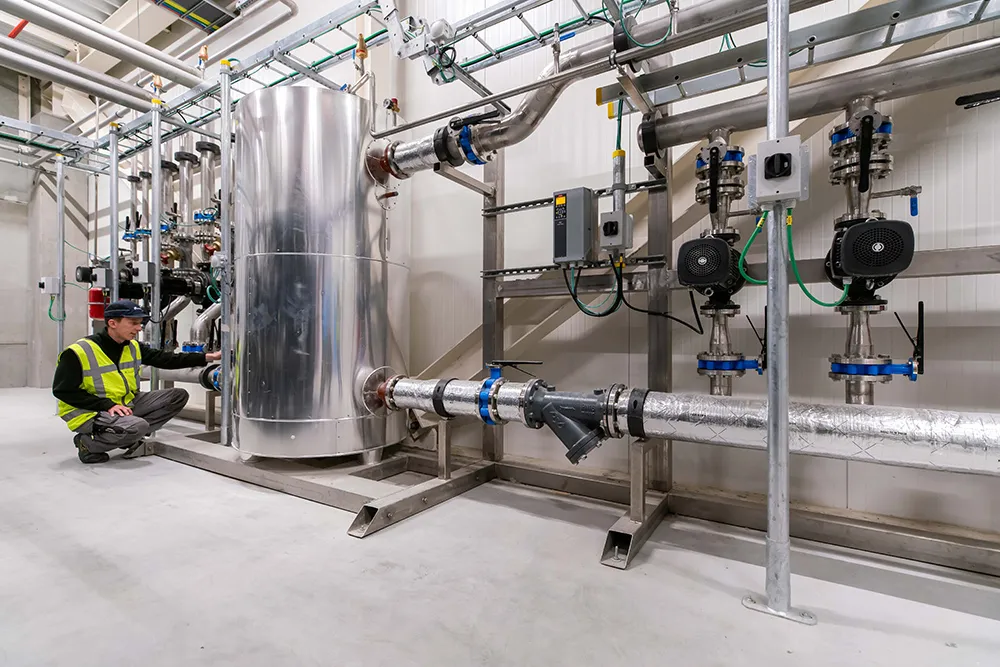
There are several ways to recover heat. Examples include a Type D ventilation system or a district heating network. Another promising technology is combined heat and power (CHP). It uses gas to power an engine, turbine or fuel cell, which then drives an alternator to generate electricity. The heat generated by the alternator’s operation is captured via a heat exchanger, as is the heat from the flue gases, through condensation. The result: up to 20% less fuel consumption than separate heat and power generation, lower emissions of CO2 and other harmful gases, and an energy bill up to 10% lower if the system is correctly sized.
At Equans, we firmly believe in the potential of CHP plants, which can add value to smart buildings and industrial environments alike. “We have two teams specialising in this field, supported by a third team of around twenty technicians who provide specialist maintenance for CHP plants and standby generators,” explains Jeroen Vander Eeckt. “Our key strength is the peace of mind we offer clients through a comprehensive service that sets the market standard: design, installation, monitoring, maintenance and, where appropriate, co-financing. This means our clients do not have to worry about the practicalities or the initial investment, while benefiting from the environmental and financial advantages alongside us. Often forming part of a wider solution, such as an EPC contract, a CHP plant aims to optimise energy efficiency by combining different technologies, with rigorous monitoring, intelligent control and high-quality maintenance.”
Beneficial in every case
Among other projects, Equans is doing this for the city of Geel, where several CHP plants have been installed under a performance-based commitment. “One important point is that we assess the savings across the entire property portfolio, not just at the sites where the systems are installed. Gas consumption may increase locally, but transporting the residual heat significantly reduces energy consumption elsewhere, making the overall result more favourable,” explains Julie Van Simaeys, Project manager. A notable example is the CHP plant Equans installed at Christeyns, a Belgian company with a global presence in the chemicals and detergents sector. The company was looking for a sustainable, future-proof solution to reduce its steam consumption and therefore its CO2 impact and energy bill. One way to achieve this is a 550 kWe CHP plant, which produces more than 4,100 MWh of electricity and 4,900 MWh of heat a year. The heat produced by the gas engine that powers the CHP system is used to heat two halls. When there is surplus residual heat, it is transported to nearby residential buildings via a district heating network. In short, nothing goes to waste. The same is true at Sligro Food Group, which has equipped its new distribution centre in Evergem with refrigeration and freezing rooms that enable heat recovery. The residual heat is used, among other things, to heat water via a heat exchanger in a heat pump, and to provide underfloor heating in the offices and meeting rooms, as well as in the floor of the freezing room.
With gas and electricity prices somewhat more volatile than before the COVID-19 crisis, there is greater hesitation about CHP technology. Equans has also noticed that some clients are reluctant to take the plunge. This is unjustified, says Julie Van Simaeys. “The decisive factor in the efficiency of a CHP system is the difference between the price of gas and that of electricity. Even under current market conditions, this difference appears large enough to make CHP more energy-efficient and more cost-effective. Heat pumps and district heating networks are also booming, but that does not change the fact that CHP remains an important part of the solution in many cases, especially where there is a constant demand for heat and electricity, such as in hospitals, airports, care homes and so on. We have even recently installed Aquafin’s first biogas-fired CHP plant. The biogas is no longer burned as a local waste product, but put to functional use to generate green electricity. So this technology will remain relevant even in a carbon-neutral world.” Jeroen Vander Eeckt fully agrees with his colleague: “If it is designed, sized and implemented properly, and combined with other technologies where necessary, a CHP plant is always beneficial environmentally and economically. That is why, as an energy expert, it is important to understand the client’s situation. This calls for specific skills, which Equans has in abundance.”
Question about this story? Ask your question
Keep following this
Get an email when a new story is published. No account needed.
- SubjectDirectory