A comprehensive geotechnical partner
Texte Niels Rouvrois Photos 2FUND
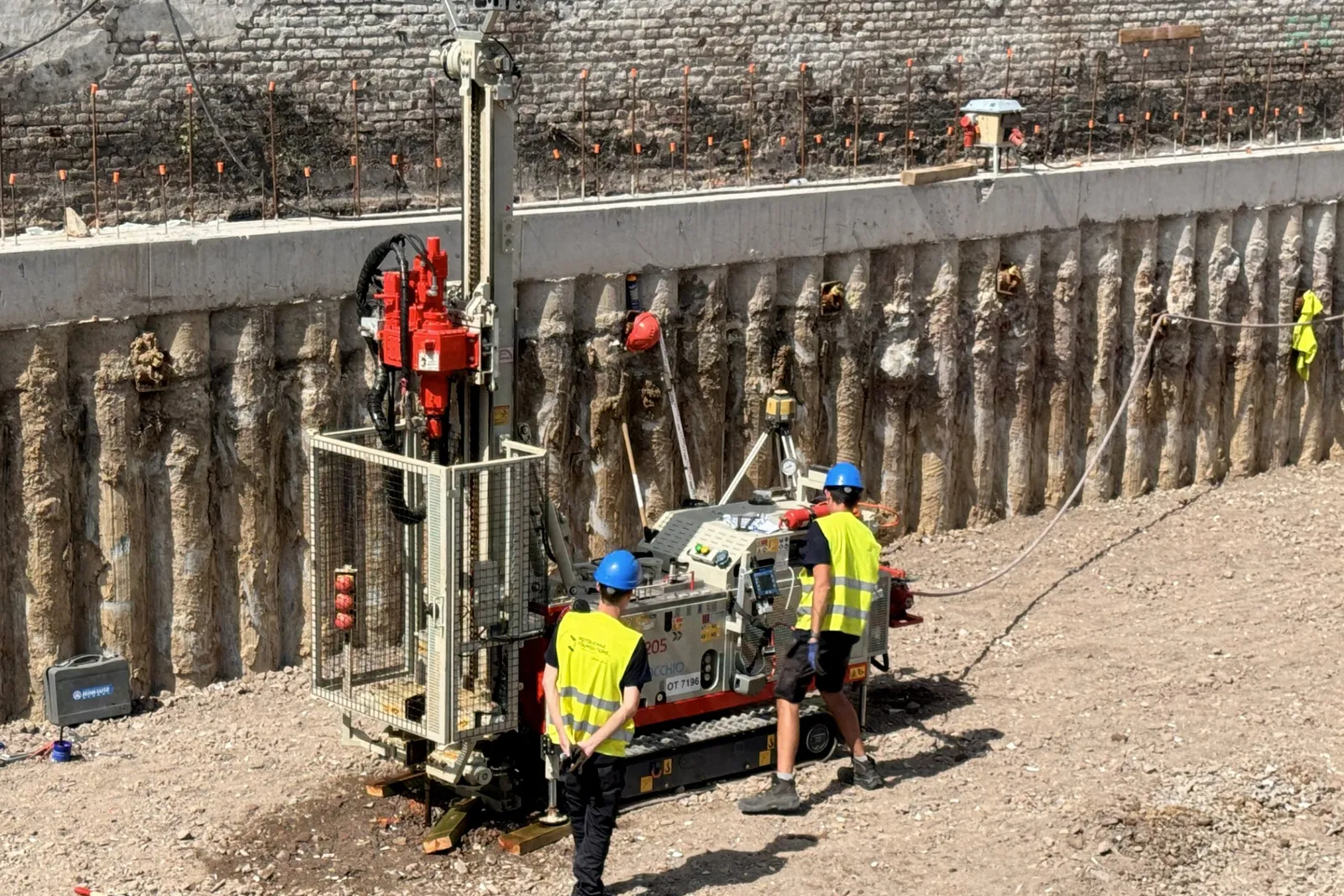
With its wide range of services, Revyson has established itself in the market as a reliable and responsive partner for geotechnical investigations. “We support architects, engineering consultancies, contractors, property developers and public authorities at every stage of the geotechnical process,” explains Ludovic Huysentruyt, geotechnical project engineer at Revyson.
From the design stage for foundations, construction pits, drainage and more, Revyson identifies and carries out the necessary tests. “A successful construction project starts with accurate, detailed knowledge of the ground,” says Ludovic Huysentruyt. “Our services begin with the necessary desk studies, followed by site investigations, the required calculations and post-construction quality checks. In addition to geotechnical investigations, we also offer expertise in related fields, such as dewatering, environmental soil investigations and archaeological monitoring of works. This enables us to offer our clients a complete range of services.”
Services and delivery
Revyson stands out for its wide range of services in the field of foundation and retaining structure design. Ludovic Huysentruyt: “We take a practical approach and help our clients determine the right investigation package. This saves time and money that might otherwise be spent on incomplete or unnecessary investigations. We provide a solid basis for further studies and design decisions. The name Revyson reflects this approach: Re-Vision & Sondages. We critically reassess every project and tailor the investigation to its specific needs. The result is reliable data that enable engineers and designers to make well-informed choices in full compliance with current standards and codes.”
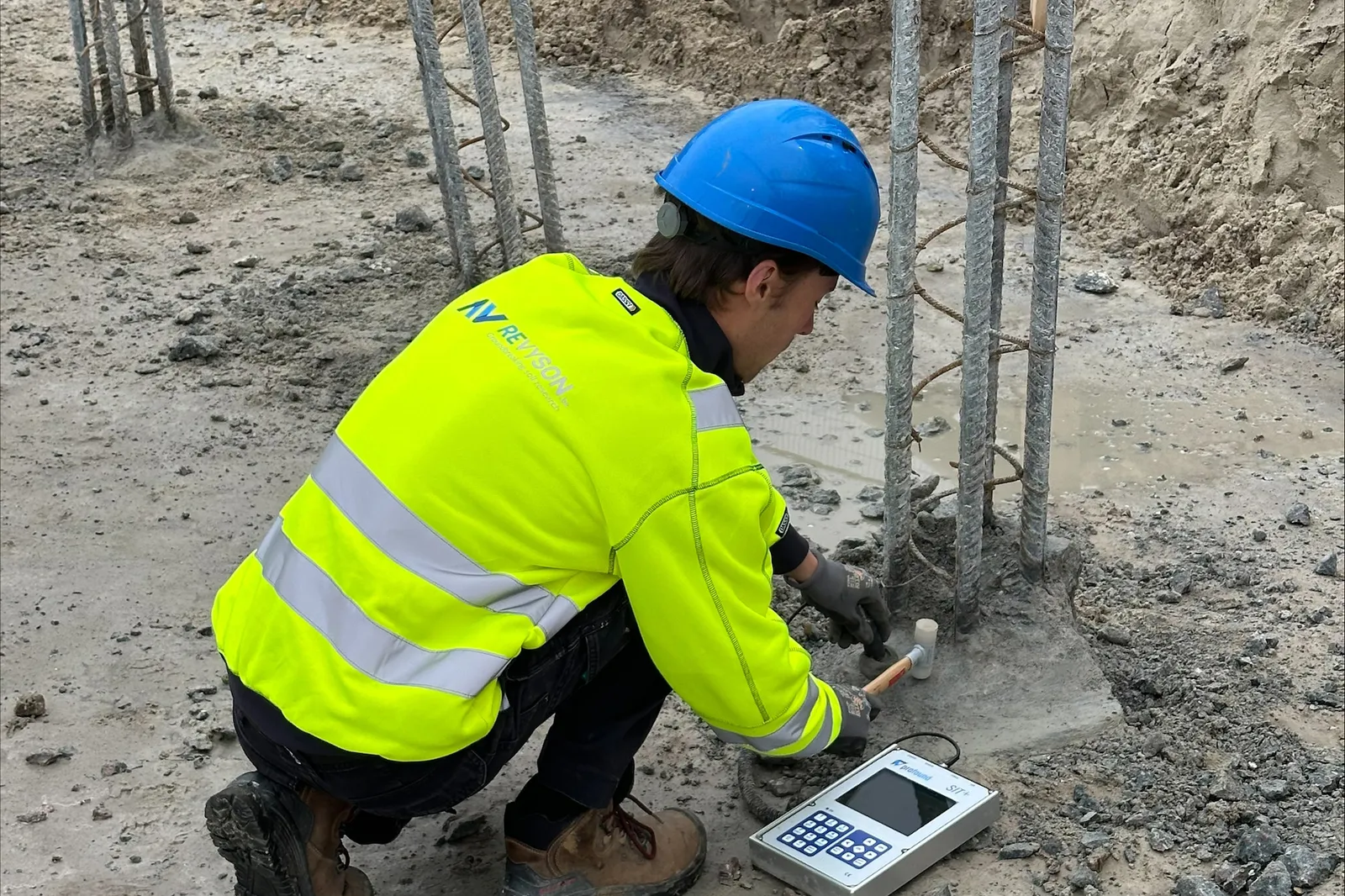
Revyson now offers a wide range of investigation methods, including probing methods (CPTM, CPTE and CPTU), drilling (auger and wireline drilling), often combined with pressuremeter tests, piezometers (with or without monitoring), plate load tests, infiltration tests, vibration measurements and sonar tests.
We outline some of these methods below, but do visit our updated website at www.revyson.be. There you will find a list of all the techniques, as well as downloadable information sheets for each one.
Probing
During a probing test, a cone is slowly pushed into the ground using a constant hydraulic thrust. Two parameters are measured as it penetrates: cone resistance, which reflects the force acting on the tip of the cone, and sleeve friction. These measurements provide valuable information about the soil profile and the types of soil layers, as well as the ground’s bearing capacity and stability.
The results of these measurements can be used to determine the ground’s bearing capacity and provide a sound basis for foundation recommendations. Many Belgian standards and design rules use these tests in their calculations, which makes them important. The main limitation is that the cone cannot penetrate hard ground such as (weathered) rock, sandstone beds and similar materials. In these cases, we use drilling combined with pressuremeter tests, a technique explained in more detail below.
Drilling
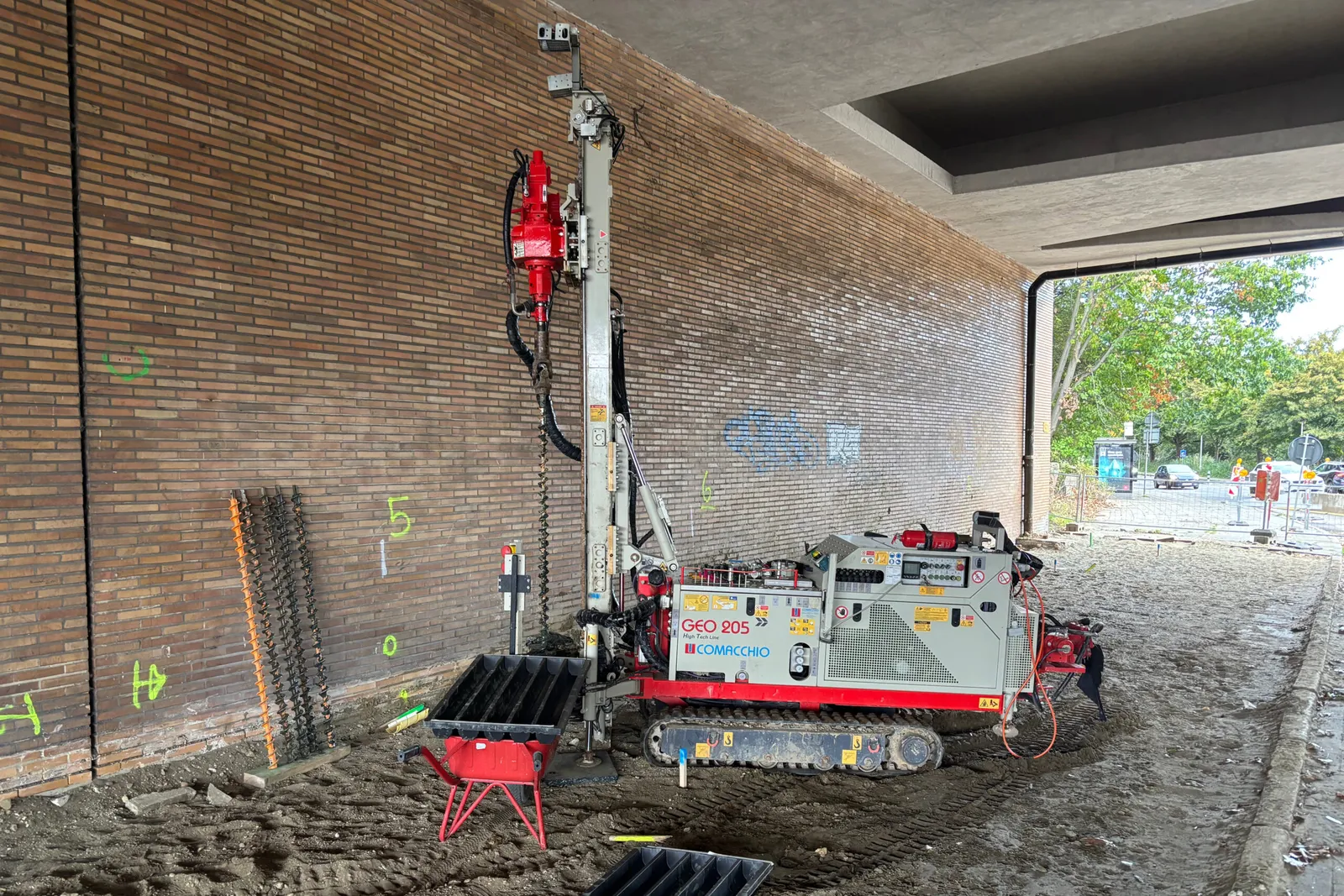
We distinguish between two types of drilling: drilling to collect samples and drilling with recording of drilling parameters.
Auger drilling is a commonly used method for collecting samples. It involves rotating a spiral-shaped drill rod, known as an auger, into the ground at a constant speed and penetration rate. As the drill advances into the ground, the spiral gradually fills with the excavated soil, which is then collected and analysed to determine the soil composition. If required, this technique can be combined with the installation of a piezometer to determine the groundwater level.
“To record drilling parameters, we use what are known as instrumented boreholes. How does this work? As we maintain a constant downward pressure on the drilling tools, we record parameters such as penetration rate, drilling torque and injection pressure. The longer it takes to reach the required depth, the harder the ground.”
These boreholes are often combined with pressuremeter tests. During the test, a cylindrical measuring instrument, the pressuremeter, is placed in a borehole. It consists of a flexible membrane that is gradually inflated. As the pressure in the cylinder increases, the expansion of the membrane is measured. The relationship between pressure and deformation is used to calculate the compressibility, stiffness and strength of the ground. These parameters can then be used to determine the bearing capacity of piles in that ground.
Continuing to grow
In the near future, Revyson will further expand its offering to include environmental drilling, unexploded ordnance detection and geophysical scanning (non-destructive detection of cables, pipes and anomalies). “Revyson will then be able to establish itself even more firmly in the market as a comprehensive partner in geotechnical investigation. Revyson stands for reliability, flexibility and innovation. We provide reliable information and tangible data that you can depend on with confidence, both literally and figuratively,” concludes Ludovic Huysentruyt.
Discover the new website: www.revyson.be
Question about this story? Ask your question
Keep following this
Get an email when a new story is published. No account needed.
- SubjectDirectory