You can’t just call yourself sustainable
Texte Philippe Selke
At the National Sustainable Building Congress, held in Lille on 4 and 5 September, Bruno Riche and Nathalie Lebrun, Managing Director and Communication & Sustainability Manager respectively at Menuiserie Riche (Mariembourg), once again saw their arguments vindicated in the context of climate change. While France is certainly further ahead in terms of legislative integration and support for sustainable construction, things are moving in the right direction here too, and the introduction of labels offers an additional argument for winning public contracts while encouraging continuous improvement.
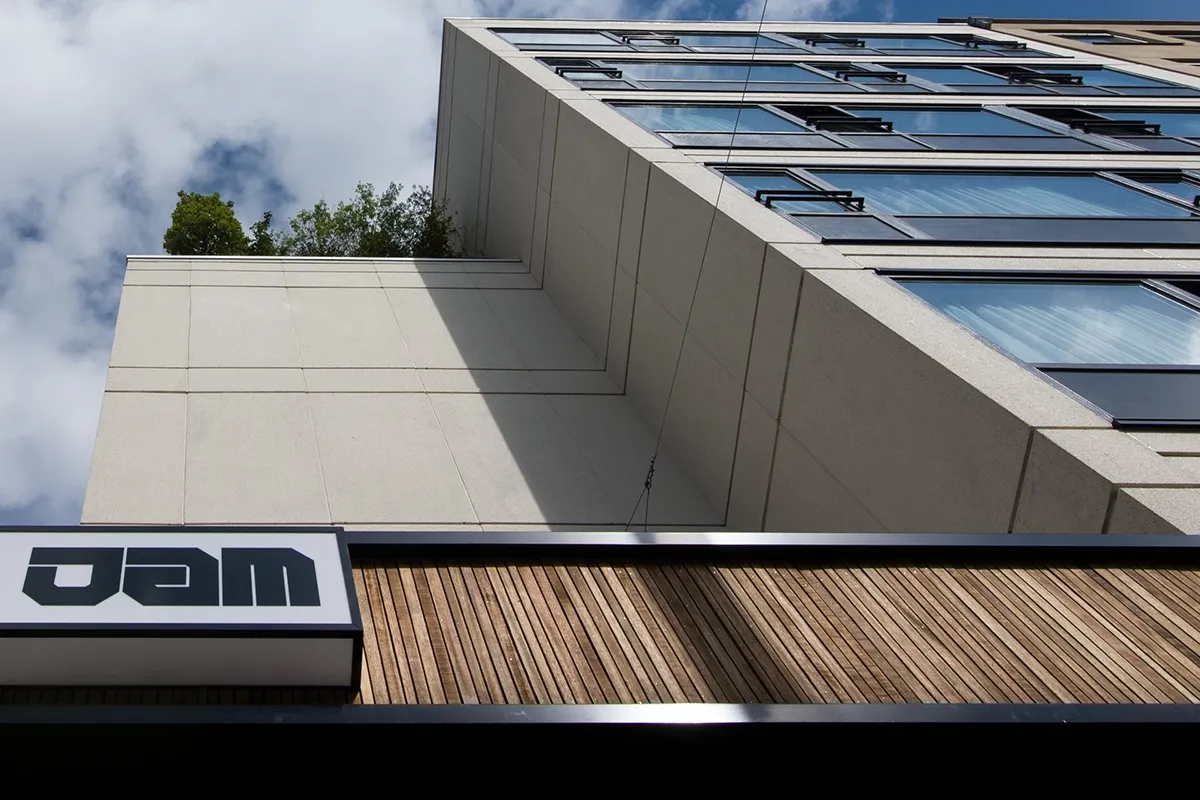
A particularly low carbon footprint, excellent airtightness and thermal and acoustic insulation performance, a proven 60-year lifespan and the ability to be refurbished… the sustainability credentials of Riche’s external timber joinery are compelling and perfectly aligned with current market expectations.
Labels as a lever
Menuiserie Riche was recently audited by BCCA as part of its move from Bronze to Silver under the Belgian « Menuiserie Durable » label. Initially created for timber joinery, the label has since been extended to all types of external joinery (timber, aluminium and PVC). Its distinctive feature is that it certifies both the company and the product, using a detailed set of criteria covering product quality (life cycle assessment, PEFC certification, bio-based label, A+ indoor air quality rating), as well as energy and water consumption, responsible purchasing and the company’s social criteria (CSR or ESG), among other things. A specialised external body carries out an annual audit, ensuring rigour and continuous improvement. Bruno Riche: « In Belgium, it is currently mainly projects receiving European subsidies that require construction partners to provide evidence of the sustainability of their offer (DNSH criteria). It is not enough to claim that you offer sustainable window frames, you have to prove it, and a label such as Menuiserie Durable, which takes a range of criteria into account, is valuable for this purpose. Having such a label can help meet the needs of clients who want a product that is not only sustainable in itself, but also made by a company that operates sustainably (CSR or ESG criteria, etc.). The label also drives the company to improve. For example, as water is not needed in production, Menuiserie Riche does not have a rainwater harvesting tank. That will change next year! »
Local timber species and prefabrication
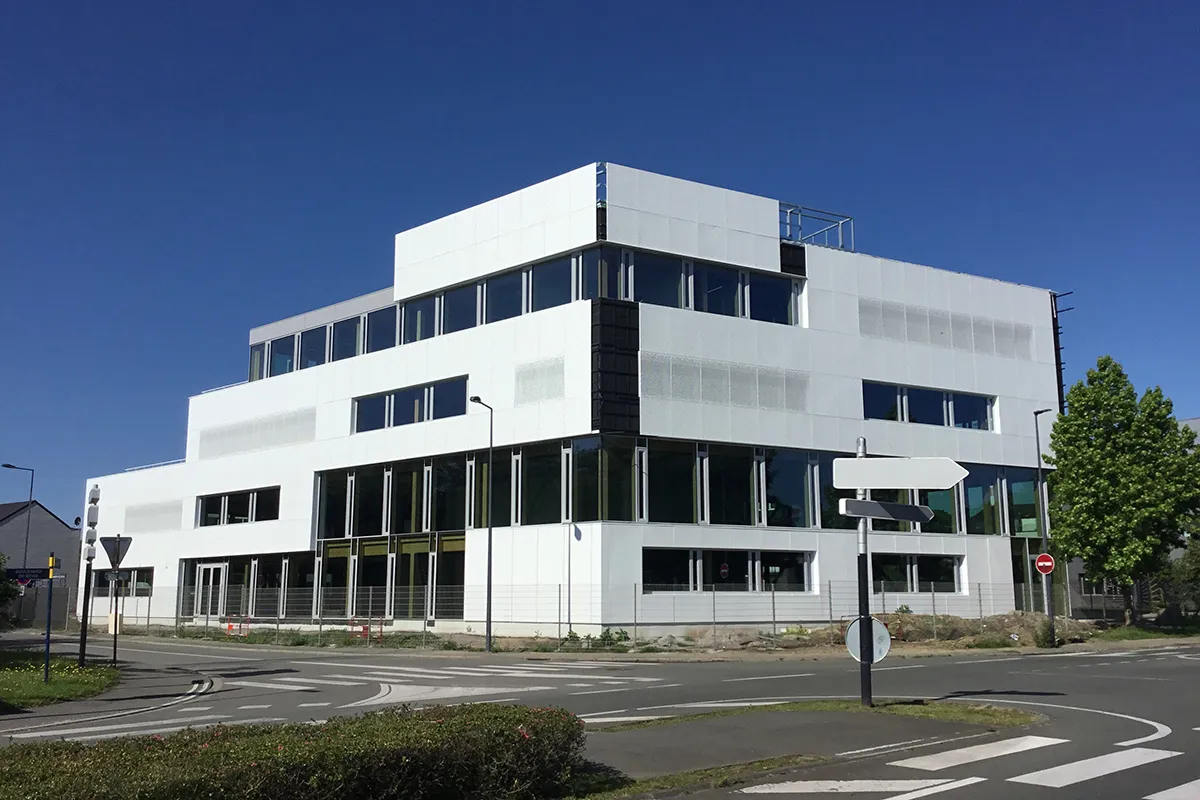
Significant investment has been made to offer greater flexibility and better meet demand. Refurbishment projects often require bespoke profiles to be incorporated into window frames. To ensure quality, the profiles are recessed into the reveals rather than surface-mounted. The new machining centre can do this automatically. It also has an additional spindle for roughing, which is useful for producing thicker window frames, for low-energy or passive projects, and/or for working more with local timber species.
Together with its sister company Stabilame, Menuiserie Riche is also well placed to meet the growing demand for fully prefabricated façades with factory-integrated joinery, enabling faster, cleaner and quieter construction sites. Nathalie Lebrun: « This is the case with the pilot project (Modul’R) at the Athénée de La Louvière, led by FWB and WBE, which is currently being assembled. This final phase of the research will be followed by validation once the 1600 m2 building is commissioned. The data for this modular concept will then be made available as open source, to help with drafting specifications for new school buildings in Wallonia and Brussels. »
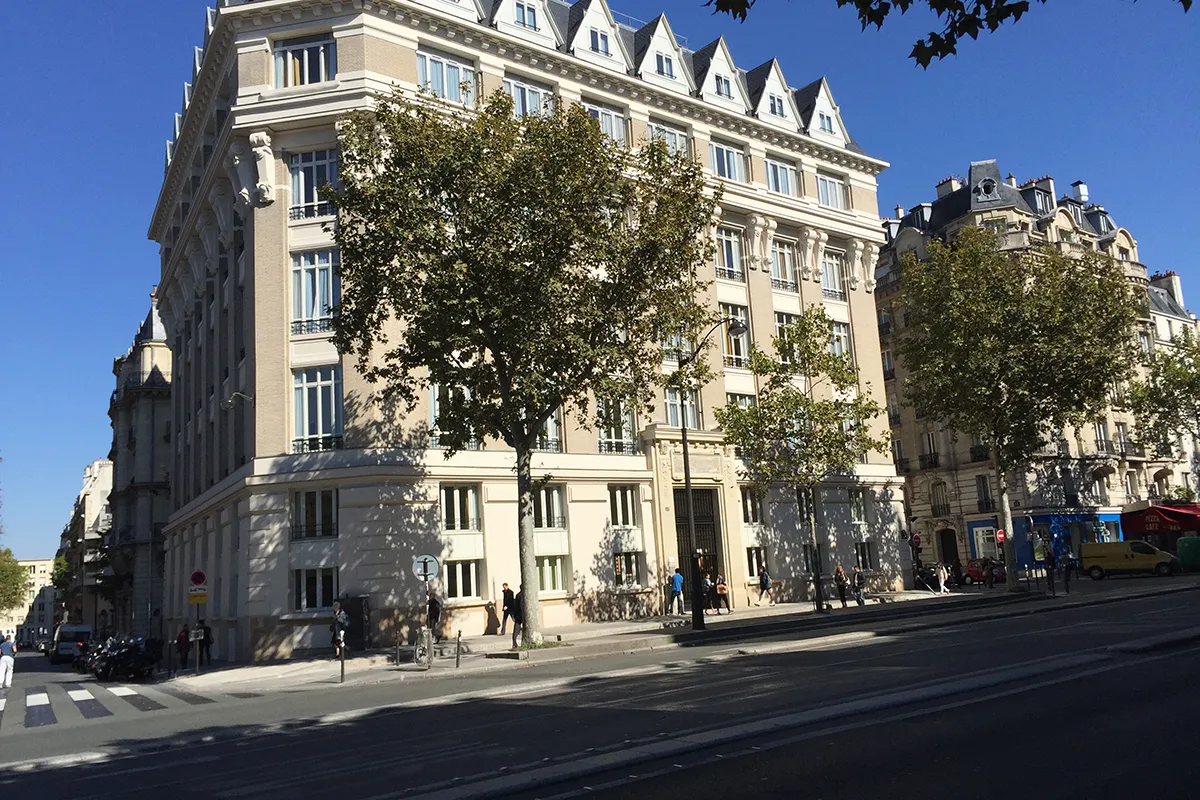
Back in Lille, Menuiserie Riche has won a contract for 1300 window frames for a BREEAM Very Good project, thanks to a comprehensive proposal (windows + interior finishes), beating off competition from Eastern Europe. With the prevailing winds coming from the west, let us hope that clients in Wallonia will follow the French example and make the most of the advantages of timber joinery in the drive for resilience to climate change.
Question about this story? Ask your question
Companies in this story
Keep following this
Get an email when a new story is published. No account needed.
- ThemeFaçades and building comfort
- SubjectSustainable construction
- CompanyBCCA vzw
- CompanySTABILAME