Sustainable construction with lightweight plasterboards
Texte Wouter Polspoel Photos Etex Building Performance
Siniat plasterboards, a brand of the Etex Building Performance group, are perfectly aligned with the principles of sustainable, circular construction. Made exclusively from natural materials, they are notable for their light weight, the result of the company’s sustained efforts to use as little material as possible. They are also 100% recyclable.
“When people hear about sustainable building materials, they often immediately think of straw or timber, but our plasterboards unquestionably belong in this category too,” says Toon Plompen, Product & Sustainability Manager at Etex Building Performance. The message is clear from the outset. “They are made from a mixture of plaster and water, with paper added as a facing. These are all natural materials. Paper is, of course, made from wood, largely in the form of recycled wood fibres. This means the boards are 100% recyclable, so new boards do not have to be made entirely from ‘virgin’ materials.”

Making the most of recycling potential
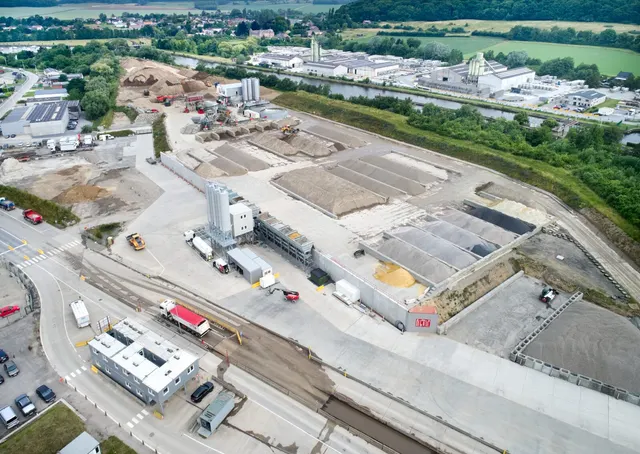
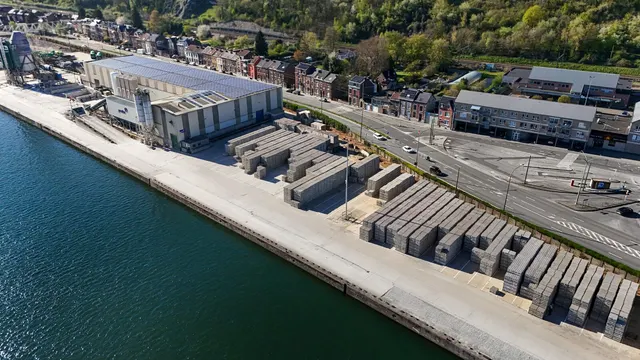
Siniat is helping to drive this recycling effort. “We use recycled plasterboard as a raw material in our production process. Unfortunately, plasterboards cannot be reused in their existing form, as it is impossible to remove them without damaging them in some way,” explains the Product & Sustainability Manager. “At Siniat’s production site in Delfzijl, in the Netherlands, which supplies our customers in Belgium and the Netherlands, recycled materials come from the nearby plants of Gips Recycling Benelux and Gipsrec.nl, which recycle plasterboard offcuts. We can currently produce boards at Delfzijl containing more than 10% recycled plasterboard. Elsewhere in the world, we even have production sites that can make boards containing more than 25% recycled material. Naturally, our goal is to gradually increase the proportion of recycled plaster in our production process. Siniat is also actively working to establish partnerships that we hope will secure a steady supply of plasterboard. Finally, we reuse all our production waste.”
A European commitment
“But our efforts to further reduce the already low environmental footprint of plasterboards do not stop there,” Toon Plompen continues. “Given the inherent environmental benefits of plasterboards, Siniat is of great interest to Etex’s R&D department as it looks for ways to make its operations more sustainable. Signing the European Green Deal and joining the United Nations Global Compact demonstrate our commitment in this area. One of our first additional measures is to reduce the volume of materials used. Thanks to a carefully considered design process, Siniat plasterboards are very lightweight and therefore very easy to install.”
“In addition, 50% of the water we use is rainwater, and we reuse surplus water from our production process. Our approach is not limited to technical considerations and materials, however. For example, we use the heat generated when drying plasterboards to produce energy for our site using a cogeneration plant. Our production sites are also located close to our customers. This was a deliberate choice to limit transport. Where possible, we have also sited them on waterways, as at Delfzijl, to maximise deliveries by river or sea. This type of transport is more in keeping with the principles of sustainable development than road transport.”
Thanks to all these efforts, the sustainability of Siniat plasterboards, like the vast majority of products made within the Etex group, is now verified by an EPD (Environmental Product Declaration). “An EPD is a document that provides all the information on a building material’s environmental footprint,” explains Toon Plompen.
Weather-resistant plasterboards
Siniat’s range includes fire-resistant and waterproof plasterboards, others with high acoustic performance, and others that can withstand heavy impact. These different boards can, of course, be combined.
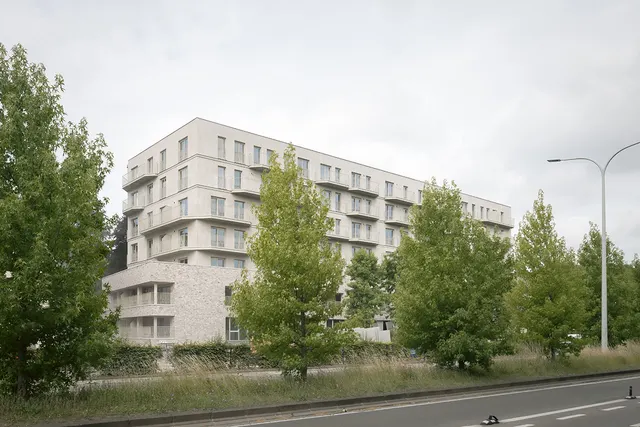
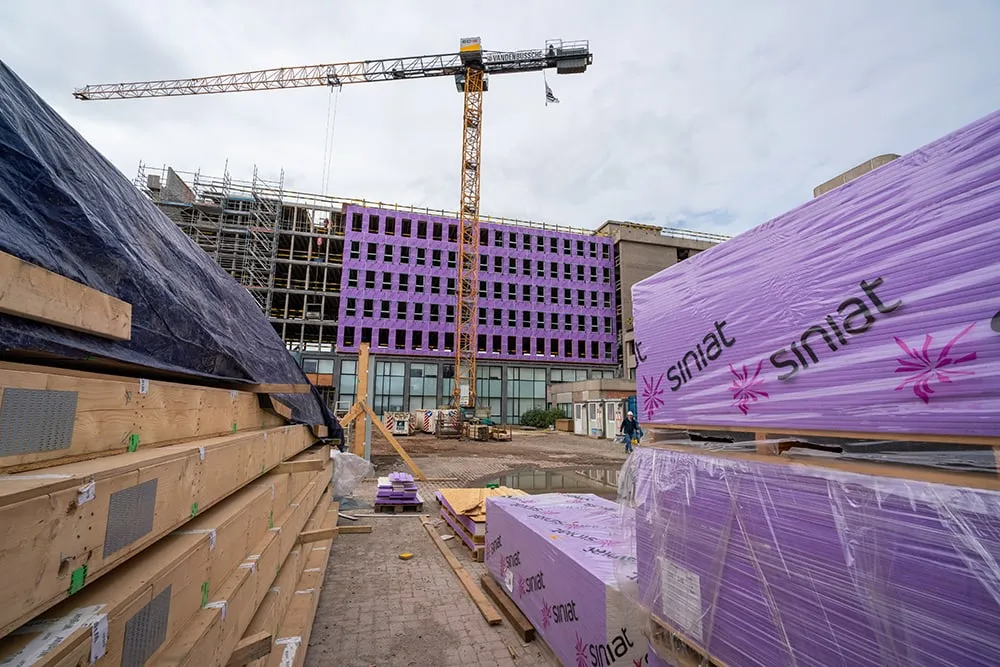
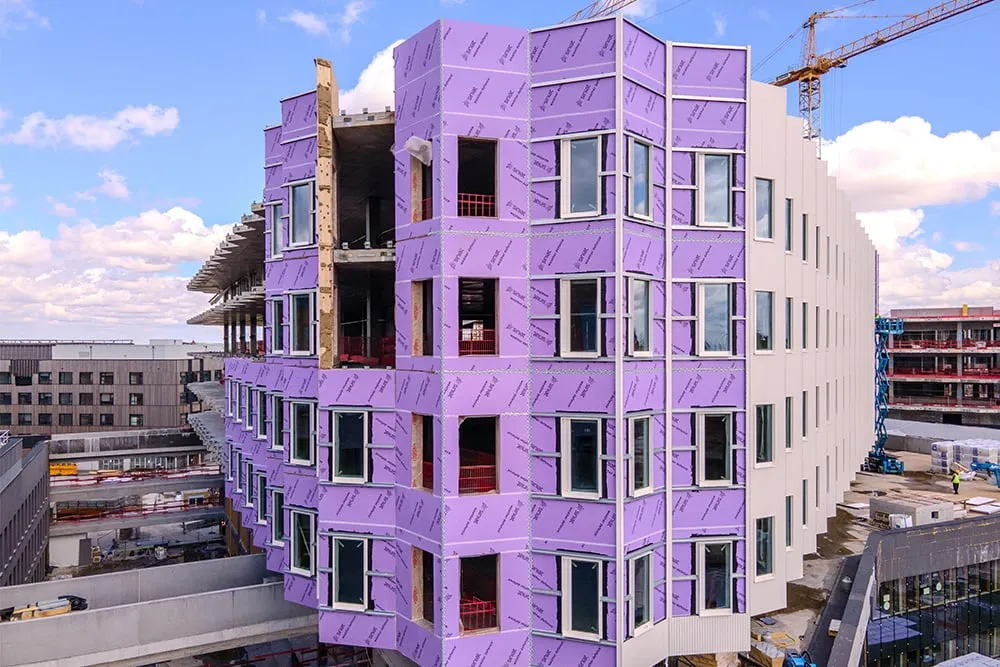
The Weather Defence board in particular is a good example of Etex’s commitment to sustainability, according to Toon Plompen. “It is an airtight plasterboard that can be used all year round, even in extreme outdoor conditions, whereas plasterboard is not normally able to withstand torrential rain. It is generally installed between the insulation and the façade cladding, protecting the structure and insulation. The façade cladding does not need to be installed immediately, as Weather Defence is weather-resistant. It also has an A1 reaction to fire classification and K2 10 fire protection performance. This makes it a more sustainable alternative to certain traditional building materials. The Maria Middelares medical centre in Gentbrugge and CHwapi hospital in Tournai are just two of the reference projects we can point to in showcasing the benefits of the innovative Weather Defence board.”
An environmentally and economically sound choice
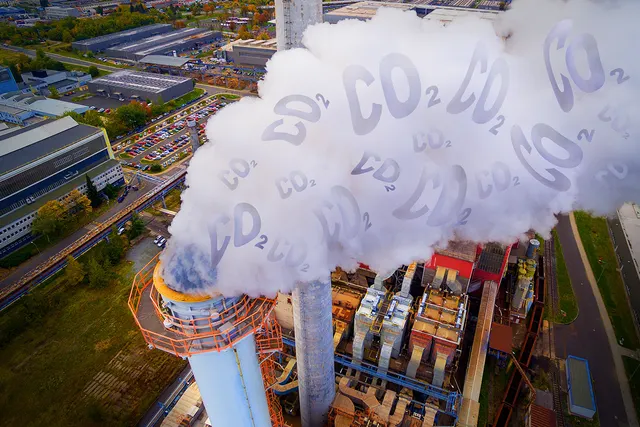
Siniat is a key part of Etex Building Performance’s efforts to reduce the carbon emissions of its products. “This is not only an environmentally sound choice, but an economically sound one too. The carbon emissions associated with building materials will become increasingly important in tender specifications and to property investors,” concludes the Product & Sustainability Manager.
Question about this story? Ask your question
Companies in this story

Keep following this
Get an email when a new story is published. No account needed.
- ThemeBuilding with less carbon
- SubjectSustainable construction
- CompanySiniat